Photo: Wikipedia
Political ClimatePolitical Climate in Naugatuck, CT
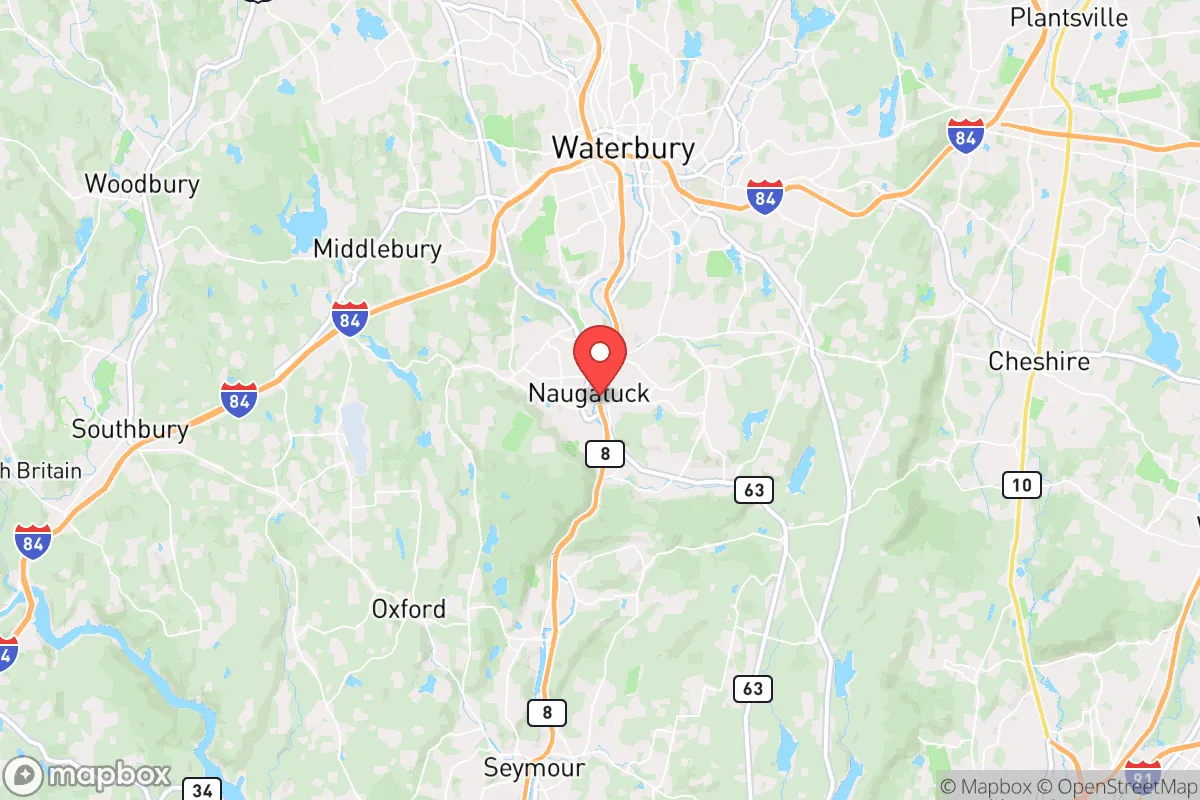
District shown is the primary district for this city’s centroid. Cities may span multiple districts.
Local Political AnalysisPolitical Analysis of Naugatuck, CT
Naugatuck, Connecticut, has a Cook PVI of D+8, meaning it leans about eight points more Democratic than the national average, but don’t let that number fool you into thinking it’s a progressive stronghold. This is a working-class town with deep roots in manufacturing and a long history of independent, live-and-let-live attitudes, not the kind of place that takes kindly to heavy-handed government overreach. Over the past decade, you’ve seen a slow but steady shift toward more progressive policies at the local level, especially around zoning and spending, which has rubbed a lot of longtime residents the wrong way. The real story here is a quiet tension between the old-school, practical conservatism of the borough and the growing influence of Hartford-style politics creeping in.
How it compares
If you drive ten minutes south to Waterbury, you’ll find a similar blue-collar vibe but with a much stronger Democratic machine and a more union-heavy political culture. Head east to Cheshire or north to Prospect, and you’re in solidly Republican territory—places where tax hikes and new regulations are met with serious pushback. Naugatuck sits right in the middle, politically speaking, but it’s more conservative than its D+8 rating suggests. The town has a strong tradition of fiscal restraint, and many residents still remember when the borough was reliably red in local elections. The shift toward progressive ideology here is real, but it’s happening slowly, and it’s being met with growing resistance from folks who see it as a threat to personal freedoms—especially around property rights and local control over schools and businesses.
What this means for residents
For someone who values limited government and personal responsibility, Naugatuck is still a decent place to live, but you’ve got to keep an eye on the town council and board of education. Recent pushes for more affordable housing mandates and stricter environmental regulations have raised eyebrows, with many residents feeling like these are top-down solutions that ignore the borough’s unique character. The school board has also seen debates over curriculum and parental rights, with a vocal group of parents pushing back against what they see as progressive overreach. On the plus side, the town’s tax rate remains relatively moderate compared to neighboring communities, and there’s still a strong sense of local identity that resists being steamrolled by state-level mandates. If you’re the type who wants to be left alone to run your business or raise your family without a lot of bureaucratic interference, Naugatuck is still workable—but you’ll need to stay engaged and vote in every local election to keep it that way.
Culturally, Naugatuck holds onto a few distinctions that set it apart from the more liberal enclaves in the state. The annual Naugatuck Duck Race and the borough’s strong volunteer fire departments reflect a community that still values tradition and neighborly self-reliance. You won’t find the same kind of activist energy you see in New Haven or Hartford, and most folks here are more concerned with potholes and property taxes than with national political trends. That said, the long-term trajectory is concerning if you’re a conservative: as younger, more progressive families move in from higher-cost areas, the political center of gravity is slowly shifting. The key is whether the old guard can hold the line on local issues like zoning, school choice, and fiscal discipline before the borough becomes just another suburb of New Haven.

State Political ClimatePolitical Climate in Connecticut
State Political AnalysisPolitical Environment in the State
Connecticut has shifted from a classic New England swing state into a solidly Democratic stronghold over the past two decades, with a partisan lean of roughly D+12 to D+15 in statewide elections. The state hasn’t voted for a Republican presidential candidate since 1988, and the GOP’s legislative presence has withered to a near-permanent minority in both chambers. The dominant coalition is a blend of wealthy suburbanites, unionized public-sector workers, and a growing population of New York City transplants, all of whom have pushed the state steadily leftward on fiscal and cultural issues. For a conservative considering relocation, the trajectory is unmistakable: the state’s political center of gravity has moved decisively away from the libertarian-leaning Yankee Republicanism that once defined it.
Urban vs. rural divide
The political map of Connecticut is a tale of three zones. The southwestern corner — Fairfield County, anchored by cities like Stamford, Bridgeport, and Norwalk — is the engine of Democratic dominance. These communities are essentially bedroom suburbs of New York City, and their politics mirror the progressive tilt of the metro area. Bridgeport itself is a deep-blue urban core where Democrats routinely win by 40-point margins. The Hartford metro area, including the capital and its inner-ring suburbs like West Hartford, is another Democratic stronghold, fueled by state government employees and insurance industry professionals. In contrast, the eastern half of the state — Windham County and the Quiet Corner — along with the Litchfield Hills in the northwest, remain the last redoubts of GOP strength. Towns like Ledyard and Killingly in the east, and Torrington in the northwest, regularly vote Republican, but their populations are too small to offset the urban-suburban vote. The 2020 presidential election saw Fairfield County deliver a 62-36 margin for Biden, while Windham County went 49-48 for Trump — a stark illustration of the divide. The suburbs that once were swing territory, like Glastonbury and Simsbury, have moved decisively blue over the last decade, driven by college-educated professionals who prioritize social issues over fiscal conservatism.
Policy environment
Connecticut’s policy environment is a case study in progressive governance with a heavy price tag. The state has the highest per-capita tax burden in the nation, driven by a progressive income tax that tops out at 6.99% and some of the highest property taxes in the country — the median effective rate is around 2.1%, meaning a $400,000 home carries an annual tax bill of roughly $8,400. The state’s regulatory posture is aggressive: it was one of the first to enact a paid family and medical leave program (PFMLA) funded by a payroll tax, and it has a strict assault weapons ban and universal background checks that go well beyond federal law. On education, Connecticut has some of the nation’s best public schools in wealthy suburbs, but also the largest achievement gap in the country between affluent and poor districts. The state’s election laws are among the most liberal: no-excuse absentee voting, early voting (enacted in 2023), and automatic voter registration. For a conservative, the cumulative effect is a state that taxes heavily, regulates intrusively, and prioritizes government solutions over individual choice. The 2023 expansion of early voting, for example, was sold as convenience but effectively dilutes the impact of Election Day mobilization that often benefits Republicans.
Trajectory & freedom
Connecticut is becoming less free by any standard measure of personal liberty. The 2023 passage of HB 6667, which expanded the state’s already strict gun laws to ban the open carry of firearms and raise the purchasing age to 21, was a clear contraction of Second Amendment rights. On medical freedom, the state maintained its COVID-19 emergency powers longer than most, and while the mandates have expired, the infrastructure for future public health orders remains in place. Parental rights took a hit with the 2021 passage of SB 2, which codified the “affirmative consent” standard in sexual assault cases and, more controversially, allowed schools to withhold information about a student’s gender identity from parents if the student requests it — a direct challenge to parental authority. Property rights are under constant pressure from the state’s aggressive eminent domain powers, used most recently in the New London area for redevelopment projects. On the tax front, the 2023 budget included a temporary income tax rate cut, but it’s set to expire in 2027, and the overall trajectory is toward higher taxes to fund the state’s massive unfunded pension liabilities — currently over $40 billion. The only bright spot for conservatives was the 2022 passage of a constitutional amendment requiring a two-thirds legislative supermajority to raise taxes, but it was narrowly defeated, leaving the door open for future hikes.
Civil unrest & political movements
Connecticut has seen relatively low levels of civil unrest compared to larger states, but the political movements are real and visible. The Black Lives Matter protests in 2020 were concentrated in Hartford and New Haven, with some property damage but no sustained violence. The state’s sanctuary city policies — New Haven was the first in the nation in 2017, and Hartford and Bridgeport followed — have made immigration enforcement a flashpoint. In 2023, the state legislature passed a law prohibiting local law enforcement from cooperating with federal immigration authorities in most cases, effectively making the entire state a sanctuary. This has created tension in more conservative towns like Enfield and Southington, where residents have pushed back. The election integrity debate has been muted compared to swing states, but the 2020 election saw a surge in mail-in voting that raised eyebrows among conservatives, particularly in Bridgeport, where a 2023 absentee ballot scandal led to a court-ordered redo of a Democratic primary. The most visible conservative movement is the “Save Our Schools” coalition, which has fought against critical race theory and gender ideology in K-12 curricula, particularly in Fairfield County suburbs like Westport and Greenwich. These groups have had some success in school board elections but have not shifted state-level policy.
Projection
Over the next 5-10 years, Connecticut is likely to become more progressive, not less. The demographic trends are clear: the state’s population is aging and shrinking, but the growth is concentrated in the urban and suburban areas that vote Democratic. The Fairfield County corridor will continue to attract New Yorkers fleeing the city but bringing its politics with them. The rural areas that vote Republican are losing population, and the GOP has no viable path to statewide power without a dramatic shift in the suburbs. The state’s fiscal crisis — unfunded pensions, high debt, and a shrinking tax base — will force either drastic spending cuts (unlikely under Democratic control) or even higher taxes. The 2023 budget’s temporary tax cut is almost certain to expire, and new revenue sources, like a proposed wealth tax on investment income, are being discussed. On cultural issues, expect further erosion of parental rights, expansion of transgender accommodations in schools, and tighter gun control. The only wild card is a potential federal shift: if a conservative Supreme Court or Congress limits state power on issues like gun rights or education, Connecticut’s laws could be preempted. But barring that, the state’s trajectory is toward a more regulated, higher-tax, and culturally progressive environment.
Bottom line for a new resident: If you’re a conservative moving to Connecticut, you’re choosing a state where your vote will have limited impact on statewide outcomes, your taxes will be among the highest in the nation, and your personal freedoms — on guns, education, and medical choices — will be increasingly constrained. The best you can hope for is to find a red pocket in a blue state, like Ledyard or Torrington, where local politics still reflect traditional values. But even there, state law will override local preferences on most issues. Connecticut is a beautiful state with strong schools and a high quality of life for those who can afford it, but it’s not a place where conservative principles are likely to gain ground anytime soon. If you’re looking for a state that respects individual liberty and fiscal restraint, you’d be better off looking west or south.
* Values derived from national, state, county, city and local statistics and may differ in a specific area. Last updated: 2026-04-30T13:33:15.000Z
Narrative content on this page is AI-generated and may contain mistakes. Verify any details that matter before acting on them.
ReloMaps may earn a commission from affiliate links at no extra cost to you.

