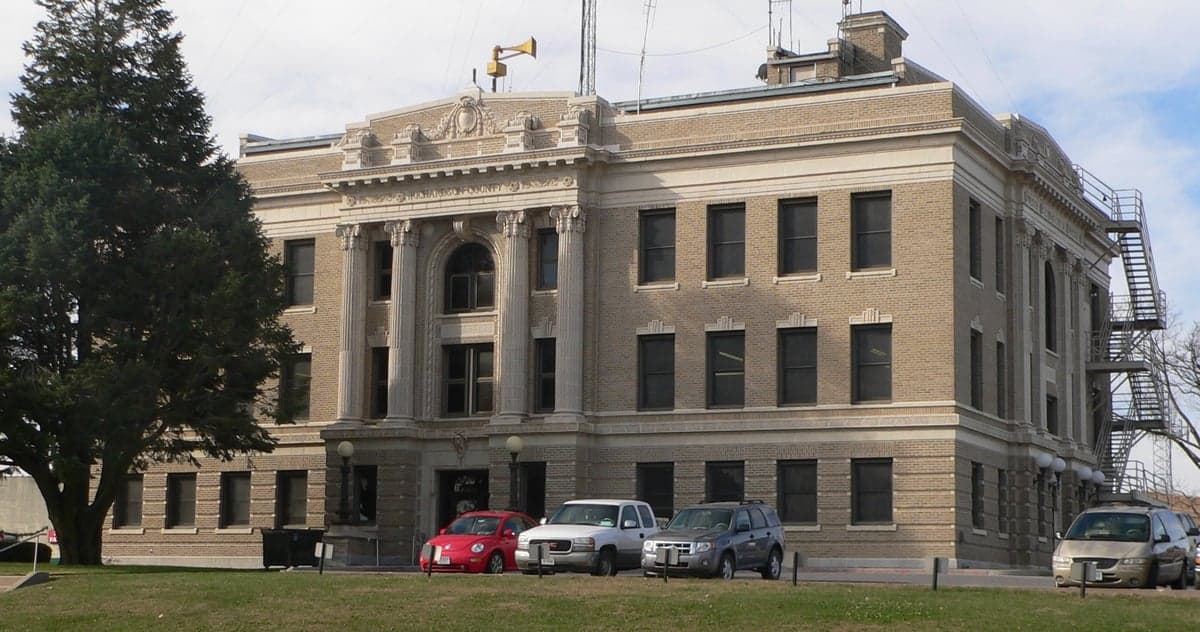
Photo: Wikipedia
Personal Sovereignty in Richardson County
Viable for self-reliance. Generally workable, though some barriers may limit total independence.
What does Personal Sovereignty tell us?
Personal Sovereignty measures your capacity for self-reliance and independence with minimal government friction. Higher scores mean fewer barriers between you and the way you want to live... but it assumes you have the space you need and good neighbors.
What does this tell us?
Personal Sovereignty measures your capacity for self-reliance and independence with minimal government friction. Higher scores mean fewer barriers between you and the way you want to live... but it assumes you have the space you need and good neighbors.
State Policy
Energy independence: Importer (35% of energy produced in-state)
Personal Liberty
Homesteading

Personal Liberty Analysis
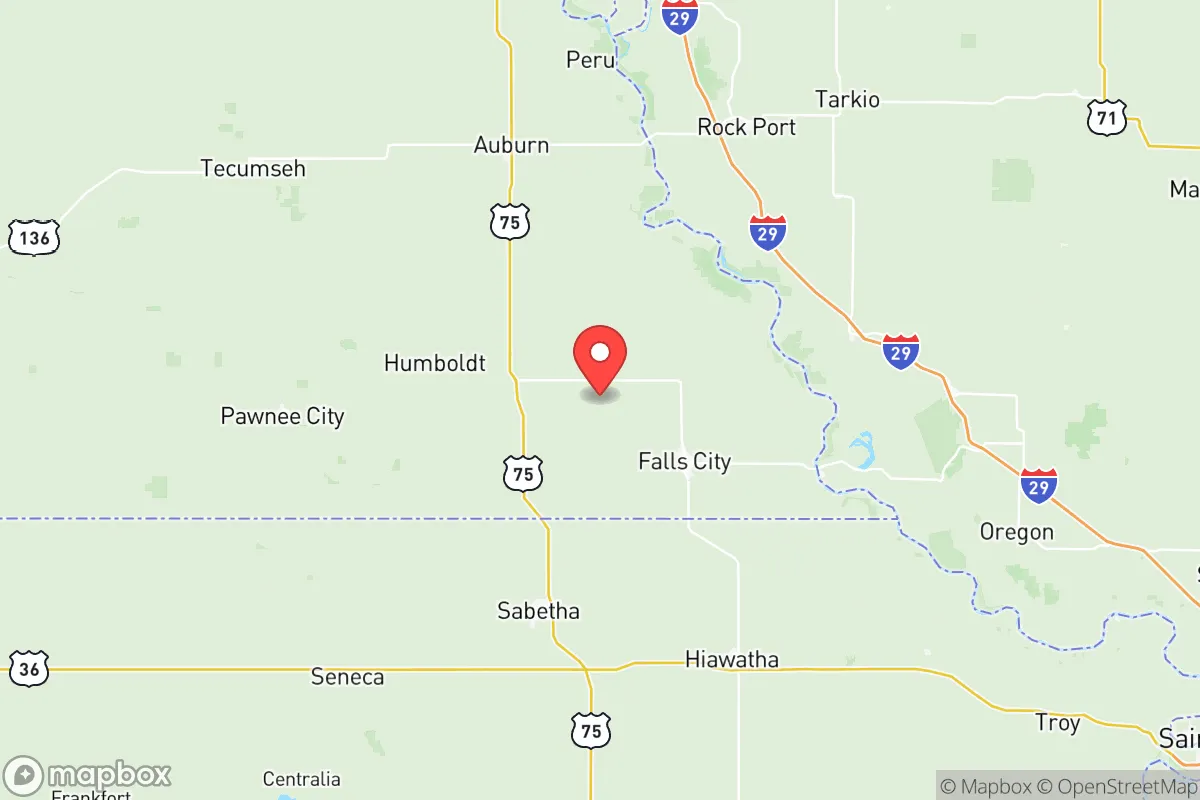
Richardson County, Nebraska offers a personal sovereignty environment that is notably hands-off compared to urban and coastal jurisdictions, with a regulatory posture that prioritizes individual discretion over government oversight. The county’s small-town character—anchored by communities like Falls City, Humboldt, and Dawson—creates a setting where residents experience minimal interference in daily life, from property use to self-defense choices. For those seeking a place where personal autonomy is the default rather than the exception, Richardson County presents a compelling option within the broader context of Nebraska’s already freedom-oriented legal framework.
Tax burden and regulatory posture: How light is the government footprint?
Richardson County operates under Nebraska’s state-level tax structure, which is moderate but not oppressive, and the local regulatory environment is decidedly light-touch. Property taxes in Nebraska average around 1.5% of assessed value, which is higher than some neighboring states but offset by the county’s relatively low home prices—median home values in Falls City hover near $80,000, keeping annual tax bills manageable. There is no state income tax on Social Security benefits, and Nebraska’s flat income tax rate of 5.84% (as of 2026) applies uniformly. Sales tax in the county is 7.0% (state plus local), but essentials like groceries and prescription drugs are exempt. The regulatory posture is permissive: there are no county-level business licensing hurdles beyond basic state requirements, and zoning in unincorporated areas like Rulo or Preston is minimal, allowing residents to operate home-based businesses or keep livestock without excessive red tape. Falls City and Humboldt have modest municipal codes focused on public safety and sanitation, but they do not impose the kind of land-use restrictions common in larger metro areas. For a relocation reader, the key takeaway is that government intrusion into personal and economic decisions is low, with the tax burden being a manageable trade-off for the services provided.
Self-defense and gun law specifics: What are your rights to carry and protect?
Nebraska is a constitutional carry state, and Richardson County fully reflects that posture. As of 2023, any law-abiding adult 21 or older can carry a concealed handgun without a permit, and open carry is legal without a license for those 18 and older. The county sheriff’s office in Falls City processes permits for those who still want one for reciprocity purposes, but there is no local ordinance that restricts carrying in public spaces beyond state-defined sensitive locations like schools and government buildings. Stand-your-ground laws apply statewide, meaning there is no duty to retreat before using deadly force in self-defense if you are lawfully present. Richardson County’s gun culture is deeply ingrained; shooting ranges and hunting are common activities, and residents in towns like Verona and Stella routinely keep firearms for home defense and recreation. There are no county-level magazine capacity bans or ammunition restrictions. For a family or individual prioritizing self-defense rights, Richardson County offers a legal environment where the burden of proof rests on the state, not the citizen, and where the sheriff’s office is known for a pro-Second Amendment stance. The practical effect is that residents can exercise their rights without fear of local overreach.
Self-reliance and homesteading viability: Lot sizes, zoning, and off-grid feasibility
Richardson County is a strong candidate for homesteading and off-grid living, particularly outside its incorporated towns. In unincorporated areas like Dawson and Salem, minimum lot sizes are not strictly enforced by the county, and parcels of 1 to 5 acres are common and affordable—often under $2,000 per acre. Zoning is virtually nonexistent in these rural stretches, meaning residents can build a home, install solar panels, drill a well, and set up septic systems without navigating a thicket of permits. Falls City and Humboldt have building codes for new construction (e.g., electrical and plumbing standards), but they are not onerous and do not prohibit alternative energy sources. Off-grid feasibility is high: Nebraska’s net metering policy allows solar homeowners to sell excess power back to the grid, and the county does not impose additional fees or restrictions on renewable energy systems. Rainwater collection is legal, and there are no county-level bans on composting toilets or graywater systems, though state health codes apply to drinking water wells. For those seeking to raise animals, Richardson County allows chickens, goats, and even larger livestock on residential lots in unincorporated areas, with Falls City having more restrictive limits (e.g., no roosters within city limits). The overall environment supports a self-reliant lifestyle with minimal bureaucratic friction, making it a practical choice for families or individuals who want to reduce dependence on municipal utilities and supply chains.
Personal liberties: Parental rights, medical autonomy, speech, and property
Richardson County aligns with Nebraska’s broader conservative tilt on personal liberties, particularly in areas of parental rights and medical autonomy. Parental rights are strongly protected: there are no state or local mandates for childhood vaccinations as a condition of school attendance (Nebraska allows philosophical exemptions), and parents have broad authority over their children’s education, including homeschooling without intrusive state oversight. Medical autonomy is similarly permissive—there are no county-level health mandates beyond basic sanitation codes, and Nebraska does not have a state-run health insurance exchange that restricts private options. Speech rights are robust; there are no local hate speech ordinances or permit requirements for public gatherings in Falls City or Humboldt, and the county’s small population means community norms, not government edicts, shape public discourse. Property rights are a standout: Nebraska’s eminent domain laws are among the most protective in the Midwest, requiring just compensation and limiting takings for private economic development. Richardson County has not pursued aggressive land-use controls, and property owners in areas like Rulo or Preston can generally use their land as they see fit, subject only to state-level environmental regulations on wetlands or endangered species. For a reader who values the ability to make personal and family decisions without government second-guessing, Richardson County offers a legal environment where the default is freedom, not permission.
Compared to other rural counties in the Midwest, Richardson County stands out for its combination of low regulatory friction, strong self-defense rights, and practical homesteading viability. While property taxes are higher than in some neighboring Kansas counties, the absence of income tax on Social Security and the permissive zoning in unincorporated areas offset that cost. The county’s personal sovereignty profile is strongest for those who want to live with minimal government interference—whether in Falls City’s small-town setting or on a remote acreage near Dawson. For a single individual or family prioritizing autonomy, Richardson County delivers a level of personal freedom that is increasingly rare in the United States, making it a solid choice for relocation within the Great Plains region.

* Values derived from national, state, county, city and local statistics and may differ in a specific area. Last updated: 2026-06-12T10:34:06.000Z
Narrative content on this page is AI-generated and may contain mistakes. Verify any details that matter before acting on them.
ReloMaps may earn a commission from affiliate links at no extra cost to you.

