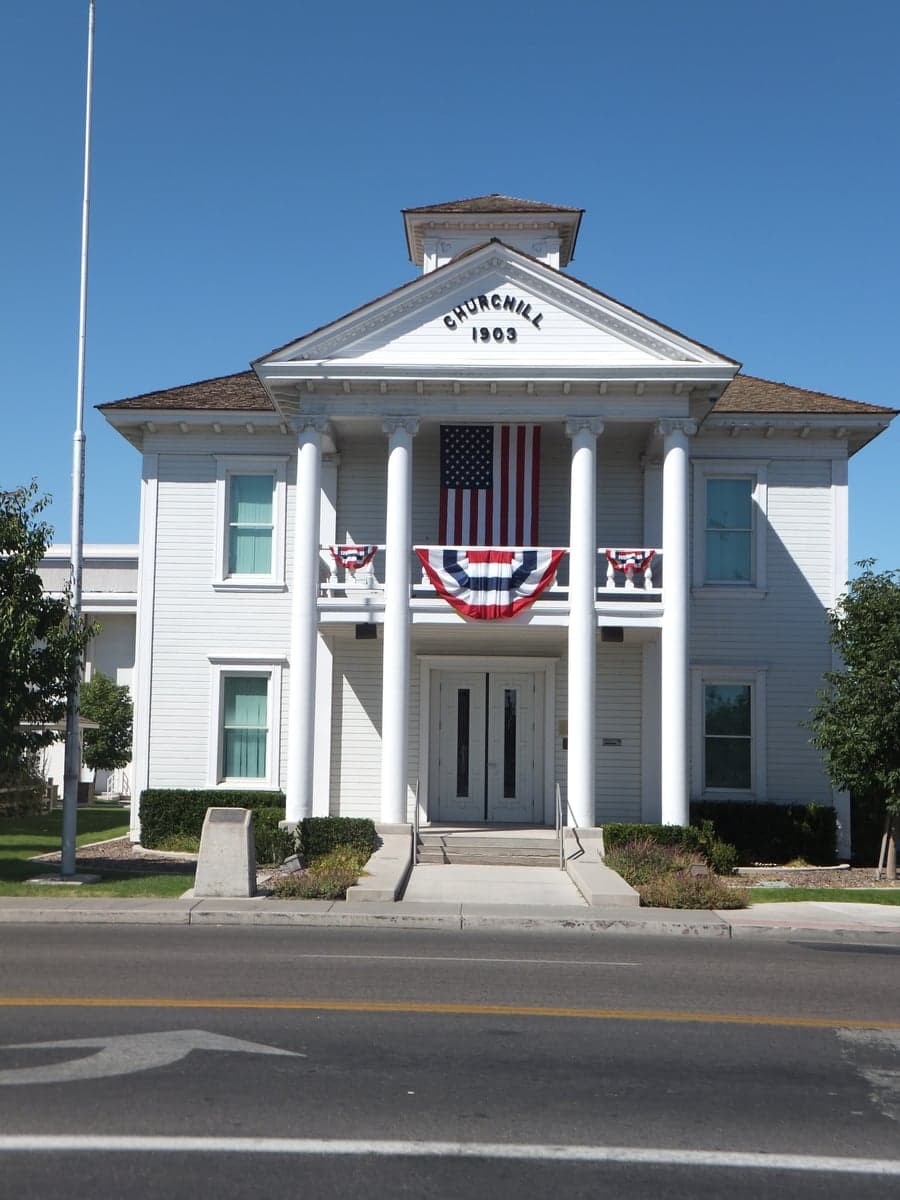
Photo: Wikipedia
Political ClimatePolitical Climate in Churchill County
Showing district-level results — no local-only data available.
Local Political AnalysisPolitical Analysis of Churchill County
Churchill County, Nevada, is a reliably conservative stronghold, with a Cook PVI of R+7 that reflects a deep-rooted preference for limited government and personal responsibility. While the state of Nevada as a whole has shifted to a more competitive R+1, Churchill County has held its ground, with Fallon and the surrounding rural areas consistently voting for conservative candidates by wide margins. The political trajectory here is one of cautious resistance to the progressive trends seen in places like Reno or Las Vegas, with locals increasingly worried about state-level overreach into local affairs.
How it compares
The contrast between Churchill County and the rest of Nevada is stark. The state's R+1 rating is largely driven by Clark County (Las Vegas) and Washoe County (Reno), which have seen a surge in progressive voters. In Churchill County, the political landscape is far more uniform. Fallon, the county seat and largest town, leans heavily red, with precincts near the Naval Air Station Fallon and the agricultural areas showing the strongest conservative turnout. The smaller community of Lahontan and the rural stretches around Stillwater are even more conservative, often voting 70% or higher for Republican candidates. There are no real "blue" towns here; the only slight variation is in a few precincts near the county's western edge, closer to the more moderate areas of Lyon County, but even those swing reliably red in most elections. This isn't a purple county—it's a place where the Second Amendment, lower taxes, and local control are non-negotiable values.
What this means for residents
For folks living here, the local political climate means a government that mostly stays out of your business. You won't see the same kind of zoning battles or mask mandates that plague the cities. The county commission and school board are dominated by conservatives who prioritize fiscal restraint and parental rights. However, there's a growing unease about state-level policies coming out of Carson City. Recent pushes for stricter gun laws, higher fuel taxes, and renewable energy mandates feel like a direct attack on the rural way of life. Many residents see these as examples of government overreach, where a distant legislature tries to impose one-size-fits-all solutions on a community that knows its own needs better. The feeling is that Churchill County is an island of sanity in a state that's drifting leftward, and that's a source of both pride and concern.
This political divide also shows up in cultural and policy distinctions. Churchill County has a strong agricultural and military heritage, with the Naval Air Station being a major employer and cultural touchstone. There's a practical, no-nonsense attitude here that clashes with the more ideological, activist-driven politics of the urban centers. For example, while the state has pushed for electric vehicle infrastructure and net-zero building codes, local leaders have pushed back, arguing these mandates hurt small businesses and limit personal choice. The county's land-use policies are also more permissive, favoring private property rights over environmental restrictions. If you value a community where your voice actually matters and the government isn't constantly trying to "fix" things that aren't broken, Churchill County is a rare find. But the long-term worry is that as Nevada's population grows and shifts, the pressure to conform to progressive norms will only increase, making it harder for places like this to hold the line.

State Political ClimatePolitical Climate in Nevada
State Political AnalysisPolitical Environment in the State
Nevada is a true battleground state with a Cook PVI of R+1, meaning it leans just barely Republican but remains highly competitive. Over the past 10-20 years, the state has shifted from a reliably blue stronghold—thanks to powerful union and casino interests in Las Vegas—to a purple state where rural and exurban growth is slowly counterbalancing Clark County’s dominance. The 2024 election saw Trump win the state by roughly 2.5 points, a flip from Biden’s 2.4-point win in 2020, signaling that the Silver State is trending rightward but still very much in play.
Urban vs. rural divide
The political map of Nevada is a tale of two worlds. Clark County (Las Vegas) is the Democratic engine, home to about 73% of the state’s population, with strong union and minority voter turnout. But even here, the suburbs are shifting: Henderson and North Las Vegas have seen notable rightward movement among working-class families and retirees. Washoe County (Reno) is a classic swing county—it went for Biden in 2020 but flipped back to Trump in 2024, driven by a growing tech and logistics workforce that leans libertarian. The real Republican strongholds are the rural counties: Elko (mining and ranching), Douglas County (Minden/Gardnerville), and Nye County (Pahrump) routinely vote 70-80% Republican. The divide isn’t just urban vs. rural—it’s also about lifestyle: Las Vegas is transient and entertainment-driven, while the rest of the state values independence, low taxes, and minimal government interference.
Policy environment
Nevada’s policy environment is a mixed bag for conservatives. On the plus side, there is no state income tax, which is a huge draw for entrepreneurs and high earners. Property taxes are capped at 3% annual growth, making homeownership more predictable. The state’s regulatory posture is generally business-friendly, especially for mining, logistics, and tech. However, the education system is a concern: Nevada ranks near the bottom nationally in K-12 outcomes, and the powerful teachers’ union in Clark County has blocked most school choice expansions. Healthcare policy is moderate—Medicaid expansion was accepted, but there’s no state-level individual mandate. Election laws are a flashpoint: Nevada has universal mail-in voting (enacted during COVID and made permanent in 2021 via AB 321), automatic voter registration, and same-day registration. Conservatives view these as vulnerabilities, though the 2024 election saw no major fraud allegations. The state also has a relatively high sales tax (8.25% average), which hits low-income families harder.
Trajectory & freedom
Nevada’s trajectory on personal freedom is a tug-of-war. On the positive side, gun rights are strong: the state has permitless carry (effective July 2023 via SB 143), no magazine capacity limits, and no red flag law. This is a major win for Second Amendment advocates. Property rights are decent—no state-level rent control, though local ordinances in Las Vegas have flirted with tenant protections. On the concerning side, parental rights took a hit in 2023 with AB 195, which allows schools to withhold information about a student’s gender identity from parents if the student requests it. This law has energized conservative parents and led to school board recall efforts in Henderson and Reno. Medical autonomy is mixed: the state legalized recreational marijuana in 2016, but COVID-era mandates (masking, vaccine passports) were enforced more aggressively in Clark County than in rural areas. The overall trend is that freedom is expanding in rural and exurban areas but contracting in the Las Vegas metro under local Democratic control.
Civil unrest & political movements
Nevada has seen its share of political flashpoints. The 2020 election integrity controversy was intense, with the Trump campaign challenging Clark County’s mail-in ballot counting process. This led to the formation of grassroots election integrity groups, particularly in Nye County and Elko, that now monitor local elections. Immigration politics are heated: Nevada has a sanctuary state law (AB 146, 2019) that limits local cooperation with ICE, which has caused friction in Reno and Las Vegas where illegal immigration is more visible. The “Rural Nevada Secession” movement (proposing a separate state called “New Nevada”) gained traction in 2023-2024, driven by frustration with Clark County’s dominance in the legislature. While unlikely to succeed, it reflects deep cultural divides. On the left, the Culinary Union (representing 60,000 casino workers) remains a powerful force, organizing protests for higher wages and against right-to-work laws. A new resident would notice that political bumper stickers and yard signs are common even in suburban neighborhoods—this is a state where people wear their politics openly.
Projection
Over the next 5-10 years, Nevada is likely to become more Republican-leaning, but not overwhelmingly so. The key driver is in-migration: people moving from California (the largest source) tend to be moderate-to-conservative refugees from high taxes and crime, settling in Henderson, Reno, and Pahrump. These newcomers often vote Republican, as seen in the 2024 flip of Washoe County. However, Clark County’s population growth (driven by Latino and Asian communities) could offset this if Democrats maintain their turnout machine. The state legislature is currently split (Democratic Assembly, Republican Senate), but redistricting after 2030 could shift the balance. The biggest wildcard is education reform: if school choice gains traction (a 2025 bill is expected), it could draw more conservative families. Expect continued fights over election laws, parental rights, and property taxes. A new resident moving in now should anticipate a state that is politically competitive but trending in a conservative direction, especially outside the Las Vegas Strip corridor.
Bottom line for a new resident: Nevada offers a unique mix of low taxes, strong gun rights, and a growing conservative base, but you’ll have to navigate a blue-leaning urban core and a progressive education system. If you’re looking for a state where your vote matters and your personal freedoms are respected, Nevada is a solid bet—just be prepared for the fight over parental rights and election integrity to continue. The best places for a conservative family are Henderson (suburban Las Vegas), Reno (if you can handle the tech influx), or Elko (if you want true rural independence). Avoid the Las Vegas Strip corridor and downtown Reno if you want to minimize exposure to progressive policies.
* Values derived from national, state, county, city and local statistics and may differ in a specific area. Last updated: 2026-05-12T08:38:46.000Z
Narrative content on this page is AI-generated and may contain mistakes. Verify any details that matter before acting on them.
ReloMaps may earn a commission from affiliate links at no extra cost to you.

