Photo: Wikipedia
Demographics of White Pine County
Affluence Level in White Pine County
A middle-class area roughly in line with national averages across income, home values, education, and employment.
People of White Pine County
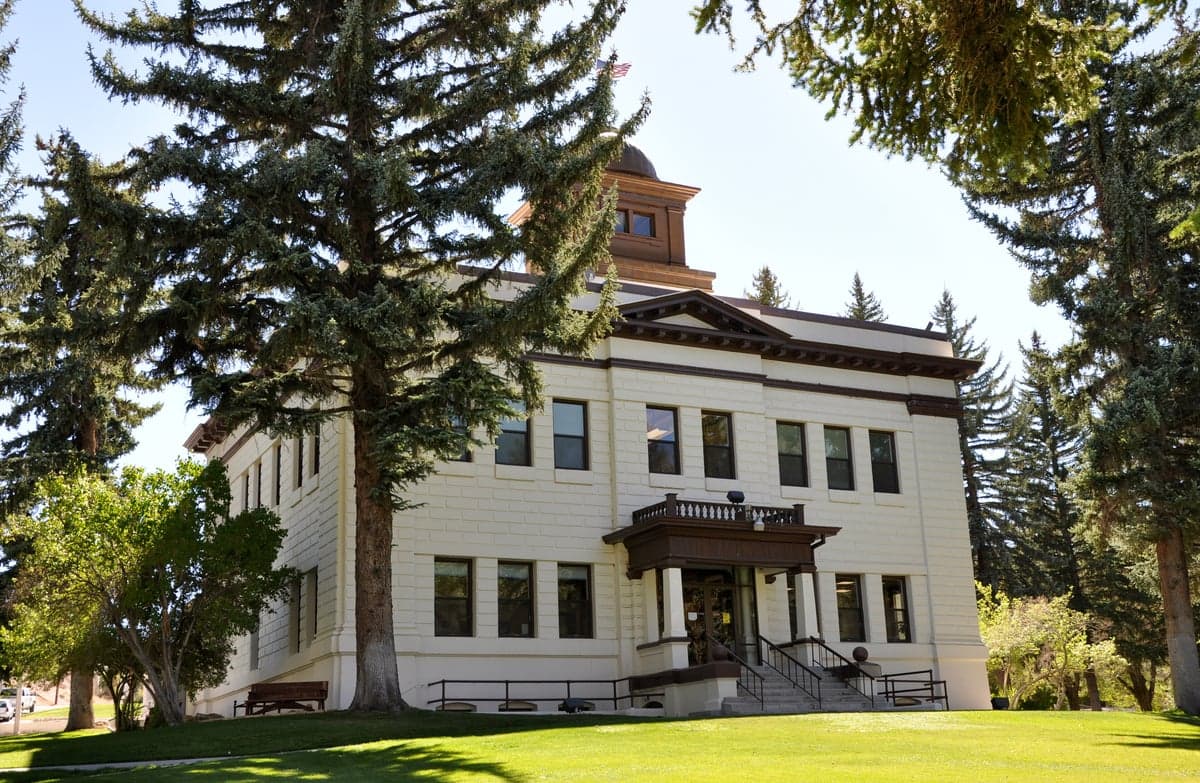
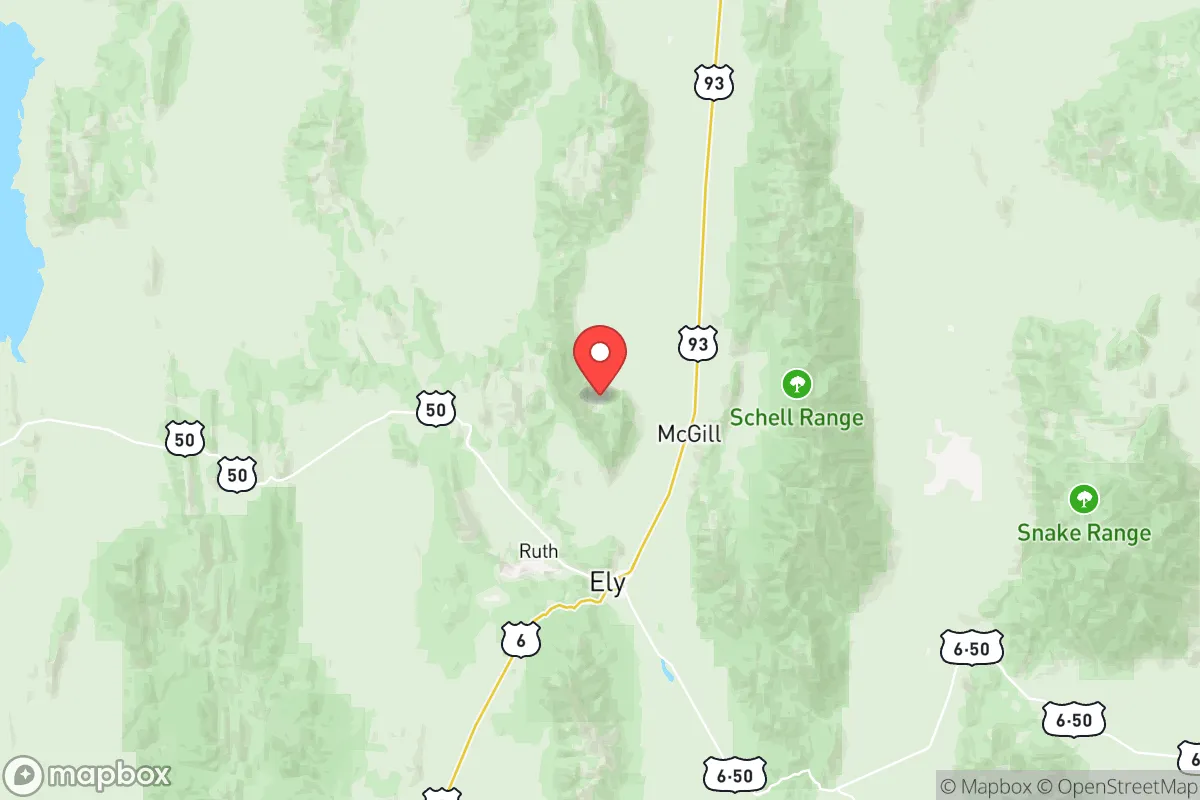
White Pine County, Nevada, is a rural, sparsely populated region where the population of 8,856 is overwhelmingly native-born (98.7%) and predominantly White (71.7%), with a significant Hispanic minority (16.4%) and a smaller Black community (6.8%). The county’s identity is shaped by its mining and ranching heritage, low population density (roughly 1.5 people per square mile), and a conservative, self-reliant character typical of the Intermountain West. Ely, the county seat and largest town, serves as the economic and cultural hub, while smaller settlements like McGill and Ruth reflect the boom-and-bust cycles of copper mining that defined the area.
Settlement & growth (pre-1960)
Before American settlement, the area now known as White Pine County was inhabited by the Western Shoshone people, who lived a nomadic lifestyle centered on seasonal hunting and gathering. The Shoshone had no permanent villages in the modern sense, but their territory included the Snake Valley and the foothills of the Schell Creek Range. Spanish and Mexican explorers passed through the region in the 18th and early 19th centuries, but no permanent colonization occurred. The first sustained American presence came with the California Trail and the Pony Express in the 1850s, which established way stations at locations like Egan Canyon and Ruby Valley.
The real population boom began with the discovery of silver and copper in the 1860s and 1870s. The town of Hamilton (now a ghost town) was founded in 1868 after rich silver strikes in the White Pine Mountains, briefly becoming one of Nevada’s largest cities with over 10,000 residents. However, the silver boom collapsed by the 1880s, and Hamilton was largely abandoned. The county’s modern population centers emerged from the copper mining era, which began in earnest around 1900. The Nevada Consolidated Copper Company (later Kennecott) established operations at Ruth and McGill, drawing a diverse workforce of European immigrants—Cornish miners, Italians, Slavs, and Greeks—as well as domestic migrants from the Midwest and the South. Ely grew as the commercial and railroad hub, while Cherry Creek and Osceola saw smaller gold and silver rushes.
By the 1920s, White Pine County’s population peaked at over 12,000, driven by copper demand during World War I. The Great Depression and the post-World War II decline in copper prices led to a gradual population drop. The county’s demographic profile remained overwhelmingly White and native-born, with small enclaves of Italian and Slavic families concentrated in the mining towns of McGill and Ruth. The completion of U.S. Route 50 (the “Loneliest Road in America”) in the 1930s improved access but did not spur significant new settlement.
Modern era (post-1965)
The 1965 Hart-Cellar Act had minimal direct impact on White Pine County, as the region never attracted significant post-1965 immigration. The foreign-born population today stands at just 1.3%, far below the national average. The county’s demographic shifts since the 1960s have been driven primarily by domestic migration and natural population decline. The closure of Kennecott’s copper operations in 1978 led to a sharp population drop, from over 9,000 in 1970 to under 8,000 by 1990. Many residents left for Reno, Salt Lake City, or Las Vegas, while those who remained were largely long-established families of European descent.
Since 2000, the county has seen modest growth, driven by a combination of prison-related employment (the Ely State Prison and the White Pine County Detention Center opened in the 1990s) and a small influx of retirees and remote workers attracted by low property prices and a rural lifestyle. The Hispanic population has grown from under 5% in 1990 to 16.4% today, largely through domestic migration from the Southwest and Mexico, with families settling in Ely and McGill for work in construction, services, and the prison system. The Black population (6.8%) is concentrated in Ely and is primarily associated with the prison workforce and their families, as well as a small number of military veterans. East/Southeast Asian residents (0.6%) are a tiny presence, mostly in Ely, with no distinct enclave. The Indian subcontinent population is effectively zero.
Suburbanization has not occurred in any meaningful sense; the county’s population remains clustered in a handful of small towns and unincorporated areas. The college-educated share is just 14.2%, reflecting the county’s blue-collar, resource-extraction economy. The cultural identity remains rooted in ranching, mining, and outdoor recreation, with a strong conservative political leaning—White Pine County voted for Donald Trump by a margin of over 40 points in 2024.
The future
White Pine County’s population is likely to remain stable or decline slightly over the next 10–20 years, barring a major new mining or energy development. The county’s age structure is older than the national median (median age 43.5), and outmigration of young adults for education and jobs in urban areas will continue. The Hispanic population is expected to grow gradually, potentially reaching 20–25% by 2040, through both domestic migration and higher birth rates, but this growth will be absorbed into the existing small-town fabric rather than creating distinct ethnic enclaves. The Black population may stabilize or decline as prison-related employment patterns shift. East/Southeast Asian and Indian populations will likely remain negligible.
The county is not homogenizing in a racial sense—the White share is slowly declining—but it is culturally tribalizing along urban-rural lines, with the small towns becoming more politically and socially insular. In-migration is limited and largely from other rural Western areas, meaning new arrivals are culturally similar to existing residents. The next decade will likely see White Pine County remain a low-density, resource-dependent, and culturally conservative region, with Ely continuing as the only service center of any size.
For someone moving in now, White Pine County offers a quiet, affordable, and safe environment with strong community ties, but limited economic opportunity and minimal ethnic diversity. The population is stable, aging, and deeply rooted in its mining and ranching past, with little prospect of rapid change. New residents should expect to integrate into a tight-knit, predominantly White and Hispanic rural society where self-reliance and traditional values are the norm.

* Values derived from national, state, county, city and local statistics and may differ in a specific area. Last updated: 2026-05-12T11:01:32.000Z
Narrative content on this page is AI-generated and may contain mistakes. Verify any details that matter before acting on them.
ReloMaps may earn a commission from affiliate links at no extra cost to you.

