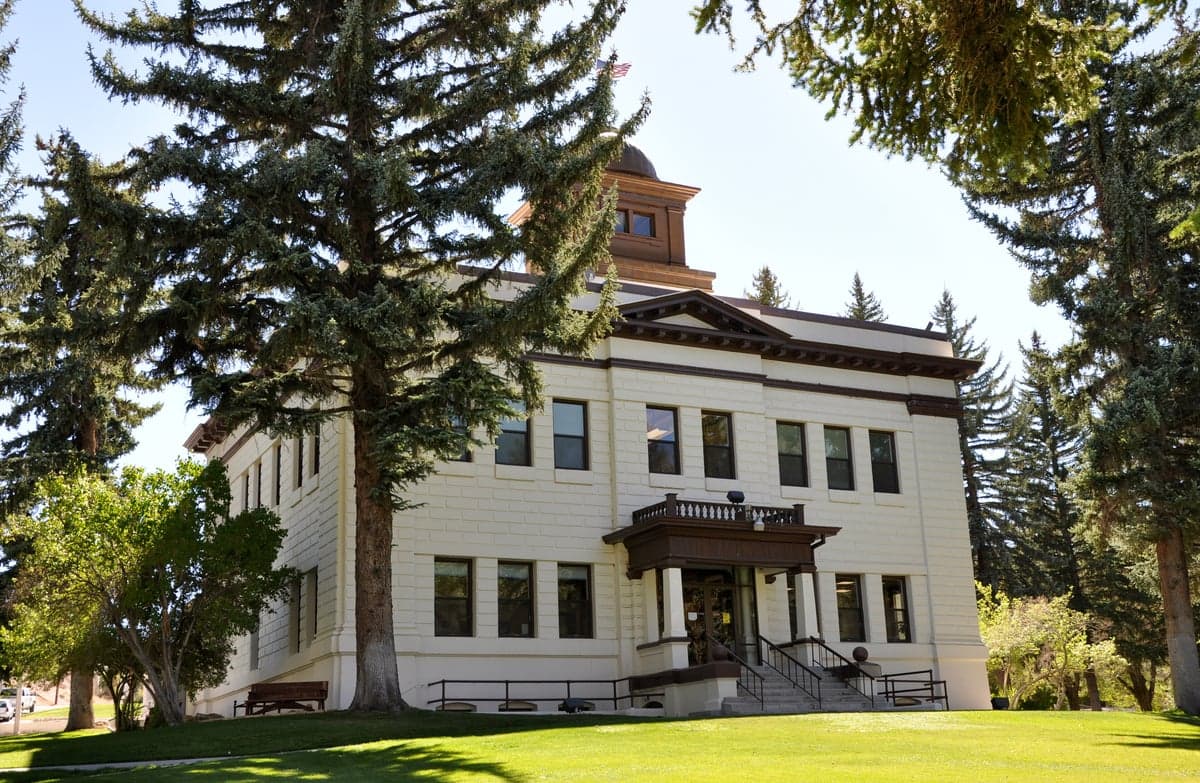
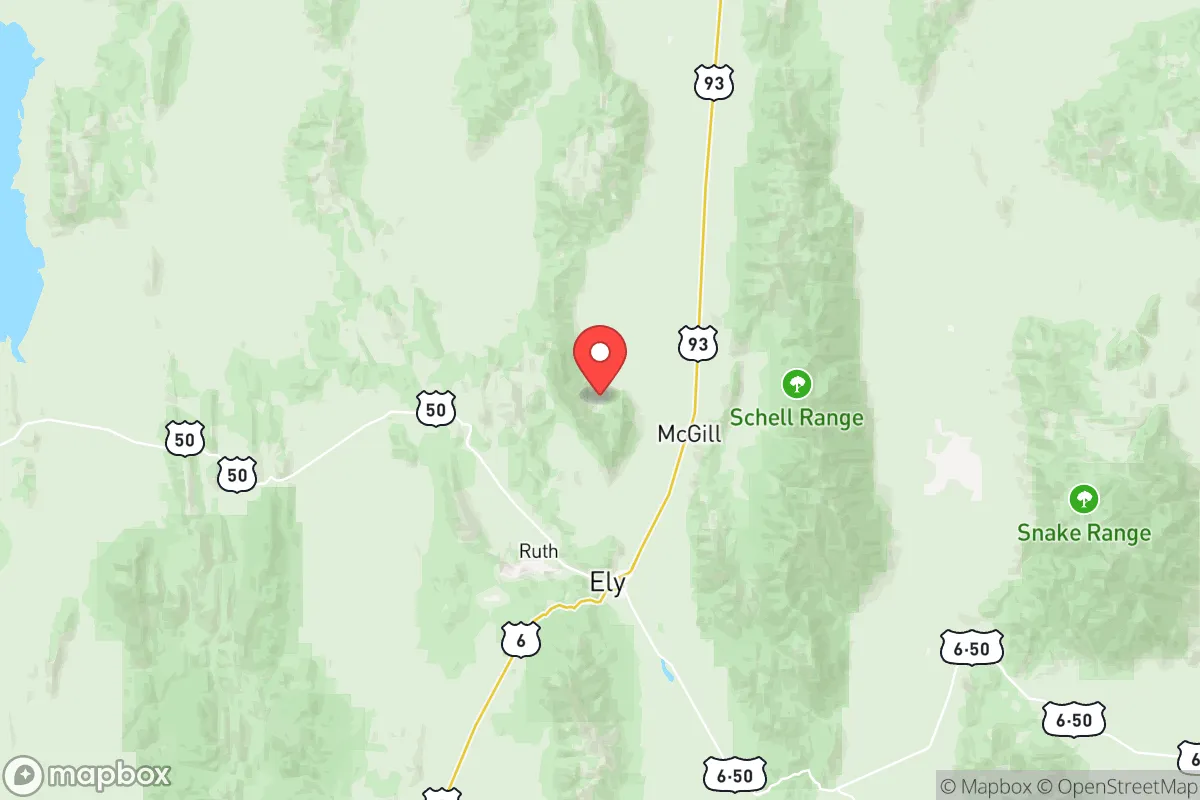
Photo: Wikipedia
Political ClimatePolitical Climate in White Pine County
Showing district-level results — no local-only data available.
Local Political AnalysisPolitical Analysis of White Pine County
White Pine County is about as solidly Republican as they come in Nevada, and it's been that way for as long as anyone can remember. The Cook PVI of R+7 tells the story—this is a place where conservative values aren't just a preference, they're the baseline. But here's the thing: that R+7 number actually understates how deep the red runs in the rural parts, because the county's political center of gravity is shifting in a way that's worth paying attention to. The county seat, Ely, is the biggest town and it's reliably red, but it's not monolithic—you'll find a few precincts near the old Kennecott mine that lean a little more purple, mostly tied to union households. Meanwhile, towns like McGill and Ruth are even more conservative, with a strong ranching and mining heritage that votes straight-ticket Republican without a second thought. The real swing precincts are actually in the smaller unincorporated areas like Cherry Creek and Baker, where you'll see a handful of independent voters who might split their ticket on local races, but they still vote red for president and Senate.
How it compares
Compared to the rest of Nevada, White Pine County is a different planet politically. The state as a whole has a Cook PVI of R+1, which sounds close to neutral, but that's only because Clark County (Las Vegas) and Washoe County (Reno) are so heavily Democratic that they pull the whole state left. In White Pine, you don't have that urban liberal influence at all. The state legislature has been trending more progressive in recent years, especially with the 2023 session passing things like red flag laws and expanded voting access that many locals here see as government overreach into personal freedoms. The contrast is stark: while the state government in Carson City is pushing a progressive agenda on everything from gun rights to energy regulations, White Pine County's commissioners are fighting to keep the federal government out of local land use decisions and pushing back against BLM overreach on grazing and mining permits. It's a classic rural-versus-urban divide, and it's only getting wider.
What this means for residents
For folks living here, the political climate means you can still live your life without a lot of bureaucratic nonsense. The county government is small and hands-off—they're not trying to tell you what to do with your property or how to raise your kids. But the concern is real that the state government in Carson City is going to keep chipping away at local control. The 2024 election saw a push to tighten ballot initiative rules, which was a win for conservatives, but the long-term trend is worrying. If you're thinking about moving here, you should know that the local culture is deeply self-reliant—people don't look to the government for solutions, they look to their neighbors and their church. That's a big part of why the county has stayed red even as Nevada has become a swing state.
The cultural distinction that really sets White Pine apart is the attitude toward federal land management. The county is over 90% federally owned, and that's a constant source of tension. Locals see the BLM and Forest Service as distant bureaucrats who don't understand what it takes to make a living off the land. There's a strong "sagebrush rebellion" spirit here—people remember the 1970s and 80s when the county was at the forefront of fighting for state control of federal lands. That fight is still alive today, especially with the push for renewable energy projects on public land that many see as a threat to traditional ranching and mining. It's not just politics; it's a way of life that values freedom over regulation, and that's not changing anytime soon.

State Political ClimatePolitical Climate in Nevada
State Political AnalysisPolitical Environment in the State
Nevada is a true battleground state with a Cook PVI of R+1, meaning it leans just slightly Republican but remains deeply competitive. Over the past 10-20 years, the state has shifted from a reliably blue stronghold—thanks to powerful union and casino interests in Las Vegas—to a purple state where rural and exurban growth is slowly counterbalancing Clark County’s Democratic machine. The 2024 presidential race saw Trump win the state by a razor-thin margin, a sign that the old coalition of casino workers, public-sector unions, and Hispanic voters is fracturing, while conservative transplants from California and the Mountain West are reshaping the political map.
Urban vs. rural divide
The political geography of Nevada is stark. Clark County (Las Vegas) is the Democratic engine, delivering about 70% of the state’s vote and reliably blue margins of 10-15 points in presidential years. But even within Clark, there are cracks: the suburban master-planned communities of Henderson and Summerlin have trended rightward as families flee California’s policies, and North Las Vegas remains a working-class swing area where union loyalty is eroding. Washoe County (Reno) is the true bellwether—it voted for Biden in 2020 but flipped back to Trump in 2024, driven by a surge of conservative-leaning tech workers and retirees moving into Sparks and the Truckee Meadows. The rural counties—Elko, Douglas, Lyon, and Nye—vote 70-80% Republican, powered by mining, ranching, and a fierce libertarian streak. The 2022 midterms saw Churchill County (Fallon) vote 78% for the GOP, while Esmeralda County, the least populated, gave Trump 85% in 2024. The divide isn’t just urban vs. rural—it’s between the Las Vegas Strip’s transient workforce and the rest of the state’s rooted communities.
Policy environment
Nevada’s policy environment is a mixed bag for conservatives. The good news: there’s no state income tax, a major draw for high-earners and business owners. Property taxes are capped at 3% annual growth, keeping housing costs predictable. The bad news: the state’s regulatory posture is heavily influenced by the gaming and hospitality industries, which means a permissive attitude toward vice but also a tolerance for big-government spending. Education policy is a sore spot—Nevada ranks near the bottom nationally in K-12 outcomes, and the powerful teachers’ union has blocked meaningful school choice expansion, though a modest Education Savings Account program for special-needs students passed in 2023. Healthcare is dominated by the state’s Medicaid expansion under Obamacare, which covers about 20% of residents, and there’s no certificate-of-need law, so healthcare markets are relatively open. Election laws are a flashpoint: Nevada automatically mails ballots to all active registered voters, a system conservatives criticize for lax verification. Voter ID is not required at the polls, though a signature verification process exists. The state also has same-day voter registration, which critics say invites fraud. On the plus side, Nevada is a “right-to-work” state, meaning no one can be forced to join a union as a condition of employment—a key win for individual freedom.
Trajectory & freedom
Nevada’s trajectory on personal freedom is a tug-of-war. On the positive side, the state has some of the strongest property rights in the West—no statewide zoning mandates, and counties like Nye and Lander fiercely defend rural landowners against federal overreach. Gun rights are solid: Nevada is a shall-issue state for concealed carry, with no permit required for open carry, and a 2023 law preempted local governments from enacting their own gun bans. However, a 2024 ballot initiative to require universal background checks on private sales passed narrowly, a worrying sign for Second Amendment advocates. On medical freedom, Nevada was an early adopter of broad telehealth access, but a 2023 law mandated COVID-19 vaccine reporting for healthcare workers, raising eyebrows. Parental rights took a hit in 2023 when the state passed a law allowing minors to consent to gender-affirming care without parental notification—a major red flag for conservative families. The state’s tax burden remains low, but a 2024 legislative push to raise the gaming tax to fund a new stadium in Las Vegas signals that the “no new taxes” culture is fraying. Overall, Nevada is still freer than California or Oregon, but the gap is narrowing as progressive activists gain influence in Carson City.
Civil unrest & political movements
Nevada has seen its share of political flashpoints. The 2020 election integrity controversy was intense here—the state’s universal mail-in ballot system led to lawsuits and a recount in Clark County, though no widespread fraud was proven. The “Stop the Steal” movement had a strong presence in Reno and Elko, with rallies outside the Washoe County courthouse. On the left, the 2020 George Floyd protests in Las Vegas turned violent, with looting on the Strip and a state of emergency declared. The “Battle Born” libertarian streak is alive in rural counties: Nye County passed a Second Amendment sanctuary resolution in 2021, and Lyon County has debated secession from the state over land-use disputes with the BLM. Immigration politics are heated—Nevada is a sanctuary state in practice, with Las Vegas police declining to cooperate with ICE, but rural sheriffs in Douglas and Churchill openly defy that policy. The 2024 legislative session saw a bill to ban “conversion therapy” for minors pass, which conservatives saw as an attack on religious freedom. The most visible movement is the influx of California transplants—they’re driving the state’s growth, but many bring progressive voting habits, creating a cultural clash in suburbs like Henderson and Summerlin.
Projection
Over the next 5-10 years, Nevada will likely remain a purple state, but the trend lines favor conservatives if current migration patterns hold. The state is growing by about 1.5% annually, with most newcomers from California, Arizona, and Texas. Many of these transplants are fleeing high taxes and crime, so they tend to vote Republican once they settle in—look at Henderson, which flipped from blue to purple in 2024. The rural counties are solidifying their GOP dominance, while Clark County’s Democratic edge is shrinking as union membership declines and the casino workforce becomes more diverse politically. The wild card is the growing Hispanic population, which is trending rightward—Nevada’s Hispanic voters went 45% for Trump in 2024, up from 35% in 2020. If that trend continues, the state could become R+5 or R+6 by 2032. However, the progressive agenda in Carson City—especially on education and parental rights—could accelerate the exodus of conservative families to Idaho or Texas. A new resident moving in now should expect a state that’s still competitive but leaning redder, with a low-tax, low-regulation core that’s under constant assault from Las Vegas-based progressive activists.
For a conservative moving to Nevada, the bottom line is this: you get no state income tax, strong property rights, and a gun-friendly culture, but you’ll need to stay politically engaged to protect those freedoms. The state’s urban centers are blue, but the suburbs and rural areas are your allies. If you’re looking for a place where your vote matters and your voice can shift the balance, Nevada is one of the few remaining swing states where a few thousand new conservative residents can make a real difference. Just be ready to fight for school choice, parental rights, and election integrity—because the other side isn’t giving up without a battle.
* Values derived from national, state, county, city and local statistics and may differ in a specific area. Last updated: 2026-05-12T11:01:32.000Z
Narrative content on this page is AI-generated and may contain mistakes. Verify any details that matter before acting on them.
ReloMaps may earn a commission from affiliate links at no extra cost to you.

