Photo: Wikipedia
Personal Sovereignty in New Hampshire
Viable for self-reliance. Generally workable, though some barriers may limit total independence.
What does Personal Sovereignty tell us?
Personal Sovereignty measures your capacity for self-reliance and independence with minimal government friction. Higher scores mean fewer barriers between you and the way you want to live... but it assumes you have the space you need and good neighbors.
What does this tell us?
Personal Sovereignty measures your capacity for self-reliance and independence with minimal government friction. Higher scores mean fewer barriers between you and the way you want to live... but it assumes you have the space you need and good neighbors.
State Policy
Energy independence: Importer (10% of energy produced in-state)
Personal Liberty
Homesteading

Personal Liberty Analysis
New Hampshire stands as one of the last strongholds of personal sovereignty in the Northeast, offering a legal and cultural environment where individual autonomy is treated as the default rather than the exception. For those who view government overreach as the primary threat to liberty, the Granite State provides a rare combination of no state income tax, minimal business regulations, and a deeply ingrained "Live Free or Die" ethos that permeates everything from property rights to pandemic-era policy. While no state is a perfect libertarian utopia, New Hampshire consistently ranks among the top three states for personal freedom according to the Cato Institute's Freedom in the 50 States index, making it a serious consideration for anyone prioritizing self-determination over convenience.
Tax burden and regulatory posture: How New Hampshire compares to neighboring states
New Hampshire's tax structure is deliberately designed to minimize state interference in personal finances. There is no state income tax on wages or salaries, no state sales tax, and no capital gains tax on most investments. The only significant state-level tax is a 5% tax on interest and dividend income above $2,400 for single filers, though this is scheduled for phase-out by 2027. Property taxes are the trade-off—they run higher than the national average, particularly in Nashua and Manchester, where mill rates can exceed $25 per $1,000 of assessed value. However, in more rural towns like Colebrook or Pittsburg, property taxes drop significantly, often below $15 per $1,000. The regulatory posture is equally lean: New Hampshire has no general business tax on sole proprietorships, no inventory tax, and a right-to-work law that prevents forced union membership. For a conservative audience wary of state overreach, the key takeaway is that New Hampshire's government operates on a "you keep what you earn" model, with the highest burden falling on property rather than income or consumption.
Self-defense and gun law specifics: Constitutional carry and castle doctrine in practice
New Hampshire is one of the most firearm-friendly states in the country, and this is non-negotiable for anyone serious about personal sovereignty. The state has constitutional carry without a permit for both open and concealed carry, meaning any adult legally allowed to possess a firearm can carry it without government permission. There is no state-level background check system beyond the federal NICS check, no waiting periods, no magazine capacity restrictions, and no firearm registration. The castle doctrine is codified in state law, with no duty to retreat in any place where a person is lawfully present. Stand-your-ground protections extend to vehicles and workplaces. For preppers, the practical reality is that Berlin and Lancaster in the North Country have a gun culture so embedded that local gun shops often double as community gathering spots, while even in more liberal-leaning Portsmouth and Durham, firearm ownership remains common and legally protected. The only notable restriction is that New Hampshire does not recognize out-of-state concealed carry permits for non-residents, but for residents, the legal environment is as permissive as any state outside of Alaska or Vermont.
Self-reliance and homesteading viability: Lot sizes, zoning, and off-grid feasibility
For those seeking to reduce dependence on centralized systems, New Hampshire's rural counties offer some of the best homesteading conditions in the Northeast. Minimum lot sizes vary dramatically by town: in Coos County (the northernmost region), many towns have no minimum lot size for agricultural use, allowing parcels as small as one acre for a homestead. In contrast, Rockingham County towns like Derry and Londonderry often require two to five acres minimum for new construction, reflecting their suburban character. Off-grid living is legally feasible across most of the state, with no state-level prohibition on solar panels, rainwater collection, or composting toilets. However, local zoning can be a trap: Hanover and Lebanon have strict building codes and environmental regulations that make off-grid setups difficult, while Stewartstown and Errol have virtually no zoning enforcement. The state's building code applies only to new construction and major renovations, so existing off-grid cabins are grandfathered. For preppers, the key advantage is that New Hampshire has no state-level property tax on solar panels, and net metering laws allow selling excess power back to the grid at retail rates. The biggest challenge is the short growing season—Zone 4b to 5a—which limits crops to cold-hardy varieties like potatoes, kale, and root vegetables.
Personal liberties: Parental rights, medical autonomy, speech, and property
New Hampshire's approach to personal liberties is consistently skeptical of federal overreach. Parental rights are explicitly protected under state law, with a 2022 law (HB 1431) affirming that parents have the fundamental right to direct their children's education, healthcare, and religious upbringing. The state has no vaccine mandate for school attendance—only the standard CDC-recommended childhood vaccines are required, with a broad religious exemption that is rarely challenged. Medical autonomy is similarly strong: New Hampshire was one of the first states to pass a law prohibiting COVID-19 vaccine mandates for employment (HB 1270 in 2023), and it has no state-level mask or lockdown authority that can be imposed without legislative approval. Free speech protections are robust, with no hate speech laws that criminalize political expression, and property rights are reinforced by a 2021 law (HB 200) that requires compensation for any regulatory taking that reduces property value by more than 20%. For conservatives concerned about federal overreach, the state's 10th Amendment Resolution (passed in 2010) formally asserts state sovereignty over any federal action that exceeds enumerated powers. The practical effect is that Concord and Keene have become hubs for homeschooling cooperatives and alternative medical practitioners, while Littleton and Bethlehem have seen an influx of families relocating specifically for the legal protections around parental choice.
In the broader landscape of American personal sovereignty, New Hampshire occupies a unique position: it offers the legal framework of a Western libertarian state (like Idaho or Montana) but with the infrastructure and proximity of the Northeast. The trade-offs are real—high property taxes, a cold climate, and a housing shortage in desirable areas—but for those who view government as a threat rather than a solution, the Granite State's combination of no income tax, constitutional carry, off-grid feasibility, and strong parental rights makes it arguably the most sovereign state east of the Mississippi. The key is choosing the right town: Pittsburg for maximum isolation and minimal regulation, Meredith for a balance of lake access and conservative governance, or Rochester for affordability and proximity to Seacoast jobs. Each offers the same baseline of state-level protections, but the local culture and zoning will determine how far you can actually push your personal autonomy.

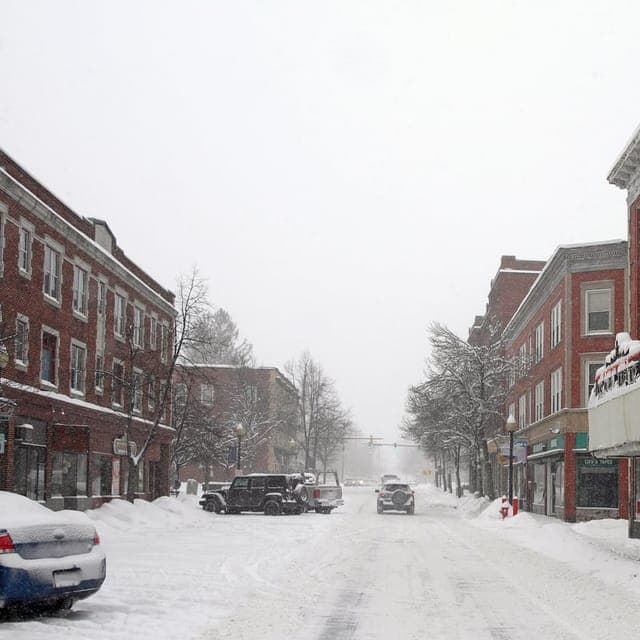
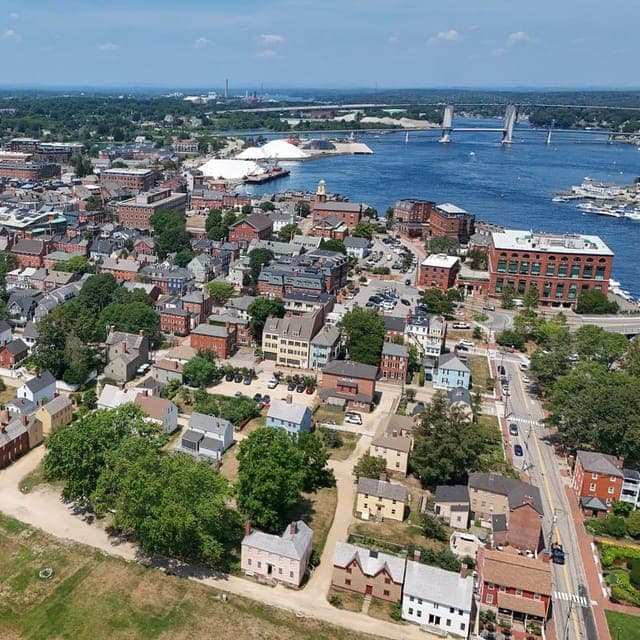
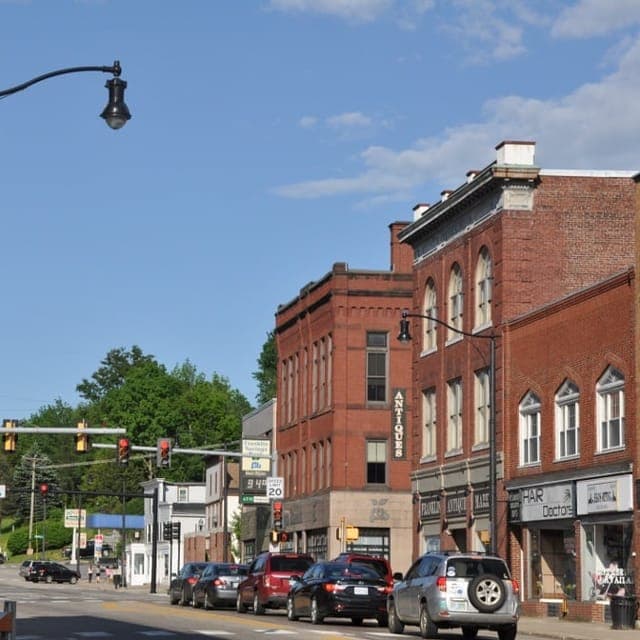
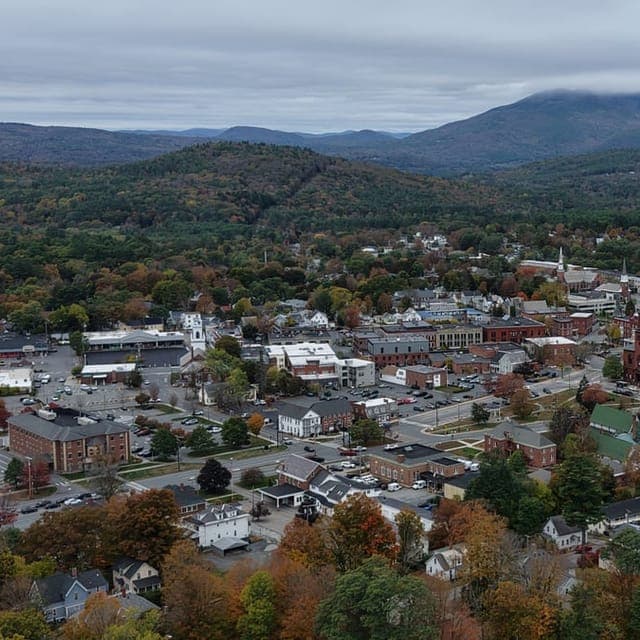
Top Cities for Personal Sovereignty in New Hampshire





* Values derived from national, state, county, city and local statistics and may differ in a specific area. Last updated: 2026-04-18T23:42:59.000Z
Narrative content on this page is AI-generated and may contain mistakes. Verify any details that matter before acting on them.
ReloMaps may earn a commission from affiliate links at no extra cost to you.

