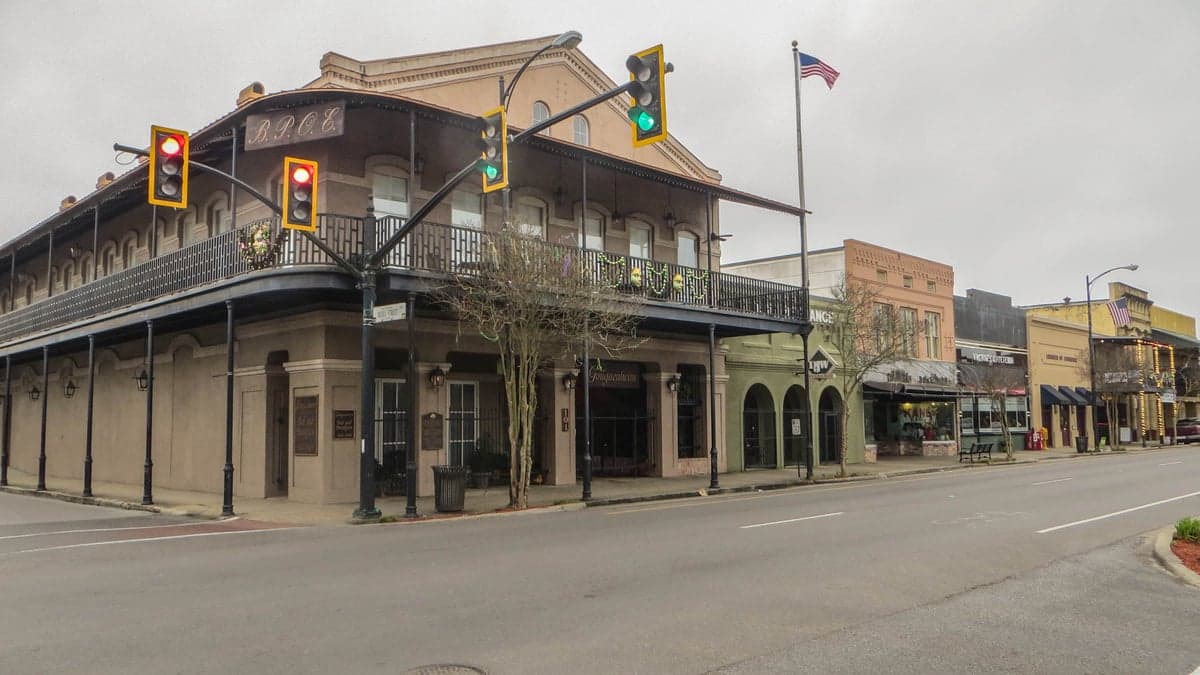
Photo: Wikipedia
Political ClimatePolitical Climate in New Iberia, LA
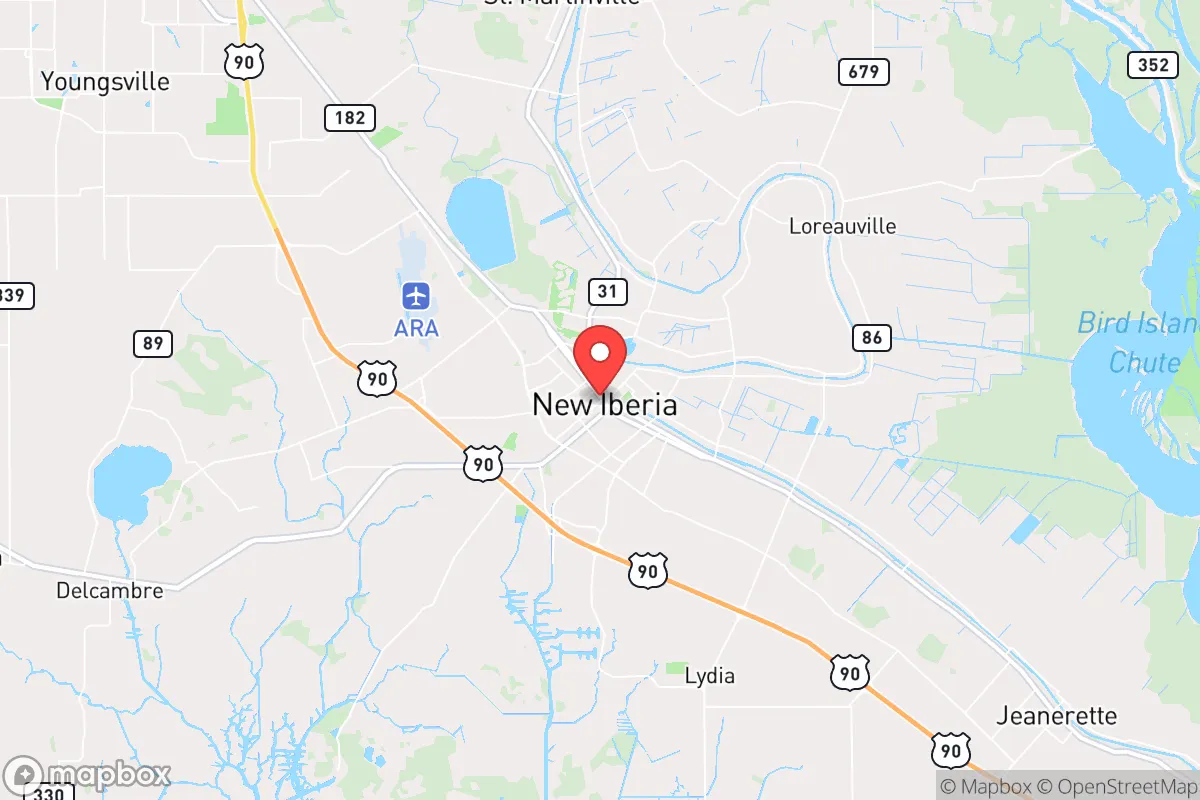
District shown is the primary district for this city’s centroid. Cities may span multiple districts.
Local Political AnalysisPolitical Analysis of New Iberia, LA
New Iberia and the surrounding Iberia Parish have long been a solidly conservative stronghold, and that hasn't changed much. The area carries a Cook PVI of R+22, meaning it votes about 22 points more Republican than the national average. That's a deep red number, and it reflects a community that values tradition, local control, and a government that stays out of your business. You won't find much appetite for progressive experiments here—folks remember when things worked differently, and they're not eager to trade that for promises from outsiders.
How it compares
If you drive east toward Lafayette, you'll notice a shift. Lafayette is more of a purple-to-blue dot, with a younger, more transient population tied to the university and oil-and-gas corporate offices. New Iberia, by contrast, feels like the old guard—slower to change, more skeptical of new regulations, and deeply rooted in family and faith. Head south to the coastal parishes like Terrebonne or Lafourche, and you'll find similar conservative values, but New Iberia has a slightly more established, small-city feel. The contrast is sharpest with Baton Rouge, about an hour north, where state government and LSU create a more liberal bubble. Here, you don't see the same push for zoning overhauls, bike lanes, or diversity mandates. People just want to be left alone to run their businesses and raise their kids.
What this means for residents
For someone moving here, the political climate means lower taxes, fewer regulations, and a general sense that your personal freedoms aren't under constant assault. You won't find mask mandates lingering or aggressive gun control measures. The local sheriff's office is pro-Second Amendment, and the city council tends to side with property rights over government overreach. That said, there's a growing concern among long-time residents about creeping influence from state-level policies—things like unfunded mandates on schools or pressure to adopt "equity" frameworks in local government. The worry is that Baton Rouge or Washington might try to impose one-size-fits-all solutions on a community that knows what works for itself. So far, New Iberia has held the line, but it takes constant vigilance.
One cultural distinction worth noting: the Cajun and Creole heritage here isn't just for tourists. It's a living, working culture that prizes self-reliance, hospitality, and a healthy distrust of authority. That translates into a political vibe that's conservative but not always partisan—people vote for the person, not the party, and they'll hold a politician accountable if they forget where they came from. Shifts toward progressive ideology, especially on energy policy or land use, are met with serious skepticism because they threaten the local economy and way of life. The near-term outlook is stable, but the long-term worry is that outside money and media influence could slowly erode the community's character. For now, New Iberia remains a place where you can still have a conversation without shouting, and where the government knows its place—which is exactly how most folks here want it.

State Political ClimatePolitical Climate in Louisiana
State Political AnalysisPolitical Environment in the State
Louisiana has long been a reliably red state in federal elections, but its political climate is far more complex than a simple partisan label suggests. The state voted for Donald Trump by nearly 19 points in 2024, continuing a multi-cycle trend where Democrats have lost ground outside of New Orleans and Baton Rouge. Over the past 20 years, the state has shifted from a competitive purple state—where Democrats like John Bel Edwards could win the governorship—to a solidly Republican stronghold, driven by the realignment of white working-class voters and the exodus of moderate Democrats from the party.
Urban vs. rural divide
The political map of Louisiana is a stark study in contrasts. The state’s two major urban centers—New Orleans and Baton Rouge—anchor the Democratic vote. Orleans Parish consistently delivers 75-80% of its vote to Democratic candidates, while East Baton Rouge Parish, though more moderate, still leans blue thanks to the state capital’s government workforce and Louisiana State University. In contrast, the rest of the state is overwhelmingly Republican. The Acadiana region, centered on Lafayette, is a conservative stronghold, as is the Florida Parishes north of Lake Pontchartrain, including Livingston Parish, which is one of the most reliably GOP counties in the nation. The rural northern half of the state, from Shreveport to Monroe, is deeply red, though Shreveport itself remains a blue island due to its sizable African American population. The suburban ring around New Orleans, particularly St. Tammany Parish (home to Covington and Mandeville), has become a GOP bastion, with many families fleeing Orleans Parish for lower taxes and better schools. The divide isn’t just partisan—it’s cultural. Rural and suburban Louisiana values self-reliance, gun rights, and traditional family structures, while the urban cores push progressive policies on crime, taxes, and social issues.
Policy environment
Louisiana’s policy environment is a mixed bag for conservatives. On the plus side, the state has no personal property tax, and its homestead exemption is generous—up to $75,000 of a home’s value is exempt from parish property taxes. The corporate tax rate was cut from 8% to 7.5% in 2021, and the state has a right-to-work law, keeping unions weak. However, the state’s sales tax is among the highest in the nation, averaging over 9.5% when local taxes are included, which hits low-income families hardest. Education policy is a bright spot: Louisiana has a robust school choice program, including the Louisiana Scholarship Program and a thriving charter school sector, especially in New Orleans, which has one of the highest rates of charter school enrollment in the country. On healthcare, the state expanded Medicaid under the Affordable Care Act in 2016, a decision that remains controversial among conservatives who see it as federal overreach. Election laws are solid: Louisiana requires voter ID, has no same-day registration, and conducts closed primaries, which help maintain party discipline. The state also passed a constitutional amendment in 2023 to ban the use of public funds for abortion, reflecting its pro-life stance.
Trajectory & freedom
Louisiana has been on a trajectory of expanding personal freedom in several key areas, though the picture is uneven. On gun rights, the state is a standout: in 2021, Louisiana became a constitutional carry state, allowing law-abiding citizens to carry a concealed firearm without a permit. This was a major victory for Second Amendment advocates. On parental rights, the state passed the "Parents' Bill of Rights" in 2023, requiring schools to notify parents of any changes to a student’s health or well-being, including gender identity issues—a direct counter to progressive school policies seen in blue states. On medical autonomy, Louisiana banned nearly all abortions in 2022 after the Dobbs decision, with no exceptions for rape or incest, which aligns with the state’s conservative values. However, the state’s tax burden remains a concern: while there’s no income tax on Social Security benefits, the state’s high sales tax and relatively high income tax rates (up to 4.25%) still feel like government overreach to many residents. Property rights are generally strong, with no statewide zoning in many rural areas, but coastal erosion and floodplain regulations in places like Houma and Lafayette can complicate building. The state also passed a law in 2024 to ban COVID-19 vaccine mandates by private employers, a clear signal that personal medical choice is valued.
Civil unrest & political movements
Louisiana has seen its share of political flashpoints, but they tend to be localized rather than statewide. The most visible recent unrest was in 2020, when New Orleans and Baton Rouge saw protests and some rioting after the death of George Floyd, with statues of Confederate figures being toppled. This sparked a backlash in suburban and rural areas, fueling a "law and order" sentiment that helped Republicans sweep local elections. Immigration politics are less heated here than in border states, but there is growing concern in places like Lake Charles and Alexandria about the influx of migrants from Central America, with some local officials calling for stricter enforcement. Election integrity has been a hot topic: after the 2020 election, Louisiana’s Republican Secretary of State, Kyle Ardoin, pushed for stricter voter ID laws and purged inactive voters from the rolls, which was praised by conservatives but criticized by Democrats as voter suppression. There is also a small but vocal secessionist movement in the Acadiana region, where some Cajun activists advocate for a separate "Free State of Louisiana," though this remains fringe. Overall, the political climate is stable, but the cultural divide between urban and rural areas is palpable—a new resident in Baton Rouge will see a very different world than someone in Ruston.
Projection
Over the next 5-10 years, Louisiana is likely to become even more Republican, driven by two trends: the continued out-migration of liberal-leaning residents from New Orleans to other states, and the in-migration of conservatives from high-tax states like California and New York, who are drawn to Louisiana’s low housing costs and gun-friendly culture. The state’s population is projected to grow slowly, but the political center of gravity will shift further toward the suburbs and rural areas. The Democratic Party will become increasingly confined to New Orleans and Baton Rouge, with little hope of winning statewide office unless a moderate like John Bel Edwards emerges again—a rarity. On policy, expect further tax cuts, especially on income, as the state’s oil and gas revenues stabilize. The school choice movement will likely expand, with more voucher programs and charter schools. However, the state’s infrastructure—roads, levees, and coastal restoration—will remain a challenge, and the federal government’s role in funding these projects will be a point of tension for small-government conservatives. A new resident moving in now should expect a state that is culturally conservative, with a strong emphasis on personal freedom, but also one that grapples with poverty, crime in the cities, and a tax system that still feels burdensome.
For a conservative individual or family considering relocation, Louisiana offers a genuine sense of community, low housing costs, and a government that generally respects gun rights and parental authority. The trade-offs are real: high sales taxes, a struggling public school system in many areas (though school choice helps), and a humid climate that can be oppressive. If you value personal liberty and a slower pace of life, and you’re willing to navigate the quirks of local politics, Louisiana is a solid bet. Just know that the state’s freedom is hard-won and requires vigilance—the urban centers will always push back, and the fight over taxes and regulation is never truly over.
* Values derived from national, state, county, city and local statistics and may differ in a specific area. Last updated: 2026-05-01T06:07:30.000Z
Narrative content on this page is AI-generated and may contain mistakes. Verify any details that matter before acting on them.
ReloMaps may earn a commission from affiliate links at no extra cost to you.

