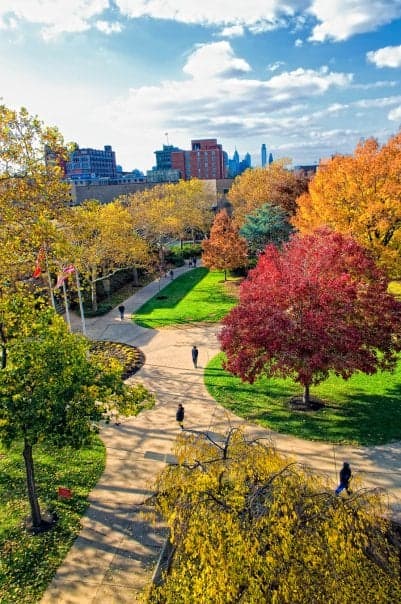
Photo: Wikipedia
Personal Sovereignty in Camden County
Viable for self-reliance. Generally workable, though some barriers may limit total independence.
What does Personal Sovereignty tell us?
Personal Sovereignty measures your capacity for self-reliance and independence with minimal government friction. Higher scores mean fewer barriers between you and the way you want to live... but it assumes you have the space you need and good neighbors.
What does this tell us?
Personal Sovereignty measures your capacity for self-reliance and independence with minimal government friction. Higher scores mean fewer barriers between you and the way you want to live... but it assumes you have the space you need and good neighbors.
State Policy
Energy independence: Importer (8% of energy produced in-state)
Personal Liberty
Homesteading

Personal Liberty Analysis
For individuals and families prioritizing personal sovereignty—the ability to live, defend, and provide for oneself free from government overreach—Camden County, New Jersey presents a complex and largely restrictive environment. As part of a state with some of the nation’s highest tax burdens, strictest gun laws, and most aggressive regulatory frameworks, the county offers limited autonomy compared to jurisdictions in the South or Midwest. However, the degree of personal freedom varies significantly between its urban core—places like Camden City and Pennsauken—and its more rural, less densely populated townships such as Waterford Works, Winslow Township, and Berlin Borough. Understanding these micro-differences is critical for anyone evaluating the area through a survivalist or prepper lens, where the ability to act without bureaucratic permission is paramount.
Tax burden and regulatory posture: how New Jersey’s policies constrain autonomy
New Jersey’s tax and regulatory climate is among the most hostile in the nation to personal sovereignty. Camden County residents face a combined state and local tax burden that consistently ranks in the top five nationally, driven by high property taxes—averaging over $8,000 annually on a median home—and a progressive income tax that tops out at 10.75%. This directly reduces the capital available for self-reliance investments like land, supplies, and training. The regulatory posture is equally intrusive: the state mandates strict building codes, environmental reviews for even minor land alterations, and a complex permitting process for home-based businesses. In towns like Haddonfield and Cherry Hill, zoning boards actively enforce suburban aesthetics, limiting the ability to erect outbuildings, store equipment, or operate a small farm. By contrast, Winslow Township and Waterford Works, with larger agricultural and rural-residential parcels, offer slightly more breathing room, though state-level regulations—such as the Highlands Water Protection and Planning Act—still constrain land use. For a prepper, the takeaway is clear: New Jersey’s tax and regulatory apparatus is designed to extract wealth and control development, leaving little room for independent action without constant government oversight.
Self-defense and gun law specifics: what the Second Amendment looks like in Camden County
For those who view the right to keep and bear arms as foundational to personal sovereignty, Camden County is a challenging jurisdiction. New Jersey’s gun laws are among the strictest in the country, requiring a Firearms Purchaser Identification Card for long guns, a separate permit for each handgun purchase, and a “justifiable need” standard for concealed carry that was only partially relaxed after the 2022 Bruen decision. Even after that ruling, the state imposes “sensitive places” restrictions so broad they effectively ban carry in most public spaces, including parks, libraries, and private property without explicit owner permission. In Camden City, where violent crime rates are high, the local police department has historically taken an aggressive stance against legal gun ownership, and the county prosecutor’s office is known for strict enforcement of magazine capacity limits (10 rounds) and the state’s “one-gun-a-month” rule. Towns like Berlin Borough and Gibbsboro, with more rural character and lower crime rates, see less friction, but the legal landscape is uniform: New Jersey treats firearm ownership as a privilege, not a right. For a survivalist, this means that self-defense planning must account for legal risk, and stockpiling ammunition or training with high-capacity firearms could invite prosecution. The state’s red-flag law, which allows for temporary seizure of firearms based on third-party reports, adds another layer of vulnerability for those who express politically incorrect views.
Self-reliance and homesteading viability: lot sizes, zoning, and off-grid feasibility
Homesteading and off-grid living in Camden County are severely constrained by zoning, lot size minimums, and state environmental regulations. The county is largely suburbanized, with most residential lots in towns like Voorhees and Gloucester Township ranging from a quarter-acre to half-acre—insufficient for meaningful food production or livestock. Even in the more rural townships, such as Winslow Township and Waterford Works, where lot sizes can reach one to five acres, zoning codes typically prohibit the keeping of pigs, goats, or more than a few chickens without a special permit. Off-grid systems—solar panels, rainwater collection, composting toilets—are heavily regulated: New Jersey requires grid-tied solar for net metering, bans rainwater harvesting for potable use without extensive treatment, and enforces strict septic and well standards that make independent water and waste systems expensive and legally risky. The state’s Department of Environmental Protection has broad authority to inspect and fine properties for perceived violations, and local health departments can shut down gardens or animal operations deemed unsanitary. For a prepper seeking true self-reliance, the only viable option within Camden County is to purchase a larger parcel in a township with agricultural zoning—such as the rural edges of Winslow or Waterford—and accept that full off-grid independence is legally impossible. The county’s proximity to Philadelphia and the Pine Barrens offers some wilderness access for foraging and hunting, but those activities are also tightly regulated by the state.
Personal liberties: parental rights, medical autonomy, speech, and property
Camden County’s environment for personal liberties reflects New Jersey’s progressive governance, which prioritizes state authority over individual and family decision-making. Parental rights are notably weak: the state mandates comprehensive sex education in public schools, allows minors to consent to certain medical treatments without parental knowledge, and has a child welfare system with broad powers to investigate and remove children based on subjective standards. In towns like Cherry Hill and Haddonfield, school boards have adopted policies that limit parental opt-out options for controversial curricula. Medical autonomy is similarly constrained—New Jersey has some of the strictest vaccine mandates in the country, with no philosophical exemption for schoolchildren, and the state’s health department can impose quarantine and treatment orders during public health emergencies. Free speech protections are nominally strong, but local governments in Camden County have shown willingness to enforce “disorderly conduct” and “harassment” statutes against individuals expressing unpopular political views, particularly at public meetings. Property rights are the most compromised: the state’s eminent domain authority is broad, and towns like Camden City have used it aggressively for redevelopment projects that displace long-term residents. For a conservative-leaning individual, the cumulative effect is a jurisdiction where the state routinely overrides personal judgment in favor of bureaucratic mandates, leaving little room for dissent or alternative lifestyles.
In the broader landscape of personal sovereignty, Camden County ranks poorly compared to regions like the rural South, the Mountain West, or even parts of upstate New York. The combination of high taxes, restrictive gun laws, limited homesteading feasibility, and weak parental rights creates an environment where self-reliance is actively discouraged and government oversight is pervasive. For those who can afford to relocate, areas like the Pine Barrens of Burlington County or the more rural reaches of Salem County offer marginally better conditions, but within Camden County itself, the best a sovereignty-minded individual can hope for is a quieter corner of Winslow Township or Waterford Works, where the density of regulation is slightly lower. Ultimately, this is not a jurisdiction for those who value autonomy over convenience—it is a place where personal freedom is negotiated with the state at every turn.

* Values derived from national, state, county, city and local statistics and may differ in a specific area. Last updated: 2026-05-28T06:42:49.000Z
Narrative content on this page is AI-generated and may contain mistakes. Verify any details that matter before acting on them.
ReloMaps may earn a commission from affiliate links at no extra cost to you.

