Photo: Wikipedia
Strategic Assessment of New Market, MD
Meaningful friction. Expect exposure to either population pressure, blast zones, or natural disaster risk. Consider buying a retreat property.
What does the Strategic Assessment tell us?
Our Strategic Assessment grades tactical survivability of an area. Major population centers, military targets, fallout zones, natural disasters, and border exposure all drive risk — lower exposure means a more defensible position in a crisis.
This is heavily inspired by Joel Skousen's Strategic Relocation book. Highly recommended you checkout the book ($)What does this tell us?
Our Strategic Assessment grades tactical survivability of an area. Major population centers, military targets, fallout zones, natural disasters, and border exposure all drive risk — lower exposure means a more defensible position in a crisis.
This is heavily inspired by Joel Skousen's Strategic Relocation book. Highly recommended you checkout the book ($)Strategic Pillars

Key Distances
Regional Safe Places
Below is our recommended "safe zones" in Maryland and the surrounding area based on our strategic heuristics. For most people, it's unrealistic to live in a “safe zone” full-time due to work, family or other personal reasons. They tend to be more rural. However, many of these areas are perfect for second homes and retreat properties that double as a vacation home or even a short-term rental.
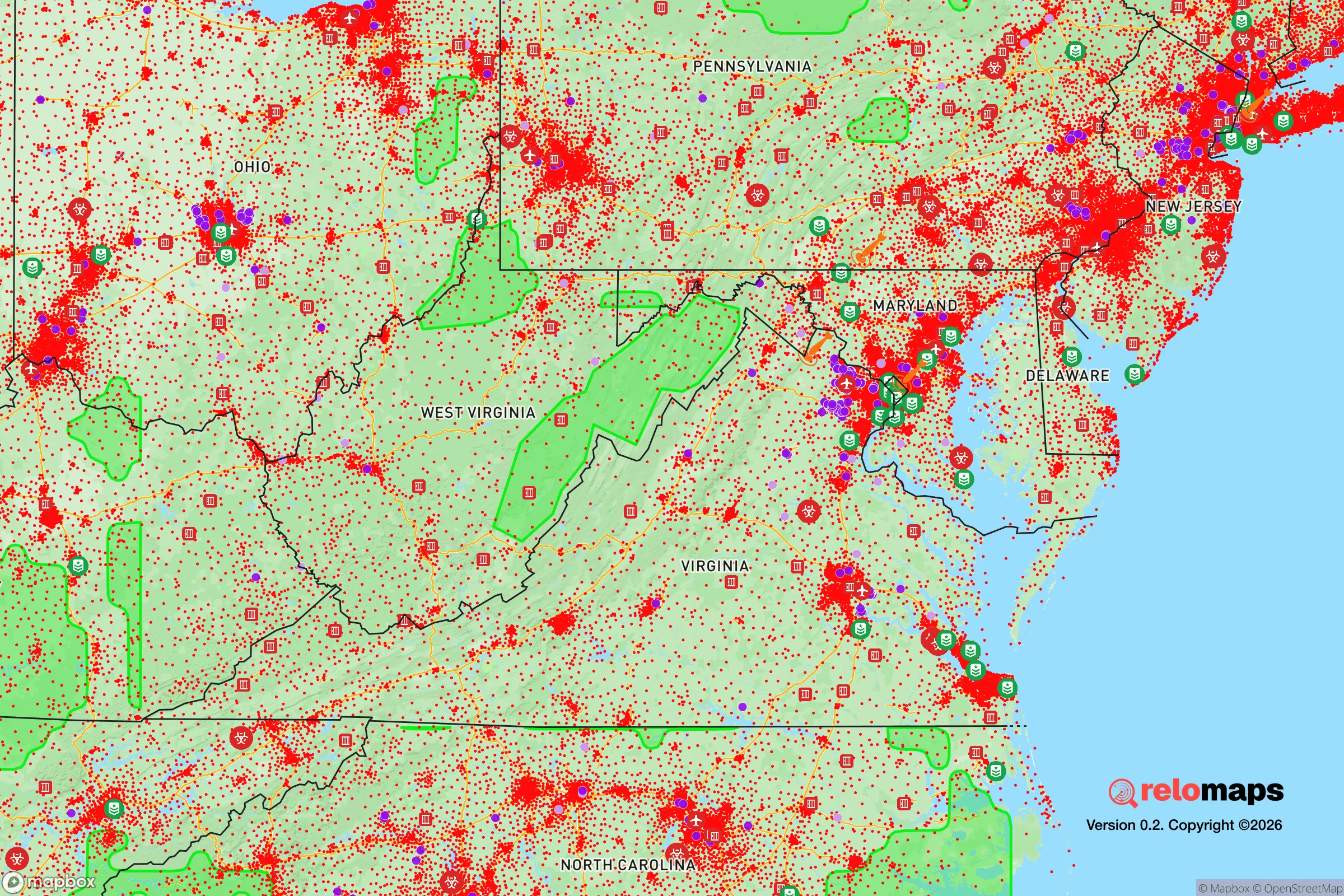
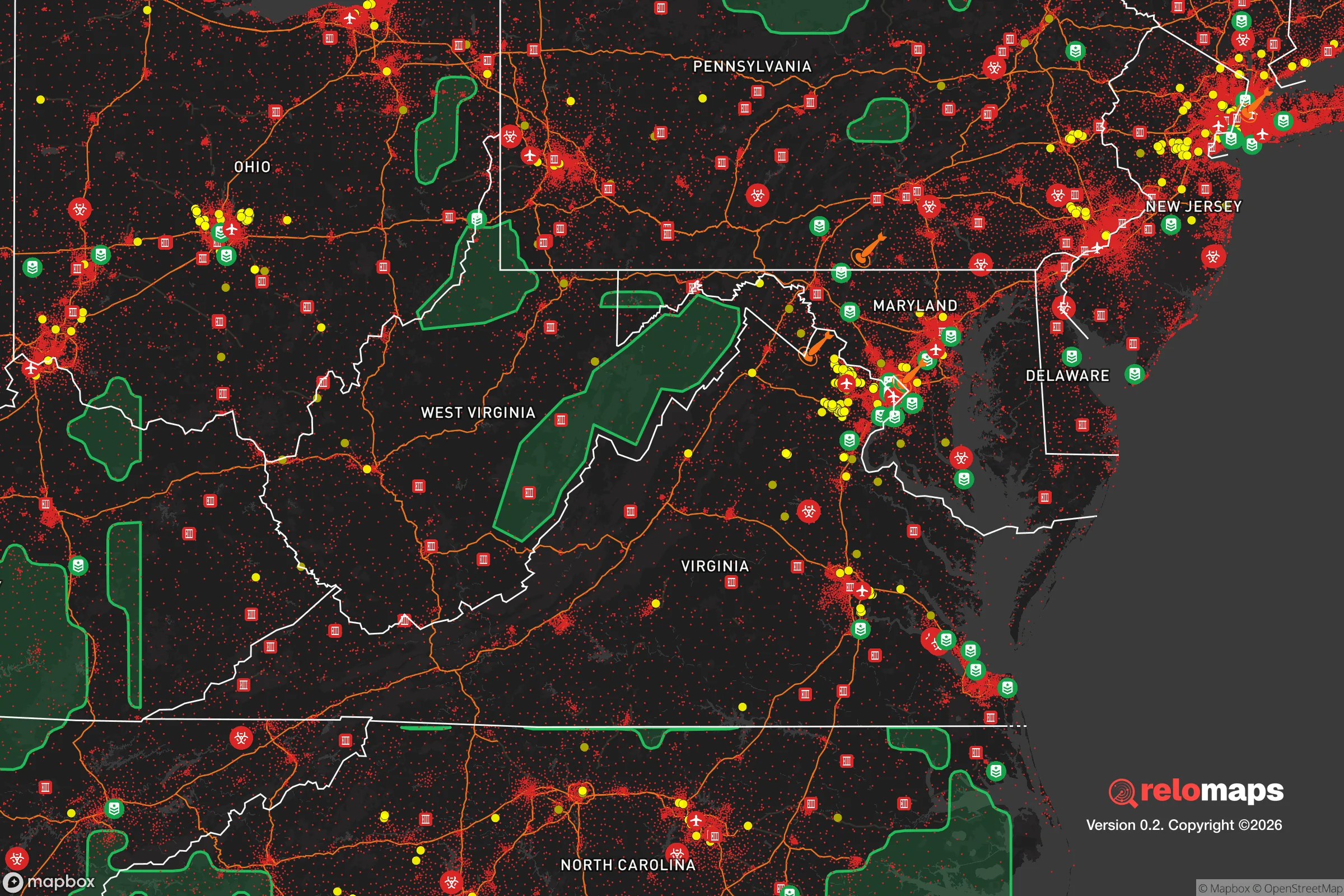


Important Note: For informational purposes only. This does not mean nothing bad ever happens in the green zones. Please use common sense. This is based on public data and modeled with AI. We tried to take a conservative approach but mistakes happen. We update this regularly as new information becomes available.
Solar Generator Recommendations
Backup power matters more here than in safer locations. We've picked three solar generators across budgets and capacity tiers — start with the budget unit if you only need a few essentials, or step up if you want to run a fridge and HVAC for days at a time.

Jackery Portable Power Station Explorer 300
Budget OptionPower on the Go: Weighing only 11 lbs, it's convenient to set up and store with book-sized foldable solar panels

BLUETTI Portable Power Station AC180
Designed for both indoor and outdoor scenarios, AC180 is highly capable as it has a robost capacity and continuous output power.

EF ECOFLOW DELTA Pro Ultra Power Station
Upgraded PickEcoFlow DELTA Pro Ultra is a whole-home energy system designed to grow with your family. Integrated with the Smart Home Panel 2, it scales to meet your evolving energy needs — keeping your home powered, intelligent, and secure through every stage of life.
We earn a commission, at no additional cost to you.
Strategic Assessment Analysis
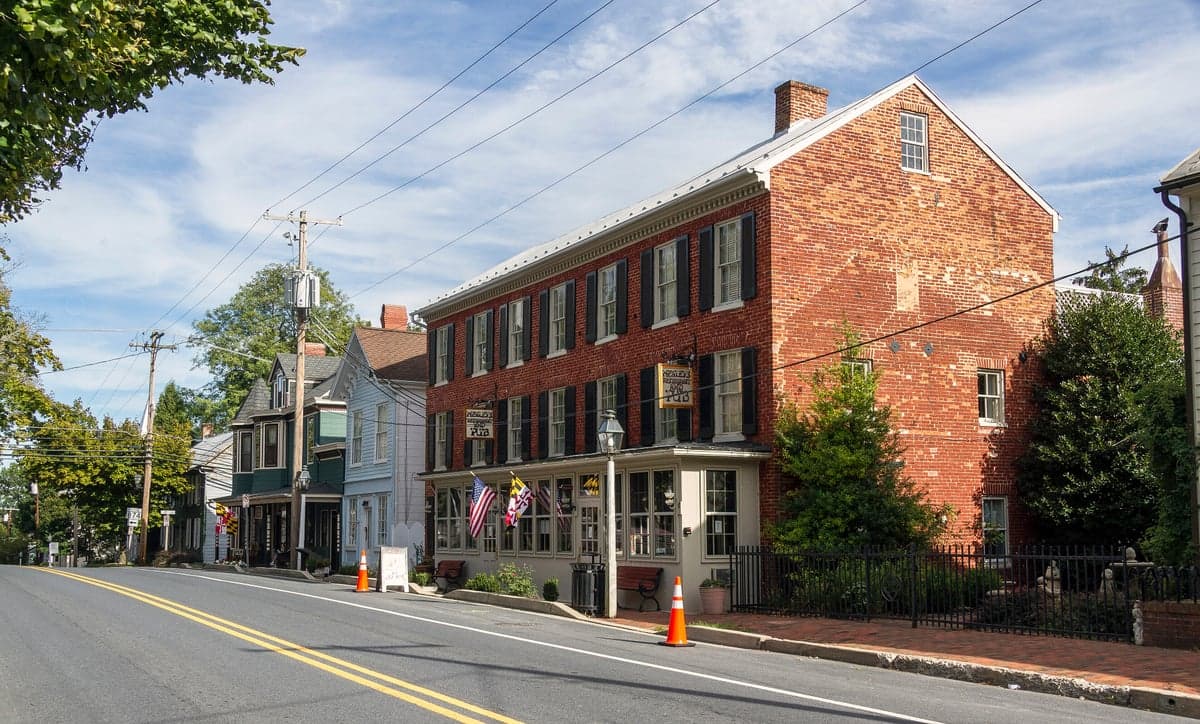
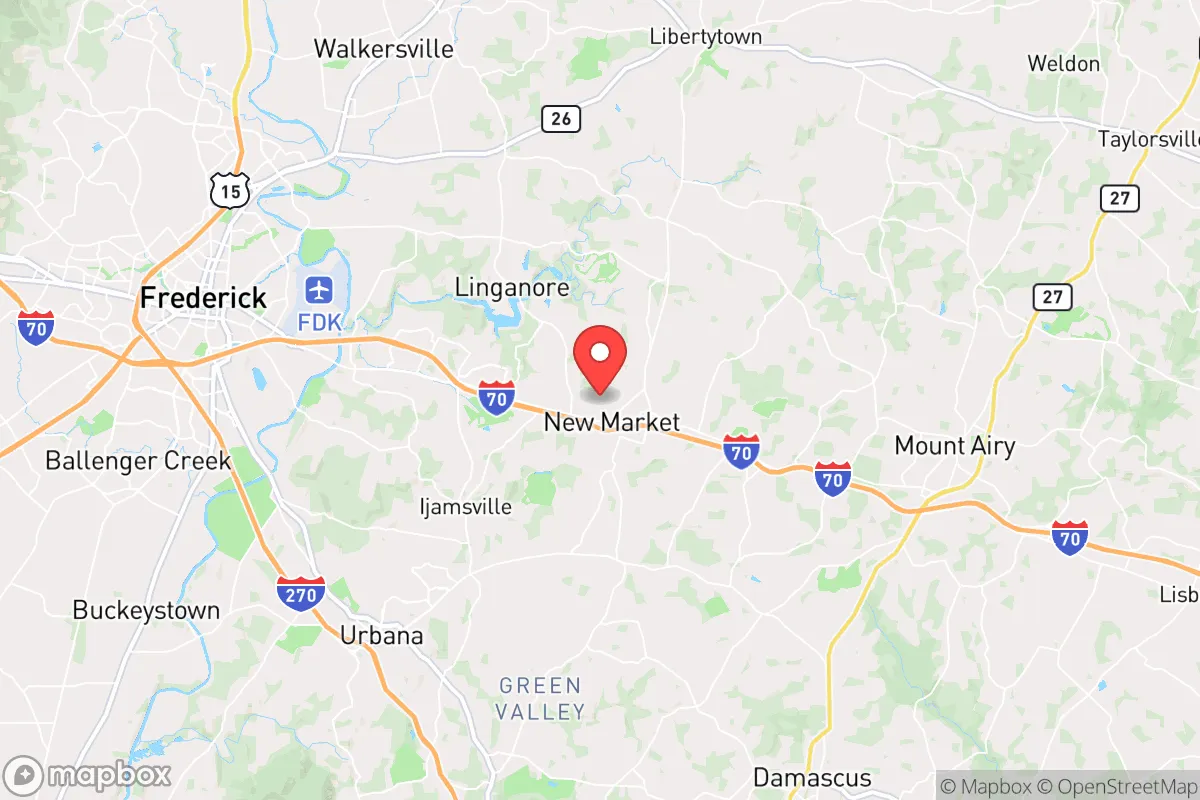
New Market, Maryland, offers a surprisingly strong strategic position for the relocator prioritizing resilience, self-sufficiency, and a buffer from the acute risks of major metropolitan centers. Its location in Frederick County, roughly 10 miles southeast of Frederick city and 50 miles northwest of Washington, D.C., places it within a "goldilocks zone" — close enough to access critical supplies and medical infrastructure, yet far enough from the dense urban core to avoid the worst of a cascading collapse scenario. The town's small population (roughly 700 residents within the historic district, with a broader census-designated area of about 500) and low-density rural character provide a foundation for community cohesion and resource management that larger suburbs simply cannot match.
Geographic position and natural advantages for long-term stability
New Market sits in the Piedmont region, a transitional zone between the coastal plain and the Appalachian Mountains. This geography offers several concrete advantages. The area is elevated above the flood-prone Potomac River basin, with the town's core at roughly 500 feet above sea level, reducing the risk of catastrophic flooding that plagues communities along the Potomac and Monocacy rivers. The underlying geology is a mix of limestone and shale, providing decent groundwater potential for well drilling — a critical factor for off-grid water security. The surrounding farmland, part of the productive Frederick County agricultural belt, means that local food production capacity is among the highest in the Mid-Atlantic. The county ranks in the top 10% of Maryland counties for agricultural output, with over 1,200 farms covering 170,000 acres. For a relocator, this translates to realistic access to fresh produce, livestock, and dairy within a 15-minute drive, even if supply chains falter. The rolling hills and wooded patches also offer natural cover and defensible terrain, with numerous small valleys and ridgelines that break up line-of-sight and create natural chokepoints.
Risks, exposures, and proximity to fallout-relevant landmarks
No location is without vulnerabilities, and New Market's proximity to the Washington-Baltimore corridor is the most significant. The town lies within 50 miles of the nation's capital, a high-value target for any adversary with long-range conventional or nuclear capabilities. In a major conflict scenario, fallout patterns from a strike on D.C. or the Pentagon would likely drift northeast or east with prevailing winds, placing New Market in a moderate-risk zone — not the immediate blast radius, but within the path of potential radioactive debris. The nearby Fort Detrick (Frederick, 10 miles north) is a U.S. Army biodefense and medical research installation, which could be a secondary target or a source of hazardous material release in a crisis. Additionally, the Interstate 70 and 270 corridors run within a few miles, funneling evacuees from the D.C. metro area directly past New Market. In a sudden evacuation event, these roads would become impassable, and the town could face a wave of refugees. The risk of civil unrest or resource competition from fleeing urban populations is real and should factor into any preparedness plan. Natural hazards are less severe: the area experiences occasional severe thunderstorms, tornadoes (EF-2 or lower historically), and winter ice storms, but is not in a hurricane or earthquake hot zone. The biggest natural risk is flash flooding from intense summer storms in low-lying areas near the Monocacy River tributaries, though the town's core is elevated enough to avoid this.
Practical resilience for a relocator: food, water, energy, and defensibility
For the individual or family serious about self-sufficiency, New Market offers a mix of existing infrastructure and DIY potential. Water security is the strongest asset: the area's groundwater is generally reliable and of good quality, with well depths typically between 100 and 300 feet. A properly maintained well with a hand pump or solar-powered backup can provide indefinite off-grid water. The town's municipal water system serves the historic district, but most surrounding properties are on private wells. Rainwater catchment is also viable, with an average annual rainfall of 42 inches. Food production is realistic: the surrounding agricultural land means that even a small homestead can tap into local farmers' markets, CSAs, and direct-from-farm purchasing. The county's right-to-farm laws protect agricultural operations, so raising chickens, goats, or a large garden is legally straightforward. For energy, the area has decent solar exposure (4.5 peak sun hours per day on average), and net metering is available through the local utility, Potomac Edison. Many rural properties already have propane tanks for heating and cooking, and wood-burning stoves are common. The defensibility of the area is moderate: the historic town center is compact and walkable, with narrow streets and brick buildings that could be secured with minimal effort. However, the surrounding subdivisions and farmsteads are more spread out, requiring a vehicle for communication and resupply. The local community is tight-knit, with a strong volunteer fire department and an active civic association — social capital that is often the most critical resilience factor. The nearest hospital is Frederick Memorial Hospital (10 miles), which is a Level III trauma center, adequate for most emergencies but not for major trauma. For serious medical needs, transport to Baltimore or D.C. would be necessary, which is a vulnerability in a grid-down scenario.
The overall strategic picture for New Market is one of calculated trade-offs. It offers a rare combination of rural self-sufficiency potential and proximity to urban resources, but that proximity is also its greatest liability. For a relocator who is willing to invest in well water, solar power, and food storage, and who has a plan for managing the risk of urban evacuees, New Market provides a defensible, resource-rich base. The key is to avoid complacency: the town's charm and quiet streets can mask the reality that it sits on the edge of a major metropolitan area. Those who treat it as a true preparedness hub — building community ties, stockpiling supplies, and developing off-grid skills — will find it one of the better options in the Mid-Atlantic. Those who move here expecting a safe haven without effort will be disappointed. In short, New Market is a strong candidate for the strategic relocator who understands that resilience is not a location, but a mindset backed by concrete action.

* Values derived from national, state, county, city and local statistics and may differ in a specific area. Last updated: 2026-08-26T18:52:14.000Z
Narrative content on this page is AI-generated and may contain mistakes. Verify any details that matter before acting on them.
ReloMaps may earn a commission from affiliate links at no extra cost to you.

