Photo: Wikipedia
Demographics of Lincoln County
Affluence Level in Lincoln County
A middle-class area roughly in line with national averages across income, home values, education, and employment.
People of Lincoln County
Lincoln County's 20,227 residents are overwhelmingly a blend of old Hispanic families descended from Spanish land-grant settlers and Anglo ranchers whose roots reach back to the 19th century, reinforced by a steady trickle of domestic migrants drawn to Ruidoso's mountain recreation. The population is 60.6% White and 32.6% Hispanic, with a foreign-born share of just 3.0%—one of the lowest in New Mexico. The county retains a distinctly rural, conservative character shaped by its frontier history, and its largest communities, Ruidoso and Ruidoso Downs, serve as commercial and tourism hubs for an otherwise sparsely settled landscape.
Settlement & growth (pre-1960)
Long before European contact, the Sierra Blanca range and the valleys of the Rio Bonito and Rio Ruidoso were home to the Mescalero Apache, who moved seasonally between the mountains and the Tularosa Basin. Spanish exploration reached the area by the late 1500s, but permanent settlement did not begin until the 1800s when Mexico granted land near modern-day San Patricio and Hondo to Hispanic families. These early villages along the Rio Hondo and Rio Ruidoso were isolated farming and sheep-raising communities, and their descendants still form the backbone of the county's Hispanic population today.
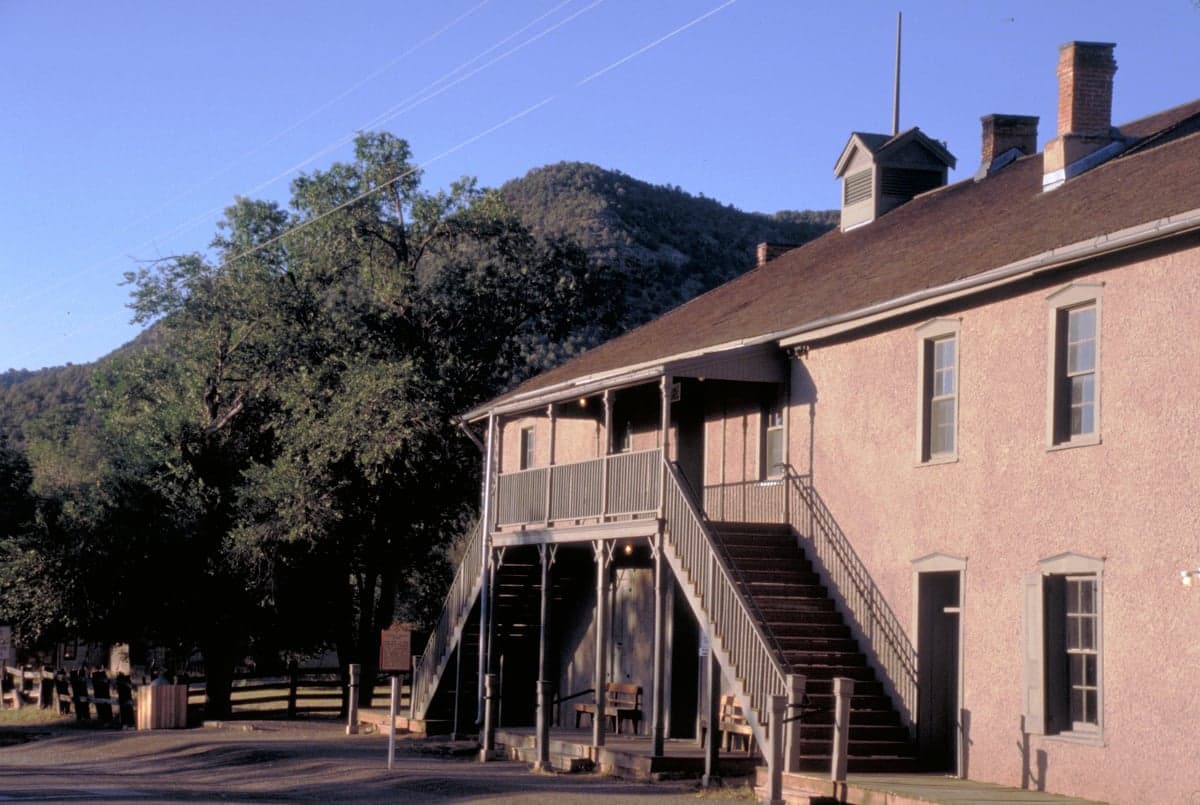
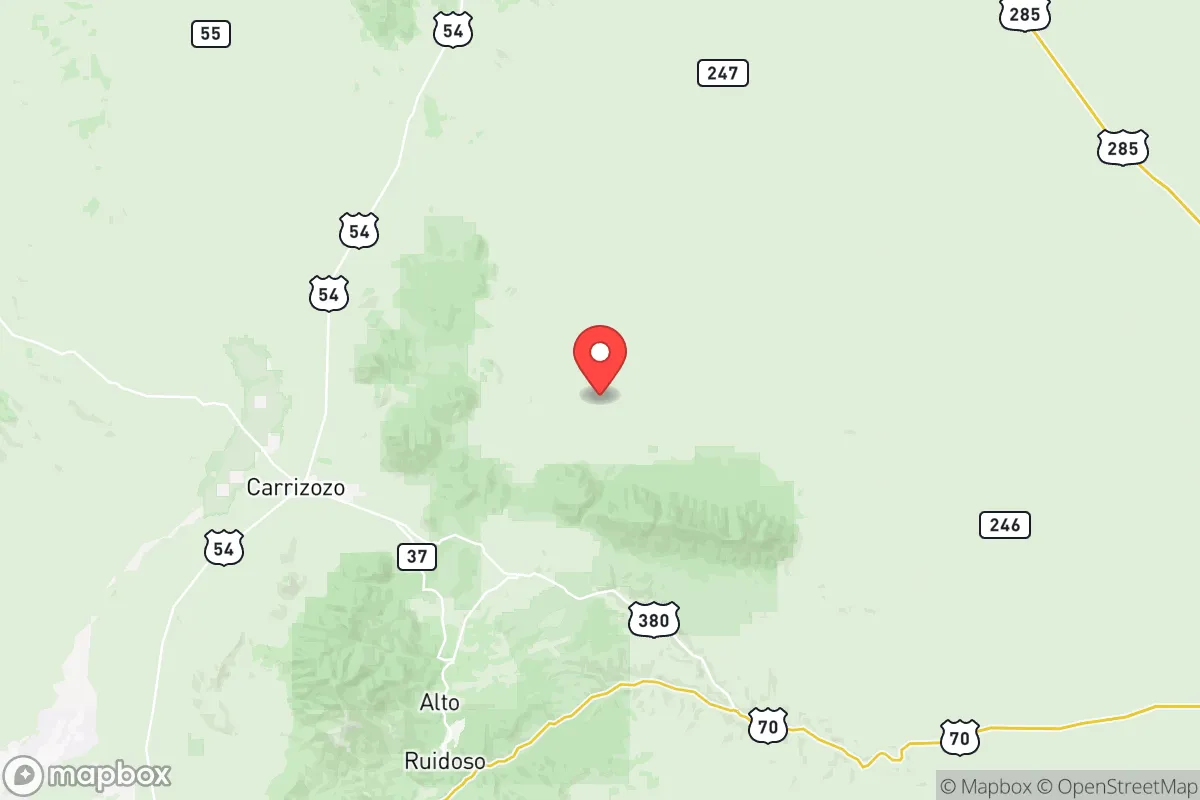
After the Mexican-American War (1846-1848) and New Mexico's annexation, Anglo ranchers and miners entered the region in force. The 1870s discovery of gold in Nogal and White Oaks drew prospectors, while cattle barons like John Chisum established vast ranches on the open range. This collision of interests—land, livestock, and law—erupted in the Lincoln County War (1878-1881), centered on the tiny town of Lincoln. The war cemented the county's Wild West reputation and brought national attention, but the boom faded by the 1890s as mining played out and the range was fenced. Railroads reached Carrizozo in 1899, which became the county seat in 1909, and the economy settled into a mix of ranching, farming along the rivers, and logging in the surrounding mountains.
The 20th century brought stability rather than surges. The establishment of Lincoln National Forest (1902) and the federal grazing program stabilized ranching, while the Civilian Conservation Corps built trails and infrastructure in the 1930s. The town of Capitan gained fame after 1950 as the home of Smokey Bear, rescued from a wildfire. Postwar prosperity spurred the growth of Ruidoso from a tiny mountain hamlet into a modest resort town after Ruidoso Downs Racetrack opened in 1947. By 1960, the county's population stood at roughly 6,000, still overwhelmingly Anglo and Hispanic, with a small scattering of Apache families on the adjacent Mescalero Reservation.
Modern era (post-1965)
The 1965 Hart-Cellar Act had negligible impact on Lincoln County. The foreign-born population has never risen above 3.5%, and the Hispanic share—32.6% in the most recent data—is almost entirely native-born, reflecting generations-deep roots rather than recent immigration. Instead, the modern demographic story is one of domestic in-migration, especially since the 1990s, as retirees, second-home buyers, and remote workers discovered the Sierra Blanca climate. Ruidoso and Ruidoso Downs absorbed most of this growth, with housing developments, golf courses, and vacation rentals transforming the upper canyon. The county's population more than tripled from 1960 to its current 20,227, a pace driven almost entirely by Anglos from Texas, California, and the Mountain West.
The Hispanic population has remained geographically concentrated in the older settlements along the Hondo and Ruidoso valleys: San Patricio, Hondo, and the historic core of Lincoln. These communities have held their cultural identity through language preservation and Catholic parish life, though young adults often leave for jobs in Alamogordo or Las

* Values derived from national, state, county, city and local statistics and may differ in a specific area. Last updated: 2026-06-01T09:55:43.000Z
Narrative content on this page is AI-generated and may contain mistakes. Verify any details that matter before acting on them.
ReloMaps may earn a commission from affiliate links at no extra cost to you.

