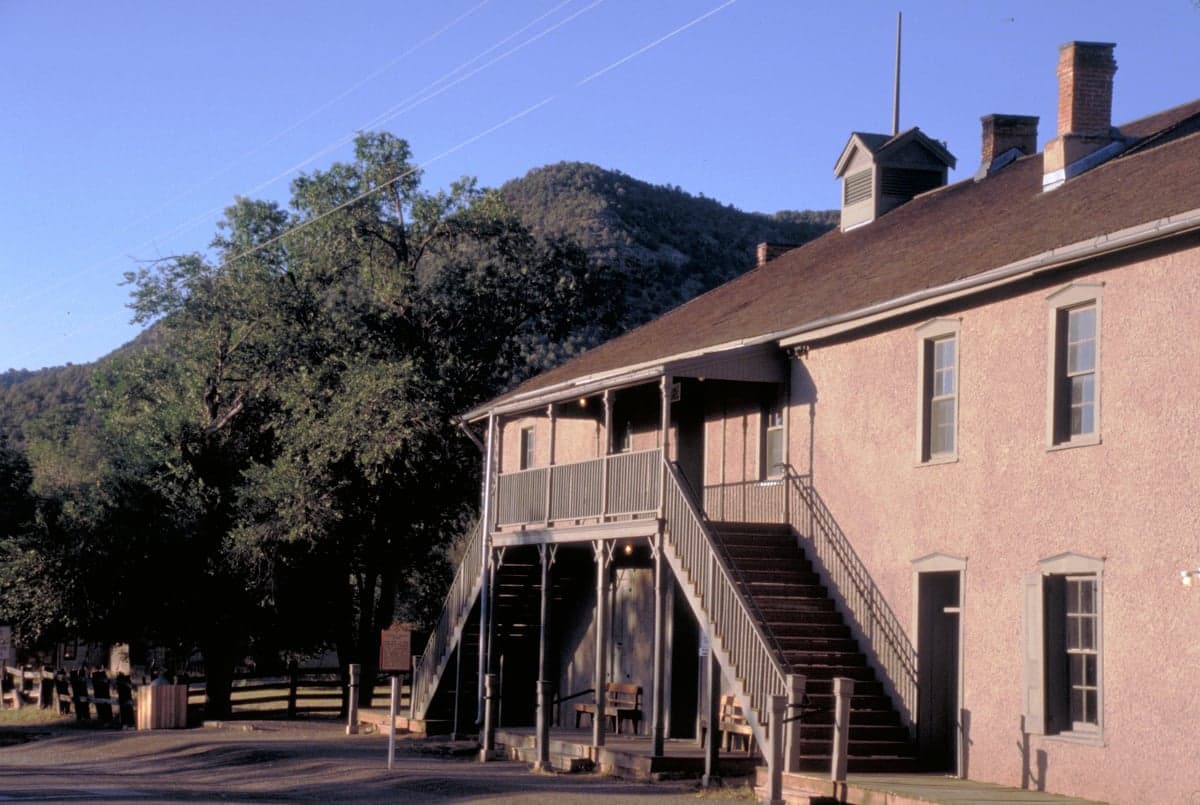
Photo: Wikipedia
Political ClimatePolitical Climate in Lincoln County
Showing district-level results — no local-only data available.
Local Political AnalysisPolitical Analysis of Lincoln County
Lincoln County, New Mexico, has long been a place where folks value their independence and aren't too keen on being told what to do, but the political winds are shifting in a way that's got a lot of us watching closely. The county's Cook PVI of D+7 might surprise some outsiders, but it reflects a slow but steady drift away from the traditional conservative roots that used to define this area. While the state as a whole leans D+3, Lincoln County is now a bit more blue than the rest of New Mexico, and that change is something you can feel in local elections and everyday conversations.
How it compares
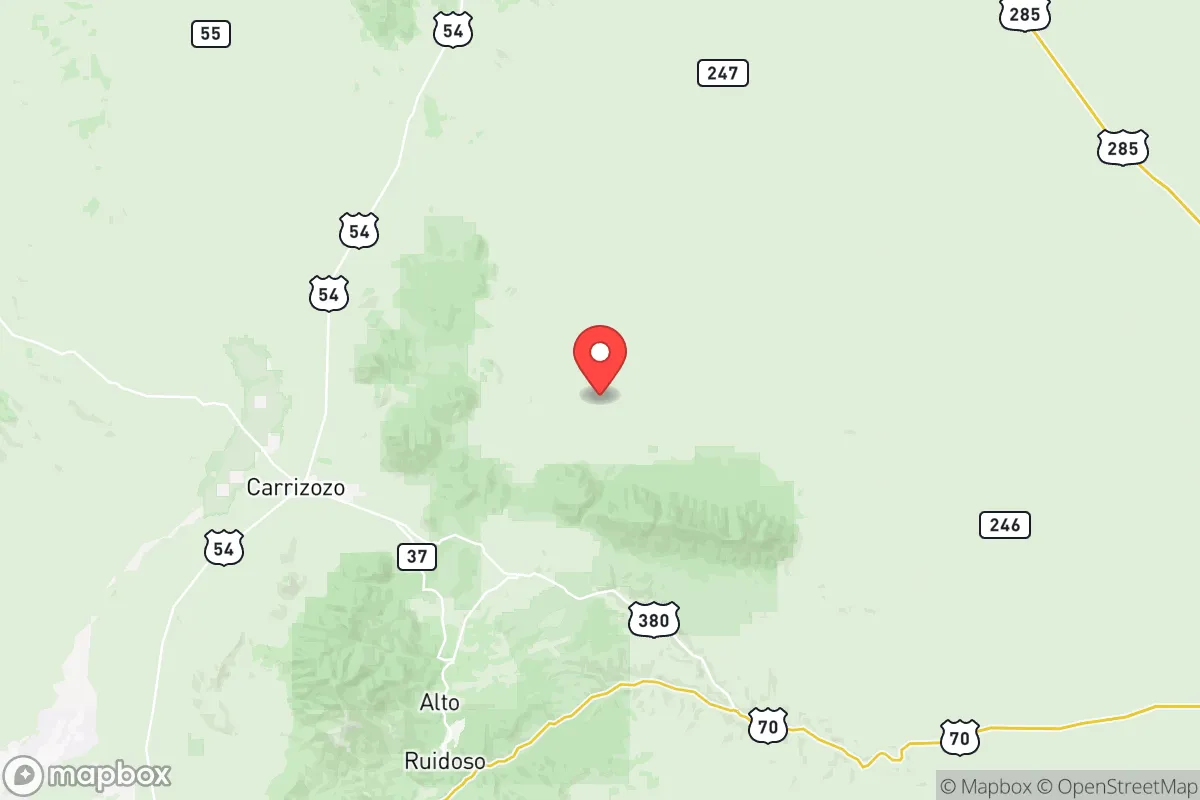
Compared to the rest of New Mexico, Lincoln County is actually more Democratic-leaning by a noticeable margin—D+7 versus the state's D+3. That might sound like a small difference, but it's a big deal in a place where ranching and outdoor recreation have always been the backbone. The real story is the variation within the county itself. Ruidoso and Ruidoso Downs are where you see the strongest blue lean, driven by a mix of retirees from out of state and a growing service industry workforce. On the flip side, Carrizozo and Capitan still hold onto a more traditional, red-leaning vibe, with folks who are deeply skeptical of government overreach. The swing precincts are around Alto and Glencoe, where a few hundred votes can tip a local race. It's a patchwork, and that's what makes it interesting—but also concerning if you value personal freedoms.
What this means for residents
For those of us who've lived here a while, the shift means more than just election results. You're seeing more regulations on land use and water rights creep in from Santa Fe, and local officials are feeling the pressure to align with state-level progressive policies. The push for stricter gun laws and energy mandates doesn't sit well with a community that relies on hunting and off-grid living. If you're a conservative, you're probably worried about government overreach into your daily life—whether it's zoning rules that limit what you can do on your own property or school curriculum changes that don't reflect local values. The county commission has managed to hold the line on some issues, but the trend is clear: the progressive agenda is gaining ground, and it's not slowing down.
One thing that sets Lincoln County apart culturally is its strong sense of self-reliance, rooted in the history of Billy the Kid and the old frontier spirit. You still see that in the way neighbors help each other out during wildfire season or when a rancher needs a hand. But there's a growing tension between that independent streak and the influx of newcomers who bring different expectations. The policy differences are real—like how the county has resisted some state-mandated housing density increases, while Ruidoso has embraced more development. If you're looking for a place where your voice still matters and you can live without too much interference, Lincoln County still has that in parts, but you'll want to keep an eye on the local elections. The next few years could decide whether we stay a refuge for freedom-loving folks or slide further into the same bureaucratic mess you see in bigger cities.

State Political ClimatePolitical Climate in New Mexico
State Political AnalysisPolitical Environment in the State
New Mexico has long been a reliably blue state in presidential elections, with a Cook Partisan Voting Index of D+3, but that label masks a deeply complex and often contentious political landscape. Over the past 10-20 years, the state has shifted from a moderate, somewhat conservative-leaning swing state to a solidly Democratic stronghold, driven largely by the explosive growth of Albuquerque and Santa Fe, combined with the declining political influence of the oil-and-gas-rich southeastern corner. While the state still elects a few moderate Democrats and the occasional Republican, the dominant coalition is now a progressive urban alliance that has pushed the state’s policy agenda sharply leftward, leaving many rural and suburban conservatives feeling increasingly alienated.
Urban vs. rural divide
The political map of New Mexico is a tale of two worlds. The entire state’s electoral power is concentrated in a handful of urban counties: Bernalillo (Albuquerque), Santa Fe, Doña Ana (Las Cruces), and Sandoval (Rio Rancho). These four counties alone deliver roughly 60% of the vote, and they lean heavily Democratic. Albuquerque, the state’s largest city, is a classic blue island in a red desert, driven by a large government workforce, a strong union presence, and a growing population of out-of-state transplants. Santa Fe is even more progressive, a hub for artists, retirees, and government employees. In contrast, the eastern plains (Lea, Eddy, Roosevelt counties) are solidly Republican, powered by the Permian Basin oil boom and a ranching culture that values self-reliance. The rural north (Taos, Mora, Rio Arriba) is a unique mix: ancestrally Hispanic and Catholic, it votes Democratic but is culturally conservative on issues like gun rights and abortion. The real battleground is the suburban ring around Albuquerque—places like Rio Rancho, Los Lunas, and the East Mountains—where moderate voters have been trending blue in recent cycles, but still occasionally elect Republicans at the local level. A new resident moving to the state will find that their political experience depends almost entirely on which zip code they choose.
Policy environment
New Mexico’s policy environment has become a textbook case of progressive governance, with all the trade-offs that implies. The state has a progressive income tax with a top rate of 5.9%, and a gross receipts tax (GRT) that can push combined rates above 9% in some cities like Santa Fe and Albuquerque. Property taxes are relatively low, which is a plus, but the state’s regulatory posture is heavy, especially in energy and land use. On education, the state has poured billions into the system following a landmark court ruling (the Yazzie/Martinez case), but outcomes remain near the bottom nationally. The state has also expanded Medicaid aggressively and created a state-run health insurance exchange. On election law, New Mexico has same-day voter registration, automatic voter registration, and no-excuse absentee voting, which critics argue opens the door to fraud, though no major scandals have surfaced. The state also has a sanctuary state law (the 2019 “New Mexico Law” that limits local cooperation with federal immigration enforcement), which is a major flashpoint for conservative residents. For a conservative-leaning newcomer, the policy environment is a mixed bag: low property taxes and a business-friendly GRT structure in some sectors, but a heavy-handed state government that often prioritizes progressive social goals over economic freedom.
Trajectory & freedom
Over the past five years, New Mexico has become decidedly less free in the eyes of many conservative residents. The most significant blow came in 2021 with the passage of the Red Flag Gun Seizure Act, which allows courts to temporarily confiscate firearms from individuals deemed a threat by family or law enforcement, without a criminal conviction. This was followed by a 2023 law requiring universal background checks on all private firearm sales and a 2025 law raising the minimum age to purchase a semiautomatic rifle to 21. On parental rights, the state passed a 2023 law that prohibits school districts from notifying parents if a child changes their gender identity or pronouns, a move that has sparked massive backlash and lawsuits. On medical autonomy, the state has enshrined abortion access as a fundamental right (2023 HB 7) and passed a law protecting out-of-state abortion providers from legal action. On property rights, the state has not gone as far as some Western states in restricting land use, but the regulatory burden on new housing construction is high. The only bright spot for conservatives has been a 2024 law that slightly reduced the gross receipts tax on food and a 2025 law that expanded school choice through a modest education savings account program. The overall trajectory is clear: the state is moving further left on social and gun issues, while making incremental, often insufficient, moves on economic freedom.
Civil unrest & political movements
New Mexico has seen its share of political flashpoints. The most visible is the ongoing immigration debate: the state’s sanctuary policies have made it a destination for migrants, and the border city of Sunland Park has seen frequent protests and counter-protests. In 2023, a caravan of anti-sanctuary activists from Texas staged a rally in Las Cruces that drew both supporters and counter-protesters. On the left, the “People’s Front” and other activist groups have organized protests in Santa Fe and Albuquerque over police brutality, housing affordability, and environmental justice. On the right, the “New Mexico Freedom Alliance” and local county-level GOP groups have held rallies against the Red Flag law and the parental notification ban. Election integrity remains a hot-button issue: in 2024, a controversy erupted in Otero County when commissioners initially refused to certify primary election results over concerns about Dominion voting machines, though they eventually relented under court order. The state also has a small but vocal secessionist movement in the rural east, with some residents calling for the creation of a new state called “East New Mexico” or “The State of Jefferson,” though this remains a fringe idea. A new resident will notice that political tensions are real but rarely boil over into violence; the state’s culture of “live and let live” still holds, but it’s fraying.
Projection
Looking ahead 5-10 years, New Mexico is likely to become more Democratic and more progressive, driven by two demographic trends: the continued growth of Albuquerque and Santa Fe, and the influx of out-of-state transplants from blue states like California and Colorado. The oil and gas industry in the southeast will remain a powerful economic force, but its political influence is waning as the state’s population center shifts north. The Republican Party is in disarray, with a weak state party organization and a growing split between moderates and Trump-aligned populists. The most likely scenario is that the state will pass a state-level public option for health insurance, further restrict gun rights, and potentially adopt a state-level carbon tax. The only wildcard is a potential economic downturn in the oil patch, which could shift the balance of power. For a conservative-leaning newcomer, the advice is simple: choose your county carefully. If you want a community that aligns with your values, look at the eastern plains (Lea, Eddy, Roosevelt) or the rural southwest (Catron, Sierra, Grant). If you must live near Albuquerque, consider the East Mountains or the far north of Sandoval County. The state as a whole will not become more conservative, but there are still pockets where you can find like-minded neighbors and a lower-tax, lower-regulation lifestyle.
For a conservative-leaning individual or family considering a move to New Mexico, the bottom line is this: the state offers stunning natural beauty, a low cost of living (especially in housing), and a laid-back culture, but it comes with a government that is increasingly hostile to gun rights, parental authority, and traditional values. If you can find the right county and are willing to engage in local politics to push back against the state-level trend, New Mexico can still be a good home. But if you’re looking for a state that is actively moving in a conservative direction, you’ll find more alignment in Texas, Arizona, or even Colorado’s eastern plains. The Land of Enchantment is still enchanting, but the political winds are blowing in a direction that many conservatives will find uncomfortable.
* Values derived from national, state, county, city and local statistics and may differ in a specific area. Last updated: 2026-06-01T09:55:43.000Z
Narrative content on this page is AI-generated and may contain mistakes. Verify any details that matter before acting on them.
ReloMaps may earn a commission from affiliate links at no extra cost to you.

