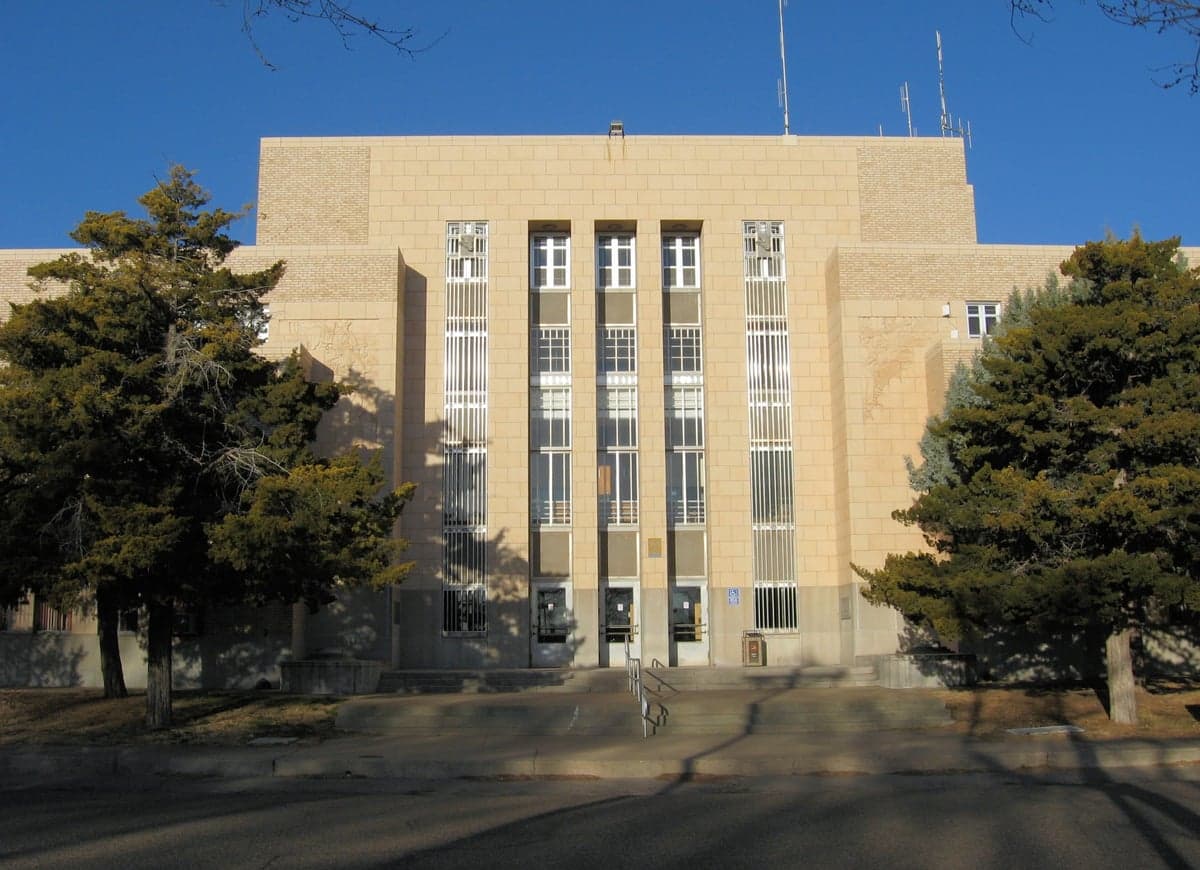
Photo: Wikipedia
Demographics of Quay County
Affluence Level in Quay County
A below-average socioeconomic profile. Incomes, home values, and educational attainment trail the U.S., with higher poverty and unemployment.
People of Quay County
Quay County, New Mexico, is home to 8,616 residents, a population that is nearly evenly split between non-Hispanic whites (48.3%) and Hispanic or Latino residents (44.6%), with a very small foreign-born share of just 1.1%. The county is sparsely populated, with a density of roughly 2 people per square mile, and its identity is rooted in a ranching and railroad heritage that has changed little over the past century. The people here are predominantly native-born, with a strong sense of local independence, and the county's demographic character is far more stable and less diverse than New Mexico's urban centers like Albuquerque or Santa Fe.
Settlement & growth (pre-1960)
Before American settlement, the area that is now Quay County was part of the vast territory of the Comanche and Apache nations, who used the high plains for seasonal hunting and raiding. Spanish and later Mexican claims to the region were largely nominal, with no permanent settlements established within the county's boundaries during the colonial period. The first permanent American settlers arrived only after the U.S. acquired the territory in 1848 following the Mexican-American War, but even then, settlement was slow due to the arid climate and lack of water.
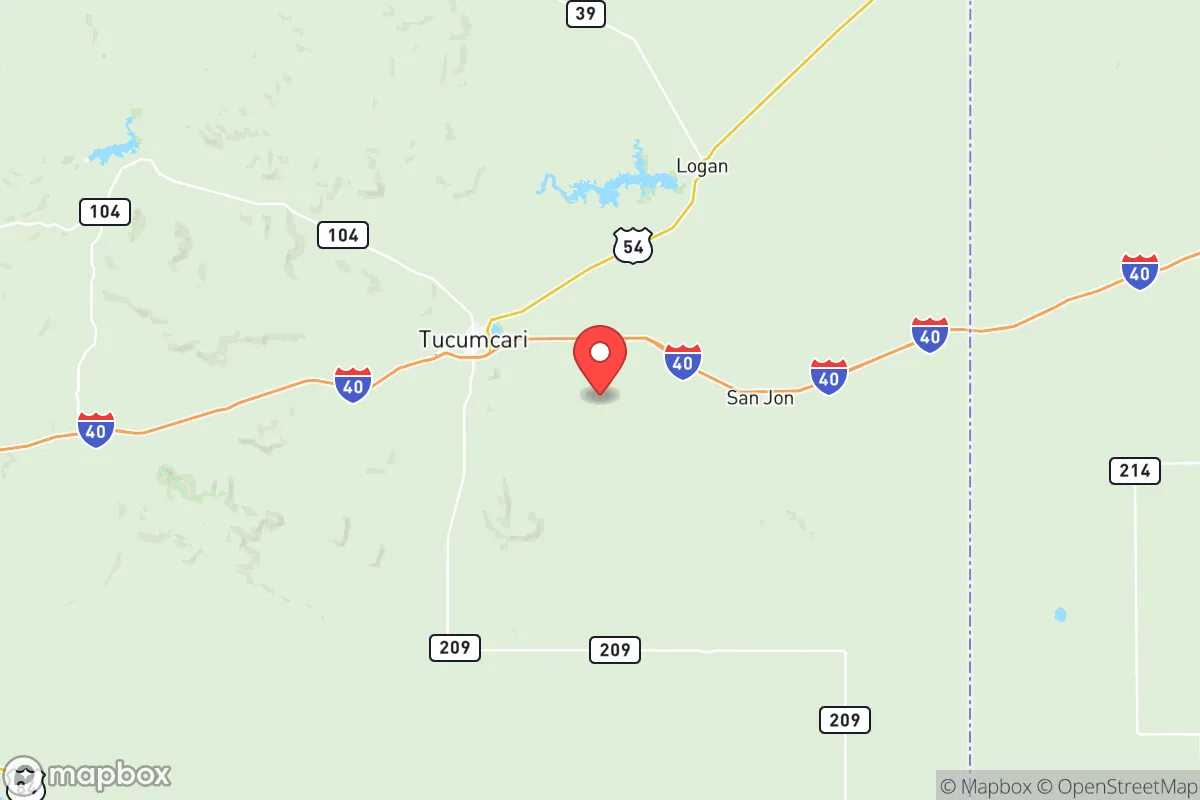
The real population wave began with the arrival of the railroad in the early 1900s. The Chicago, Rock Island and Pacific Railroad built a line through the area, and the town of Tucumcari was founded in 1901 as a railroad division point. Tucumcari quickly became the county's commercial and population hub, attracting a mix of Anglo ranchers, Hispanic laborers from the Rio Grande valley, and a small number of African American railroad workers. The town's name itself is a subject of debate—some say it comes from a Comanche word, others from a Spanish phrase—but its growth was entirely tied to the railroad and the later construction of U.S. Route 66, which passed directly through Tucumcari.
Other communities sprang up along the railroad and the highway. Logan, founded in 1902, grew as a farming and ranching center along the Canadian River. San Jon, established around the same time, served as a stop for travelers and ranchers. House, named after a railroad official, and Nara Visa (Spanish for "near the way") were smaller settlements that attracted homesteaders hoping to farm dryland wheat and sorghum. The Dust Bowl of the 1930s hit Quay County hard, causing many homesteaders to abandon their claims, but the population stabilized around the railroad and highway corridor. By 1960, the county's population peaked at roughly 14,000, with Tucumcari as the dominant town and a strong Hispanic minority that had been present since the early railroad days.
Modern era (post-1965)
The post-1965 era in Quay County is defined not by immigration, but by steady out-migration and demographic aging. The 1965 Hart-Cellar Act, which reshaped U.S. immigration patterns, had virtually no effect here: the foreign-born population today is just 1.1%, and there are no significant immigrant enclaves. Instead, the county has experienced a long, slow population decline from its 1960 peak, driven by the closure of railroad facilities, the decline of Route 66 after the interstate highway system bypassed Tucumcari, and the lack of new economic opportunities.
The Hispanic share of the population has grown gradually, from roughly 30% in 1970 to 44.6% today, primarily through natural increase (higher birth rates among Hispanic families) rather than new immigration. The non-Hispanic white population has declined in absolute numbers as younger adults leave for jobs in Albuquerque, Amarillo, or Lubbock. The African American population remains tiny at 1.1%, concentrated in Tucumcari, and has not grown. There are no measurable East/Southeast Asian or Indian subcontinent communities in the county, reflecting its isolation from the urban and suburban growth that has transformed other parts of New Mexico.
Suburbanization has not occurred in Quay County. There are no suburbs to speak of; the county's towns—Tucumcari, Logan, San Jon, House, Nara Visa—remain small, with populations ranging from a few hundred to about 5,000. The county's economy is now heavily dependent on government services (the county seat, Tucumcari, houses a state prison and a mental health facility), healthcare, and agriculture. The college-educated share is just 20.4%, well below the national average, reflecting the limited white-collar job market.
The future
Quay County's population is projected to continue its slow decline, with the non-Hispanic white share shrinking and the Hispanic share growing through natural increase. The county is not tribalizing into distinct ethnic enclaves—the population is too small and too dispersed for that—but it is becoming more uniformly Hispanic in its younger cohorts, while the older population remains predominantly white. The immigrant community is negligible and unlikely to grow, as there are no industries or networks to attract foreign-born residents.
In-migration is minimal and consists almost entirely of retirees or people seeking a lower cost of living, rather than job seekers. The cultural identity of the county is likely to remain rooted in its ranching and small-town heritage, with the Hispanic influence becoming more pronounced over time. The next 10-20 years will likely see a continuation of the current trend: a smaller, older, and more Hispanic population, with Tucumcari remaining the only town of any size.
For someone moving in now, Quay County offers a quiet, affordable, and culturally stable environment, but one with limited economic opportunity and a population that is slowly shrinking. It is a place where the past—the railroad, Route 66, the ranching tradition—still defines the present, and where demographic change is gradual rather than disruptive. The county is becoming more Hispanic, but it is doing so through the natural growth of families already there, not through new arrivals, making it a uniquely stable and insular community in a rapidly changing state.

* Values derived from national, state, county, city and local statistics and may differ in a specific area. Last updated: 2026-05-27T20:57:30.000Z
Narrative content on this page is AI-generated and may contain mistakes. Verify any details that matter before acting on them.
ReloMaps may earn a commission from affiliate links at no extra cost to you.

