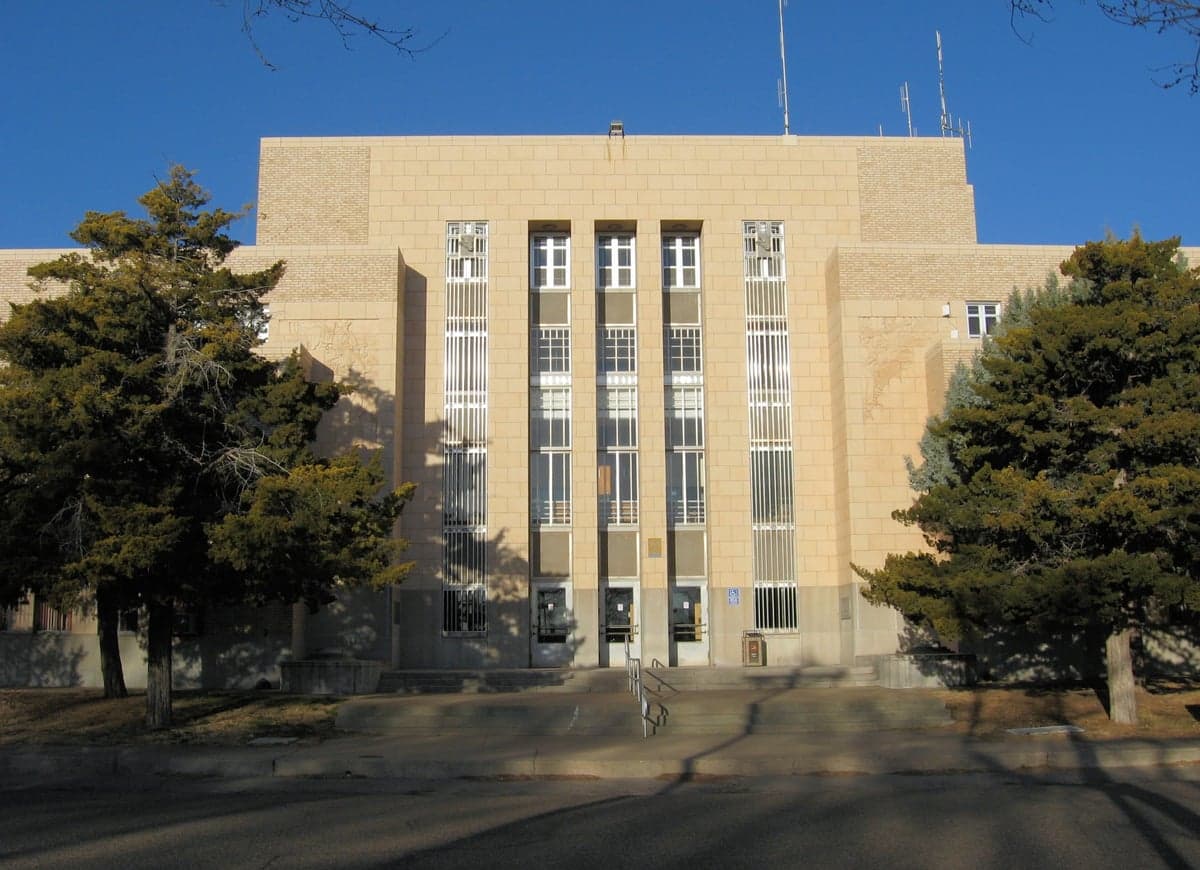
Photo: Wikipedia
Political ClimatePolitical Climate in Quay County
Showing district-level results — no local-only data available.
Local Political AnalysisPolitical Analysis of Quay County
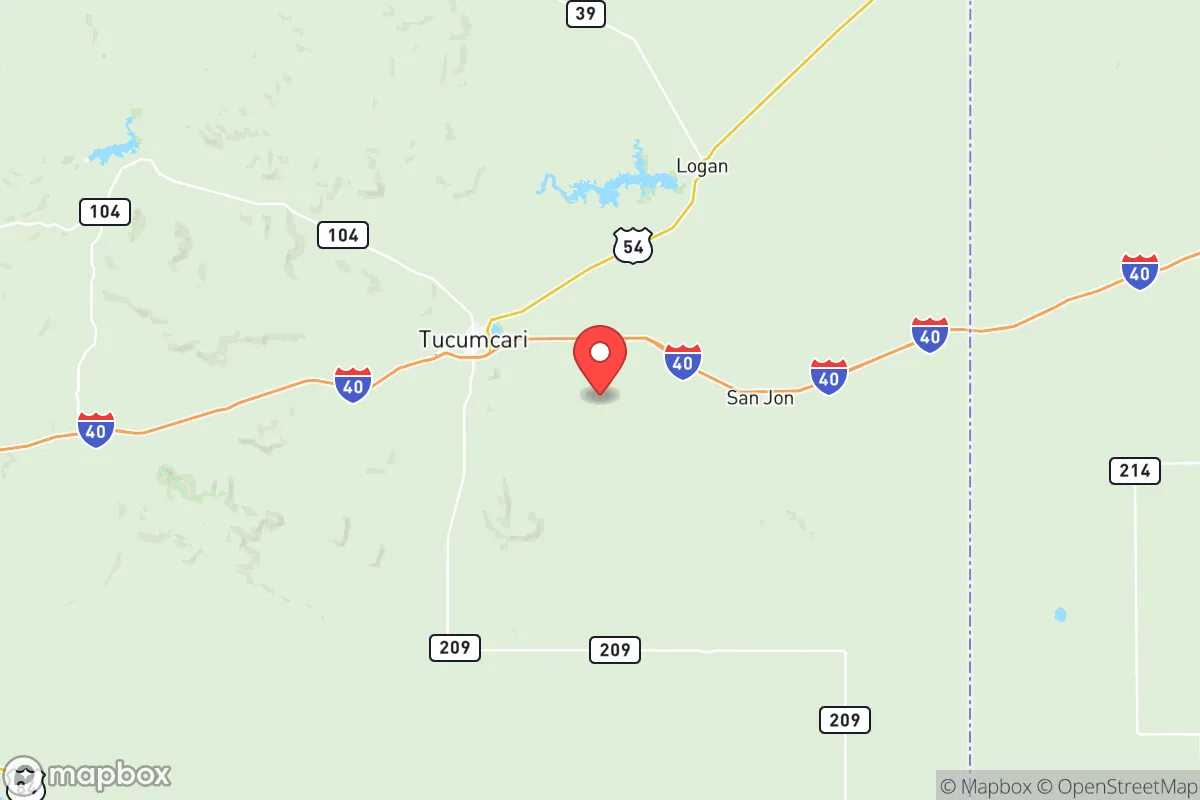
Quay County, New Mexico, has historically leaned more conservative than its Cook PVI of D+3 might suggest, but that's changing in ways that worry a lot of us who've lived here a while. The county's voter registration still favors Democrats, but many of those are old-school, blue-dog types who vote their conscience on things like gun rights and energy independence. In the 2024 election, the county flipped to Trump by a narrow margin, a sign that the national shift toward conservative values is alive and well here, even if the official numbers don't always show it. The real story is the growing divide between the county seat, Tucumcari, which trends more liberal, and the outlying communities like Logan, San Jon, and House, where folks are deeply skeptical of government overreach.
How it compares
Compared to the rest of New Mexico, Quay County is a conservative island in a sea of progressive politics. The state as a whole has a D+3 PVI, but that's driven by the massive liberal majorities in Albuquerque, Santa Fe, and Las Cruces. Out here in eastern New Mexico, we're closer in spirit to the Texas Panhandle than to the state capitol. In Tucumcari, you'll find a few precincts that vote reliably blue, especially around the older neighborhoods near the hospital and the college. But drive 15 minutes north to Logan, and you're in solid red territory, where the talk is about water rights, property taxes, and the Second Amendment. The swing precincts are the rural areas around the interstate—places like the Nara Visa area—where independent voters decide elections based on who promises to leave them alone the most.
What this means for residents
For folks living here, the political climate means you get a lot of freedom to live your life without the state breathing down your neck—for now. The county commission and local school boards are still dominated by common-sense conservatives who prioritize low taxes, local control, and keeping government out of your business. But there's a creeping concern that as the state government in Santa Fe pushes more progressive mandates—like stricter gun laws, energy regulations that hurt our oil and gas jobs, and top-down education policies—Quay County could get dragged along. The recent push for "clean energy" zones and land-use restrictions from the state has already sparked heated town hall meetings in Tucumcari. Residents here value their independence, and any move toward centralized control is met with serious skepticism.
Culturally, Quay County is a place where neighbors still help each other, church potlucks are a big deal, and the Fourth of July parade in Logan is the highlight of the summer. The policy distinctions that matter most to us are the ones that protect our way of life: keeping property taxes low, defending water rights for farmers and ranchers, and pushing back against any state mandates that tell us how to run our businesses or raise our kids. If you're looking for a place where you can still have a say in your own life, without the heavy hand of government, Quay County is one of the last holdouts in New Mexico. But keep an eye on those state-level elections—because what happens in Santa Fe affects us all out here, whether we like it or not.

State Political ClimatePolitical Climate in New Mexico
State Political AnalysisPolitical Environment in the State
New Mexico has a Cook PVI of D+3, making it a reliably blue state in presidential elections, but that top-line number hides a deeply divided political landscape. The Democratic coalition is anchored by Bernalillo County (Albuquerque) and Santa Fe County, while the rest of the state—particularly the eastern plains and southern borderlands—votes reliably Republican. Over the past 20 years, the state has drifted leftward on cultural issues while maintaining a relatively moderate economic posture, but recent legislative sessions have accelerated progressive policy changes that are reshaping daily life for residents.
Urban vs. rural divide
The political map of New Mexico is a study in stark contrasts. Bernalillo County, home to Albuquerque and about a third of the state's population, delivers roughly 40% of all Democratic votes statewide. Santa Fe County, with its high concentration of government workers and artists, is even more lopsided—voting D+40 or worse in most cycles. On the flip side, the eastern counties of Lea (Lovington, Hobbs), Roosevelt (Portales), and Curry (Clovis) are solidly Republican, driven by oil and gas employment and agricultural interests. The southern tier—Doña Ana County (Las Cruces) and Otero County (Alamogordo)—is more competitive, with Las Cruces trending blue as the university and government sectors grow, while Alamogordo remains a conservative stronghold thanks to Holloman Air Force Base and a large retiree population. The northwest corner, San Juan County (Farmington), is a GOP bastion tied to the Four Corners energy economy. What this means for a conservative relocating: you can find like-minded communities in the eastern plains and southern border towns, but you'll be living under a state government dominated by urban and Santa Fe interests.
Policy environment
New Mexico's policy mix is a study in contradictions. The state has no personal income tax on Social Security benefits and a relatively low top marginal income tax rate of 5.9%, which is competitive for retirees. Property taxes are among the lowest in the nation, averaging about 0.8% of assessed value, thanks to a constitutional cap. However, the gross receipts tax (GRT)—the state's version of a sales tax—is high and applies to many services, with combined state and local rates often exceeding 8%. On education, the state has poured money into early childhood programs and universal pre-K, but K-12 outcomes remain near the bottom nationally. Healthcare is dominated by the state's Medicaid expansion, which covers nearly half the population, and the recent creation of a state-run public option health plan has raised concerns about private insurance viability. Election laws are permissive: same-day registration, no-excuse absentee voting, and automatic voter registration are all in place. There is no voter ID law requiring a photo—a non-driver's ID or utility bill suffices—which has been a flashpoint for election integrity advocates.
Trajectory & freedom
Over the past five years, New Mexico has moved decisively toward progressive governance on social and cultural issues, which is concerning for those prioritizing personal liberty. The 2021 Energy Transition Act effectively mandates a 100% carbon-free electricity grid by 2045, which has already driven the closure of the San Juan Generating Station near Farmington, costing hundreds of high-paying union jobs. In 2023, the legislature passed a red flag law (HB 129) allowing courts to temporarily seize firearms from individuals deemed a risk, which gun rights advocates view as a due process violation. The same session saw the repeal of the state's pre-1973 abortion ban, codifying abortion access into state law. On parental rights, the 2023 passage of the "Healthy Youth Act" requires schools to provide comprehensive sex education, including LGBTQ+ content, without an opt-out provision for parents—a major concern for conservative families. On the positive side for liberty, the state has no "right-to-work" law, but it also has no state-level rent control or price controls. Medical cannabis has been legal since 2007, and recreational cannabis was legalized in 2021, creating a regulated market that has generated significant tax revenue but also raised concerns about public safety and youth access.
Civil unrest & political movements
New Mexico has seen its share of political flashpoints. The 2020 protests in Albuquerque over the death of George Floyd turned violent, with the toppling of a statue of Spanish conquistador Juan de Oñate and arson at the Albuquerque Police Department headquarters. The state's sanctuary policies are among the strongest in the nation: the 2019 "New Mexico Values Act" prohibits state and local law enforcement from cooperating with federal immigration authorities, a policy that has created tension with border communities like Las Cruces and Sunland Park. The Otero County Commission made national headlines in 2022 when it refused to certify primary election results based on unsubstantiated claims about voting machines, leading to a state Supreme Court intervention. The "New Mexico Civil Guard," a militia group, has been active in border surveillance operations, particularly around Hatch and Columbus. More recently, the 2023 legislative session saw a failed attempt to pass a "clean fuel" standard that would have penalized traditional fuel producers, which sparked protests from oil and gas workers in Hobbs and Carlsbad. For a new resident, the visible presence of both progressive activism in Santa Fe and conservative pushback in the eastern plains creates a palpable tension that varies dramatically by location.
Projection
Looking ahead 5-10 years, New Mexico's political trajectory is likely to continue its leftward drift on social issues, but economic realities may moderate the pace. The state's heavy reliance on oil and gas revenue—about 40% of the general fund—creates a structural tension between progressive environmental goals and fiscal stability. In-migration is modest compared to Texas or Arizona, but the retirees and remote workers who do come tend to cluster in Santa Fe and Albuquerque, reinforcing the urban blue vote. The eastern plains and southern border counties are losing population, which will further concentrate political power in the Democratic strongholds. However, the 2023 election of a Republican mayor in Las Cruces (Eric Enriquez) and the narrow defeat of a progressive school board slate in Rio Rancho suggest that conservative voters can still organize effectively at the local level. The biggest wildcard is the potential for a constitutional amendment to impose a state-level income tax on capital gains or to raise property taxes, which would accelerate out-migration of high-income earners. For a conservative moving in now, expect to live in a state where state-level politics are dominated by Santa Fe progressives, but where local control in conservative counties offers some buffer—at least for now.
For a conservative individual or family considering New Mexico, the bottom line is this: you can find a community that shares your values in places like Hobbs, Clovis, or Alamogordo, but you will be living under a state government that is increasingly hostile to gun rights, parental authority in education, and traditional energy jobs. The low property taxes and lack of Social Security income tax are genuine financial advantages, but they come with high gross receipts taxes and a regulatory environment that is trending left. If you prioritize local community and are willing to fight for your values at the county and municipal level, New Mexico offers affordable land and a slower pace of life. If you want a state government that reflects your values, you will likely be frustrated. Choose your county carefully—it makes all the difference.
* Values derived from national, state, county, city and local statistics and may differ in a specific area. Last updated: 2026-05-27T20:57:30.000Z
Narrative content on this page is AI-generated and may contain mistakes. Verify any details that matter before acting on them.
ReloMaps may earn a commission from affiliate links at no extra cost to you.

