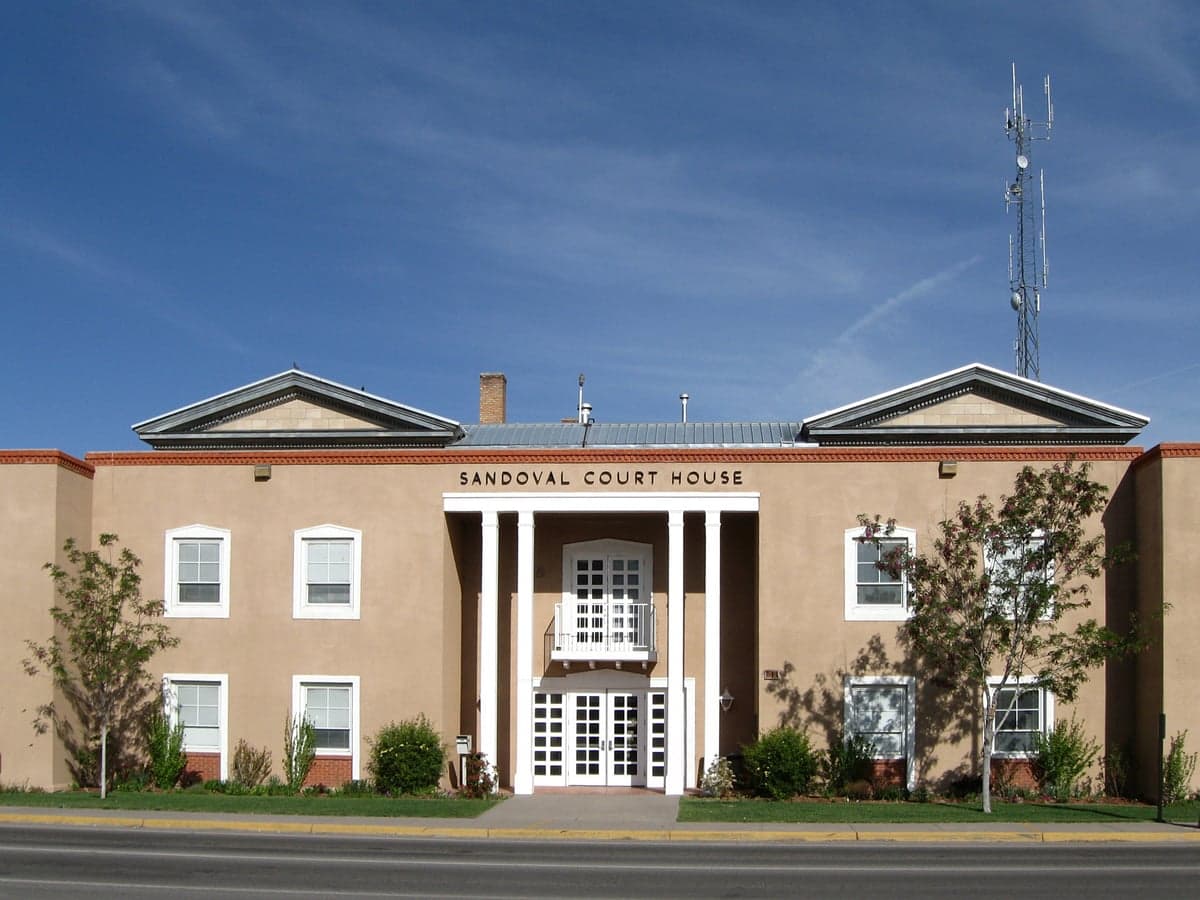
Photo: Wikipedia
Political ClimatePolitical Climate in Sandoval County
Showing district-level results — no local-only data available.
Local Political AnalysisPolitical Analysis of Sandoval County
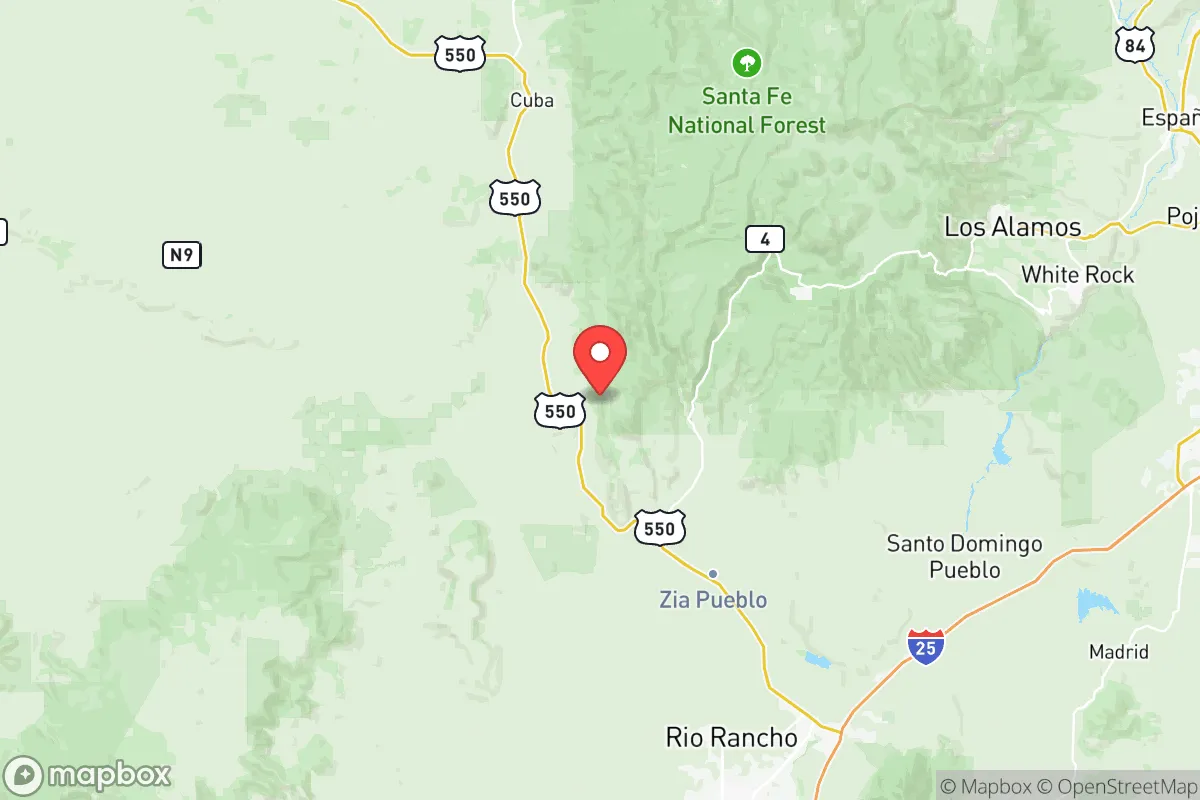
Sandoval County, New Mexico, carries a Cook PVI of D+3, which on paper looks like a solidly blue-leaning area, but anyone who’s lived here for a while knows that’s a bit of a simplification. The county is a patchwork of very different communities, and the political leanings shift dramatically depending on whether you’re in the Rio Rancho suburbs, the rural villages along the Jemez, or the more traditional towns like Bernalillo. While the county has voted Democratic in recent presidential elections, the margin has been shrinking, and there’s a growing conservative undercurrent that’s pushing back against the progressive wave coming out of Santa Fe and Albuquerque.
How it compares to the rest of New Mexico
New Mexico as a whole also has a Cook PVI of D+3, so Sandoval County is right in line with the state average, but the internal dynamics are what matter. The county’s Democratic edge is almost entirely driven by Rio Rancho’s newer, more transient population, where you’ll find a mix of government workers and tech employees who lean left. But drive 20 minutes north to Placitas or the rural areas around Jemez Pueblo, and you’ll find a very different story. Those areas are reliably conservative, with a strong independent streak that’s suspicious of any government overreach. The swing precincts are in the unincorporated areas between Rio Rancho and Bernalillo, where local issues like water rights and property taxes often outweigh party loyalty. In the 2024 election, these precincts flipped back and forth, showing that Sandoval County is far from a lock for either party.
What this means for residents
For a conservative-leaning resident, the biggest concern here is the slow creep of progressive policies from the state level. Sandoval County itself has a fairly moderate county commission, but the real pressure comes from Santa Fe, where the state legislature has been pushing things like stricter gun control, higher taxes on small businesses, and mandates that feel like they’re designed to make life harder for families and ranchers. The county’s D+3 rating means that while we’re not deep blue, we’re also not red enough to stop these policies from being implemented. Local elections are where the fight really is—keeping the county commission and school boards from falling into the hands of activists who want to bring the same kind of top-down control you see in Albuquerque. The good news is that the rural parts of the county are still strongholds of common sense, and they’re not going down without a fight.
One thing that sets Sandoval County apart is the cultural divide between the Rio Rancho metro area and the rest of the county. Rio Rancho feels more like a suburb of Albuquerque, with all the traffic and chain stores that come with it, while the northern and western parts of the county still have that old New Mexico feel—small towns, open spaces, and a live-and-let-live attitude. That’s where the real tension lies: the urban areas are pulling the county toward the same kind of progressive policies that have made Albuquerque a mess, while the rural areas are fighting to keep their way of life. If you’re looking for a place where you can still have a say in how things are run, Sandoval County is worth a look, but keep an eye on those local elections. They’re the only thing standing between you and a whole lot of government overreach.

State Political ClimatePolitical Climate in New Mexico
State Political AnalysisPolitical Environment in the State
New Mexico has shifted from a reliably purple swing state to a solidly Democratic-leaning one, carrying a Cook PVI of D+3, but that number hides a deeply fractured political landscape. The state’s dominant coalition is a mix of urban progressives in Albuquerque and Santa Fe, unionized government workers, and a growing Hispanic electorate that leans left on immigration and social services, while rural and oil-patch counties have become increasingly Republican redoubts. Over the past 20 years, the state has moved leftward by about 5 points in presidential races, driven by rapid growth in Santa Fe and Bernalillo County, while rural areas like Lea and Eddy Counties have become GOP strongholds. For a conservative considering relocation, the state’s trajectory is concerning, but the picture varies dramatically depending on whether you’re looking at the Albuquerque metro, the oil fields of the southeast, or the conservative enclaves of the east-central plains.
Urban vs. rural divide
The political map of New Mexico is a tale of two worlds. The Albuquerque metro, home to nearly half the state’s population, leans heavily Democratic, with Bernalillo County delivering margins of 15-20 points for Democrats in recent cycles. Santa Fe County is even more progressive, routinely voting 2-to-1 Democratic, driven by a mix of wealthy retirees, artists, and government employees. On the flip side, the southeastern corner of the state—places like Hobbs and Carlsbad in Lea and Eddy Counties—votes 70-80% Republican, fueled by the oil and gas industry and a strong ranching culture. The east-central plains, including Clovis and Portales, are also reliably red, with a conservative agricultural base. The rural-urban divide is stark: Las Cruces in Doña Ana County is a purple-to-blue swing area, while Farmington in the northwest is a conservative outlier in an otherwise Democratic region. The state’s political future hinges on whether the urban growth in Albuquerque and Santa Fe continues to outpace the rural exodus.
Policy environment
New Mexico’s policy environment is a mixed bag for conservatives, with some bright spots and many red flags. On taxes, the state has a progressive income tax with rates up to 5.9%, and a gross receipts tax (essentially a sales tax) that can push 8-9% in some cities. Property taxes are relatively low, which is a plus, but the state has no right-to-work law, meaning union power is strong, especially in government and education. Education policy is a major concern: the state has one of the lowest graduation rates in the nation, and the public school system is dominated by the teachers’ union. School choice is limited, though charter schools exist in Albuquerque and Santa Fe. Healthcare is heavily regulated, with Medicaid expansion under the Affordable Care Act covering nearly half the population. Election laws are moderately restrictive—voter ID is not required for most elections, though a photo ID is needed for in-person voting. The state has automatic voter registration at the DMV, which has boosted Democratic turnout. For a conservative, the tax burden and lack of school choice are significant drawbacks.
Trajectory & freedom
New Mexico is becoming less free by most measures, with recent legislation expanding government control over personal choices. On gun rights, the state passed a red-flag law in 2020 (HB 5) allowing courts to temporarily seize firearms from individuals deemed a threat, a move that Second Amendment advocates see as an overreach. In 2023, the legislature passed a ban on carrying firearms in public buildings and near polling places. On parental rights, the state has moved in the opposite direction of conservative priorities: in 2021, it passed a law requiring schools to adopt policies that affirm transgender students’ gender identity, overriding parental notification. Medical autonomy took a hit with the 2021 legalization of recreational marijuana, which, while popular, has led to a heavily regulated market that some see as government overreach. Property rights are under pressure from the state’s aggressive renewable energy mandates, which have led to conflicts over solar and wind farm siting on private land. The most concerning trend for conservatives is the state’s move toward a single-payer healthcare system, with a 2023 study commission exploring a public option. These trends suggest a state government that is increasingly comfortable intervening in personal and economic decisions.
Civil unrest & political movements
New Mexico has seen its share of political flashpoints, though large-scale civil unrest is rare. The most visible movement is the ongoing debate over immigration and sanctuary policies. Albuquerque and Santa Fe are sanctuary cities, with local police prohibited from cooperating with federal immigration enforcement. This has led to tensions with rural counties, where sheriffs have publicly resisted. In 2023, a protest in Las Cruces over a proposed migrant shelter turned into a heated standoff between activists and local residents. On the right, the “New Mexico Patriots” movement has organized around election integrity, with activists challenging the state’s automatic voter registration system and mail-in ballot procedures. The 2020 election saw a minor controversy when a few rural precincts reported irregularities, but no major fraud was found. The state’s high crime rate, particularly in Albuquerque, has fueled a growing “law and order” movement, with groups like “Albuquerque Citizens for Safety” pushing for tougher sentencing. A new resident would notice the visible presence of homeless encampments in Albuquerque and Santa Fe, which have become a political flashpoint, with the state’s progressive policies on homelessness clashing with local residents’ concerns about safety and property values.
Projection
Over the next 5-10 years, New Mexico is likely to continue its leftward drift, driven by demographic trends and in-migration patterns. The Albuquerque metro is growing, attracting young professionals and retirees from blue states, while rural counties are losing population. The state’s reliance on federal funding (it receives more than $1.50 back for every dollar paid in federal taxes) means it will remain dependent on Washington, D.C., which reinforces its progressive lean. The oil and gas industry in the southeast is booming, but that region’s political influence is waning as its population share shrinks. The most realistic projection is that New Mexico will become a D+5 or D+6 state by 2030, with the legislature moving further left on social issues. A conservative moving in now should expect to see continued expansion of government programs, tighter gun laws, and a growing push for single-payer healthcare. The bright spot is that local control remains strong in rural counties, so a move to Hobbs or Clovis can still offer a conservative lifestyle, but state-level policy will increasingly feel like a hostile force.
For a conservative considering relocation, New Mexico offers a mixed bag: low property taxes and a beautiful landscape, but a state government that is actively expanding its reach into personal freedoms. The key is to choose your location carefully—stick to the oil-patch counties or the east-central plains if you want a community that shares your values, and be prepared to fight for your rights at the state level. The state’s trajectory is concerning, but it’s not irreversible, and the growing conservative movement in rural areas is a sign that the fight is far from over.
* Values derived from national, state, county, city and local statistics and may differ in a specific area. Last updated: 2026-05-12T00:17:19.000Z
Narrative content on this page is AI-generated and may contain mistakes. Verify any details that matter before acting on them.
ReloMaps may earn a commission from affiliate links at no extra cost to you.

