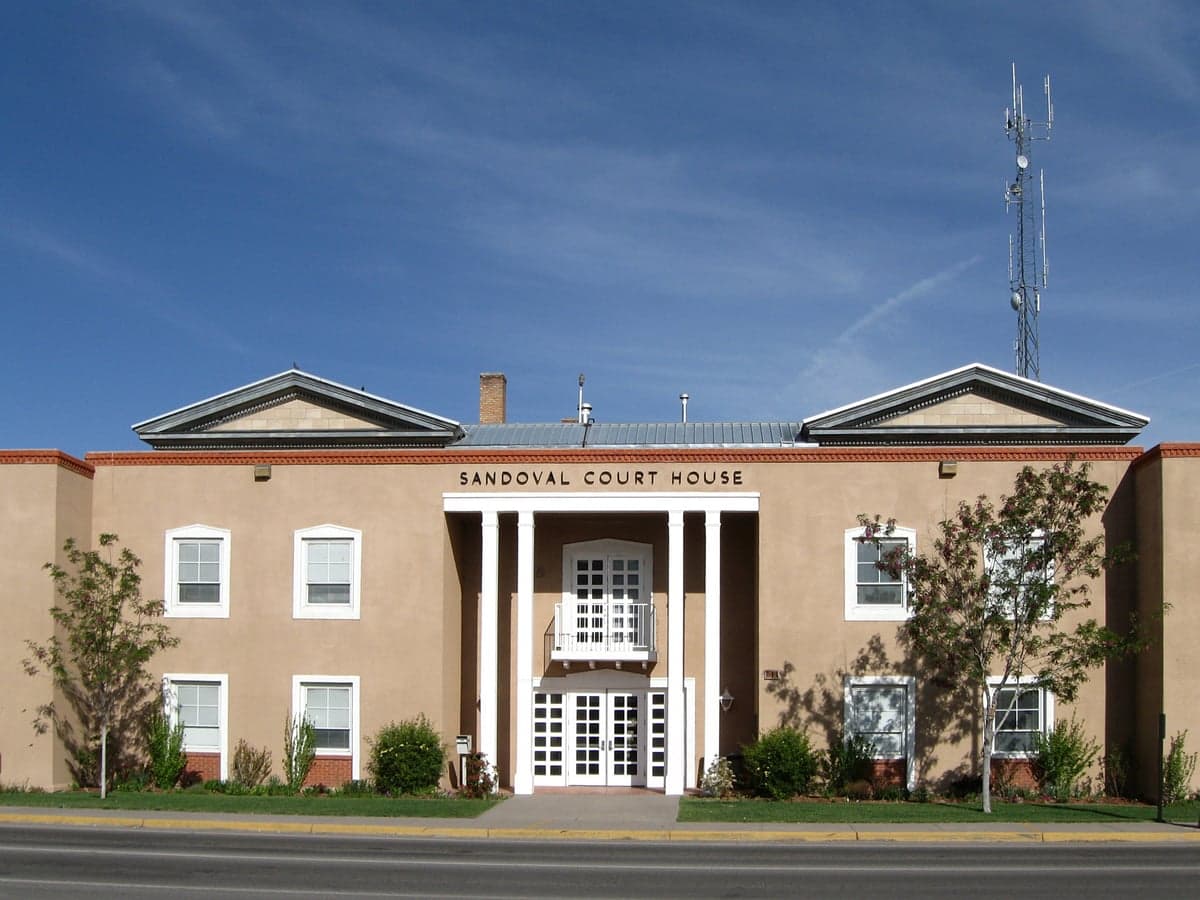
Photo: Wikipedia
Strategic Assessment of Sandoval County
Workable tactical position. Some exposure to population density or targets, but generally defensible in a crisis.
What does the Strategic Assessment tell us?
Our Strategic Assessment grades tactical survivability of an area. Major population centers, military targets, fallout zones, natural disasters, and border exposure all drive risk — lower exposure means a more defensible position in a crisis.
This is heavily inspired by Joel Skousen's Strategic Relocation book. Highly recommended you checkout the book ($)What does this tell us?
Our Strategic Assessment grades tactical survivability of an area. Major population centers, military targets, fallout zones, natural disasters, and border exposure all drive risk — lower exposure means a more defensible position in a crisis.
This is heavily inspired by Joel Skousen's Strategic Relocation book. Highly recommended you checkout the book ($)Strategic Pillars

Key Distances
Strategic Assessment Analysis
Sandoval County, New Mexico, offers a compelling mix of strategic depth and practical resilience for those prioritizing self-reliance and distance from major urban collapse zones. Its position along the Rio Grande, with the Jemez Mountains to the west and the Sandia Mountains to the east, provides natural barriers and defensible terrain, while its proximity to Albuquerque (about 20 miles south of the county seat, Bernalillo) is close enough for supply runs but far enough to avoid the worst of civil unrest or fallout from a major city. The county’s low population density—roughly 150,000 residents spread over 3,716 square miles—means fewer targets and more room to maneuver, a key advantage for anyone serious about long-term survival planning.
Geographic position and natural advantages for strategic relocation
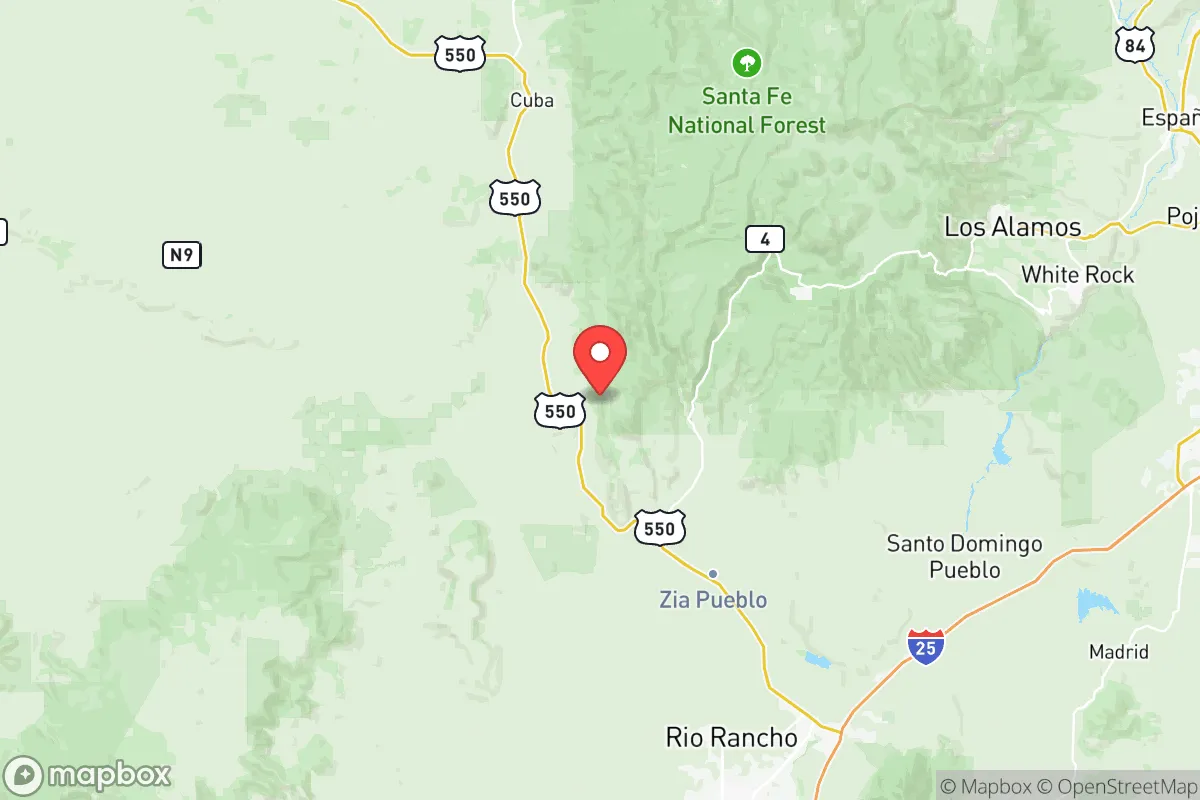
Sandoval County’s geography is its strongest asset. The western half is dominated by the Jemez Mountains and the Valles Caldera National Preserve, a massive volcanic crater that offers high-altitude refuge, abundant wildlife, and natural water sources like the Jemez River. This area is sparsely populated, with towns like Jemez Springs and Cuba serving as remote outposts—ideal for a bug-out location or a primary homestead if you can secure land. To the east, the Sandia Mountains provide a steep, forested barrier that separates the county from the Albuquerque metro area, creating a natural choke point along I-25. The Rio Grande Valley runs through the middle, offering fertile soil for small-scale agriculture in communities like Corrales and Bernalillo. For a relocator, this means you can tap into three distinct ecosystems: high desert, mountain forest, and river valley, each with its own survival advantages. The county’s elevation ranges from 5,000 feet in the valley to over 11,000 feet in the mountains, which moderates temperatures and reduces wildfire risk compared to lower-elevation desert areas. Water access is a standout—the Rio Grande and its tributaries provide surface water, and the aquifer beneath the valley is deep and reliable, though you’ll need a well permit and a good pump setup.
Risks, exposures, and proximity to fallout-relevant landmarks
No area is without risks, and Sandoval County has a few that demand attention. The most obvious is its proximity to Albuquerque, a city of over 560,000 people that could become a focal point for civil unrest, resource shortages, or a mass casualty event. If Albuquerque collapses, expect refugees to flow north along I-25 and NM-550, putting pressure on towns like Bernalillo and Rio Rancho. Rio Rancho itself, the county’s largest city with about 100,000 residents, is a sprawling suburban development that could become a liability—it’s heavily dependent on grid infrastructure and has limited defensible terrain. More concerning is the presence of the Kirtland Air Force Base and Sandia National Laboratories just south of the county line in Albuquerque. These are high-value targets in any conflict, and while they’re not inside Sandoval County, a strike or accident there could send fallout or electromagnetic pulse effects northward. The Valles Caldera is a dormant supervolcano, but the risk of eruption is negligible in human timescales—though geothermal activity in the Jemez Mountains means you should be aware of potential ground instability near hot springs. Wildfire is a real threat in the forested areas, especially during dry years, and the county has seen major burns like the 2011 Las Conchas Fire that scorched over 150,000 acres. Flooding along the Rio Grande is manageable but can disrupt roads and bridges, particularly around Bernalillo and Algodones. For a prepper, the key takeaway is to avoid the I-25 corridor and Rio Rancho’s suburbs for a primary residence; instead, focus on the western mountain communities or the remote northern reaches near Cuba.
Practical resilience for a relocator: food, water, energy, and defensibility
Sandoval County offers solid foundations for self-sufficiency, but you’ll need to put in the work. Water is the biggest win—the Rio Grande and Jemez River systems provide year-round flow, and many rural properties have access to shallow wells. In the mountains, springs and seasonal creeks are common, but you’ll want to test for heavy metals from historical mining in the Jemez region. Rainwater catchment is viable in the valley, with annual precipitation around 10 inches, but the mountains get up to 30 inches, making them better for off-grid living. For food, the growing season is short (about 150 days in the valley, less at elevation), but you can raise livestock—cattle, goats, and chickens are common in the rural areas. The county has a strong hunting culture, with elk, mule deer, and wild turkey in the mountains, plus small game in the desert. Energy is a mixed bag: solar is excellent, with over 280 sunny days per year, but the mountainous terrain can create shading issues. Wind is reliable in the valley and along the mesas, and micro-hydro is possible on year-round streams in the Jemez. The grid is stable in towns but unreliable in remote areas, so plan for battery storage and a backup generator. Defensibility varies by location. The mountain communities like Jemez Springs and Cuba are naturally protected by rugged terrain and limited road access—NM-4 and NM-126 are the only routes in, and they’re easy to monitor or block. The valley towns are more exposed, but you can leverage the acequia systems (traditional irrigation ditches) as natural barriers and water sources. The county’s gun culture is strong, with many residents owning firearms for hunting and self-defense, and law enforcement is sparse in the rural areas, meaning you’re largely responsible for your own security. For a relocator, the ideal setup is a property in the Jemez foothills with a well, solar panels, and a defensible perimeter—think 10-20 acres with a clear view of approach routes.
Overall, Sandoval County presents a solid strategic option for those looking to balance accessibility with resilience. It’s not a perfect fortress—the proximity to Albuquerque and the lab complex is a real concern, and the wildfire risk in the mountains requires constant vigilance. But the natural water sources, defensible terrain, and low population density in the western and northern areas give you a fighting chance in a worst-case scenario. If you’re serious about relocation, focus on the communities west of the Rio Grande and north of I-25, and invest in off-grid infrastructure before you move. The county’s conservative lean—it voted +12 for Trump in 2020—aligns with a self-reliant mindset, and the local culture is generally welcoming to those who pull their own weight. Just don’t expect to disappear completely; you’ll still need to engage with the county for permits, taxes, and emergency services. For a prepper or survivalist, Sandoval County is a viable base of operations, provided you pick your spot carefully and prepare for the risks that come with living on the edge of a major urban area.

* Values derived from national, state, county, city and local statistics and may differ in a specific area. Last updated: 2026-05-12T00:17:19.000Z
Narrative content on this page is AI-generated and may contain mistakes. Verify any details that matter before acting on them.
ReloMaps may earn a commission from affiliate links at no extra cost to you.

