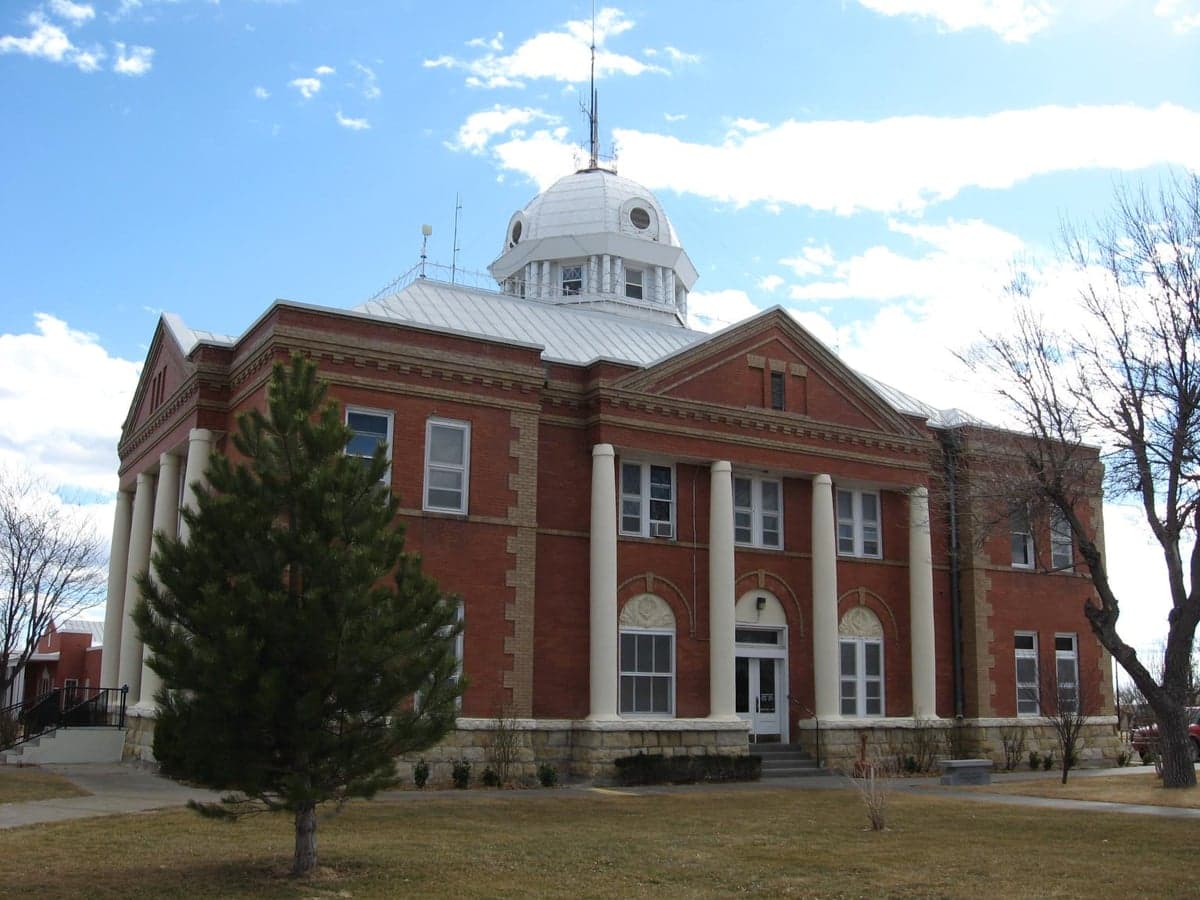
Photo: Wikipedia
Demographics of Union County
Affluence Level in Union County
A below-average socioeconomic profile. Incomes, home values, and educational attainment trail the U.S., with higher poverty and unemployment.
People of Union County
Union County, New Mexico, is a sparsely populated ranching and farming community of 4,039 residents, characterized by its strong Hispanic and White heritage, a deeply rooted conservative culture, and a population density of just over one person per square mile. The county’s identity is shaped by its history as a crossroads of the American frontier, where Hispanic settlers, Anglo ranchers, and railroad workers created a resilient, independent community. Today, the population is overwhelmingly native-born, with only 2.0% foreign-born, and the county remains one of the most culturally homogeneous and politically conservative areas in New Mexico, with a distinct rural character that sets it apart from the state’s more urbanized regions.
Settlement & growth (pre-1960)
The human history of Union County begins with the indigenous peoples of the Southern Plains, primarily the Jicarilla Apache and Comanche, who used the region for seasonal hunting and trade long before European contact. Spanish exploration in the 16th and 17th centuries established a nominal claim, but permanent settlement did not begin until the mid-19th century. The area was part of the Mexican land grant system, with the Maxwell Land Grant (1841) covering much of what is now northeastern New Mexico, including Union County. This grant attracted Hispanic settlers from the Rio Grande valley, who established small farming and ranching communities along the Canadian River and its tributaries.
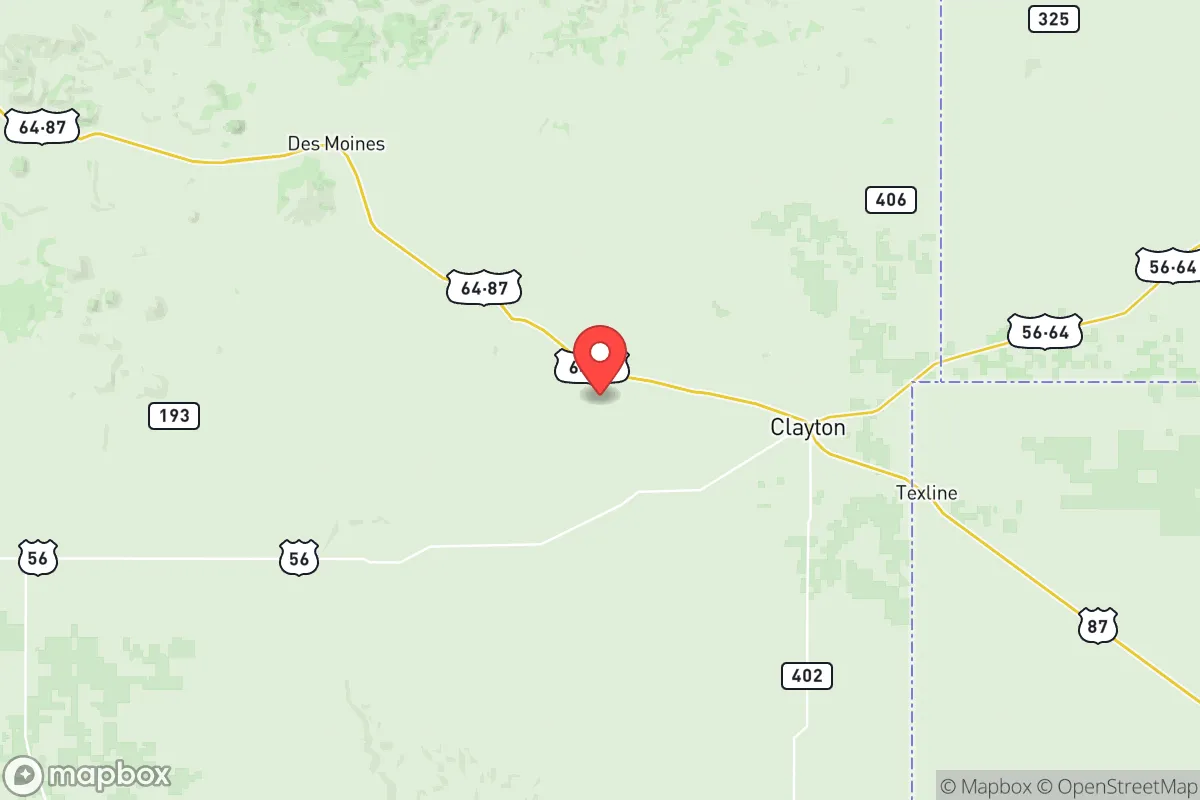
The first major wave of Anglo-American settlement came after the U.S. acquisition of the region in the 1848 Treaty of Guadalupe Hidalgo and the subsequent opening of the Santa Fe Trail. The trail passed through the northeastern corner of what would become Union County, and the town of Clayton was founded in 1887 as a railroad stop on the Chicago, Rock Island and Pacific Railroad. The railroad’s arrival spurred rapid growth, drawing cattle ranchers from Texas, Kansas, and Colorado who were attracted by the open grasslands and the ability to ship cattle to eastern markets. These Anglo ranchers, many of Scots-Irish and English descent, established large cattle operations that remain the backbone of the county’s economy. The town of Des Moines (founded 1888) and Folsom (founded 1888) grew as supply centers for these ranches, while Grenville and Amistad emerged as agricultural hubs for dryland farming and wheat production.
A second significant wave occurred during the Dust Bowl era of the 1930s, when displaced farmers from Oklahoma, Texas, and Kansas—often called “Okies”—moved into Union County seeking work on ranches and farms. These migrants, predominantly of Anglo and Scots-Irish stock, reinforced the county’s already strong ranching culture and contributed to its conservative, self-reliant ethos. The Hispanic population, which had been the original settlers, remained concentrated in the southern part of the county, particularly around Moses and Sedan, where they maintained their language and Catholic traditions. By 1960, Union County’s population peaked at roughly 5,500, with a demographic makeup that was approximately 60% Anglo and 40% Hispanic, with virtually no other ethnic groups present.
Modern era (post-1965)
The post-1965 era, shaped by the Hart-Cellar Act, had minimal impact on Union County’s demographics due to its remote location and limited economic opportunities. Unlike urban New Mexico, which saw significant immigration from Mexico and Central America, Union County’s foreign-born population remained negligible—today just 2.0%—and the county did not experience the large-scale Hispanic immigration that transformed other parts of the state. Instead, the dominant demographic trend has been out-migration, as younger residents left for jobs in Albuquerque, Amarillo, and Denver, causing a steady population decline from the 1960 peak to the current 4,039.
The Hispanic population, however, has grown as a share of the total, rising from about 40% in 1960 to 39.7% today, while the White (non-Hispanic) share has declined from roughly 60% to 54.0%. This shift is not due to new immigration but rather to higher birth rates among Hispanic families and the out-migration of Anglo youth. The Black population remains minuscule at 0.8%, and there are no measurable East/Southeast Asian or Indian subcontinent communities. The county has not suburbanized in any meaningful way; the only incorporated town, Clayton, remains the commercial and administrative center, with a population of about 2,500. The unincorporated communities of Folsom, Des Moines, and Grenville have seen their populations dwindle as consolidation of ranches and farms reduced the need for small-town services.
Domestic migration has been almost entirely outward, with no significant influx from the Rust Belt or coastal states. The county’s economy, based on cattle ranching, wheat farming, and some oil and gas extraction, has not attracted the kind of in-migration seen in New Mexico’s more dynamic regions like Santa Fe or Las Cruces. The result is a population that is aging, with a median age of 47.6, and increasingly reliant on retirees and those who inherit family ranches.
The future
Union County’s population is projected to continue its slow decline over the next 10–20 years, driven by low birth rates, an aging demographic, and limited economic opportunities for young adults. The county is not homogenizing into a single cultural identity; rather, it is becoming more distinctly Hispanic in its ethnic composition, as the Anglo population ages out and younger Hispanic families remain. However, this shift is gradual and does not represent a cultural transformation—both groups share a common ranching heritage, conservative political values, and a deep attachment to the land.
There is no sign of tribalization into distinct enclaves; the small population and shared rural lifestyle mean that Hispanic and Anglo residents interact closely in schools, churches, and community events in Clayton. The immigrant communities that have reshaped other parts of New Mexico are absent here, and the county’s foreign-born share is unlikely to rise significantly given the lack of jobs in agriculture and the distance from major immigration corridors. The cultural identity of Union County will likely remain stable, defined by its ranching traditions, its conservative politics, and its status as one of the most sparsely populated counties in the state.
For someone moving in now, Union County offers a place where the population is small, stable, and deeply rooted. The county is becoming more Hispanic in its ethnic makeup, but its cultural character—independent, rural, and conservative—is unlikely to change. The challenge for newcomers will be the lack of economic diversity and the long distances to urban amenities, but for those seeking a quiet, traditional community with strong social ties, Union County remains a distinctive and enduring part of the American West.

* Values derived from national, state, county, city and local statistics and may differ in a specific area. Last updated: 2026-05-22T03:53:53.000Z
Narrative content on this page is AI-generated and may contain mistakes. Verify any details that matter before acting on them.
ReloMaps may earn a commission from affiliate links at no extra cost to you.

