Photo: Wikipedia
Political ClimatePolitical Climate in Union County
Showing district-level results — no local-only data available.
Local Political AnalysisPolitical Analysis of Union County
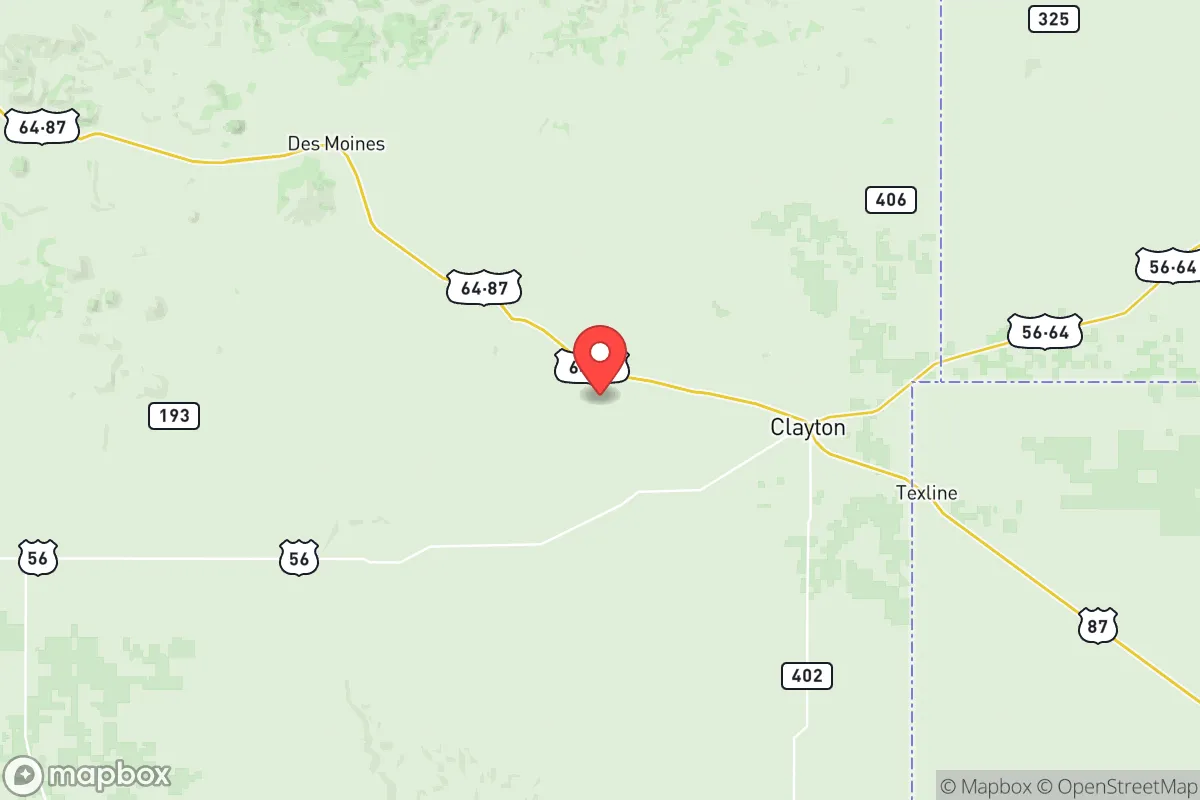
Union County has long been a place where folks value their independence and don't take kindly to being told how to live their lives. While the county as a whole leans slightly Democratic with a Cook PVI of D+3, that number doesn't tell the full story of a community that's been shifting rightward in recent years, especially in the rural areas outside of Clayton. The county seat, Clayton, tends to vote more blue, but the surrounding towns like Des Moines, Folsom, and Amistad are reliably red, with many precincts swinging hard toward conservative candidates in the last few cycles. If you're looking at the political map, the real battleground is in the precincts around Seneca and Mount Dora, where independent voters have been breaking for Republicans more often than not.
How it compares
Union County's D+3 PVI matches the state of New Mexico's D+3 exactly, but the similarity ends there. New Mexico as a whole has been drifting left for years, with Albuquerque and Santa Fe driving progressive policies on energy, land use, and gun rights that feel foreign to folks in Union County. Here, the state's push for tighter environmental regulations on ranching and farming, along with mandates on everything from water rights to school curricula, rubs a lot of people the wrong way. In contrast, Union County's local government has fought to keep those state-level overreaches at bay, with county commissioners pushing back on what they see as unnecessary bureaucracy. The difference is stark: while the state legislature in Santa Fe talks about green energy transitions and social programs, Union County residents are more concerned with keeping their property taxes low and their Second Amendment rights intact.
What this means for residents
For someone living here, the political climate means you're constantly watching your back against state overreach. The progressive agenda coming out of Santa Fe—things like stricter gun laws, land-use restrictions that hurt ranchers, and mandates on renewable energy—feels like a direct threat to the way of life that's been here for generations. Locals are increasingly worried that the state's one-size-fits-all policies will ignore the realities of rural life, where a family might rely on a well for water and a truck for work. The good news is that Union County's conservative lean in the rural precincts has kept the worst of it at bay so far, but the trend is concerning. If you're thinking about moving here, know that you'll be part of a community that values personal freedom and isn't afraid to push back against government overreach, but you'll also need to stay engaged in local elections to keep that spirit alive.
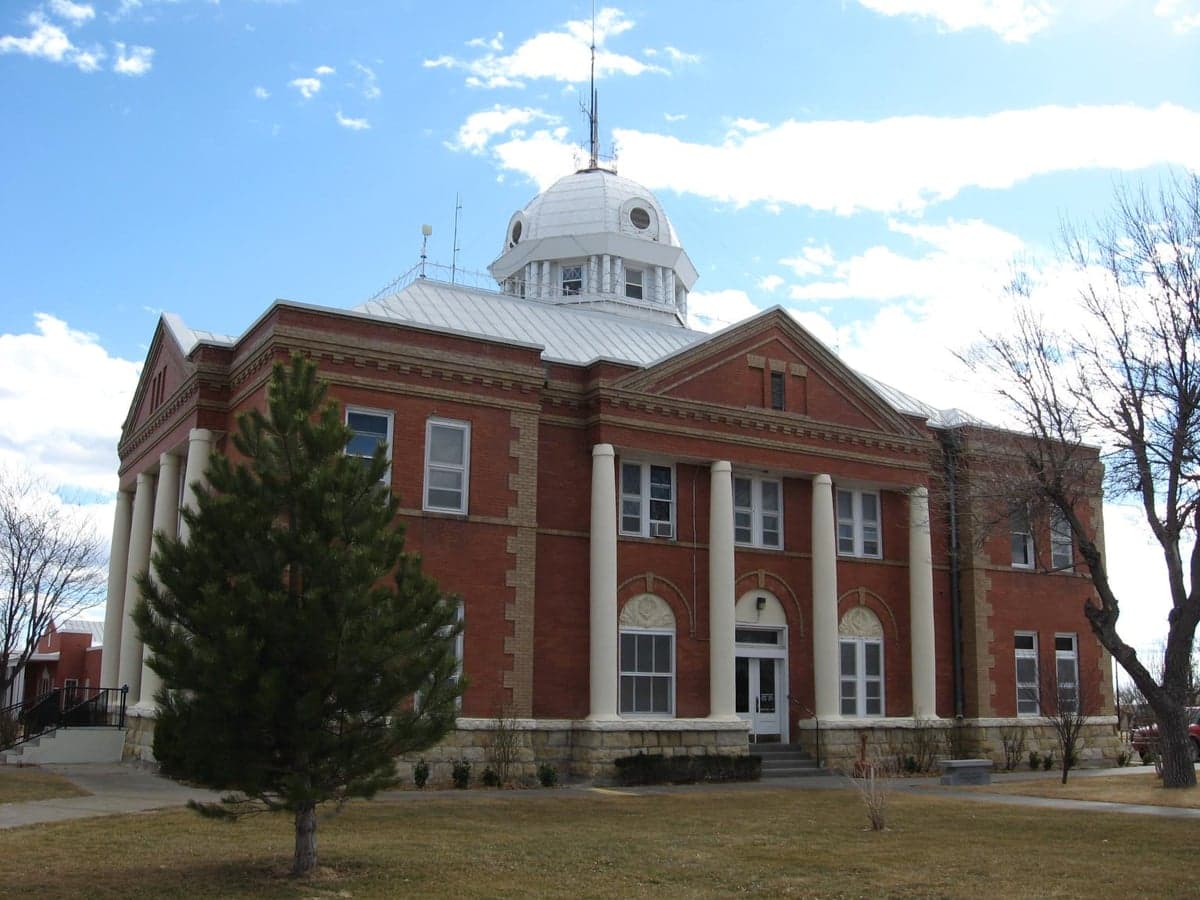
Culturally, Union County is a place where neighbors still help each other out, and the local politics reflect that—less about big government programs and more about personal responsibility and community support. The policy distinctions from the rest of New Mexico are clear: while the state pushes for centralized control, Union County's leaders focus on local solutions, like keeping the courthouse open and supporting volunteer fire departments. The long-term outlook is uncertain, but if the trend of rural precincts swinging red continues, Union County could become an even stronger conservative stronghold in a state that's moving in the opposite direction. For now, it's a place where you can still live your life without too much interference, but you'd better keep an eye on Santa Fe.

State Political ClimatePolitical Climate in New Mexico
State Political AnalysisPolitical Environment in the State
New Mexico has been a reliably blue state for decades, with a Cook PVI of D+3, but don't let that number fool you into thinking it's a monolith. The state's political lean is driven almost entirely by the Albuquerque metro and a handful of other urban centers, while vast rural areas vote as red as any in Texas. Over the last 10-20 years, the state has shifted noticeably leftward on cultural and economic issues, driven by a growing progressive activist class in Santa Fe and a Democratic supermajority that has governed without much restraint. For a conservative-leaning individual or family, the key question isn't whether the state is red or blue—it's whether the blue parts are manageable and whether the rural areas offer enough breathing room.
Urban vs. rural divide
The political map of New Mexico is a study in stark contrasts. Bernalillo County (Albuquerque) alone casts about one-third of the state's votes, and it leans reliably Democratic, though not as far left as Santa Fe County. Santa Fe itself is the progressive engine of the state—home to a dense concentration of government workers, artists, and activists who push for policies that often feel disconnected from the rest of New Mexico. Las Cruces, in Doña Ana County, is another blue stronghold, driven by a large Hispanic population that leans Democratic and a major state university. On the flip side, the eastern plains—places like Roswell, Hobbs, and Clovis—vote overwhelmingly Republican, driven by oil and gas, agriculture, and a strong ranching culture. The northwest corner, including Farmington and the Four Corners area, is also reliably red, powered by the energy industry. Even within blue counties, there are pockets of red: the East Mountains area outside Albuquerque and the rural parts of Valencia County are noticeably more conservative. The divide isn't just about party registration; it's about worldview. In rural areas, people still know their neighbors, carry firearms without a second thought, and expect local government to stay out of their lives. In Santa Fe and parts of Albuquerque, the expectation is that government should be an active, progressive force.
Policy environment
The policy environment in New Mexico has become increasingly challenging for conservatives. The state has a progressive income tax structure with a top rate of 5.9%, and while there is no state sales tax on groceries, the gross receipts tax (which functions like a sales tax) can exceed 8% in some cities. Property taxes are relatively low compared to Texas, which is a plus, but the state makes up for it with high fees and a regulatory posture that is hostile to traditional energy development. On education, the state has embraced the "community schools" model, which critics argue is a vehicle for progressive social agendas, and has resisted school choice expansion. Healthcare is dominated by the state's Medicaid expansion, which covers nearly half the population, and the state has enacted some of the most permissive abortion laws in the country, including the 2023 law that prohibits local municipalities from restricting abortion access. Election laws are a mixed bag: New Mexico has no-excuse absentee voting and same-day registration, but also requires voter ID for first-time voters who registered by mail. The state's Public Regulation Commission was abolished in 2020 and replaced with an appointed commission, removing a layer of direct accountability that conservatives valued.
Trajectory & freedom
On the trajectory of personal freedom, the picture is mixed but trending in a concerning direction for conservatives. Gun rights have been under sustained attack: in 2021, the state passed a "red flag" law allowing for temporary firearm seizure without a criminal conviction, and in 2023, a ban on firearms at polling places and government buildings was enacted. The state also passed a 7-day waiting period for firearm purchases in 2023. On parental rights, the 2023 "Safe Haven for New Mexico Families" law expanded the timeframe for surrendering infants, but the state has resisted parental notification requirements for minors seeking abortions. Medical autonomy took a hit with the 2021 passage of a vaccine mandate for healthcare workers, which led to significant staffing shortages in rural hospitals. Property rights are relatively strong compared to coastal states, but the state's environmental review process can be weaponized against development. On the positive side, New Mexico has no state-level occupational licensing for many trades, making it easier to start a business than in neighboring states. The state also has no "right-to-work" law, meaning union membership can be a condition of employment in some sectors.
Civil unrest & political movements
New Mexico has seen its share of political flashpoints. The 2020 protests in Albuquerque were intense, with the toppling of a statue of Juan de Oñate and a series of confrontations between activists and police. The state's sanctuary policies are among the strongest in the nation: the 2019 "New Mexico Values Act" explicitly prohibits state and local law enforcement from cooperating with federal immigration authorities, which has created tension with border communities like Deming and Las Cruces. There have been organized efforts on the right, including the "New Mexico Civil Guard" and various county-level Second Amendment sanctuary resolutions, but these have been largely symbolic. The 2022 election integrity controversy in Otero County, where commissioners initially refused to certify primary results over concerns about Dominion voting machines, was a high-profile example of the distrust that exists in rural areas. More recently, the 2023 legislative session saw massive protests over the gun control bills, with gun rights advocates filling the Roundhouse in Santa Fe. The state's high crime rate—Albuquerque consistently ranks among the most dangerous cities in the country—has also fueled a growing "law and order" movement that crosses party lines.
Projection
Looking ahead 5-10 years, the trajectory is not encouraging for conservatives. Demographic trends favor the blue areas: Santa Fe and Albuquerque are growing slowly, while rural counties are losing population. The oil and gas boom in the Permian Basin has brought some conservative-leaning workers to the southeast corner, but that region's political influence is diluted by the state's heavily gerrymandered districts. The Democratic supermajority shows no signs of weakening, and the state's progressive wing is ascendant. Expect more gun control, more expansion of government healthcare, and continued resistance to school choice. The wild card is crime and quality of life: if Albuquerque's crime problem continues to worsen, it could drive a moderate backlash, but that would likely manifest as a shift toward centrist Democrats rather than Republican gains. For a conservative moving in now, the realistic expectation is that the state will continue to move left on cultural issues, but that rural areas and the eastern plains will remain islands of traditional values.
For a conservative individual or family considering New Mexico, the bottom line is this: the state offers beautiful landscapes, a low cost of living, and genuine community in rural areas, but you will be living under a state government that is actively hostile to many of your values. If you can find work in the oil fields of Hobbs or the agricultural economy of Clovis, you can carve out a good life with like-minded neighbors. But if you're moving to Albuquerque or Santa Fe for a job, be prepared for a political environment that will feel increasingly foreign. The state's trajectory is clear, and it's not turning around anytime soon.
* Values derived from national, state, county, city and local statistics and may differ in a specific area. Last updated: 2026-05-22T03:53:53.000Z
Narrative content on this page is AI-generated and may contain mistakes. Verify any details that matter before acting on them.
ReloMaps may earn a commission from affiliate links at no extra cost to you.

