Photo: Wikipedia
Demographics of New Rochelle, NY
Affluence Level in New Rochelle, NY
An upper-middle-class area. Household wealth, education levels, and homeownership run ahead of national benchmarks.
People of New Rochelle, NY
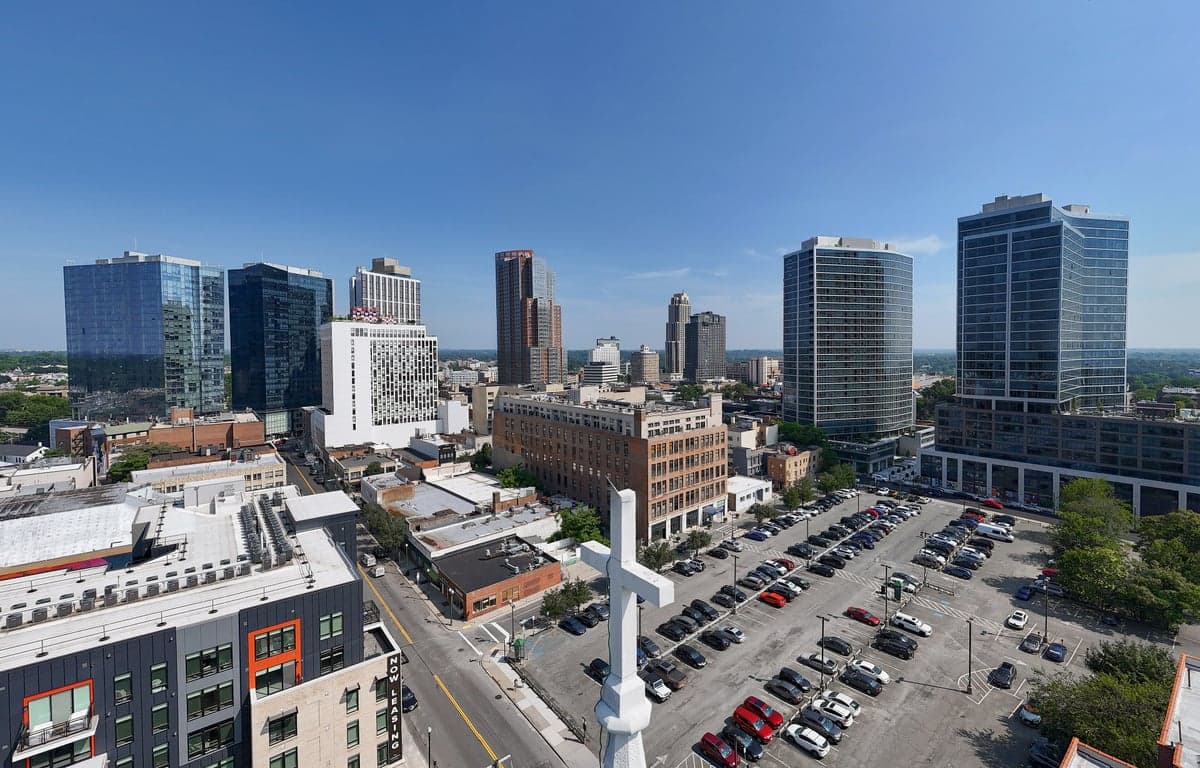
The people of New Rochelle, New York, today number 81,591, forming a dense, diverse, and highly educated suburban city just north of Manhattan. With a population that is 42.0% White, 30.6% Hispanic, 18.6% Black, 3.3% East/Southeast Asian, and 2.0% Indian, the city is a mosaic of distinct ethnic enclaves and income brackets. Its identity is shaped by a long history of successive immigrant waves, a strong Catholic and Jewish institutional presence, and a recent surge in luxury high-rise development that is attracting a new class of professional residents.
How the city was settled and grew
New Rochelle was founded in 1688 by French Huguenots fleeing religious persecution, who were granted land by the British colonial government. These original settlers established a farming and milling community centered around what is now the Huguenot neighborhood, named for their heritage. The city grew slowly through the 19th century as a summer resort and commuter suburb for New York City's elite, with the arrival of the railroad in the 1840s spurring development. Major population waves came in the late 19th and early 20th centuries, when Irish, Italian, and German immigrants arrived to work in the city's growing construction, service, and manufacturing sectors. These groups settled in working-class neighborhoods like Beechmont (Irish and German) and the Florence Park area (Italian). By the mid-20th century, New Rochelle was a predominantly White, middle-class suburb with a significant Jewish population concentrated in the Wykagyl and Larchmont Woods sections, drawn by the city's excellent public schools and proximity to Manhattan.
Modern era (post-1965)
The 1965 Hart-Cellar Immigration Act and the broader civil rights movement fundamentally reshaped New Rochelle's population. The city experienced significant White flight to outer suburbs, particularly during the 1970s and 1980s, as Black families moved into previously restricted neighborhoods. This domestic migration saw African American residents concentrate in the Lincoln Avenue corridor and the Downtown area. Simultaneously, a new wave of immigration began. Hispanic residents, primarily from Puerto Rico, the Dominican Republic, and later Central America, settled in the Downtown and South Side neighborhoods, establishing a vibrant commercial corridor along Main Street. The city's foreign-born population now stands at 12.5%, a figure that understates the cultural impact of second-generation families. More recently, the 2000s and 2010s brought a small but growing East/Southeast Asian community (3.3%), concentrated in the Wykagyl and Premium Point areas, and an Indian-subcontinent population (2.0%) found in the Beechmont and Wykagyl sections, drawn by the city's strong schools and professional job base. The city's college-educated share of 49.1% reflects this professional in-migration, which has accelerated with the construction of luxury high-rises near the New Rochelle Transit Center.
The future
The population of New Rochelle is heading toward greater economic and ethnic stratification. The downtown area is undergoing a massive redevelopment boom, with thousands of new market-rate apartments attracting young professionals and empty-nesters, many of whom are White and Asian. This is creating a distinct, high-income enclave that contrasts with the older, more established, and more diverse neighborhoods. The Hispanic population is projected to continue growing, likely surpassing 35% of the total within the next decade, driven by both immigration and higher birth rates. The Black population is stable but aging, with younger Black families often choosing more affordable outer suburbs. The East/Southeast Asian and Indian communities are small but growing, primarily through professional migration, and are likely to remain concentrated in the city's more affluent northern sections. The city is not homogenizing; rather, it is tribalizing into distinct geographic and economic zones: a luxury downtown corridor, a stable middle-class north end, and a more working-class, heavily Hispanic south side.
For a conservative-leaning individual or family considering a move, New Rochelle offers a mixed picture. It is a city with strong historical institutions, good schools, and a vibrant, diverse population, but it is also one where demographic change is rapid and neighborhood character varies sharply. The city is becoming a place of distinct enclaves rather than a unified whole, and the choice of neighborhood will largely determine the experience of daily life.

* Values derived from national, state, county, city and local statistics and may differ in a specific area. Last updated: 2026-05-01T23:52:59.000Z
Narrative content on this page is AI-generated and may contain mistakes. Verify any details that matter before acting on them.
ReloMaps may earn a commission from affiliate links at no extra cost to you.

