Photo: Wikipedia
Quality of Life in New Rochelle, NY
A high quality of life with strong walkability, manageable living costs, healthy neighborhood signals, and solid amenity access.
What does Quality of Life tell us?
Quality of Life blends cost of living, nearby amenities, socioeconomic signals, and neighborhood character. City-level scores represent the whole municipality; individual neighborhoods can differ.
What does this tell us?
Quality of Life blends cost of living, nearby amenities, socioeconomic signals, and neighborhood character. City-level scores represent the whole municipality; individual neighborhoods can differ.
Cost of Living
89% above national average
The Real Cost of Living in New Rochelle, NY for 2026
| Tier | Individual | Family (4) |
|---|---|---|
| Survival | $29k | $55k |
| Comfortable | $130k | $191k |
| Luxury | $188k+ | $291k+ |
| Elite (Top 5%) | $306k+ | $474k+ |
54%
The Area Signal
A metric tracking the socioeconomic signals of the area.
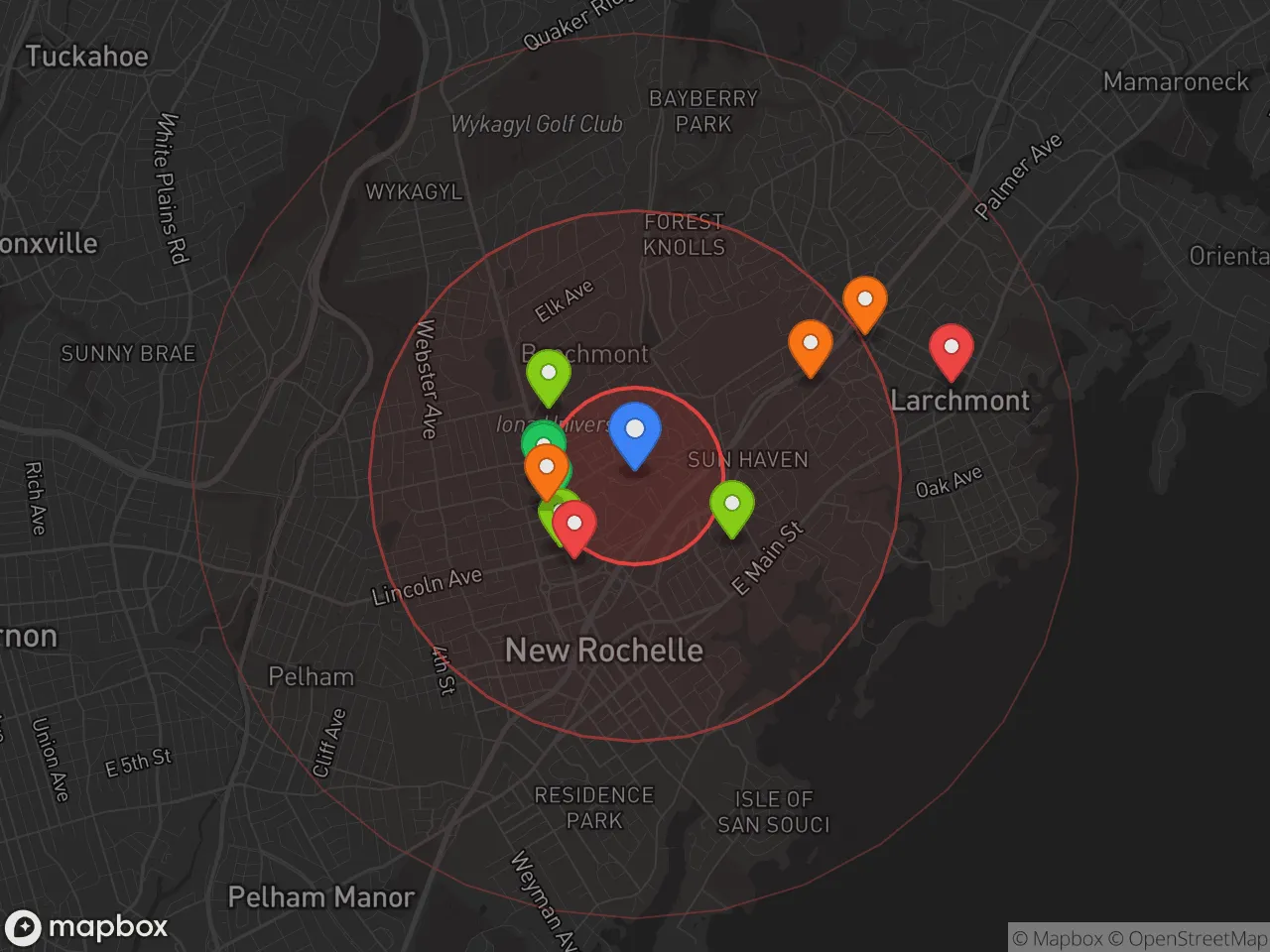
Hobbies
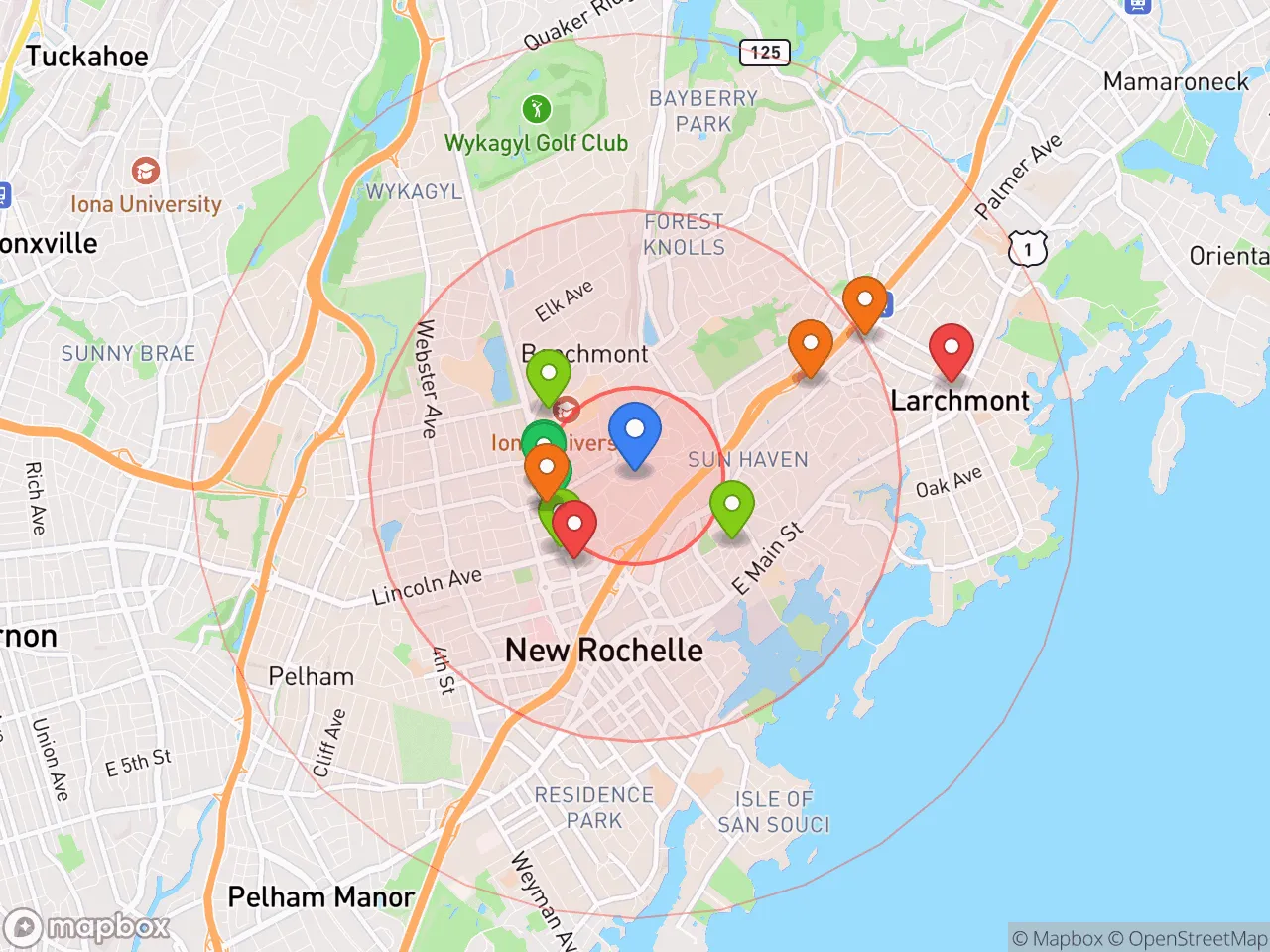
Explore the areaGroceries
7 within 10 miles
Gas
20 within 10 miles
Hospital
20 within 20 miles
Airport
JFK — John F. Kennedy International
Post Office
USPS — New Rochelle, NY
Critical Amenities
Quality-of-Life Analysis
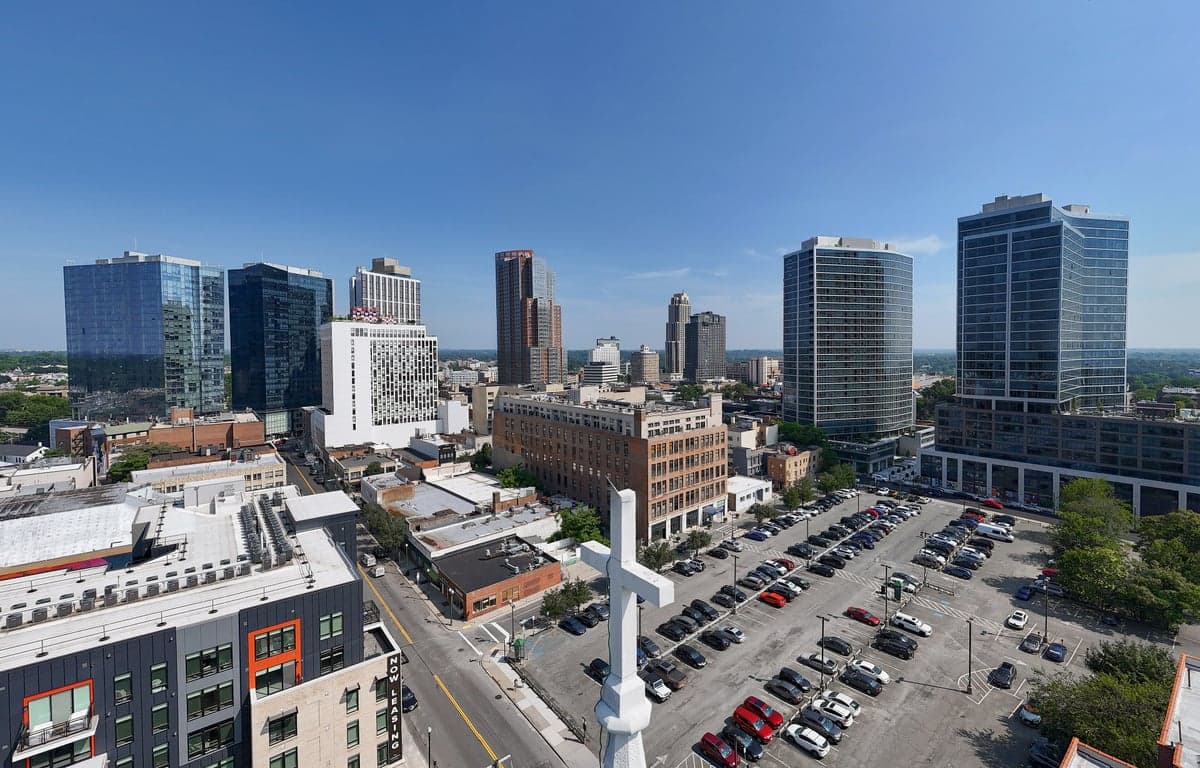
New Rochelle presents a classic suburban affluence profile within Westchester County, attracting a mix of established professionals, young families, and empty-nesters drawn by its proximity to Manhattan and its own robust local economy. With a cost of living index of 189 (nearly double the U.S. average of 100), the city commands a premium for its location, amenities, and housing stock, but remains a more attainable alternative to pricier neighbors like Scarsdale or Larchmont. The population skews educated and career-oriented, with a significant share of residents commuting to New York City for white-collar jobs in finance, law, and media, while a growing number work locally in healthcare, education, and retail sectors.
Cost of living, housing affordability, and how New Rochelle compares to nearby suburbs
New Rochelle’s cost of living is driven primarily by housing, with a median home value of $667,300—well above the national median but notably lower than the $1 million-plus averages seen in Scarsdale or Bronxville. Renters face a median monthly rent of $1,830, which is competitive for Westchester but still significantly higher than the national median of roughly $1,200. Compared to nearby Mount Vernon (median home value around $450,000) or Yonkers ($550,000), New Rochelle sits at a higher price point, reflecting its stronger school system and more extensive waterfront and downtown amenities. Property taxes in New Rochelle are high, typical for Westchester, with effective rates often exceeding 2% of assessed value, which adds a substantial recurring cost for homeowners. For buyers, the trade-off is access to a Metro-North commuter rail station with a 31-minute average commute to Grand Central Terminal, a time savings that justifies the premium for many professionals.
What daily life is like: schools, parks, dining, and the local rhythm
Daily life in New Rochelle centers on a walkable downtown core around the New Rochelle Transit Center, which has seen significant redevelopment with new apartment towers, restaurants like Dubrovnik and Alvin & Friends, and the New Roc City entertainment complex. The city’s public school system, New Rochelle City School District, serves roughly 11,000 students and includes New Rochelle High School, which offers a strong International Baccalaureate program and consistently ranks among the top 10% of New York high schools. For recreation, residents have access to Glen Island Park (a county beach and picnic area on Long Island Sound), Hudson Park (with a marina and kayak launch), and the sprawling Ward Acres Nature Preserve with hiking trails. The city also hosts a vibrant arts scene via the New Rochelle Council on the Arts and the annual New Rochelle Film Festival. The rhythm is distinctly suburban-urban hybrid: mornings see a steady flow of commuters to the train station, while evenings and weekends fill with youth sports leagues, farmers markets, and community events at the New Rochelle Public Library.
New Rochelle is best suited for professionals and families who prioritize a short commute to Manhattan and value a dense, amenity-rich suburban environment over a quiet, car-dependent one. Empty-nesters and downsizers will find the newer downtown condos appealing, while families should weigh the high property taxes against the strong school system and recreational offerings. Those seeking a lower cost of living or a more rural setting should look farther north in Westchester or into Putnam County, but for buyers and renters who can absorb the premium, New Rochelle delivers a balanced quality of life with genuine urban convenience.

Crime in New Rochelle, NY
Generally safer than 68% of comparable U.S. locations.
Violent CrimeViolent Crime Analysis
Property CrimeProperty Crime Analysis
Crime Analysis
New Rochelle’s overall crime profile is a study in contrasts: its violent crime rate of 145 incidents per 100,000 residents is well below the national average, yet its property crime rate of 1,139.3 per 100,000 sits notably higher than both state and national benchmarks. This combination creates a safety picture where residents generally feel secure from violent confrontations but face elevated risks of theft, burglary, and vehicle-related crime. The city’s proximity to New York City and its status as a dense, transit-connected suburb contribute to these dynamics, as does the broader criminal justice environment in Westchester County.
Crime in context
New Rochelle’s violent crime rate of 145 per 100,000 is roughly 60% lower than the national average of about 380 per 100,000, and also below the New York state average of approximately 360 per 100,000. This places the city in a relatively safe tier for violent offenses like homicide, robbery, and aggravated assault. However, the property crime rate of 1,139.3 per 100,000 is about 15% higher than the national average of roughly 1,000 per 100,000 and significantly exceeds the New York state average of around 900 per 100,000. Larceny-theft is the most common property crime, followed by motor vehicle theft, which has been a persistent concern in the region. The disparity between low violent crime and elevated property crime is a hallmark of many suburban communities near major urban centers.
What residents experience
For daily life, the practical impact is that residents are unlikely to encounter violent crime in their neighborhoods but should take standard precautions against theft. Car break-ins and package thefts are the most frequently reported incidents, particularly in denser downtown areas and near the train station. The city’s police department maintains a visible presence and has invested in community policing initiatives, but the broader context of Westchester County’s criminal justice system is a concern. Like many jurisdictions in the New York City metro area, Westchester has seen the influence of progressive prosecutorial policies, including bail reform and reduced sentencing for nonviolent offenses. While these policies aim to reduce incarceration, they also result in more repeat offenders cycling back onto the streets, which directly undermines property crime deterrence and can erode public confidence in the justice system’s ability to protect victims.
Neighborhood-level variation is significant. Areas west of I-95, such as the Wykagyl and Premium Point sections, generally report the lowest crime rates, with many blocks seeing near-zero incidents. In contrast, the downtown corridor along Main Street and the areas immediately surrounding the New Rochelle Transit Center experience higher concentrations of larceny and vehicle theft. The Lincoln Avenue corridor and parts of the South Side have historically reported more incidents, though violent crime remains rare even there. Prospective residents should research block-level data on platforms like the New Rochelle Police Department’s crime map, as a single street can differ markedly from its neighbors in safety outcomes. Overall, New Rochelle offers a safe suburban environment for most families, but the elevated property crime rate and the regional justice system’s leniency toward repeat offenders are factors that warrant careful consideration.
* Values derived from national, state, county, city and local statistics and may differ in a specific area. Last updated: 2026-05-01T23:52:59.000Z
Narrative content on this page is AI-generated and may contain mistakes. Verify any details that matter before acting on them.
ReloMaps may earn a commission from affiliate links at no extra cost to you.

