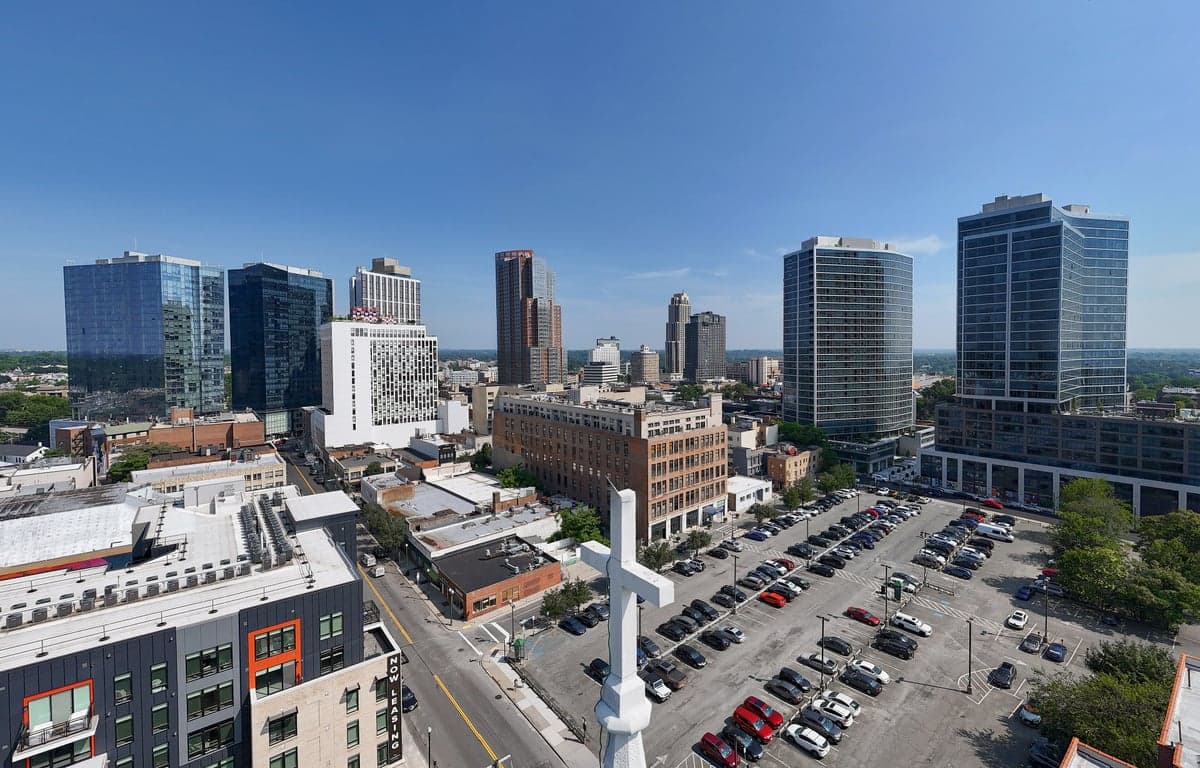
Photo: Wikipedia
Political ClimatePolitical Climate in New Rochelle, NY
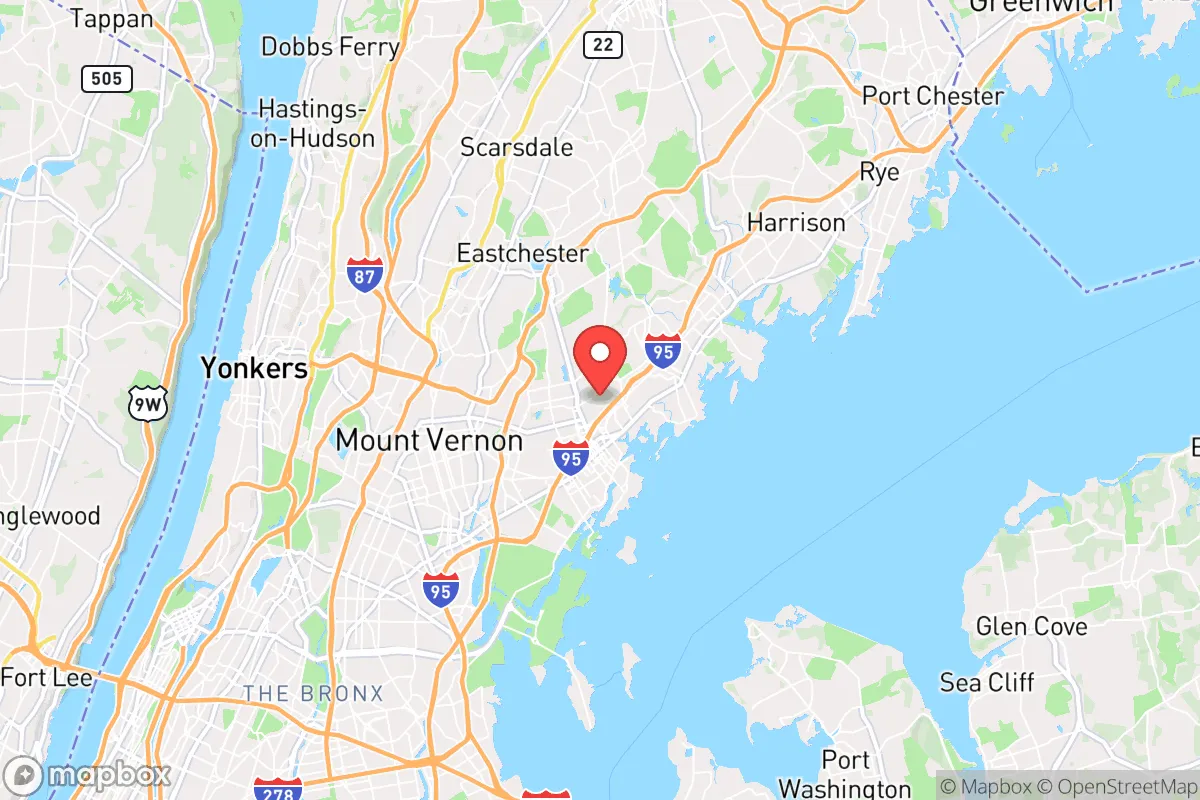
District shown is the primary district for this city’s centroid. Cities may span multiple districts.
Local Political AnalysisPolitical Analysis of New Rochelle, NY
Look, I’ve lived in New Rochelle my whole life, and I’ve watched it change from a solidly moderate, family-first town into a place that’s now deep blue by any measure. The Cook PVI of D+18 tells you everything you need to know: this city leans hard left, and it’s been accelerating that way for the last decade. In the 2024 presidential race, Westchester County as a whole went for the Democrat by about 30 points, and New Rochelle was right in that mix—if not a few ticks bluer. The shift isn’t subtle. It’s a place where progressive policies are the baseline, not the exception, and that’s something you need to weigh if you’re thinking about moving here.
How it compares
New Rochelle isn’t an island. Drive 10 minutes north to Scarsdale or Eastchester, and you’ll find towns that are also blue but with a more restrained, “old-school” liberal vibe—think high property taxes but less appetite for radical social experiments. Head west to Yonkers, and you get a more working-class, mixed bag politically, though it’s still safely Democratic. The real contrast is if you go 20 minutes east into Fairfield County, Connecticut—places like Greenwich or Stamford—where you’ll find a more balanced political mix, with actual Republican representation on local boards. New Rochelle, by comparison, is a one-party town. The city council is all Democrats, and the mayor’s office has been in Democratic hands for decades. There’s no real opposition, and that’s where the rubber meets the road for anyone worried about government overreach.
What this means for residents
For a conservative or even a moderate, living here means accepting that your voice is often drowned out. The local government has pushed through a series of progressive initiatives that I’d call concerning: a “sanctuary city” policy that limits cooperation with federal immigration enforcement, a push for rent control that’s made landlords sell off properties, and a zoning overhaul that’s fast-tracking high-density development without much community input. Property taxes are already among the highest in the state—around 2.5% of assessed value—and they keep climbing to fund new social programs. School board meetings have become battlegrounds over curriculum and library books, with the progressive majority usually winning. If you value personal freedoms—like choosing your own healthcare, deciding what your kids read, or keeping more of your paycheck—you’ll feel the squeeze here. The city’s also been aggressive with COVID-era mandates that lingered longer than in surrounding towns, and there’s a general vibe that the government knows best.
On the cultural side, New Rochelle has always been a diverse, vibrant community—that part hasn’t changed. You’ve got great waterfront parks, a solid downtown with new restaurants, and easy train access to Manhattan. But the political monoculture is real. If you’re the type who likes to keep your head down and just live your life, you can do that. But if you’re politically active or even just vocal, you’ll find yourself swimming against a strong current. The long-term trajectory? I don’t see it swinging back. The city’s demographics are shifting younger and more transient, and the old guard of moderate homeowners is aging out. For now, New Rochelle is a place where progressive ideology is the law of the land, and that’s something you should know before you sign a lease or a mortgage.

State Political ClimatePolitical Climate in New York
State Political AnalysisPolitical Environment in the State
New York State has long been a Democratic stronghold, but the real story is far more complex than the statewide numbers suggest. The state hasn't voted for a Republican presidential candidate since 1984, and Democrats hold supermajorities in both legislative chambers. But that blue veneer masks a deep and widening chasm between the five boroughs of New York City and the rest of the state. Over the last 20 years, the Democratic coalition has consolidated power in the urban core while rural and suburban areas have shifted sharply rightward, creating one of the most politically bifurcated states in the country.
Urban vs. rural divide
The political map of New York is essentially a tale of two states. New York City alone accounts for roughly 40% of the state's vote, and it delivers margins of 70-80% for Democrats. The city's outer boroughs—Brooklyn, Queens, and the Bronx—are among the most reliably Democratic territory in America. But drive just 30 miles north to Orange County, and you'll find a different world: in 2024, Orange County voted for Donald Trump by a 10-point margin, a flip from its Obama-era purple status. The same pattern holds across the Hudson Valley, where Dutchess and Putnam counties have trended red, and in the Finger Lakes region, where Ontario County went +18 for Trump. The real battlegrounds are the suburban ring counties like Nassau and Suffolk on Long Island, which have oscillated between parties but are now reliably competitive—Suffolk went +4 for Trump in 2024 after backing Biden by 2 points in 2020. Upstate metros like Buffalo and Rochester remain Democratic, but their surrounding counties—Erie County's suburbs, Monroe County's exurbs—are deeply red. The rural North Country, from Plattsburgh to Watertown, votes Republican by 20-30 points, but those areas have shrinking populations and limited political clout.
Policy environment
New York's policy environment is a case study in progressive governance at scale, and it's a major reason conservative-leaning residents are leaving. The state has the highest combined state and local tax burden in the nation, with income tax rates topping out at 10.9% and property taxes among the highest in the country. The 2019 bail reform law eliminated cash bail for most misdemeanors and nonviolent felonies, a move that sparked widespread criticism from law enforcement and suburban parents who saw repeat offenders cycling through the system. Education policy is dominated by the teachers' unions, with the state spending over $27,000 per pupil annually—the highest in the nation—yet reading and math proficiency rates hover around 40%. The state's healthcare system is heavily regulated, with a Medicaid program that covers nearly 40% of residents and a strict certificate-of-need process that limits new hospital construction. Election laws are among the most progressive: no-excuse absentee voting, early voting, and automatic voter registration are all in place. The state also has some of the nation's strictest gun laws, including the 2022 Concealed Carry Improvement Act, which requires a "proper cause" showing for permits and bans firearms in most public places—a law currently being challenged in federal court.
Trajectory & freedom
On the freedom index, New York has been moving decisively in one direction: less free. The 2019 Reproductive Health Act codified abortion up to viability and removed restrictions on late-term procedures, making New York a sanctuary for out-of-state abortion seekers. The 2021 Clean Slate Act automatically seals certain criminal records after a waiting period, a move supporters call rehabilitative but critics say erodes public safety transparency. The state's COVID-era emergency powers, which allowed Governor Andrew Cuomo to issue sweeping executive orders for over a year, were a flashpoint for conservatives who saw them as a template for permanent executive overreach. On parental rights, the state has been a battleground: in 2023, the legislature passed a law requiring schools to allow students to use names and pronouns without parental notification if the student requests it, a direct challenge to parental authority that has sparked lawsuits and school board protests. Property rights have been eroded by the state's rent stabilization laws, which cover over a million units in New York City and have been expanded to upstate cities like Albany and Kingston, limiting landlords' ability to raise rents or evict tenants. The state's 2022 ban on natural gas hookups in new buildings, set to take effect in 2026, is another example of government dictating personal energy choices.
Civil unrest & political movements
New York has been a focal point for political activism on both sides, but the left's footprint is far larger. The 2020 Black Lives Matter protests in New York City were among the largest in the country, with tens of thousands taking to the streets and the city eventually settling a $13 million lawsuit over NYPD tactics. The state's sanctuary policies, codified in the 2017 "New York is a Sanctuary State" executive order and later the 2019 Green Light Law, prohibit state and local law enforcement from cooperating with federal immigration authorities—a policy that has led to frequent clashes with ICE and has made New York a magnet for illegal immigration. On the right, the "New York State of Mind" movement and the "Upstate New York" secessionist rhetoric have gained traction, with some counties passing resolutions calling for a breakaway state. The 2020 election integrity controversy was particularly acute in New York, where the state's mail-in ballot expansion led to widespread reports of ballot harvesting and late-arriving ballots being counted. The 2022 gubernatorial race saw Republican Lee Zeldin come within 6 points of Kathy Hochul, a surprisingly close margin driven by suburban and upstate outrage over crime and bail reform. That race was a wake-up call for Democrats and a signal that the state is not as blue as its registration numbers suggest.
Projection
Over the next 5-10 years, New York's political trajectory is likely to continue its current path: the Democratic supermajority in Albany will keep passing progressive legislation, while the upstate and suburban exodus accelerates. The state is losing population—over 300,000 residents since 2020—and those leaving are disproportionately conservative-leaning families and retirees heading to Florida, Texas, and the Carolinas. The remaining population is increasingly concentrated in the urban core, which means the Democratic base becomes more dominant even as the state shrinks. The 2024 election results showed that even in a year when Trump gained ground nationally, New York's electoral votes remained safely blue. The real action will be in the state legislature: the 2024 redistricting gave Democrats a structural advantage that will be hard to overcome, and the party's left flank is pushing for even more aggressive policies on rent control, single-payer healthcare, and climate mandates. For a conservative-leaning newcomer, the practical reality is that you will be living under a government that is actively hostile to your values on taxes, guns, education, and parental rights. The best you can hope for is to find a red pocket—like the suburbs of Buffalo or the exurbs of the Hudson Valley—where local government provides some buffer, but state-level policy will continue to tighten.
Bottom line: New York is a state where your vote for president or Senate is effectively meaningless, but your local vote matters a great deal. If you're moving here, choose your county carefully—places like Saratoga Springs, Clarence, or Orange County offer a more conservative lifestyle than the state as a whole. But be prepared for a constant battle against Albany's one-party rule, and understand that the state's tax burden and regulatory environment will never be friendly to your wallet or your freedoms. It's a beautiful state with incredible natural resources and world-class cities, but the political climate is a headwind you'll be fighting every day.
* Values derived from national, state, county, city and local statistics and may differ in a specific area. Last updated: 2026-05-01T23:52:59.000Z
Narrative content on this page is AI-generated and may contain mistakes. Verify any details that matter before acting on them.
ReloMaps may earn a commission from affiliate links at no extra cost to you.

