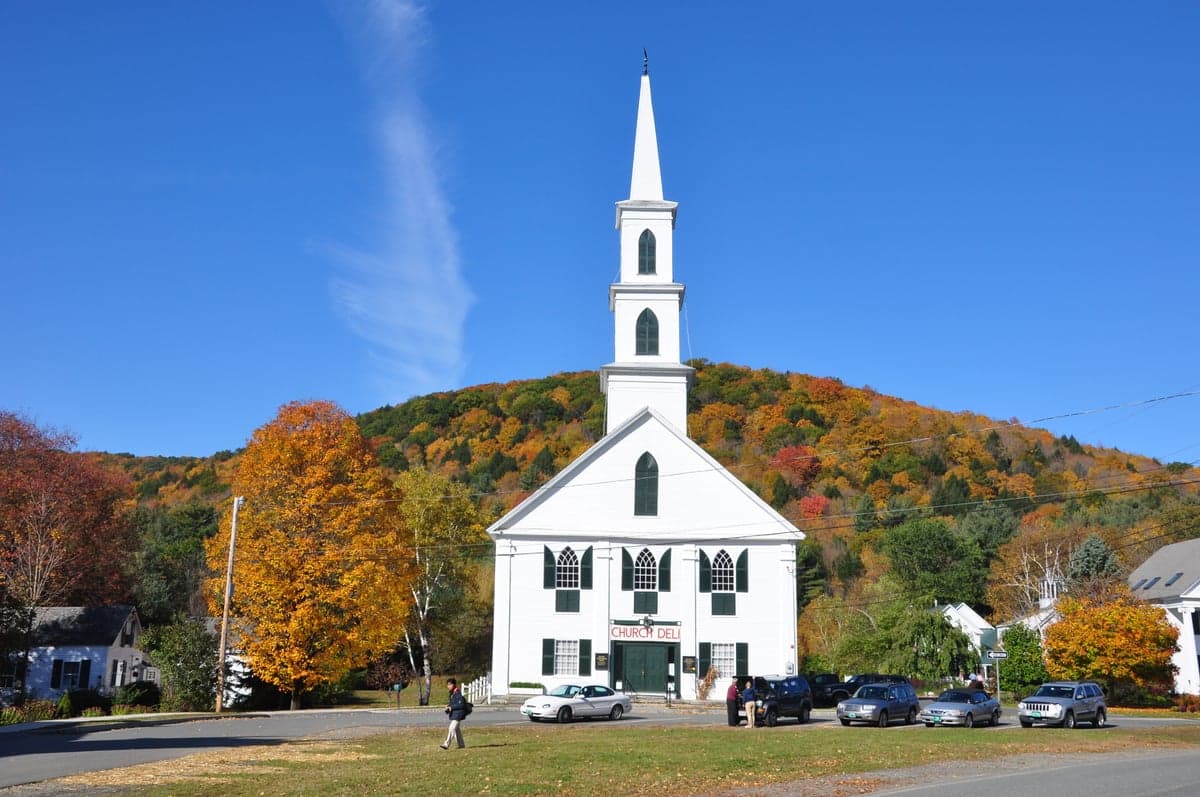
Photo: Wikipedia
Political ClimatePolitical Climate in Newfane, VT
District shown is the primary district for this city’s centroid. Cities may span multiple districts.
Inherited from parent state — no local data available.
Local Political AnalysisPolitical Analysis of Newfane, VT
Newfane, Vermont, leans heavily Democratic, with a Cook PVI of D+17 that places it among the most liberal towns in the state. That wasn't always the case. I remember when this place was more about minding your own business and letting folks live their lives without a bunch of government telling you how to do it. But over the last decade or so, the political winds have shifted hard. The local elections, the school board, the town selectboard — they've all been taken over by folks who see government as the solution to every problem, not a necessary evil to be kept in check. It's a real shame, because the Newfane I grew up in valued independence and self-reliance.
How it compares
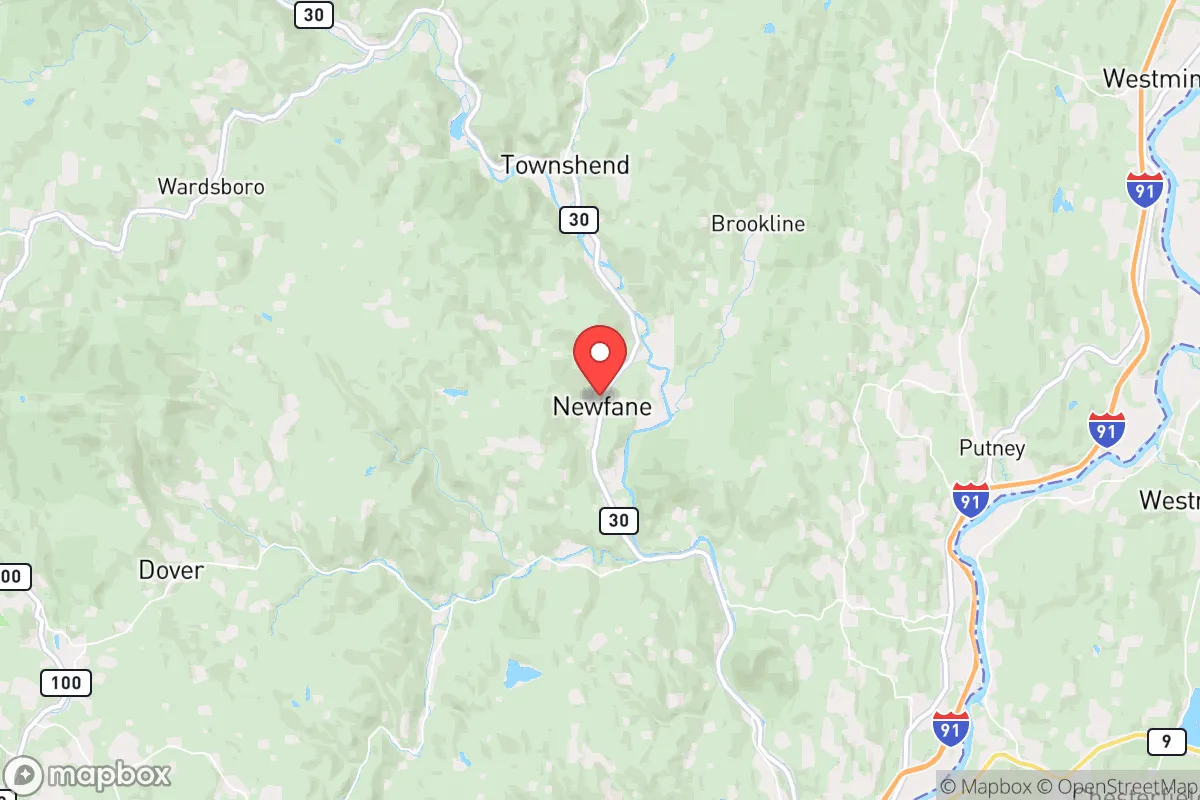
Newfane's D+17 rating puts it in a different universe from the surrounding towns. Head west to Dover or Wilmington, and you'll find a more balanced mix of conservatives and moderates — places where people still grumble about property taxes and gun laws without being shouted down. Even Brattleboro, the regional hub, is less extreme than Newfane these days, though it's still plenty blue. The contrast is stark: Newfane's town meetings have become echo chambers for progressive activism, while neighboring communities like Marlboro and Halifax still have a healthy dose of fiscal conservatism and a healthy skepticism of state overreach. If you're looking for a place where your vote actually means something against the tide, you'd be better off a few miles down the road.
What this means for residents
For those of us who value personal freedom, the shift in Newfane is more than just a political annoyance — it's a practical concern. The local government has embraced a laundry list of progressive policies that chip away at individual rights. Strict land-use regulations make it harder to build a workshop or a garage on your own property without a pile of permits. The school board has pushed critical race theory and gender ideology into the curriculum, leaving parents who object feeling like outsiders in their own community. And the town's support for state-level gun control measures — like the 2023 magazine ban and universal background checks — means law-abiding citizens have fewer tools to protect themselves. It's not about being anti-government; it's about government that doesn't trust its own people to make responsible choices.
Property taxes are another sore spot. The progressive majority in Montpelier, cheered on by Newfane's local leaders, has driven up education spending and property taxes to among the highest in the nation. For a town that's mostly rural and working-class, that's a heavy burden. I've seen neighbors sell their family homes because they couldn't keep up with the tax hikes. The promise of "free" programs and "equity" initiatives sounds nice on paper, but someone's got to pay for it — and it's usually the people who just want to be left alone.
Looking ahead, I don't see things turning around anytime soon. The young families moving in are mostly remote workers from out of state who bring big-city politics with them. They don't remember when Newfane was a place where you could build a shed without a permit or send your kid to school without worrying about what they're being taught. If you're considering a move here, just know what you're getting into. The scenery is beautiful, but the political climate is suffocating for anyone who believes in limited government and personal responsibility.

State Political ClimatePolitical Climate in Vermont
State Political AnalysisPolitical Environment in the State
Vermont has long been a deep blue state, but its political climate is far more complex than the national headlines suggest. The state has voted Democratic in every presidential election since 1992, with margins often exceeding 30 points, but this masks a fierce urban-rural divide and a growing libertarian streak in its more remote areas. Over the last 10-20 years, the dominant coalition has shifted from a moderate, fiscally conservative Yankee Republicanism to a progressive, government-heavy agenda centered in Chittenden County, while the rest of the state has grown increasingly skeptical of one-party rule and the erosion of local control.
Urban vs. rural divide
The political map of Vermont is a study in contrasts. Burlington and its surrounding Chittenden County suburbs—places like South Burlington, Essex Junction, and Winooski—are the engine of the state’s progressive majority. These areas reliably deliver 70-80% of the vote for Democratic and Progressive candidates, driven by a dense population of college students at UVM, tech workers, and state employees. In contrast, the rest of the state is a patchwork of red and purple. Rutland County and Franklin County have trended Republican in recent cycles, with towns like St. Albans and Fairfax flipping from blue to red in 2020 and 2024. The Northeast Kingdom—Newport, St. Johnsbury, and Lyndon—remains a Republican stronghold, though its population is too small to offset the Chittenden County machine. The divide isn’t just about party; it’s about worldview. Urban Vermonters prioritize climate action and social justice, while rural residents are increasingly focused on property rights, school choice, and pushing back against mandates from Montpelier.
Policy environment
Vermont’s policy environment is a mixed bag for a conservative-leaning newcomer. The state has one of the highest tax burdens in the nation, with a progressive income tax topping 8.75% and property taxes among the highest per capita, driven by a school funding system that redistributes local revenue statewide. The regulatory posture is heavy: Act 250, the state’s landmark land-use law, can delay or kill development projects for years, making it hard to build new homes or businesses. Education policy is a flashpoint—Vermont was one of the first states to mandate “diversity, equity, and inclusion” curricula in public schools, and the state board of education has pushed for consolidation of small rural districts, stripping local control. On healthcare, Vermont operates a single-payer-style system called Green Mountain Care, which has driven up costs and limited provider choice. Election laws are among the most permissive in the country: universal mail-in voting, same-day registration, and no voter ID requirement. For a conservative, the policy environment feels like a slow squeeze on personal freedom, with the state inserting itself into everything from what your kids learn to how you use your land.
Trajectory & freedom
Over the past five years, Vermont has become less free in several key areas. The 2023 passage of S.15, a sweeping gun control law, banned the sale of many semi-automatic rifles, limited magazine capacity to 10 rounds, and raised the purchase age to 21. This was followed by a 2024 law requiring a 72-hour waiting period for all firearm purchases. Parental rights took a hit with Act 1 (2022), which removed the requirement for schools to notify parents if a child changes their gender identity or pronouns. On medical freedom, Vermont was one of the first states to mandate COVID-19 vaccines for schoolchildren, and the state’s health department retains broad emergency powers. Property rights are under constant threat from Act 250 and a 2023 law that allows municipalities to impose rent control. On the positive side, Vermont has no right-to-work law, but it also has no state sales tax, which is a small relief. The trajectory is clear: the legislature in Montpelier, dominated by Democrats and Progressives, is pushing a top-down agenda that prioritizes collective outcomes over individual liberty. A new resident should expect more of the same—more mandates, more taxes, and less local control.
Civil unrest & political movements
Vermont has seen its share of political flashpoints. The 2020 Black Lives Matter protests in Burlington turned violent, with property damage and clashes with police, leading to a “defund the police” movement that saw the Burlington Police Department’s budget slashed by 30%. That decision was later partially reversed after a spike in violent crime. On the right, the “Green Mountain Patriots” and local gun rights groups have held regular rallies at the Statehouse, particularly after the passage of S.15. The state’s sanctuary policies are a major point of tension: Vermont was the first state to pass a “trust act” limiting cooperation with federal immigration enforcement, and Burlington has declared itself a “sanctuary city.” This has led to visible friction, with some rural towns like Derby and Swanton passing resolutions opposing the policy. Election integrity is a growing concern among conservatives, given the state’s mail-in voting system and lack of voter ID. In 2022, a Republican candidate for governor, Christina Nolan, made election security a central issue, but she lost decisively. The overall vibe is one of simmering resentment—rural residents feel ignored by Montpelier, and urban activists feel the state isn’t moving fast enough.
Projection
Over the next 5-10 years, Vermont is likely to become more progressive and more polarized. Demographic trends are not on the side of conservatives: the state’s population is aging, and young people are moving to Chittenden County for jobs and lifestyle, while rural areas are shrinking. In-migration from out-of-state, particularly from New York and Massachusetts, is bringing more progressive voters to places like Brattleboro and Montpelier. The 2024 election saw a slight rightward shift in some rural counties, but the overall Democratic margin held. Expect more gun control, more education mandates, and higher taxes. The one wild card is the housing crisis—if the state can’t fix its affordability problem, it may drive out the very young families it needs to sustain its economy. For a conservative moving in now, the realistic outlook is that Vermont will remain a blue state with a vocal, but shrinking, conservative minority. You’ll find your people in the Northeast Kingdom or Franklin County, but you’ll be fighting an uphill battle in Montpelier.
Bottom line for a new resident: If you’re a conservative considering Vermont, you need to go in with eyes wide open. The state’s natural beauty and small-town feel are real, but so is the government overreach. You’ll pay high taxes, deal with heavy regulations, and watch your kids be taught a curriculum you may not agree with. Your best bet is to settle in a rural county like Franklin or Orleans, where local politics are more aligned with your values, and get involved in town meetings—that’s where real power still resides. Vermont is not a lost cause, but it’s a state where you’ll need to fight for your freedoms every step of the way.
* Values derived from national, state, county, city and local statistics and may differ in a specific area. Last updated: 2026-05-03T20:38:51.000Z
Narrative content on this page is AI-generated and may contain mistakes. Verify any details that matter before acting on them.
ReloMaps may earn a commission from affiliate links at no extra cost to you.

