
Photo by Nikunj Singh on Unsplash
Strategic Assessment of Newport, VT
Meaningful friction. Expect exposure to either population pressure, blast zones, or natural disaster risk. Consider buying a retreat property.
What does the Strategic Assessment tell us?
Our Strategic Assessment grades tactical survivability of an area. Major population centers, military targets, fallout zones, natural disasters, and border exposure all drive risk — lower exposure means a more defensible position in a crisis.
This is heavily inspired by Joel Skousen's Strategic Relocation book. Highly recommended you checkout the book ($)What does this tell us?
Our Strategic Assessment grades tactical survivability of an area. Major population centers, military targets, fallout zones, natural disasters, and border exposure all drive risk — lower exposure means a more defensible position in a crisis.
This is heavily inspired by Joel Skousen's Strategic Relocation book. Highly recommended you checkout the book ($)Strategic Pillars

Key Distances
Regional Safe Places
Below is our recommended "safe zones" in Vermont and the surrounding area based on our strategic heuristics. For most people, it's unrealistic to live in a “safe zone” full-time due to work, family or other personal reasons. They tend to be more rural. However, many of these areas are perfect for second homes and retreat properties that double as a vacation home or even a short-term rental.
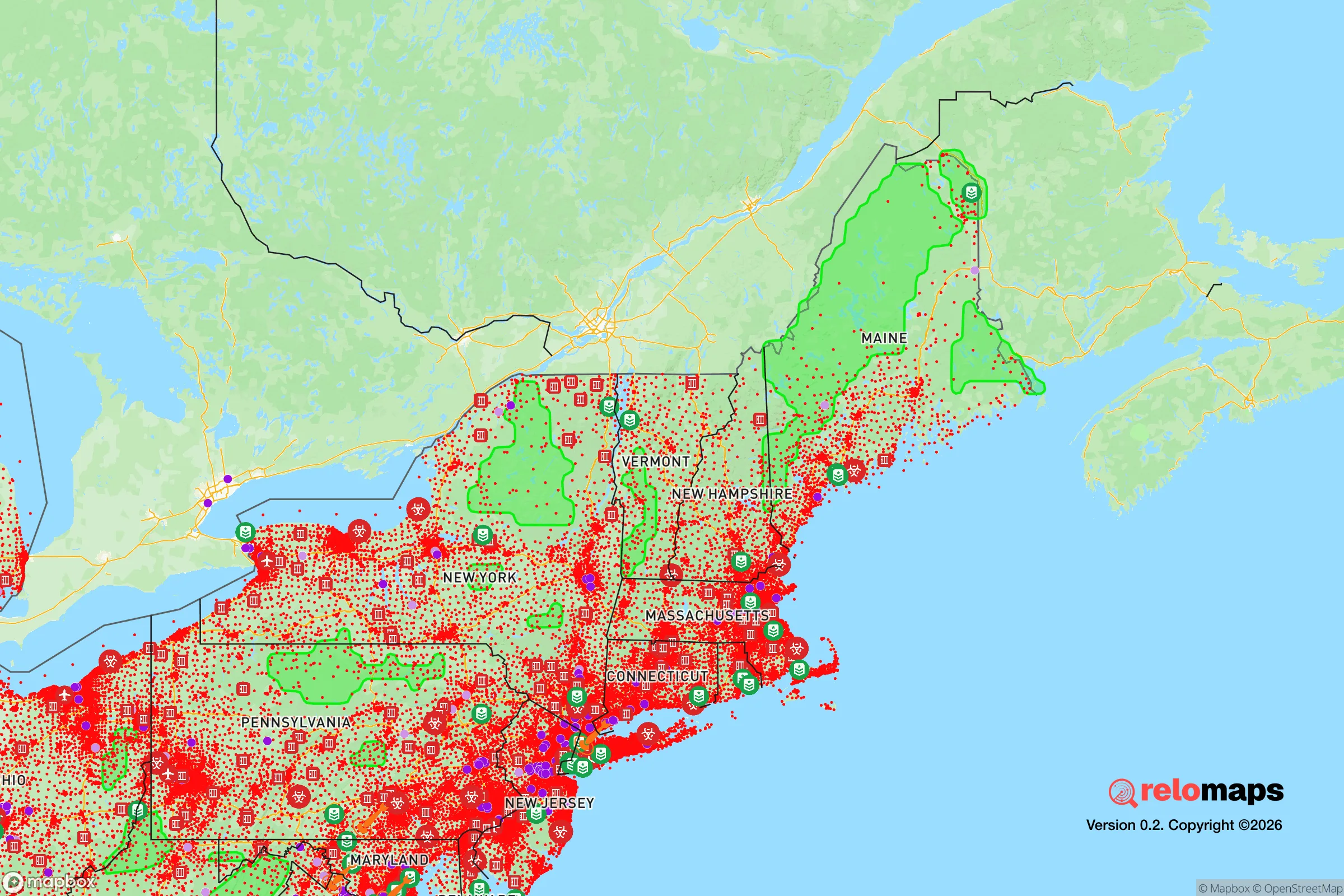
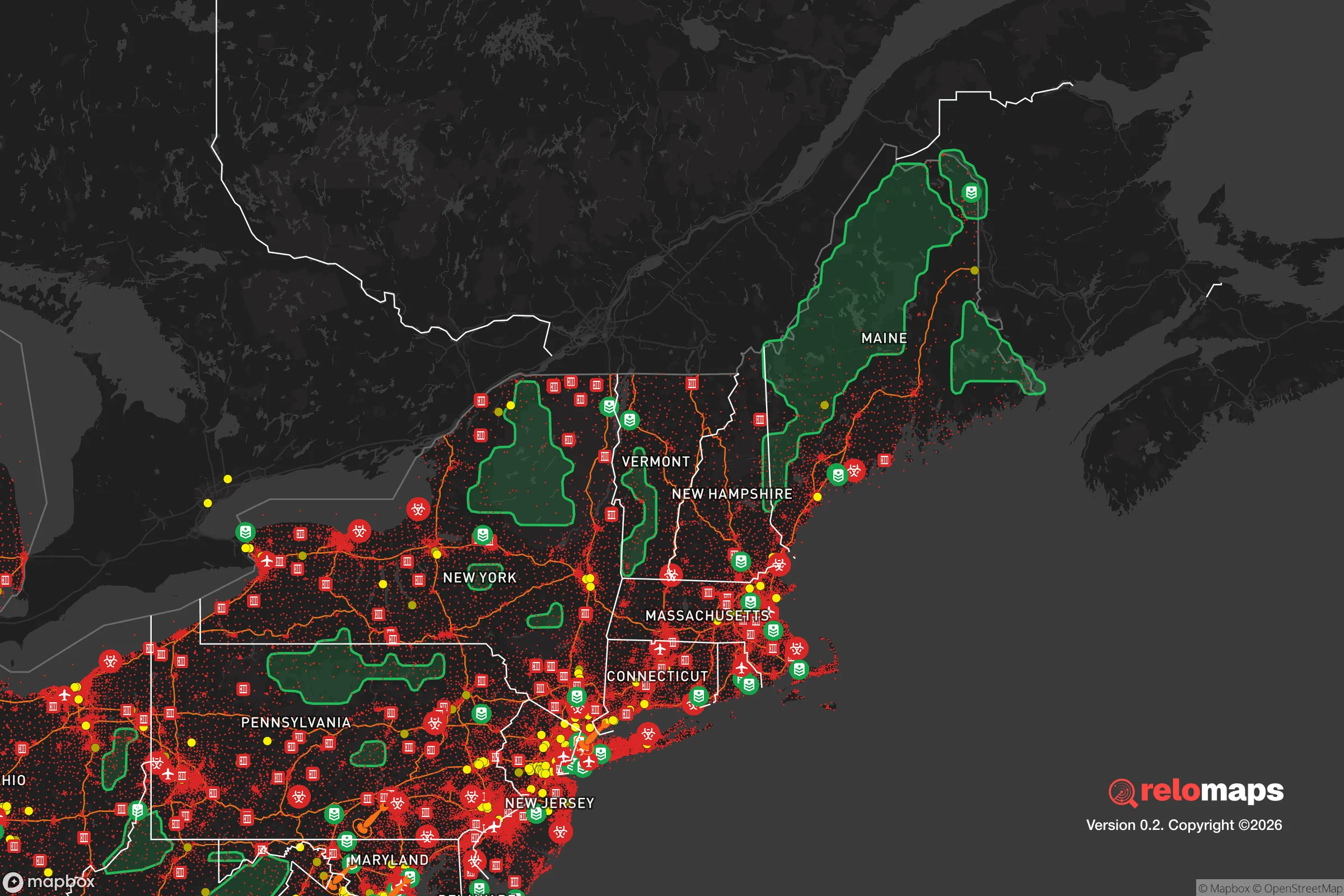


Important Note: For informational purposes only. This does not mean nothing bad ever happens in the green zones. Please use common sense. This is based on public data and modeled with AI. We tried to take a conservative approach but mistakes happen. We update this regularly as new information becomes available.
Solar Generator Recommendations
Backup power matters more here than in safer locations. We've picked three solar generators across budgets and capacity tiers — start with the budget unit if you only need a few essentials, or step up if you want to run a fridge and HVAC for days at a time.

Jackery Portable Power Station Explorer 300
Budget OptionPower on the Go: Weighing only 11 lbs, it's convenient to set up and store with book-sized foldable solar panels

BLUETTI Portable Power Station AC180
Designed for both indoor and outdoor scenarios, AC180 is highly capable as it has a robost capacity and continuous output power.

EF ECOFLOW DELTA Pro Ultra Power Station
Upgraded PickEcoFlow DELTA Pro Ultra is a whole-home energy system designed to grow with your family. Integrated with the Smart Home Panel 2, it scales to meet your evolving energy needs — keeping your home powered, intelligent, and secure through every stage of life.
We earn a commission, at no additional cost to you.
Strategic Assessment Analysis
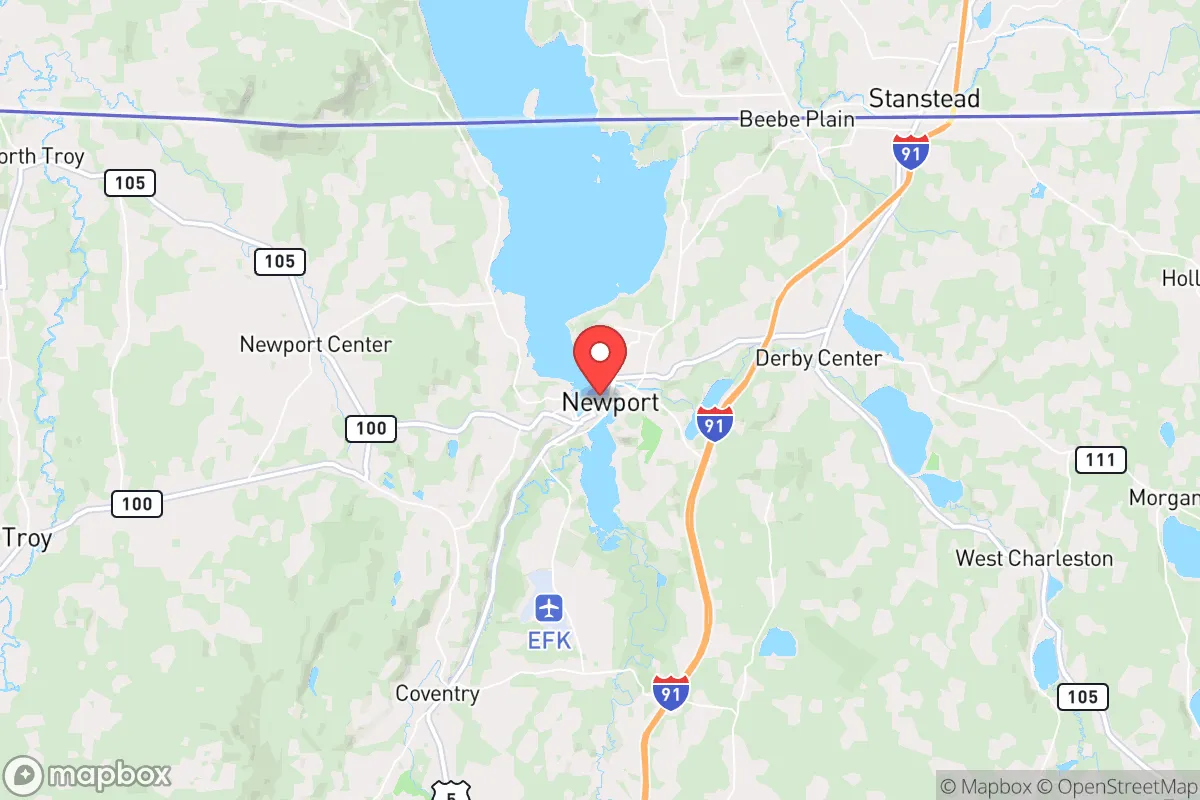
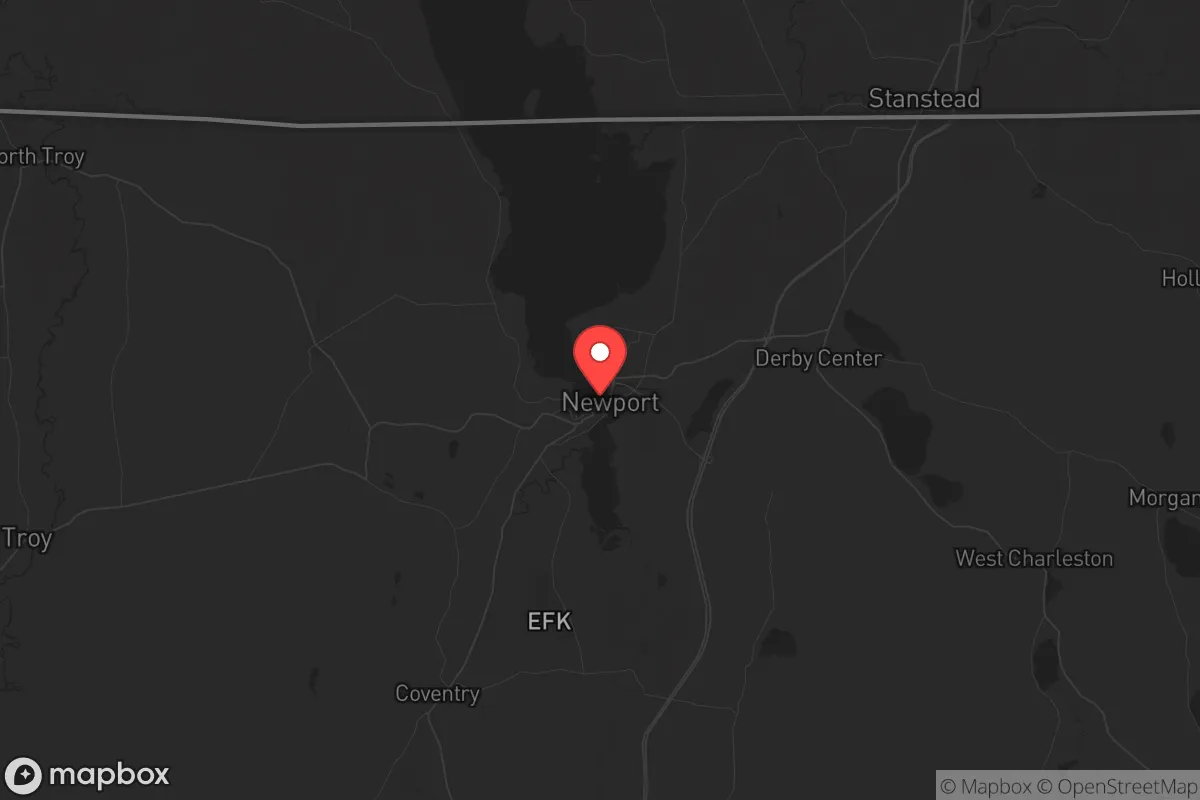
Newport, Vermont, offers a strategic relocation option for those prioritizing resilience and distance from major population centers, though its position comes with distinct trade-offs. Situated in the state’s remote Northeast Kingdom, this town of roughly 4,500 residents sits at the northern tip of Lake Memphremagog, directly on the Canadian border. For a conservative-leaning individual or family focused on prepping, civic unrest avoidance, and long-term sustainability, Newport provides a rare combination of geographic isolation, natural resources, and low population density—but also exposes relocators to specific risks tied to its border location and regional infrastructure.
Geographic position and natural advantages for long-term security
Newport’s primary strategic asset is its location in the Northeast Kingdom, a region defined by rugged terrain, dense forests, and a sparse population of about 6 people per square mile in surrounding Orleans County. This isolation places it over 100 miles from Burlington, Vermont’s largest city, and more than 200 miles from Boston, making it one of the most remote incorporated towns in New England. The Canadian border offers a potential secondary egress route, though this cuts both ways—more on that below. The area’s topography includes the Green Mountains to the west and the Connecticut River headwaters to the east, creating natural chokepoints and defensible terrain. For a relocator concerned with civil unrest or mass casualty events, the sheer distance from major targets—like the Boston metro area (population 4.9 million) or the New York City metro (19 million)—means Newport is unlikely to see refugee flows or secondary effects from a regional collapse. The town itself sits on a deep, cold-water lake (Lake Memphremagog, 30 miles long, with Vermont controlling the southern third), which provides a reliable freshwater source and potential for fishing and hydropower. Winters are harsh—average January lows hit -2°F—which acts as a natural barrier to unprepared migrants and reduces the growing season to roughly 100 days, but also limits agricultural self-sufficiency.
Risks, exposures, and proximity to fallout-relevant landmarks
Newport’s border location is its most significant vulnerability. The town sits directly across from Magog, Quebec, a city of 26,000, and is only 90 miles from Montreal, a major international city of 4.3 million. In a scenario involving civil unrest, disease outbreak, or economic collapse, the Canadian border could become a vector for population movement rather than a barrier. The nearby Derby Line border crossing (just 10 miles east) is a primary port of entry, and any large-scale disruption in Montreal—a target for terrorism or infrastructure failure—could push people south. Additionally, Newport is roughly 150 miles from the Vermont Yankee nuclear site (decommissioned but still storing spent fuel) and about 200 miles from the Seabrook Station nuclear plant in New Hampshire. While these distances are outside the immediate fallout zone for a catastrophic event, prevailing westerly winds could carry airborne contamination into the region. More concerning is the proximity to the Canadian nuclear reactors at Gentilly (Quebec), just 120 miles northwest, which are older CANDU designs with known maintenance issues. For a prepper, the border also means dealing with federal jurisdiction—Customs and Border Protection has a presence in the area, and during a national emergency, checkpoints could restrict movement. The town’s single main highway (Interstate 91) runs north-south and is the only major evacuation route; a blockage at the border or a bridge failure over the Clyde River would effectively trap residents.
Practical resilience for a relocator: food, water, energy, and defensibility
For a family or individual serious about self-sufficiency, Newport offers a mixed bag. Water is abundant: Lake Memphremagog holds over 200 billion gallons of freshwater, and the Clyde and Barton Rivers provide year-round flow. Most properties with well water tap into the region’s high water table, but municipal water comes from the lake and is treated—vulnerable to chemical or biological disruption. Food production is limited by the short growing season; the last frost date is typically late May, and first frost hits by mid-September. Hardy crops like potatoes, root vegetables, and cold-tolerant greens are viable, but corn, tomatoes, and other warm-weather staples require greenhouses or high tunnels. The area has a strong hunting culture—white-tailed deer, moose, and black bear are common—and fishing in the lake and rivers is excellent (lake trout, salmon, bass). However, game populations can be pressured by a sudden influx of relocators; the region’s carrying capacity for subsistence hunting is limited. Energy resilience is a bright spot: Vermont’s grid is relatively reliable, but rural outages are common in winter storms (ice storms can knock out power for days). Solar potential is moderate—the region gets about 160 sunny days per year, below the national average—but micro-hydro from the many streams is feasible for properties with year-round flow. Wood heating is the norm; most homes have wood stoves or boilers, and firewood is plentiful (hardwood stands of maple, beech, and birch dominate). Defensibility is strong due to the terrain: the town is nestled in a valley, with hills and ridges to the east and west providing natural observation points. The low population density means neighbors are typically a quarter-mile or more apart, reducing the risk of conflict over resources. However, the town itself has a small police force (Orleans County Sheriff’s Office covers most rural areas), and response times for emergencies can exceed 30 minutes in winter. For a prepper, this means self-reliance is not optional—it’s a requirement.
The overall strategic picture for Newport, VT, is one of high isolation with specific, manageable risks. Its distance from major cities and nuclear targets is a clear advantage, but the Canadian border proximity and harsh climate demand serious preparation. For a conservative relocator seeking a location where community values align with self-reliance—the area is heavily Republican (Orleans County voted +28 for Trump in 2020), with a strong tradition of hunting, fishing, and local governance—Newport offers a defensible, resource-rich base. The trade-off is that you’re trading convenience for security: medical care is limited (the nearest hospital is North Country Hospital, a 25-bed critical access facility), supply chains are thin, and winter can be a four-month siege. If your plan involves bugging in and riding out a long-term disruption, Newport’s combination of water, wood, and remoteness makes it a solid choice. If you need to maintain access to urban infrastructure or have health concerns requiring specialist care, look elsewhere. The bottom line: Newport is a frontier outpost, not a retreat—it demands you bring skills, supplies, and a willingness to be your own first responder.

* Values derived from national, state, county, city and local statistics and may differ in a specific area. Last updated: 2026-04-24T06:57:20.000Z
Narrative content on this page is AI-generated and may contain mistakes. Verify any details that matter before acting on them.
ReloMaps may earn a commission from affiliate links at no extra cost to you.

