 Popular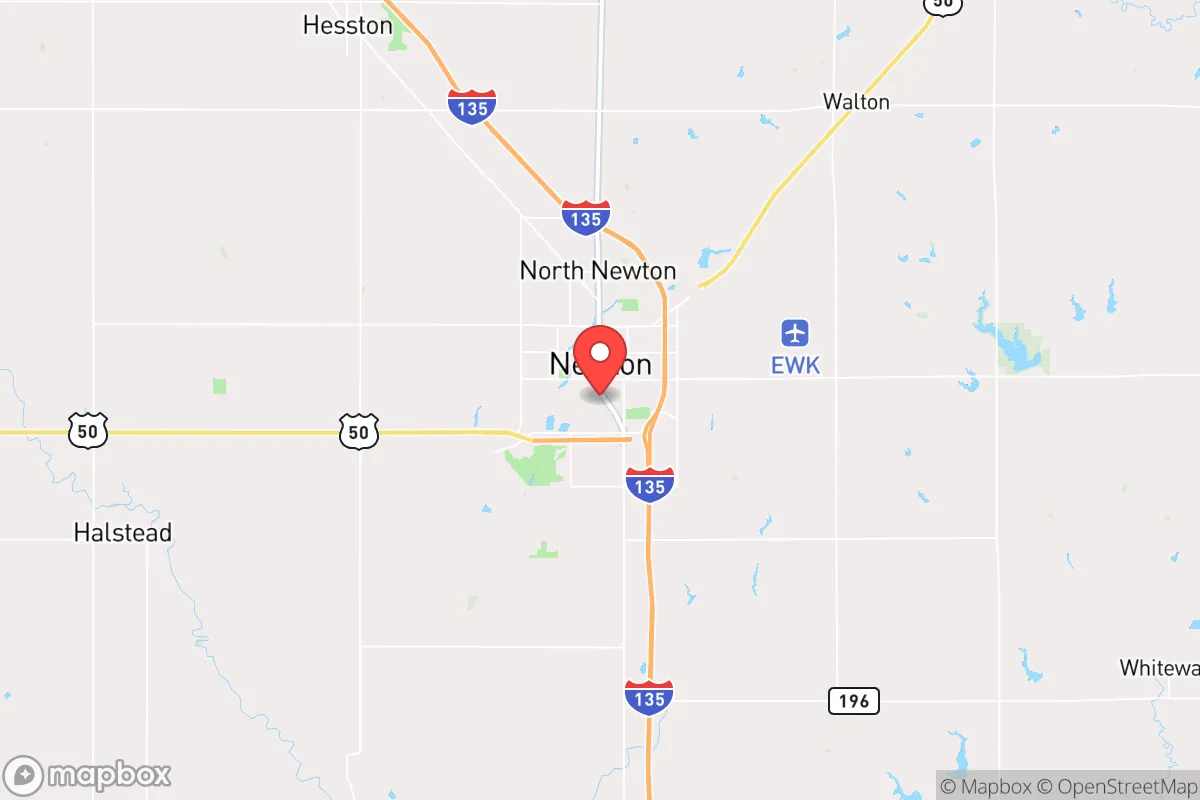
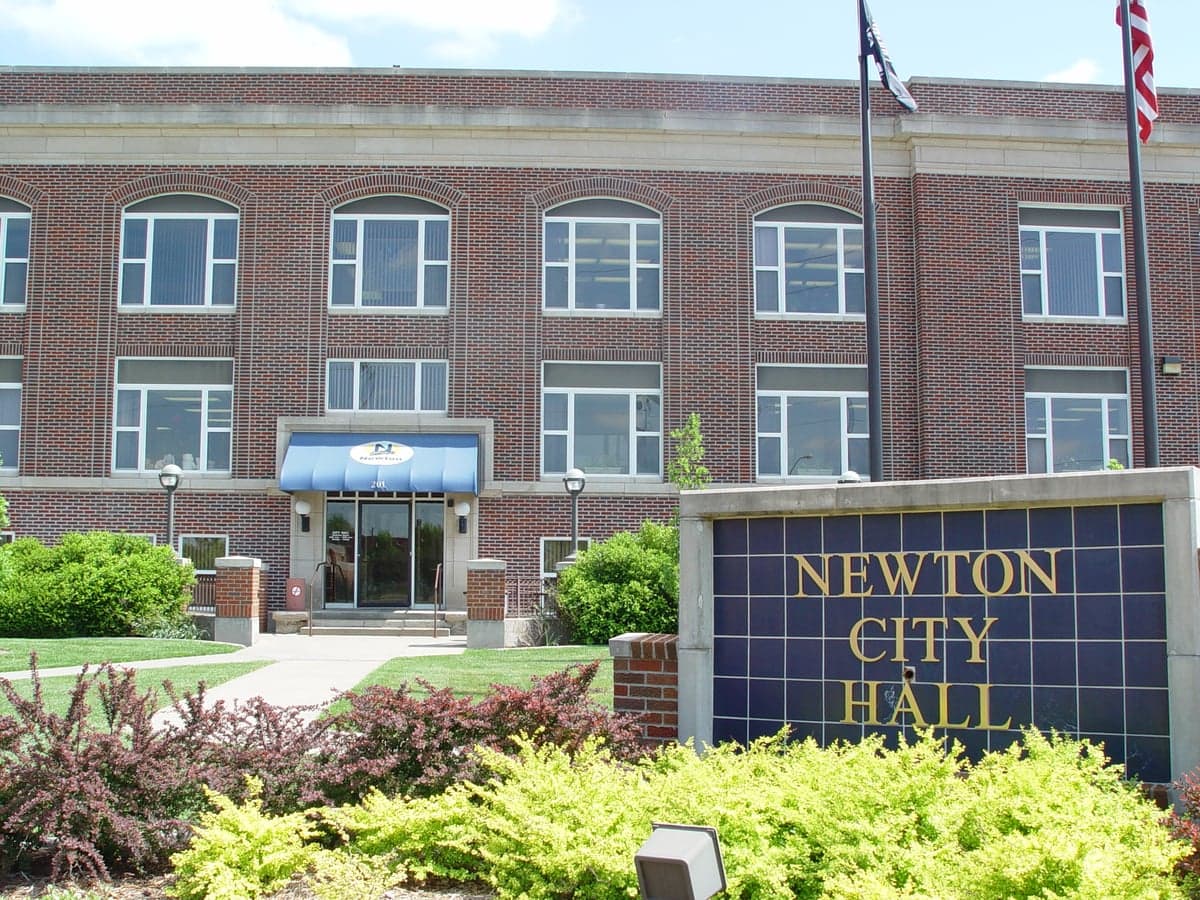
Photo: Wikipedia
Strategic Assessment of Newton, KS
Workable tactical position. Some exposure to population density or targets, but generally defensible in a crisis.
What does the Strategic Assessment tell us?
Our Strategic Assessment grades tactical survivability of an area. Major population centers, military targets, fallout zones, natural disasters, and border exposure all drive risk — lower exposure means a more defensible position in a crisis.
This is heavily inspired by Joel Skousen's Strategic Relocation book. Highly recommended you checkout the book ($)What does this tell us?
Our Strategic Assessment grades tactical survivability of an area. Major population centers, military targets, fallout zones, natural disasters, and border exposure all drive risk — lower exposure means a more defensible position in a crisis.
This is heavily inspired by Joel Skousen's Strategic Relocation book. Highly recommended you checkout the book ($)Strategic Pillars

Key Distances
Regional Safe Places
Below is our recommended "safe zones" in Kansas and the surrounding area based on our strategic heuristics. For most people, it's unrealistic to live in a “safe zone” full-time due to work, family or other personal reasons. They tend to be more rural. However, many of these areas are perfect for second homes and retreat properties that double as a vacation home or even a short-term rental.
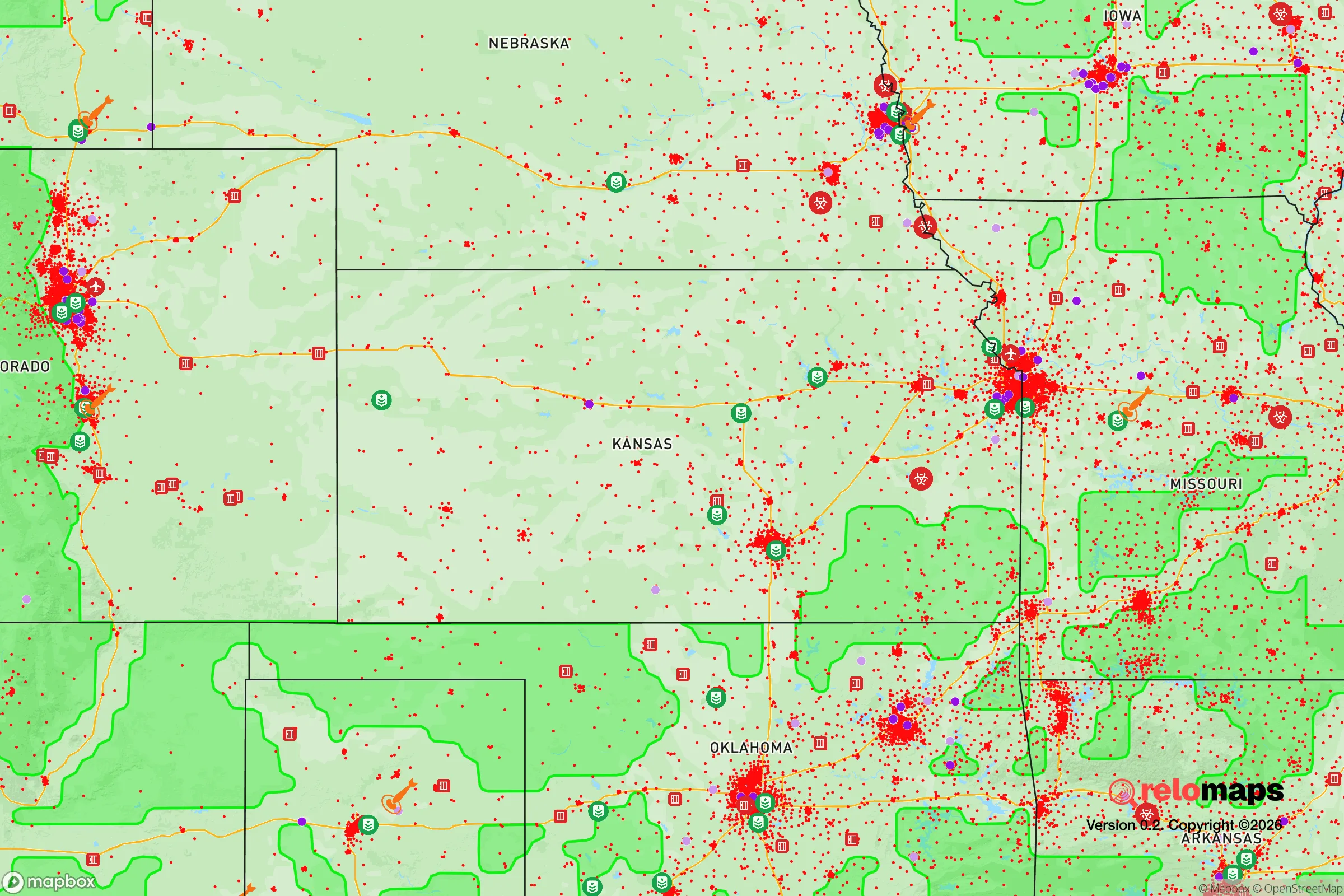
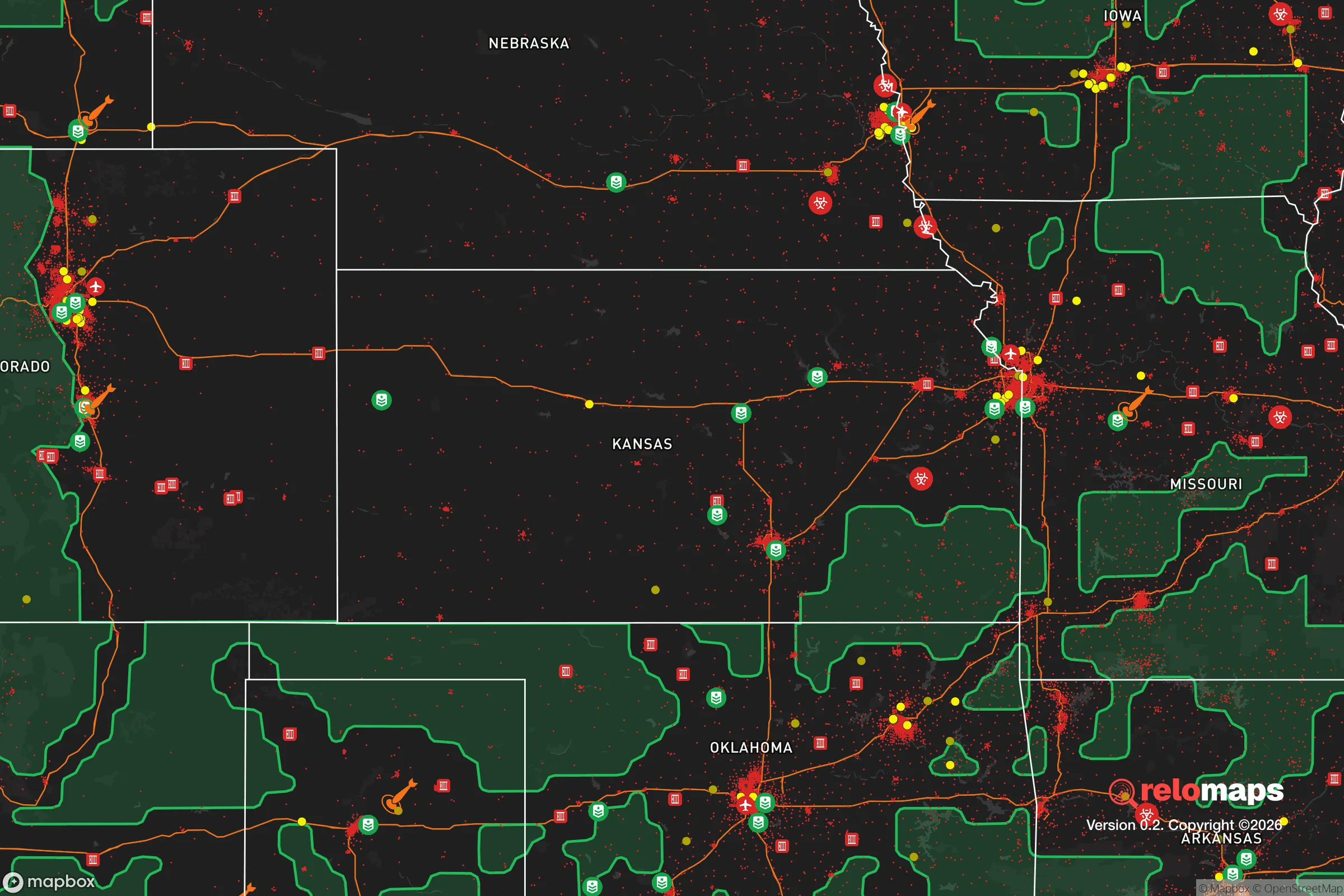


Important Note: For informational purposes only. This does not mean nothing bad ever happens in the green zones. Please use common sense. This is based on public data and modeled with AI. We tried to take a conservative approach but mistakes happen. We update this regularly as new information becomes available.
Solar Generator Recommendations
Backup power matters more here than in safer locations. We've picked three solar generators across budgets and capacity tiers — start with the budget unit if you only need a few essentials, or step up if you want to run a fridge and HVAC for days at a time.

Jackery Portable Power Station Explorer 300
Budget OptionPower on the Go: Weighing only 11 lbs, it's convenient to set up and store with book-sized foldable solar panels

BLUETTI Portable Power Station AC180
Designed for both indoor and outdoor scenarios, AC180 is highly capable as it has a robost capacity and continuous output power.

EF ECOFLOW DELTA Pro Ultra Power Station
Upgraded PickEcoFlow DELTA Pro Ultra is a whole-home energy system designed to grow with your family. Integrated with the Smart Home Panel 2, it scales to meet your evolving energy needs — keeping your home powered, intelligent, and secure through every stage of life.
We earn a commission, at no additional cost to you.
Strategic Assessment Analysis
Newton, Kansas, often overlooked in favor of its larger neighbor Wichita, presents a surprisingly resilient strategic option for those prioritizing self-reliance and distance from major population centers. Its location along the I-135 corridor offers a unique balance: close enough to access critical resources, yet far enough from the immediate blast zones and civil unrest risks of a major metropolitan area. For a relocator with a survivalist mindset, Newton’s agricultural backbone, strong local governance, and low population density create a foundation that is both defensible and sustainable, provided one understands the specific vulnerabilities that come with being in the heart of the Great Plains.
Geographic position and natural advantages for long-term security
Newton sits in Harvey County, roughly 25 miles north of Wichita, placing it in a strategic buffer zone. The area is flat, open, and dominated by farmland, which offers excellent lines of sight and minimal natural cover for potential threats—a double-edged sword for defense but a clear advantage for surveillance and early warning. The region’s primary natural advantage is its access to the High Plains Aquifer, specifically the Equus Beds, which provide some of the most reliable groundwater in the state. This is not a region that will run out of water quickly, even during prolonged drought or infrastructure collapse. The Arkansas River runs nearby, though it is heavily managed and not a pristine source; still, it offers a secondary water option for those with filtration systems. The climate is continental, with hot summers and cold winters, but the lack of major seismic activity, hurricanes, or wildfires makes it a low-risk zone for natural disasters. The flat terrain also simplifies off-grid energy setups—solar panels on a south-facing roof or ground mount will perform consistently, and wind turbines are a viable supplement given the area’s consistent breezes. For a prepper, the geographic isolation from coastal chaos and the absence of major fault lines or floodplains are significant pluses.
Risks, exposures, and proximity to fallout-relevant landmarks
The most immediate risk for Newton is its proximity to Wichita, which is home to McConnell Air Force Base and a major transportation hub. In a scenario involving a nuclear exchange or a large-scale terrorist attack, Wichita would be a high-priority target. Newton sits just outside the likely blast radius for a ground burst on McConnell, but fallout patterns are unpredictable and could easily drift northward depending on wind direction. The I-135 corridor, which runs directly through Newton, would become a primary evacuation route for Wichita residents, turning the city into a choke point for refugees and potential looters. Additionally, the nearby Kansas City metropolitan area (about 180 miles northeast) and the oil and gas infrastructure around El Dorado (30 miles east) add secondary risk vectors. The Burlington Northern Santa Fe (BNSF) rail line that runs through Newton is a critical freight artery; in a collapse scenario, it could become a target for sabotage or a vector for disease and contraband. The city’s own water treatment plant and electrical substations are vulnerable to cyberattacks or physical sabotage, as they are not hardened military facilities. For a relocator, the key takeaway is that Newton is not a remote bunker—it is a small city in a region that would be heavily impacted by a national crisis, but its size and layout make it easier to defend than a dense urban area.
Practical resilience for a relocator: food, water, energy, and defensibility
Newton’s agricultural environment is its strongest asset for long-term survival. The surrounding farmland produces wheat, corn, soybeans, and sorghum, and there are numerous small farms and ranches within a 20-minute drive. A relocator with land can easily establish a kitchen garden, raise chickens or goats, and barter with local farmers for bulk grains. The Harvey County Farmers Market operates seasonally, but direct relationships with producers are common and encouraged. For water, the Equus Beds aquifer means that a private well is a realistic and affordable option—many rural properties already have them. The city’s municipal water is treated and reliable, but a prepper should plan for a hand pump or solar-powered well pump as a backup. Energy resilience is achievable: Newton gets plenty of sun, and net metering policies in Kansas are favorable for grid-tied solar, though a battery backup system is essential for true off-grid capability. Propane is widely available for heating and cooking, and wood-burning stoves are a practical secondary heat source given the area’s abundant timber from shelterbelts and windbreaks. Defensibility is a mixed bag. The flat terrain means that a determined group could approach from any direction, but the city’s layout—with a compact downtown and residential areas separated by open fields—allows for natural perimeter control. The local sheriff’s office is well-regarded and responsive, but in a SHTF scenario, a neighborhood watch or community defense group would be necessary. The presence of a strong Mennonite and conservative Lutheran community means that many locals are already oriented toward self-sufficiency and mutual aid, which is a cultural asset that cannot be overstated.
Overall, Newton offers a solid strategic foundation for a relocator who wants to be prepared for civic unrest, economic collapse, or localized disasters without going completely off-grid. Its weaknesses—proximity to Wichita, reliance on vulnerable infrastructure, and flat terrain—are manageable with proper planning and a modest investment in defensive and self-sufficiency measures. The area’s conservative culture, low crime rate, and strong agricultural base make it a viable long-term holding ground for those who are serious about resilience. It is not a perfect redoubt, but for a single individual or a family willing to put in the work, Newton represents a rational, data-backed choice in an increasingly uncertain world.

* Values derived from national, state, county, city and local statistics and may differ in a specific area. Last updated: 2026-04-30T13:17:12.000Z
Narrative content on this page is AI-generated and may contain mistakes. Verify any details that matter before acting on them.
ReloMaps may earn a commission from affiliate links at no extra cost to you.

