
Photo: Wikipedia
Strategic Assessment of Noblesville, IN
Multiple tactical vulnerabilities. Population density, target proximity, or disaster risk are likely compounding. A retreat property and exit planning is required.
What does the Strategic Assessment tell us?
Our Strategic Assessment grades tactical survivability of an area. Major population centers, military targets, fallout zones, natural disasters, and border exposure all drive risk — lower exposure means a more defensible position in a crisis.
This is heavily inspired by Joel Skousen's Strategic Relocation book. Highly recommended you checkout the book ($)What does this tell us?
Our Strategic Assessment grades tactical survivability of an area. Major population centers, military targets, fallout zones, natural disasters, and border exposure all drive risk — lower exposure means a more defensible position in a crisis.
This is heavily inspired by Joel Skousen's Strategic Relocation book. Highly recommended you checkout the book ($)Strategic Pillars

Key Distances
Regional Safe Places
Below is our recommended "safe zones" in Indiana and the surrounding area based on our strategic heuristics. For most people, it's unrealistic to live in a “safe zone” full-time due to work, family or other personal reasons. They tend to be more rural. However, many of these areas are perfect for second homes and retreat properties that double as a vacation home or even a short-term rental.

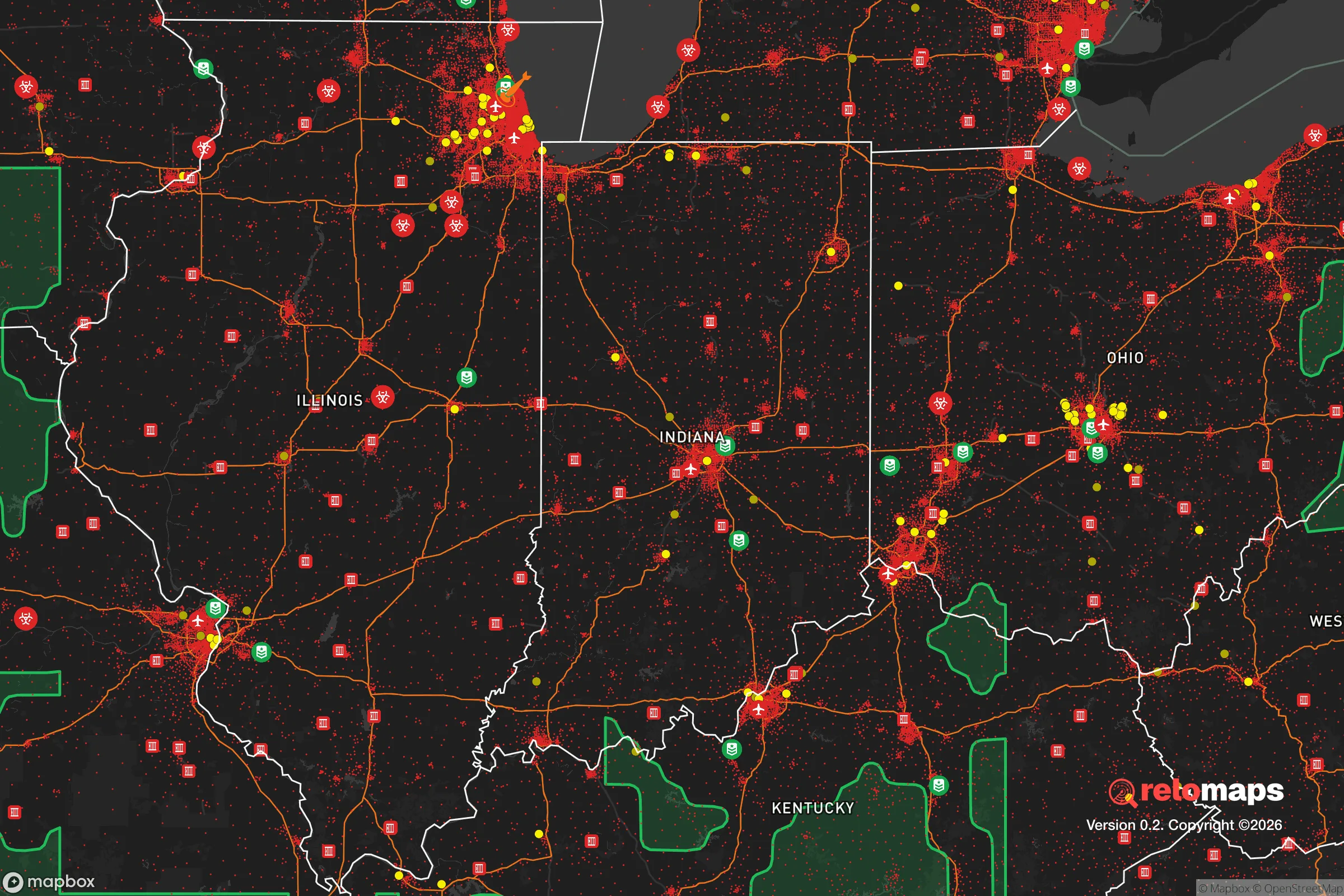


Important Note: For informational purposes only. This does not mean nothing bad ever happens in the green zones. Please use common sense. This is based on public data and modeled with AI. We tried to take a conservative approach but mistakes happen. We update this regularly as new information becomes available.
Solar Generator Recommendations
Backup power matters more here than in safer locations. We've picked three solar generators across budgets and capacity tiers — start with the budget unit if you only need a few essentials, or step up if you want to run a fridge and HVAC for days at a time.

Jackery Portable Power Station Explorer 300
Budget OptionPower on the Go: Weighing only 11 lbs, it's convenient to set up and store with book-sized foldable solar panels

BLUETTI Portable Power Station AC180
Designed for both indoor and outdoor scenarios, AC180 is highly capable as it has a robost capacity and continuous output power.

EF ECOFLOW DELTA Pro Ultra Power Station
Upgraded PickEcoFlow DELTA Pro Ultra is a whole-home energy system designed to grow with your family. Integrated with the Smart Home Panel 2, it scales to meet your evolving energy needs — keeping your home powered, intelligent, and secure through every stage of life.
We earn a commission, at no additional cost to you.
Strategic Assessment Analysis
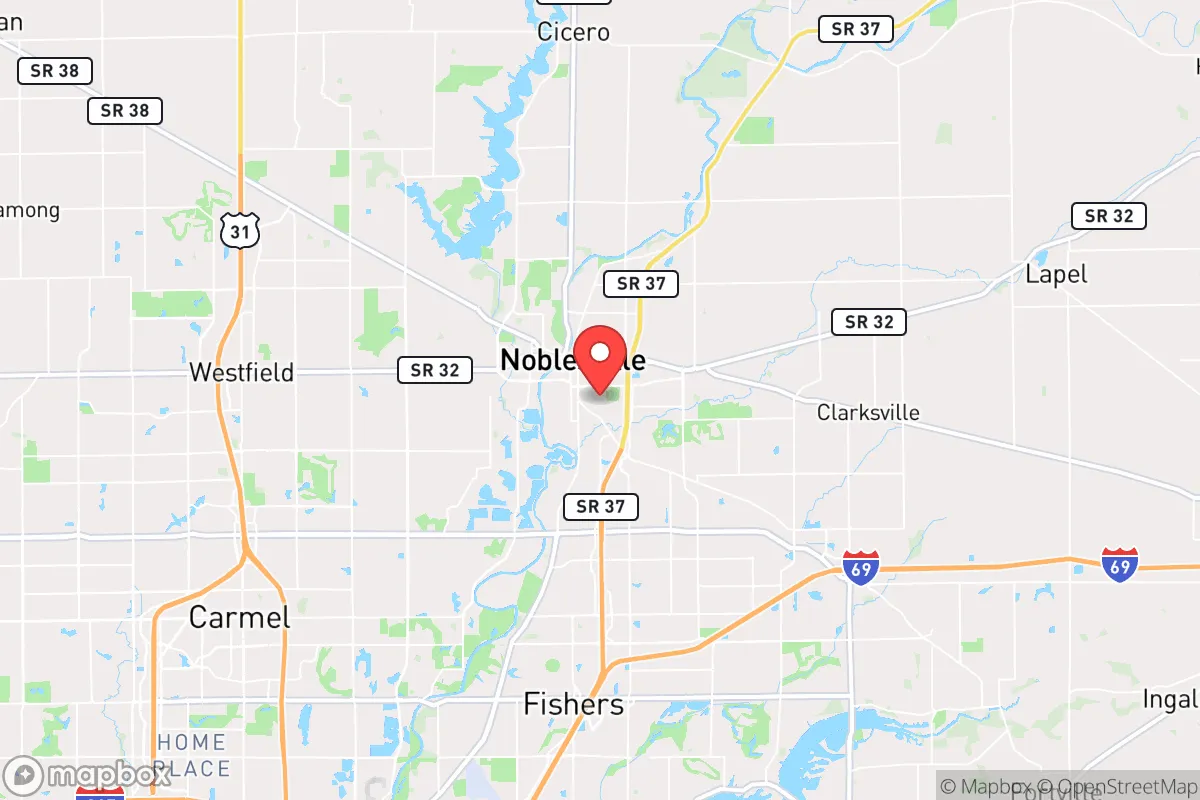
Noblesville, Indiana, sits in a strategic sweet spot that resilience-minded relocators should take seriously: close enough to Indianapolis to access its logistics and medical infrastructure, yet far enough out that you aren't staring down the barrel of a major urban collapse scenario. The city's position in Hamilton County—one of the fastest-growing and wealthiest counties in the Midwest—gives it a tax base and civic capacity that most small towns can't match, but that same growth brings trade-offs a prepper needs to weigh. For a single individual or family looking to balance proximity to resources with genuine survivability, Noblesville offers a credible middle ground, provided you understand its specific exposures and plan accordingly.
Geographic position and natural advantages for long-term stability
Noblesville sits roughly 20 miles north of downtown Indianapolis, placing it outside the immediate blast radius of any major urban target while still within a reasonable drive of the state's largest medical hub. The area is defined by the White River, which cuts through the western edge of town, and the Morse Reservoir to the northeast—a 1,500-acre man-made lake that serves as both a recreational asset and a potential emergency water source. The terrain is flat to gently rolling, typical of central Indiana, which means no natural chokepoints for defense but also no barriers to movement if you need to bug out further north toward more rural areas like Tipton or Howard County. The soil is rich and arable, a genuine advantage for anyone serious about long-term food production; Hamilton County sits atop some of the most productive farmland in the state, and even suburban lots in Noblesville often have space for a substantial garden. The climate is four-season continental, with hot summers and cold winters, so you'll need to plan for both extremes—but the lack of hurricane, wildfire, or earthquake risk makes it a low-hazard baseline compared to coastal or mountain regions.
Risks, exposures, and proximity to fallout-relevant landmarks
The biggest vulnerability for Noblesville is its proximity to Indianapolis, a city of nearly 900,000 that would be a primary target in any major conflict or terror event. The 20-mile buffer is enough to avoid direct blast effects from a conventional strike, but fallout patterns depend entirely on wind direction; a south-to-north wind could put Noblesville in the plume path from an attack on the city's infrastructure, including the Indianapolis International Airport, the FedEx hub, or the numerous rail yards and fuel depots along I-65 and I-70. Closer to home, the Noblesville area has its own potential liabilities: the nearby Indiana Michigan Power plant in Peru (about 40 miles north) is a nuclear facility that, while well-regulated, represents a fixed target. There are also several natural gas pipelines running through Hamilton County, including the Panhandle Eastern line, which could be vulnerable to sabotage or cascading failure. On the social risk side, Noblesville's rapid growth—population nearly doubled from 2000 to 2020—means a lot of new residents who don't know each other, which can erode the kind of tight-knit community trust that matters in a crisis. The city's wealth also makes it a potential looting target if civil unrest spreads from Indianapolis; the upscale shopping corridors along SR-37 and the Hamilton Town Center mall are obvious draws for desperate populations.
Practical resilience for a relocator: food, water, energy, and defensibility
For a prepper moving to Noblesville, the practical picture is mixed but workable. Water is the strongest asset: the Morse Reservoir and the White River provide surface water access, and the city's municipal supply comes from groundwater wells that are less vulnerable to surface contamination than many systems. A well-installed property outside city limits is ideal, but even in-town homes can set up rainwater catchment without much hassle. Food resilience is solid if you're willing to put in the work—the growing season runs roughly April through October, and the local soil supports corn, beans, squash, and most vegetables. The Hamilton County 4-H Fairgrounds and the Noblesville Farmers Market are good indicators of a local food culture, but you'll want to establish relationships with nearby farmers directly; the Amish communities in neighboring Madison and Elkhart counties are a reliable source of seeds, tools, and knowledge if you're willing to drive an hour north. Energy is a weak point: Duke Energy provides electricity via a grid that's aging and increasingly strained by summer air conditioning loads. Solar is viable—central Indiana gets about 190 sunny days per year—but you'll need battery storage to handle the long winter overcast periods. Natural gas is widely available for heating, which is a plus for grid-down scenarios if you have a generator that can run on it. Defensibility is the biggest challenge: Noblesville is a sprawling suburban grid with multiple entry points and no natural barriers. Your best bet is a property on the northern or eastern edges, where lots are larger and roads are fewer, giving you more standoff from the main population centers. A rural parcel near Cicero or Atlanta (the town, not the city) would offer better security while still keeping you within 15 minutes of Noblesville's hospitals and supply lines.
The overall strategic picture for Noblesville is one of calculated risk. It's not a remote bug-out location—you won't find the isolation of Montana or the defensible terrain of West Virginia here. What you will find is a functioning community with strong local governance, a robust tax base, and enough distance from Indianapolis to avoid the worst of an urban collapse while still benefiting from its resources. For a single individual or family who wants to stay connected to the modern economy while building genuine resilience, Noblesville is a viable base of operations. The key is to treat it as a hub, not a fortress: establish your property as a self-sufficient node, build relationships with neighbors and local farmers, and have a plan to move further north if the situation deteriorates beyond what suburban infrastructure can handle. The area's growth and prosperity are a double-edged sword—they give you resources now, but they also attract attention when things go sideways. If you go in with eyes open and a solid prepping plan, Noblesville can work. If you go in expecting a bunker, you'll be disappointed.

* Values derived from national, state, county, city and local statistics and may differ in a specific area. Last updated: 2026-04-22T08:42:05.000Z
Narrative content on this page is AI-generated and may contain mistakes. Verify any details that matter before acting on them.
ReloMaps may earn a commission from affiliate links at no extra cost to you.

