Photo: Wikipedia
Demographics of Noblesville, IN
Affluence Level in Noblesville, IN
An upper-middle-class area. Household wealth, education levels, and homeownership run ahead of national benchmarks.
People of Noblesville, IN
Noblesville, Indiana, today is a rapidly growing suburban city of 71,940 residents, characterized by a predominantly white population (82.5%) with a notably high college education rate (51.4%). Its identity is shaped by a blend of historic small-town roots and modern suburban expansion, with a foreign-born population of 4.4% that is slowly diversifying the community. The city’s residents are largely families and professionals drawn by strong schools and commuter access to Indianapolis, creating a stable but increasingly competitive housing market.
How the city was settled and grew
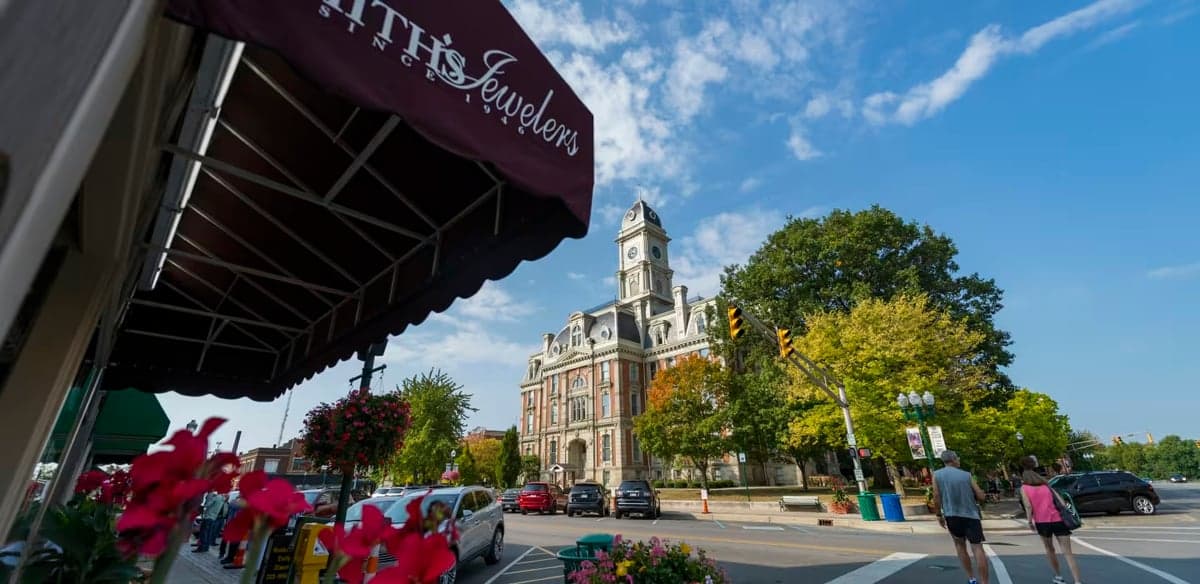
Noblesville was founded in 1823 as the county seat of Hamilton County, named after Indiana Supreme Court Justice James Noble. The original settlers were primarily white Anglo-American farmers and tradesmen from Kentucky, Ohio, and the Mid-Atlantic states, drawn by the fertile land along the White River and the promise of government land grants. The construction of the Central Canal in the 1830s, though never completed, spurred early growth, and by the mid-19th century, the arrival of the railroad cemented Noblesville as a regional agricultural and manufacturing hub. The historic Downtown Noblesville district, with its brick storefronts and courthouse square, was built by these early settlers and remains the city’s cultural core. A small wave of German and Irish immigrants arrived in the 1850s-1880s, settling in the Forest Park area and working in the local mills and railroads, though the population remained overwhelmingly native-born white through the early 1900s.
Modern era (post-1965)
The post-1965 era transformed Noblesville from a quiet farm town into a booming Indianapolis suburb. The completion of Interstate 69 in the 1970s and the expansion of State Road 37 made the city accessible to commuters, triggering a wave of domestic in-migration from Marion County and other parts of the Midwest. This growth accelerated sharply after 2000, with the city’s population nearly doubling from 28,590 in 2000 to 71,940 today. The new arrivals were overwhelmingly white, college-educated professionals and families seeking larger homes and top-rated schools. The Saxony master-planned community, developed in the 2000s, became the primary landing zone for these newcomers, offering new construction homes and a suburban lifestyle. Meanwhile, the Morse Lake area attracted a mix of retirees and second-home buyers. The city’s Hispanic population (5.1%) and Black population (5.7%) have grown modestly, largely settling in the Pleasant Street corridor and parts of Downtown, often working in service, construction, and healthcare. The East/Southeast Asian community (2.1%) and Indian subcontinent community (0.9%) are smaller but visible, with families concentrated in Saxony and newer subdivisions near the Hamilton Town Center mall. The foreign-born share (4.4%) remains low compared to national averages, reflecting the city’s continued appeal to domestic movers.
The future
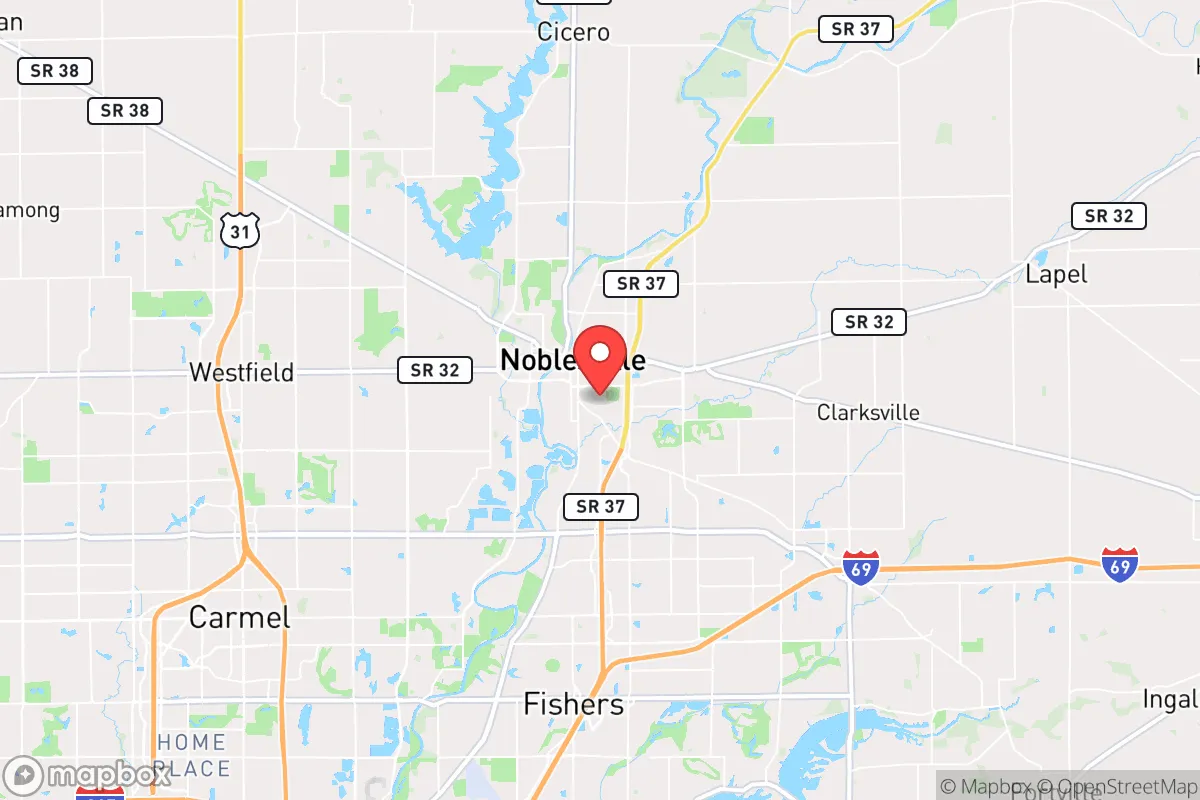
Noblesville’s population is projected to continue growing, likely reaching 90,000-100,000 by 2040, driven by ongoing residential development in the South Harbour and White River Township areas. The city is not homogenizing but rather tribalizing into distinct enclaves: established historic neighborhoods like Downtown and Forest Park retain older, longer-term residents, while master-planned communities like Saxony and newer subdivisions attract younger families and professionals. The Hispanic and Black populations are expected to grow slowly, likely reaching 8-10% each by 2040, as affordable housing options in the Pleasant Street area and near the industrial corridor draw more diverse residents. The East/Southeast Asian and Indian communities are likely to plateau or assimilate, as many families move to larger ethnic enclaves in Carmel or Fishers for more established cultural infrastructure. The city’s high college education rate (51.4%) will likely increase further, reinforcing its reputation as a family-oriented, professional suburb.
For a conservative-leaning individual or parent considering a move, Noblesville is becoming a stable, predominantly white, and well-educated suburb with strong schools and a growing but still modestly diverse population. The city offers a clear choice: historic charm in Downtown or modern convenience in Saxony and newer developments, with the understanding that the community’s character will remain largely unchanged in the near term, even as it slowly diversifies.

* Values derived from national, state, county, city and local statistics and may differ in a specific area. Last updated: 2026-04-22T08:42:05.000Z
Narrative content on this page is AI-generated and may contain mistakes. Verify any details that matter before acting on them.
ReloMaps may earn a commission from affiliate links at no extra cost to you.

