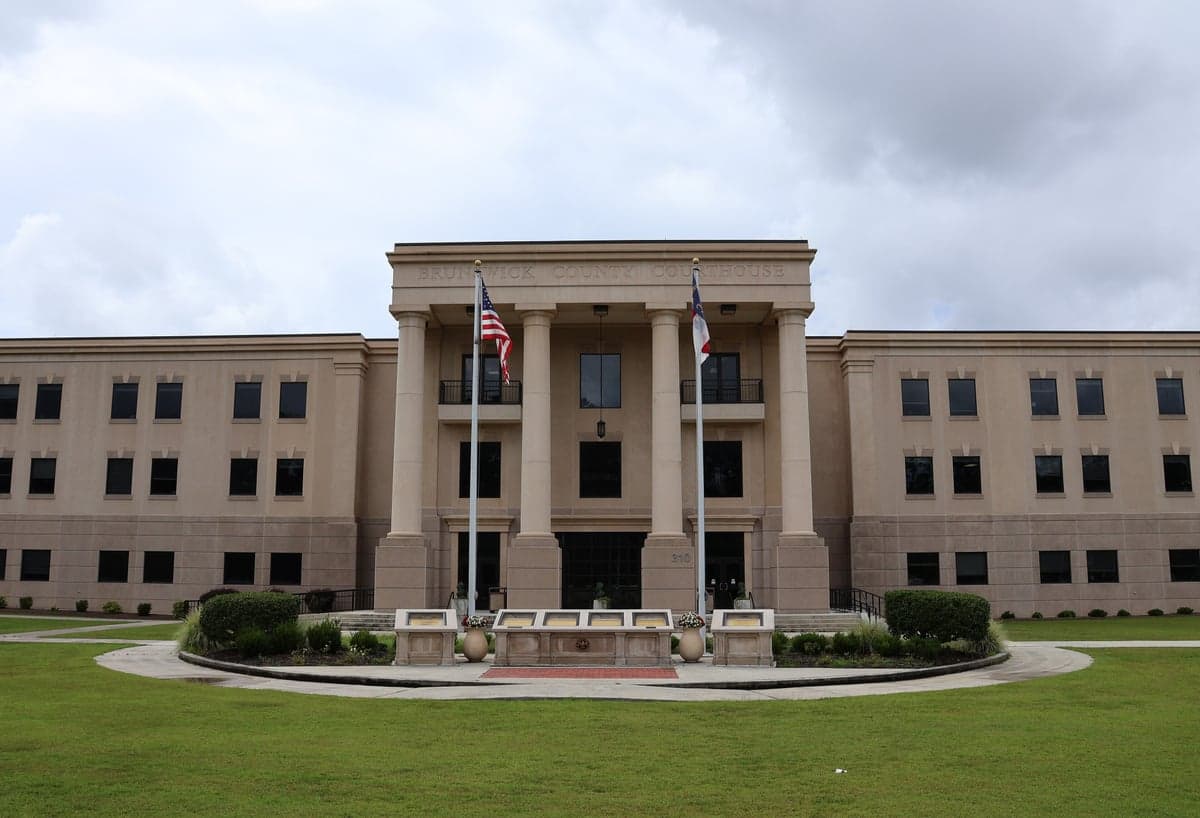
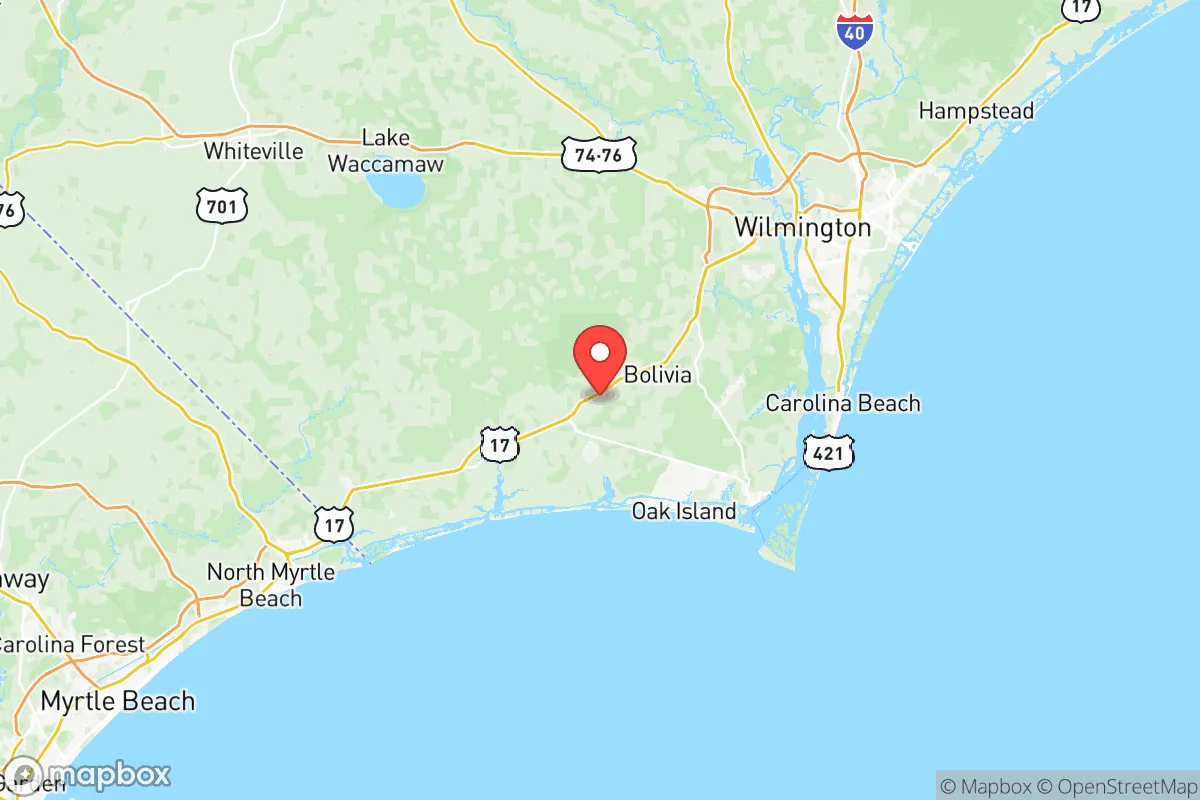
Photo: Wikipedia
Personal Sovereignty in Brunswick County
Viable for self-reliance. Generally workable, though some barriers may limit total independence.
What does Personal Sovereignty tell us?
Personal Sovereignty measures your capacity for self-reliance and independence with minimal government friction. Higher scores mean fewer barriers between you and the way you want to live... but it assumes you have the space you need and good neighbors.
What does this tell us?
Personal Sovereignty measures your capacity for self-reliance and independence with minimal government friction. Higher scores mean fewer barriers between you and the way you want to live... but it assumes you have the space you need and good neighbors.
State Policy
Energy independence: Importer (15% of energy produced in-state)
Personal Liberty
Homesteading

Personal Liberty Analysis
Brunswick County, North Carolina, offers a notably high degree of personal sovereignty compared to many coastal and metropolitan areas, driven by a combination of low state-level taxes, permissive gun laws, and a regulatory environment that generally favors individual choice over government mandate. While not a libertarian enclave, the county's rural character and conservative-leaning governance create a strong foundation for self-reliance, particularly in its inland towns and unincorporated areas. For a single individual or family prioritizing autonomy, the key question is not whether freedom exists here, but how it varies across the county's diverse geography—from the beach towns of Sunset Beach and Ocean Isle Beach to the more rural interior around Supply and Leland.
Tax burden and regulatory posture: How North Carolina's framework shapes local freedom
North Carolina's state-level policies are the primary driver of Brunswick County's light-touch fiscal environment. The state levies a flat personal income tax rate of 4.75% (as of 2025), with a scheduled reduction to 3.99% by 2027, and a corporate income tax rate that is already among the lowest in the nation at 2.5%. There is no state tax on Social Security benefits, and retirees receive a significant deduction on other retirement income—up to $35,000 for those 65 and older. Property taxes in Brunswick County are moderate, with a county rate of roughly $0.50 per $100 of assessed value, plus municipal rates that vary: Southport adds about $0.30, while Boiling Spring Lakes adds around $0.20. The county's regulatory posture is generally permissive, with no county-wide zoning in unincorporated areas—a critical detail for anyone seeking to use their land without excessive bureaucratic hurdles. However, incorporated towns like Oak Island and Holden Beach enforce stricter building codes, setback requirements, and short-term rental restrictions, reflecting a more managed approach to development. For a reader weighing tax burden and red tape, the unincorporated areas offer the most freedom, while the beach towns trade some autonomy for predictable infrastructure and services.
Self-defense and gun law specifics: What the Second Amendment looks like in practice
Brunswick County sits in a state with some of the most firearm-friendly laws in the Southeast. North Carolina is a "shall-issue" state for concealed carry permits, meaning the sheriff's office must issue a permit if the applicant meets statutory requirements—no subjective "good cause" standard. The county sheriff, John Ingram, has a reputation for efficient processing of permits, with wait times typically under 45 days. Open carry of handguns is legal without a permit for anyone who can legally possess a firearm, though local law enforcement may stop individuals if they receive a call about a person with a gun. Stand-your-ground laws are in effect, with no duty to retreat in any place where the individual is lawfully present. Castle doctrine protections apply to homes, vehicles, and workplaces. Importantly, North Carolina preempts local governments from enacting their own gun ordinances, so the rules are uniform across Brunswick County—whether you're in Shallotte or Calabash. The practical effect is that gun owners face minimal local friction; no town in the county has attempted to restrict magazine capacity, ban certain firearms, or impose waiting periods beyond state law. For a family prioritizing self-defense rights, Brunswick County offers a legal environment that is both predictable and protective of individual choice.
Self-reliance and homesteading viability: Lot sizes, zoning, and off-grid feasibility
The viability of a self-reliant lifestyle varies dramatically across Brunswick County. In unincorporated areas, particularly around Supply and Ash, minimum lot sizes are typically 1 to 2 acres, and there is no county-wide zoning that restricts keeping chickens, goats, or even a few head of cattle. Off-grid living is legally feasible in these areas: North Carolina has no state law prohibiting rainwater collection, and solar panel installation is straightforward, though you must still comply with the state's building code for electrical work. Septic systems are required for properties without sewer access, and the county health department inspects them, but this is a standard requirement, not a barrier. In contrast, the beach towns impose tighter restrictions: Sunset Beach requires minimum lot sizes of 5,000 to 10,000 square feet, and HOAs in planned communities often ban livestock, outdoor storage, and non-standard housing like tiny homes or RVs. Boiling Spring Lakes is a middle ground—lots can be as small as 0.25 acres in older subdivisions, but the town allows accessory dwelling units and has a more relaxed approach to gardening and small-scale agriculture. For a homesteader, the inland areas are clearly superior, with lower land prices (often under $10,000 per acre) and minimal regulatory interference. The county does not enforce any ban on composting toilets or graywater systems, though they must meet state health standards.
Personal liberties: Parental rights, medical autonomy, speech, and property
Brunswick County's cultural and legal environment strongly supports parental rights and medical autonomy, reflecting the broader conservative tilt of southeastern North Carolina. The state's Parents' Bill of Rights, enacted in 2023, gives parents explicit authority over their children's education, healthcare, and moral upbringing, including the right to opt out of any school curriculum or activity. Local school boards in the county have been generally responsive to parental concerns, with the Brunswick County Board of Education holding public comment periods at every meeting. On medical autonomy, North Carolina does not have a state-level vaccine mandate for adults, and COVID-era restrictions were lifted early in the county. The state does not require a prescription for COVID-19 tests or treatments, and pharmacists can prescribe certain medications like birth control and naloxone without a doctor's visit. Speech protections are robust: the county has no local hate speech ordinances, and public protests are allowed on sidewalks and in parks without a permit, provided they don't block traffic. Property rights are strong, with North Carolina's "right to farm" law protecting agricultural operations from nuisance lawsuits, and the state's eminent domain laws strictly limiting government takings to public use with just compensation. The county's planning department is known for being responsive to property owners, with variance requests often approved if they don't create a public nuisance. For a family concerned about government overreach, Brunswick County's combination of state-level protections and local deference to individual choice creates a favorable environment.
Overall, Brunswick County ranks among the more sovereignty-friendly areas in the coastal Southeast, comparable to rural counties in Georgia or South Carolina but with the added benefit of no state income tax on retirement income. The key trade-off is between the beach towns—which offer amenities but impose more rules—and the inland areas, where personal freedom is maximized but services like high-speed internet and emergency response times are less consistent. For a reader who values self-reliance, gun rights, and minimal government interference, the unincorporated areas around Supply and Ash are the strongest bet, while families who want a balance of freedom and community structure may find Leland or Southport more suitable. The county's trajectory is toward growth, which may increase regulatory pressure over time, but for now, it remains a place where individual choice is the default, not the exception.

* Values derived from national, state, county, city and local statistics and may differ in a specific area. Last updated: 2026-09-29T07:51:12.000Z
Narrative content on this page is AI-generated and may contain mistakes. Verify any details that matter before acting on them.
ReloMaps may earn a commission from affiliate links at no extra cost to you.

