
Photo: Wikipedia
Quality of Life in Brunswick County
A livable area that tracks near national norms for affordability, walkability, and neighborhood health.
What does Quality of Life tell us?
Quality of Life measures an area by evaluating factors like cost of living, nearby amenities, country club access, airport proximity, socioeconomic signals and neighborhood character. For large states, this is a general average — quality of life can vary dramatically between metro areas, suburbs, and rural communities within the same state.
What does this tell us?
Quality of Life measures an area by evaluating factors like cost of living, nearby amenities, country club access, airport proximity, socioeconomic signals and neighborhood character. For large states, this is a general average — quality of life can vary dramatically between metro areas, suburbs, and rural communities within the same state.
Cost of Living
10% above national average
82%
The Real Cost of Living in Brunswick County for 2026
| Tier | Individual | Family (4) |
|---|---|---|
| Survival | $20k | $38k |
| Comfortable | $61k | $90k |
| Luxury | $132k+ | $204k+ |
| Elite (Top 5%) | $155k+ | $240k+ |
Quality-of-Life Analysis
Brunswick County, North Carolina, offers a broad spectrum of living environments, from the bustling beachside tourism hub of Carolina Beach to the quiet, agricultural inland communities around Supply and the historic riverfront town of Southport. This coastal county, with a cost of living index of 110 (10% above the national average), attracts a mix of retirees seeking waterfront tranquility, second-home owners drawn to the barrier islands, and commuters working in the Wilmington metro area. The county’s character shifts dramatically from the dense, amenity-rich coastal strip to the sparsely populated pine forests and farmlands of its western half, creating distinct quality-of-life options for different lifestyles.
Largest town(s) & population centers
The county’s primary population anchor is Leland, a fast-growing town of roughly 25,000 residents located just across the Cape Fear River from Wilmington. Daily life in Leland is defined by suburban convenience: big-box retail along Highway 17, new subdivisions, and a heavy reliance on the Cape Fear Memorial Bridge for commuting. The average commute across the county is 25.6 minutes, but Leland residents often face longer trips into Wilmington for employment. Southport, with a population around 4,000, offers a contrasting historic coastal village experience, with a working waterfront, antique shops, and a slower pace that attracts retirees and seasonal residents. Oak Island and Sunset Beach are the primary beach towns, dominated by vacation rentals, seasonal tourism, and a permanent population that swells dramatically in summer. These coastal centers feature higher property values and a lifestyle centered on beach access, fishing piers, and golf courses.
Smaller towns & rural pockets
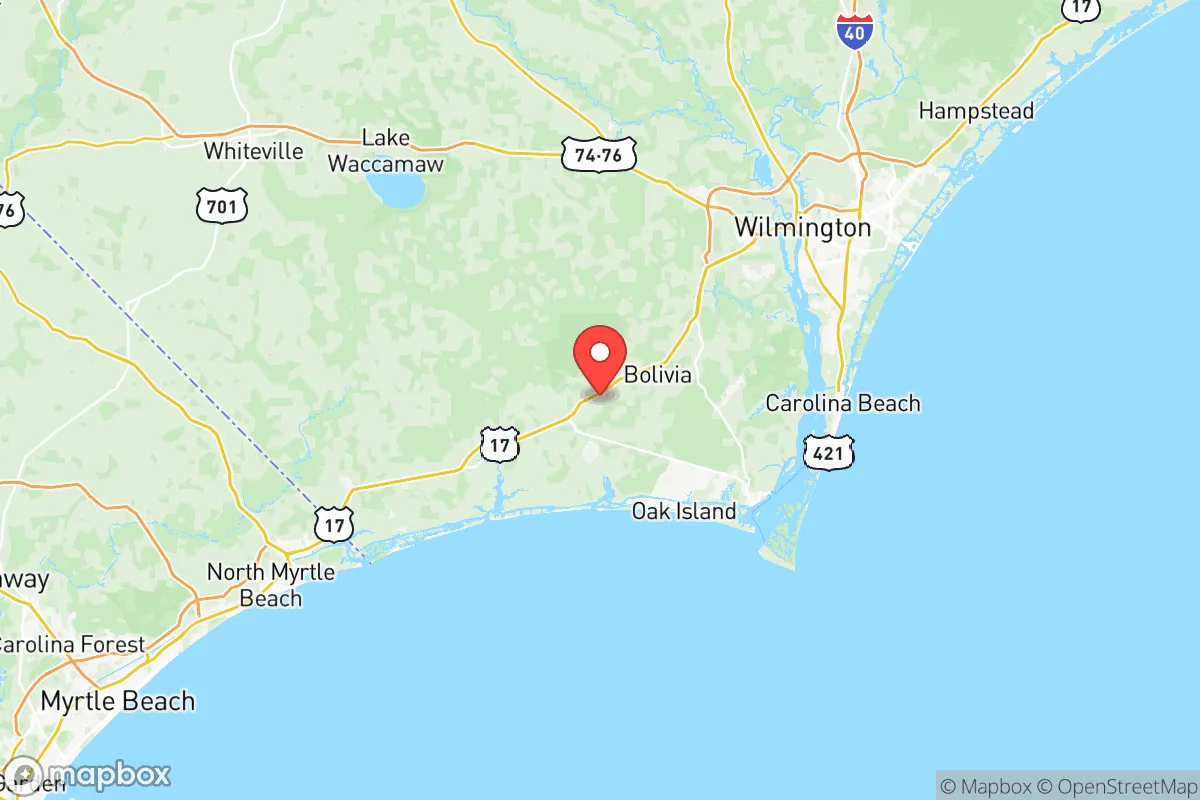
Inland Brunswick County reveals a very different character. Supply, an unincorporated community along Highway 211, serves as a rural crossroads with basic services and a strong agricultural base. Shallotte, while growing, retains a small-town feel with its historic downtown and local seafood markets. Further west, Bolivia, the county seat, is a tiny village of fewer than 200 residents, surrounded by the Green Swamp Preserve and offering little more than a courthouse and a few churches. Calabash, famous for its “Calabash-style” fried seafood, is a compact fishing village that has seen some tourist-oriented development but still feels distinct from the larger beach towns. The rural pockets along Highway 130 and in the Winnabow area feature large tracts of timberland, mobile homes, and older farmhouses, where residents often commute to Leland or Wilmington for work and shopping.
Cost & lifestyle range
The cost of living and amenities vary dramatically across the county. At the high end, Sunset Beach and Ocean Isle Beach command median home values well above the countywide $314,700, with many properties exceeding $500,000 for oceanfront homes. These areas offer resort-style amenities: private golf clubs, beach access, and upscale dining, but come with higher property taxes and seasonal crowds. The median rent countywide is $1,267, though beach-area rentals often double that during peak season. At the lower end, rural communities like Supply and Bolivia offer significantly cheaper housing—often mobile homes or older single-family homes under $200,000—but lack public water, sewer, and high-speed internet in many areas. Leland sits in the middle, with newer subdivisions offering homes in the $300,000–$450,000 range and access to chain retail, medical facilities, and schools. The lifestyle range spans from full-time beach living with high costs and tourist traffic to quiet, self-sufficient rural life with lower costs but fewer services and longer drives for groceries or healthcare.
Brunswick County best suits those who understand and accept its trade-offs. Retirees and second-home owners thrive in the coastal towns if they can afford the premium and tolerate seasonal crowds. Commuters who work in Wilmington find Leland offers the most balanced suburban option. Families and individuals seeking affordable land and a slower, more independent lifestyle will find value in the inland communities around Supply and Winnabow, provided they are comfortable with longer drives and limited local amenities. The county’s diversity of environments means that the right fit depends almost entirely on whether one prioritizes beach proximity, suburban convenience, or rural space.

Crime in Brunswick County
Crime rates similar to the national median for U.S. locations.
Violent CrimeViolent Crime Analysis
Property CrimeProperty Crime Analysis
Crime Analysis
Brunswick County, North Carolina, presents a mixed safety profile that is significantly safer than the national average for violent crime but slightly elevated for property crime, with notable variation across its many coastal and inland communities. The county’s violent crime rate of 319.3 per 100,000 residents is well below the U.S. average of roughly 380 per 100,000, while its property crime rate of 1,749.1 per 100,000 sits close to the national figure of about 1,950 per 100,000. However, these countywide numbers mask sharp differences between towns like Leland, Southport, and Shallotte, and the broader judicial environment in southeastern North Carolina warrants close attention from prospective residents.
Crime in context
When compared to state and national benchmarks, Brunswick County’s violent crime rate is roughly 16% lower than the U.S. average and about 25% lower than North Carolina’s statewide rate of approximately 420 per 100,000. Property crime, however, runs slightly above the state average of 1,650 per 100,000, driven largely by thefts from vehicles and vacation rentals in tourist-heavy areas. The county’s proximity to the Wilmington metropolitan area—where violent crime rates exceed 500 per 100,000—means that some spillover crime occurs along the US-17 and NC-211 corridors. The judicial district serving Brunswick County (District 13) operates under a mix of elected and appointed judges, and while the county itself leans conservative, the broader region’s court system has seen progressive influences in recent years, particularly in neighboring New Hanover County. This can result in lighter sentencing for repeat property offenders, a factor that contributes to Brunswick’s elevated property crime numbers.
What residents experience
Residents in Brunswick County most frequently encounter property crimes—vehicle break-ins, package thefts, and burglaries of unoccupied seasonal homes—rather than violent confrontations. The towns of Leland and Shallotte report the highest property crime volumes due to their larger populations and commercial hubs, while Southport and Oak Island see spikes during summer tourist months. Violent crime is rare but concentrated in specific areas: Boiling Spring Lakes has experienced occasional domestic violence incidents, and Calabash sees minor assault reports tied to late-night bar activity. The Brunswick County Sheriff’s Office maintains a visible presence, and most residents describe feeling safe walking in their neighborhoods during daylight hours. However, the county’s rapid population growth—up 30% since 2020—has strained law enforcement resources, leading to slower response times in rural pockets like Supply and Ash. For families, the biggest daily concern is securing vehicles and homes against opportunistic theft, not personal safety.
Neighborhood-level variation
Safety in Brunswick County varies sharply by location and housing type. Gated communities and newer subdivisions in Leland’s Brunswick Forest and St. James Plantation near Southport report crime rates far below the county average, often with private security patrols. Conversely, older mobile home parks and rental-heavy areas along Highway 17 in Shallotte and Ocean Isle Beach see higher rates of theft and minor drug offenses. The unincorporated areas around Lockwoods Folly and Winnabow have very low violent crime but face challenges with rural property crimes like equipment theft. Prospective buyers should check specific neighborhood crime maps and consider that the progressive judicial trends in the region—particularly the district attorney’s office in Wilmington—can lead to reduced consequences for repeat offenders, meaning that a low-crime neighborhood today may see increased property crime if regional sentencing policies remain lenient. For the safest experience, choose established, HOA-governed communities in Leland or Southport, and avoid areas with high rental turnover near major highways.
* Values derived from national, state, county, city and local statistics and may differ in a specific area. Last updated: 2026-09-29T07:51:12.000Z
Narrative content on this page is AI-generated and may contain mistakes. Verify any details that matter before acting on them.
ReloMaps may earn a commission from affiliate links at no extra cost to you.

