Political ClimatePolitical Climate in North Hills, WV
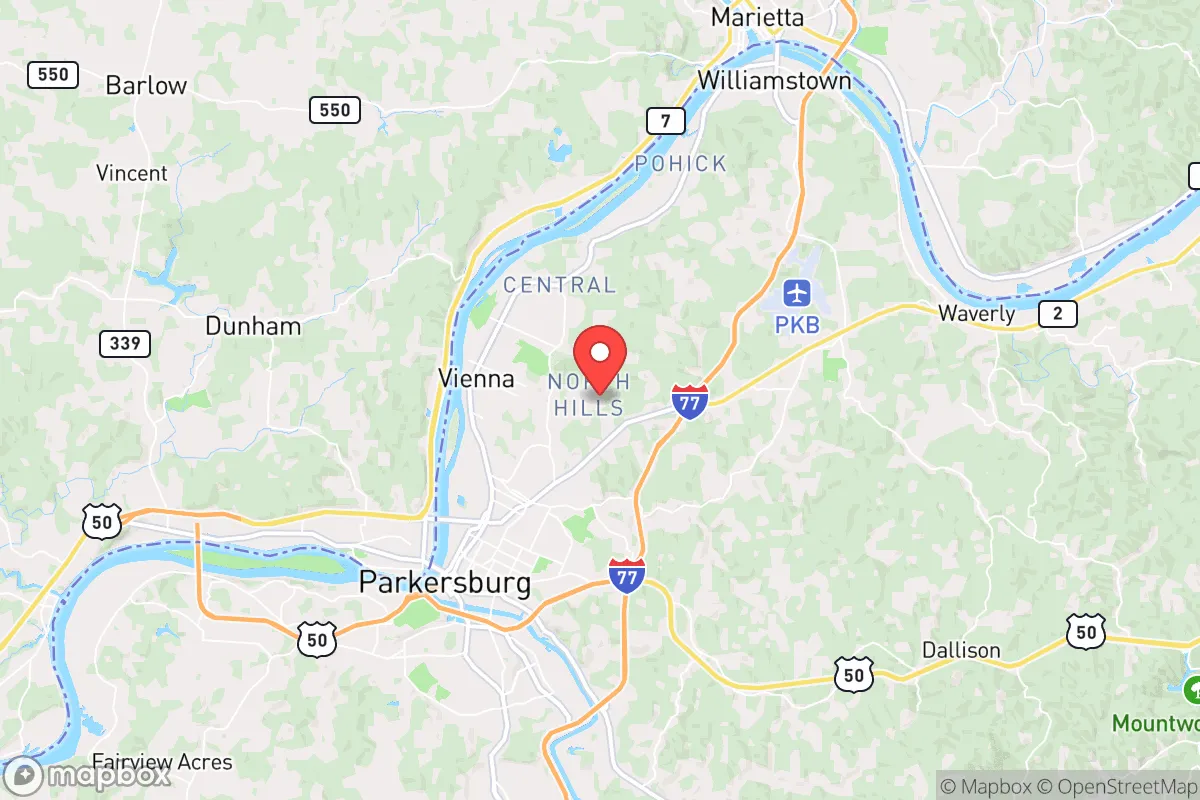
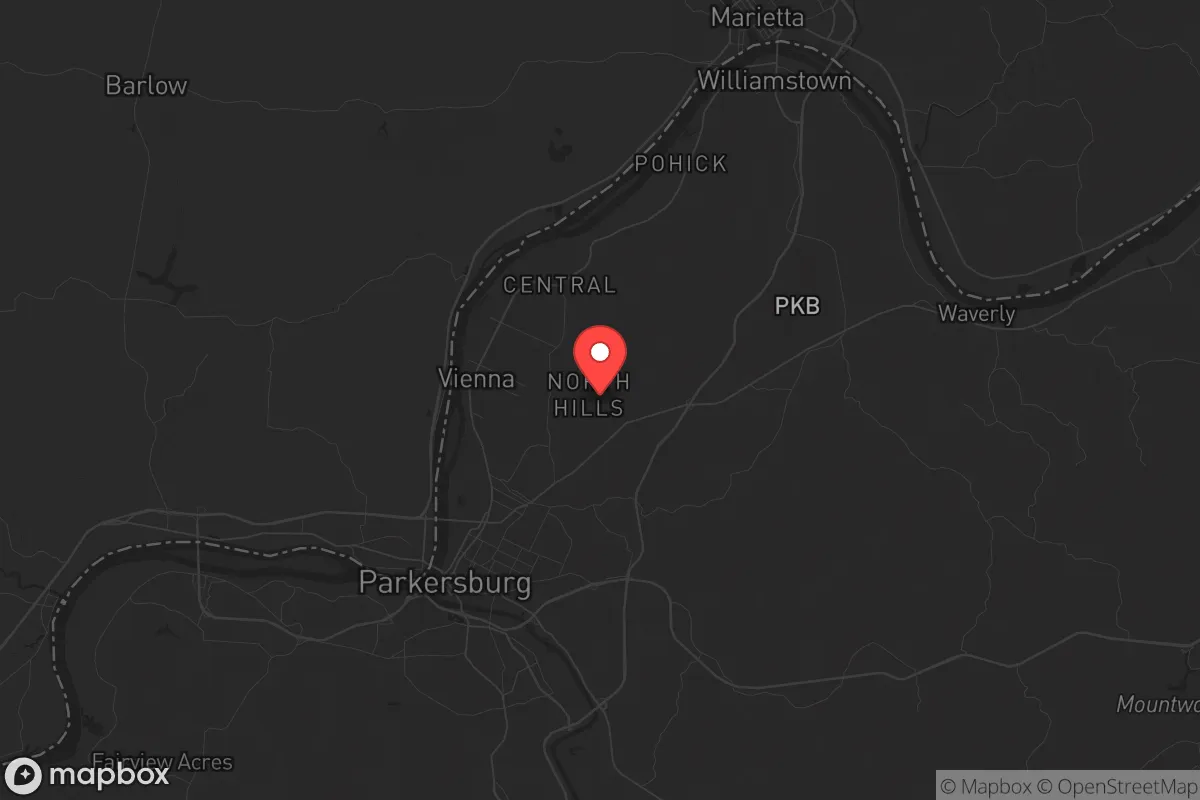
District shown is the primary district for this city’s centroid. Cities may span multiple districts.
Local Political AnalysisPolitical Analysis of North Hills, WV
North Hills, West Virginia, sits deep in reliably conservative territory, with a Cook PVI of R+20 that reflects decades of consistent Republican voting. This isn't a purple area that flips on a dime; it's a place where local elections are often decided in the primary, and where the prevailing attitude is that government should stay out of your business, your family, and your paycheck. The political trajectory here has been steady, but there's a growing unease among longtime residents that outside influences—from Charleston and even further afield—are starting to test the area's traditional values.
How it compares
To understand North Hills, you have to look at its neighbors. Head south to Charleston, and you'll find a more mixed political landscape, with Kanawha County as a whole leaning Republican but the city itself showing pockets of progressive activism, especially around the state capitol and the university. Drive east toward Morgantown, and you hit a blue island in a red sea, driven by West Virginia University's student and faculty population. North Hills, by contrast, has none of that. It's a bedroom community where folks commute to Charleston for work but come home to a place where the Second Amendment isn't debated, taxes are kept low, and the local school board isn't pushing critical theory or gender ideology. The contrast is stark: in North Hills, a candidate who talks about "equity" or "diversity initiatives" is likely to get a very short hearing. The surrounding towns like South Charleston and St. Albans lean conservative too, but North Hills feels more insulated from the cultural shifts that are creeping into even those communities.
What this means for residents
For the people who live here, the political climate translates into a daily life that feels free from a lot of the nonsense you see in bigger cities. You don't have to worry about your kids being exposed to radical sex ed in elementary school, or about the county sheriff enforcing vaccine mandates or mask orders. The local government generally takes a hands-off approach: if you want to build a shed, you don't need three permits and a zoning variance. If you want to carry a firearm, you're not treated like a criminal. That said, there's a real concern that the state legislature in Charleston, while Republican-controlled, has been too willing to accept federal money with strings attached—like the opioid settlement funds that come with reporting requirements that feel like a backdoor to federal oversight. Residents here watch the national news and see what's happening in places like Oregon or New York, and they're determined to keep that out. The long-term worry is that as more people move in from out of state—even from other red states—they might bring progressive voting habits with them, slowly shifting the local balance.
Culturally, North Hills is a place where church potlucks still outnumber yoga studios, and where the local hardware store is more likely to sell a Trump 2024 flag than a "Coexist" sticker. There's a strong sense of self-reliance here, and that extends to politics: people don't want handouts, they want to be left alone. The biggest policy distinction is the near-total absence of any kind of local income tax or business licensing hassle, which keeps the economy small but honest. If you're looking for a place where your vote actually means something and where the government isn't constantly trying to "improve" your life, North Hills is about as solid as it gets. But keep an eye on the school board meetings—that's where the battles over parental rights and curriculum are already heating up, and that's where the future of this town's politics will be decided.

State Political ClimatePolitical Climate in West Virginia
State Political AnalysisPolitical Environment in the State
West Virginia has long been one of the most reliably Republican states in the nation, but that wasn't always the case. As recently as the 1990s, the Mountain State was a Democratic stronghold at the state and local level, but a massive realignment over the past two decades has flipped it decisively red. In 2024, Donald Trump carried West Virginia by nearly 40 points, and Republicans now hold supermajorities in both chambers of the state legislature, all three U.S. House seats, and both U.S. Senate seats. The shift has been driven by cultural and economic disaffection with the national Democratic Party, particularly around coal, energy, and Second Amendment issues, and it shows no signs of reversing.
Urban vs. rural divide
The political map of West Virginia is starkly divided between a handful of small urban centers and the vast, deeply conservative rural expanse. The state's largest city, Charleston, and its surrounding Kanawha County are the most competitive ground in the state — Kanawha County voted for Trump by about 12 points in 2024, a far cry from the 40-point margins in rural counties. Morgantown, home to West Virginia University, is the state's most liberal enclave, with Monongalia County often voting within single digits of the national average. Huntington and Cabell County lean Republican but are less intense than the rest of the state, while Wheeling in Ohio County is reliably red but with a small Democratic holdout in the city proper. The real engine of the GOP's dominance is the rural south and east — counties like Mingo, Logan, and McDowell routinely deliver 70-80% Republican margins. The Eastern Panhandle, including Martinsburg and Berkeley County, has been trending redder as exurban refugees from D.C. and Maryland move in, though it remains slightly more moderate than the rest of the state.
Policy environment
West Virginia's policy environment is among the most conservative in the country, and it's been getting more so. The state has no personal or corporate income tax on most business income after a 2023 phase-down, and the legislature is actively working toward full elimination of the personal income tax. Property taxes are among the lowest in the nation, and there is no estate or inheritance tax. The regulatory posture is aggressively pro-energy and pro-business, with the state actively fighting EPA regulations on coal and natural gas. Education policy has shifted sharply right: the state passed a robust school choice law in 2021 that created Education Savings Accounts (ESAs) for all students, and in 2023 expanded it to include homeschoolers and private school students. Healthcare is a mixed bag — the state expanded Medicaid under the Affordable Care Act, but the legislature has resisted further expansion and has passed laws restricting abortion to the first eight weeks of pregnancy, with no exceptions for rape or incest. Election laws are strict: voter ID is required, early voting is limited to 10 days, and absentee voting requires an excuse. The state also passed a 2021 law banning private funding of election administration, a direct response to concerns about Zuckerberg-funded grants in 2020.
Trajectory & freedom
West Virginia is unquestionably moving in a more libertarian direction on most fronts, but not without some concerning countercurrents. On the positive side for freedom-minded residents, the state passed constitutional carry (permitless concealed carry) in 2016 and has repeatedly strengthened Second Amendment protections, including a 2021 law prohibiting state enforcement of federal gun laws that conflict with state law. Parental rights were bolstered by the 2021 ESA law and a 2023 law requiring schools to notify parents of any curriculum changes involving sexuality or gender identity. Medical autonomy took a hit with the near-total abortion ban, but the state has not imposed vaccine mandates or mask mandates since 2021, and the legislature passed a 2022 law prohibiting employers from requiring COVID-19 vaccines as a condition of employment. Property rights are strong, with no statewide zoning and a 2023 law limiting the ability of local governments to impose rent control. The concerning trend is the growing use of state preemption to override local ordinances — the legislature has stripped cities like Morgantown and Charleston of the ability to pass their own minimum wage, paid leave, or anti-discrimination laws. While this keeps the state uniformly conservative, it also reduces local control, which is a trade-off some freedom advocates find troubling.
Civil unrest & political movements
West Virginia has a surprisingly active history of political protest, though it's almost entirely from the right. The 2018 teachers' strike, which shut down schools across the state for nine days, was a rare left-wing mobilization that succeeded in winning a 5% pay raise, but it was driven more by economic grievance than progressive ideology. Since then, the dominant grassroots energy has been on the right: the state has seen multiple Second Amendment sanctuary resolutions passed in over 40 counties, and in 2021, a convoy of coal trucks and pickup trucks descended on Charleston to protest federal energy policies. Immigration politics are less visible here than in border states, but the legislature passed a 2024 law requiring local law enforcement to cooperate with ICE and banning sanctuary city policies — a largely symbolic move since no West Virginia city had declared itself a sanctuary. Election integrity remains a hot topic: the 2020 election saw no major controversies in the state, but the legislature has passed multiple bills tightening voting laws, and there is a vocal minority pushing for a full audit of the 2020 results. Secession or nullification rhetoric is present but fringe — a 2021 resolution calling for a "Committee on the Separation of the State of West Virginia from the United States" died in committee. New residents should expect a politically engaged but generally civil atmosphere, with the occasional heated debate at a diner or town hall but little of the street-level conflict seen in larger states.
Projection
Over the next 5-10 years, West Virginia is likely to become even more conservative, but with some important caveats. The state's population is aging and shrinking — it lost 3.2% of its population between 2020 and 2024, the second-highest rate in the nation — and the people leaving tend to be younger and more moderate, while those staying or moving in are often retirees or remote workers seeking low taxes and conservative values. The Eastern Panhandle, particularly Berkeley and Jefferson counties, is seeing an influx of former D.C. area residents who are generally more moderate than the rest of the state, but they're still a small fraction of the total population. The coal industry will continue to decline, but the state is pivoting to natural gas, petrochemicals, and data centers, which may attract a slightly more diverse workforce. The biggest wildcard is the state's healthcare system: with the highest overdose death rate in the nation and the lowest life expectancy, the state's freedom-friendly policies may be tested by a worsening public health crisis. Expect continued tax cuts, further expansion of school choice, and a hardening of the state's already strict abortion laws. The Republican supermajority is safe for the foreseeable future, and the only real political drama will be internal GOP fights over how far to push the culture war agenda.
For a conservative-leaning individual or family considering a move to West Virginia, the bottom line is this: you'll find a state that largely shares your values on taxes, guns, education, and limited government, and you'll have the political power to keep it that way. The trade-offs are a struggling economy, poor healthcare outcomes, and a shrinking population that means fewer services and amenities than you'd find in a growing state. If you value low taxes and cultural alignment above all else, West Virginia is a strong bet. If you want a vibrant job market or top-tier schools, you'll need to look carefully at specific towns like Morgantown or the Eastern Panhandle. The state is what it is — unapologetically red, increasingly free, and unlikely to change course anytime soon.
* Values derived from national, state, county, city and local statistics and may differ in a specific area. Last updated: 2026-04-23T05:36:43.000Z
Narrative content on this page is AI-generated and may contain mistakes. Verify any details that matter before acting on them.
ReloMaps may earn a commission from affiliate links at no extra cost to you.

