Strategic Assessment of North Hills, WV
Meaningful friction. Expect exposure to either population pressure, blast zones, or natural disaster risk. Consider buying a retreat property.
What does the Strategic Assessment tell us?
Our Strategic Assessment grades tactical survivability of an area. Major population centers, military targets, fallout zones, natural disasters, and border exposure all drive risk — lower exposure means a more defensible position in a crisis.
This is heavily inspired by Joel Skousen's Strategic Relocation book. Highly recommended you checkout the book ($)What does this tell us?
Our Strategic Assessment grades tactical survivability of an area. Major population centers, military targets, fallout zones, natural disasters, and border exposure all drive risk — lower exposure means a more defensible position in a crisis.
This is heavily inspired by Joel Skousen's Strategic Relocation book. Highly recommended you checkout the book ($)Strategic Pillars

Key Distances
Regional Safe Places
Below is our recommended "safe zones" in West Virginia and the surrounding area based on our strategic heuristics. For most people, it's unrealistic to live in a “safe zone” full-time due to work, family or other personal reasons. They tend to be more rural. However, many of these areas are perfect for second homes and retreat properties that double as a vacation home or even a short-term rental.
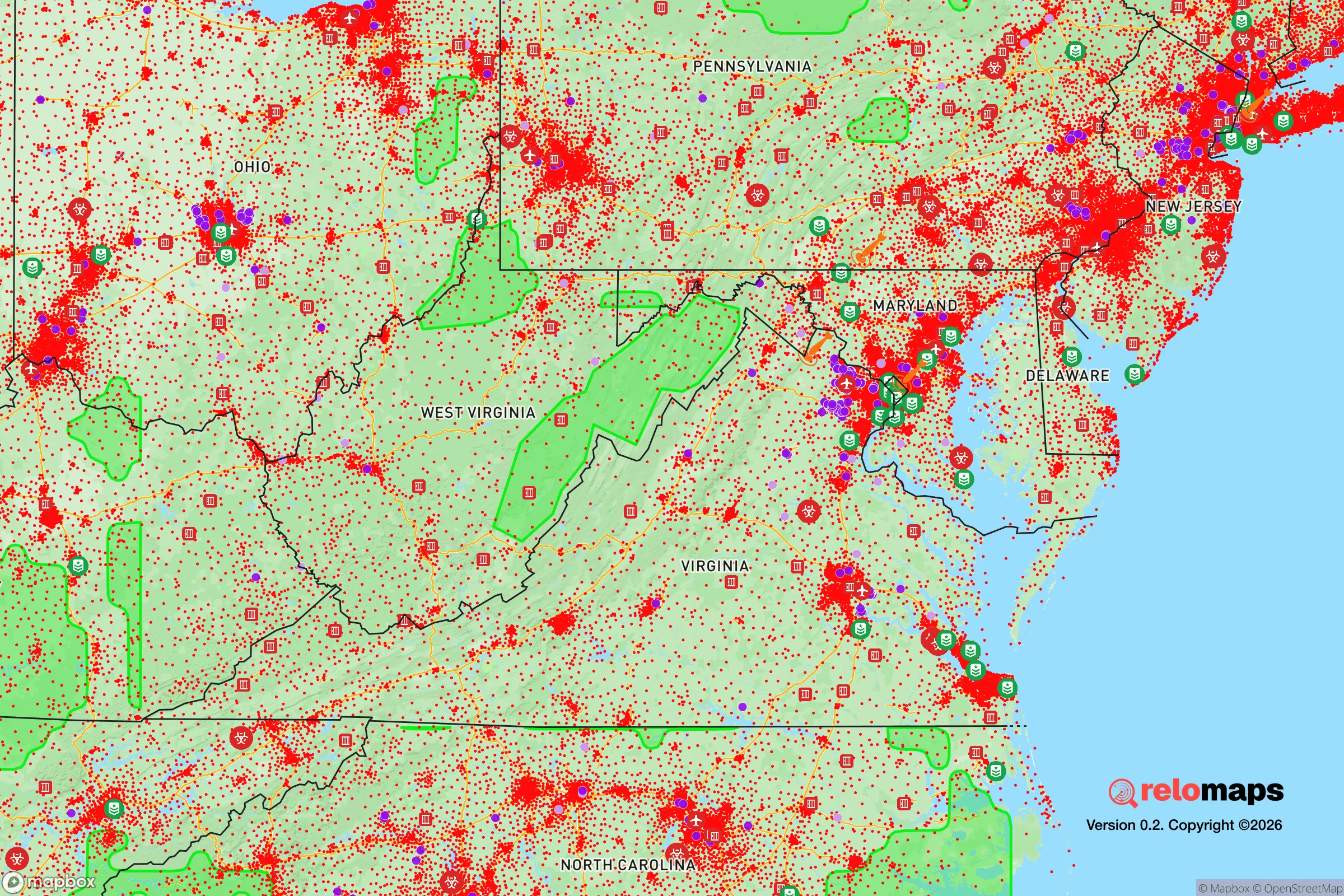
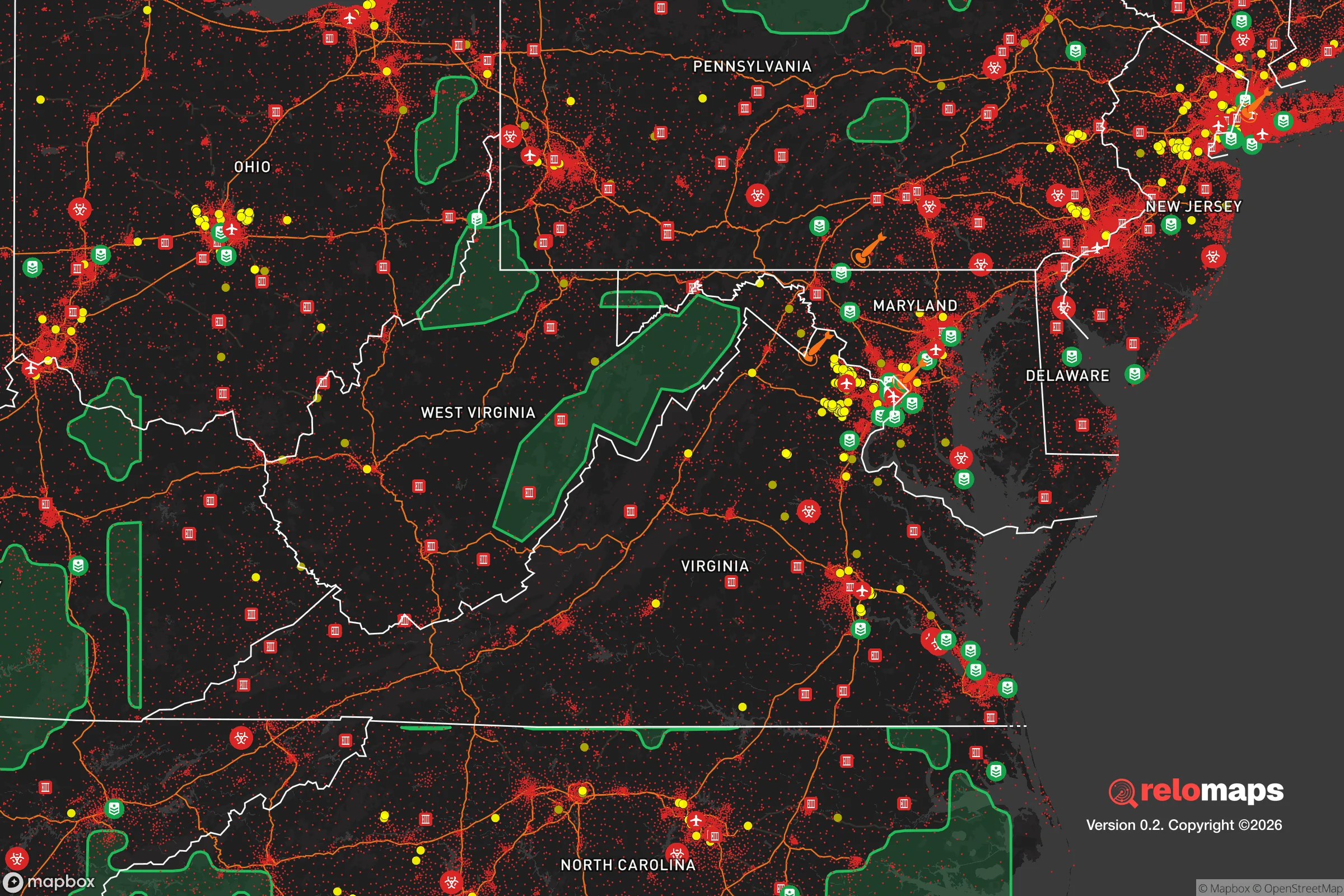


Important Note: For informational purposes only. This does not mean nothing bad ever happens in the green zones. Please use common sense. This is based on public data and modeled with AI. We tried to take a conservative approach but mistakes happen. We update this regularly as new information becomes available.
Solar Generator Recommendations
Backup power matters more here than in safer locations. We've picked three solar generators across budgets and capacity tiers — start with the budget unit if you only need a few essentials, or step up if you want to run a fridge and HVAC for days at a time.

Jackery Portable Power Station Explorer 300
Budget OptionPower on the Go: Weighing only 11 lbs, it's convenient to set up and store with book-sized foldable solar panels

BLUETTI Portable Power Station AC180
Designed for both indoor and outdoor scenarios, AC180 is highly capable as it has a robost capacity and continuous output power.

EF ECOFLOW DELTA Pro Ultra Power Station
Upgraded PickEcoFlow DELTA Pro Ultra is a whole-home energy system designed to grow with your family. Integrated with the Smart Home Panel 2, it scales to meet your evolving energy needs — keeping your home powered, intelligent, and secure through every stage of life.
We earn a commission, at no additional cost to you.
Strategic Assessment Analysis
North Hills, West Virginia, sits in a pocket of the Appalachian foothills that offers genuine strategic depth for those thinking seriously about resilience and long-term preparedness. This small, unincorporated community in Wood County is not a prepper fantasyland—it has real trade-offs—but its position relative to major population centers, critical infrastructure, and natural barriers makes it a location worth a hard look for anyone planning a relocation with survival-minded criteria. The area’s low population density, access to fresh water, and distance from high-value fallout targets provide a baseline that many more popular relocation destinations in the eastern U.S. simply cannot match.
Geographic position and natural advantages for long-term security
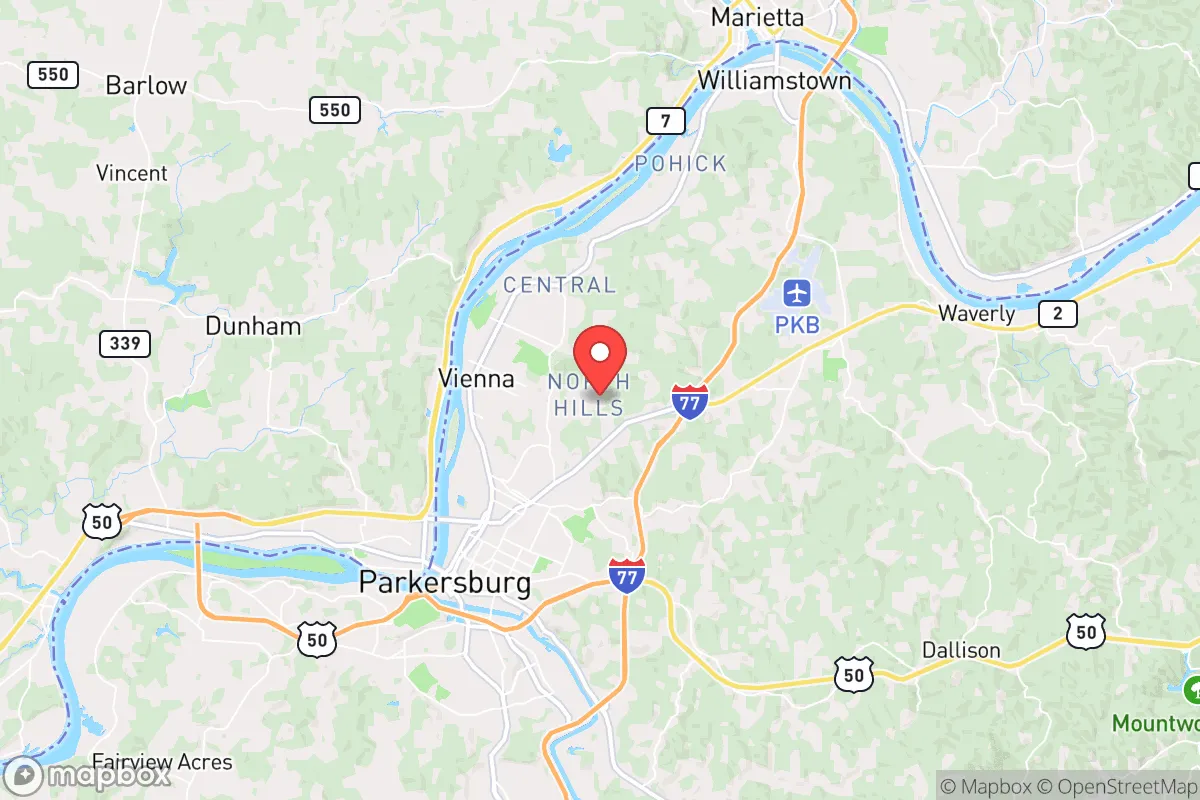
North Hills sits roughly 10 miles northeast of Parkersburg, the largest city in the Mid-Ohio Valley region, and about 90 miles south of Pittsburgh. That distance from a major metropolitan hub is a double-edged sword—close enough for supply runs and medical access, far enough that a collapse or civil unrest in Pittsburgh would not immediately wash over this area. The Ohio River runs just west of North Hills, providing a reliable water source and a natural barrier to movement from the Ohio side. The surrounding terrain is rolling hills and mixed hardwood forest, with enough elevation to offer decent line-of-sight defensibility for a small property. The area is not mountainous like eastern West Virginia, but the ridges and hollows still break up sightlines and slow down any large-scale movement. For a relocator, this means you are not sitting in a flat, exposed basin like much of the Midwest. The local climate is temperate, with four distinct seasons, adequate rainfall (around 40 inches annually), and no extreme drought risk. Soil quality is marginal for large-scale agriculture, but small gardens and orchards are viable with some amendment. The biggest natural advantage here is water: the Ohio River is a massive, perennial source, and the groundwater table in Wood County is generally reliable for wells. That alone puts North Hills ahead of many arid western relocation spots.
Risks, exposures, and proximity to fallout-relevant landmarks
No location is a fortress, and North Hills has specific vulnerabilities that a strategic relocator must weigh. The most obvious is the Ohio River itself—while it provides water, it also concentrates industrial infrastructure. Upstream from North Hills, along the Ohio, are chemical plants, natural gas storage facilities, and aging locks and dams. A major industrial accident or sabotage event at one of these facilities could contaminate the river for weeks. The nearby Parkersburg area has a history of chemical manufacturing, including the infamous DuPont plant that caused the C8 contamination crisis. That legacy means the groundwater and soil in some parts of Wood County carry long-term pollution risks. For fallout from a nuclear event—whether a detonation at a major city or a strike on a military target—North Hills is far enough from Pittsburgh, Columbus, and Charleston to avoid lethal prompt radiation, but fallout plumes could still drift over the area depending on wind patterns. The closest high-value target is the Pittsburgh metro area, but the prevailing winds in this region generally blow west to east, meaning fallout from a Pittsburgh strike would likely move toward central Pennsylvania, not southwest into West Virginia. That is a meaningful advantage. The area also sits within a few hours’ drive of the Marcellus Shale gas fields, which have seen pipeline sabotage and protest activity in recent years. A coordinated attack on natural gas infrastructure could disrupt heating and power for weeks in winter. For a relocator, the key takeaway is that North Hills is not a zero-risk zone, but its risks are mostly industrial and environmental, not military or civil-unrest driven. The local population is small and politically conservative, which reduces the likelihood of organized unrest compared to larger cities.
Practical resilience for a relocator: food, water, energy, and defensibility
For someone serious about self-sufficiency, North Hills offers a workable baseline but requires deliberate investment. Water is the strongest asset. The Ohio River is a reliable surface source, but you will need a filtration system capable of handling industrial runoff and sediment. A deep well (200-400 feet) is the better long-term bet, and drilling costs in Wood County are reasonable compared to the Northeast. The water table is generally good, but you should test for the legacy C8 contamination before drinking. For food, the growing season runs about 160 days, which is enough for warm-season crops like tomatoes, peppers, squash, and beans. The soil is clay-heavy and acidic, so raised beds or container gardening with imported topsoil will yield better results. Local deer populations are healthy, and small game like squirrel and rabbit is abundant. Fishing in the Ohio River is viable but requires caution due to industrial pollution—catch-and-release is safer than regular consumption. For energy, the grid in Wood County is moderately reliable, but winter ice storms can knock out power for days. Solar is viable here—the area gets about 4.5 peak sun hours per day on average, which is decent for the region. A ground-mounted array with battery storage can cover a modest home’s needs. Wood heating is the most practical backup, and firewood is plentiful if you have land. Defensibility is mixed. North Hills is not a natural fortress—it is a suburban-style development with winding roads and scattered homes. A single property with a long driveway, good sightlines, and a creek or ridge for a natural barrier is possible, but you will need to choose your lot carefully. The community itself is small enough that neighbors are likely to know each other, which is a social resilience factor that matters in a breakdown scenario. The nearest hospital is in Parkersburg, about 15 minutes away, which is acceptable for emergencies but not ideal for a long-term collapse where medical infrastructure fails.
The overall strategic picture for North Hills is one of moderate but real resilience, with a strong water advantage and a low-risk profile for civil unrest and nuclear fallout compared to most eastern U.S. locations. It is not a remote mountain redoubt—you will have neighbors, and you will be within an hour of a mid-sized city. But for a relocator who wants to stay within driving distance of the Midwest and Mid-Atlantic while avoiding the high-risk zones around D.C., Pittsburgh, and Columbus, this area offers a solid middle ground. The key is to treat it as a base that requires active hardening: secure your own water, build soil for food production, install off-grid energy, and choose a property with defensible terrain. If you do that, North Hills can serve as a long-term holdout location that keeps you out of the blast zones and away from the worst of the unrest, while still being close enough to civilization to maintain a normal life until things go sideways. That is a rare combination, and it makes this area worth a serious visit before you commit to a more extreme or more exposed location.

* Values derived from national, state, county, city and local statistics and may differ in a specific area. Last updated: 2026-04-23T05:36:43.000Z
Narrative content on this page is AI-generated and may contain mistakes. Verify any details that matter before acting on them.
ReloMaps may earn a commission from affiliate links at no extra cost to you.

