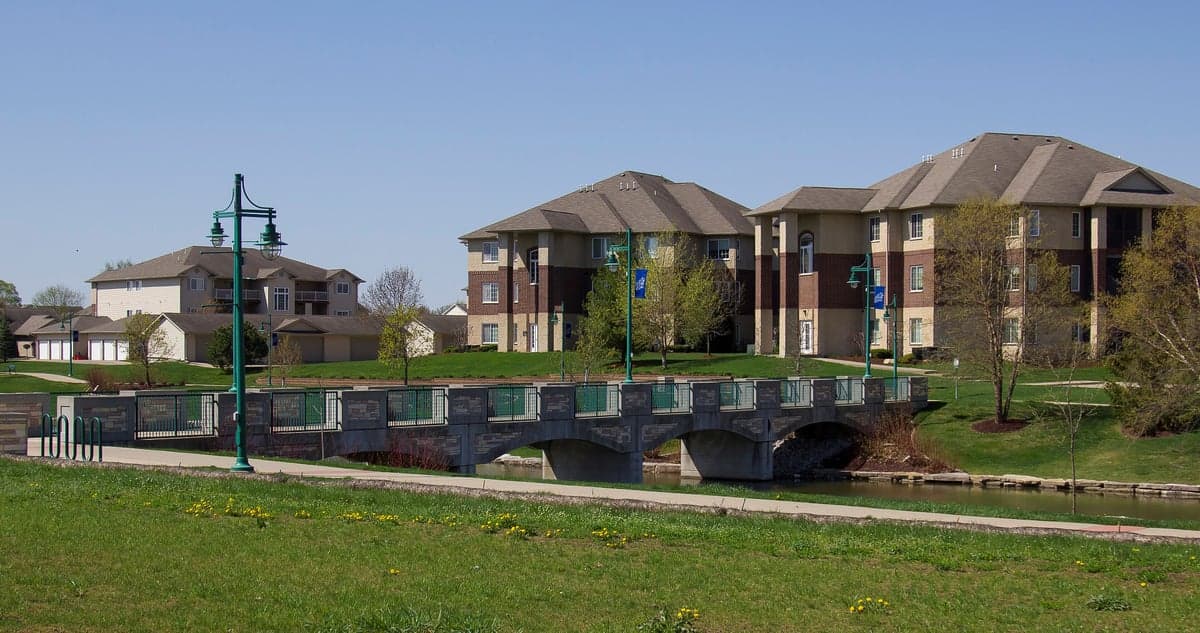
Photo: Wikipedia
Strategic Assessment of North Liberty, IA
Meaningful friction. Expect exposure to either population pressure, blast zones, or natural disaster risk. Consider buying a retreat property.
What does the Strategic Assessment tell us?
Our Strategic Assessment grades tactical survivability of an area. Major population centers, military targets, fallout zones, natural disasters, and border exposure all drive risk — lower exposure means a more defensible position in a crisis.
This is heavily inspired by Joel Skousen's Strategic Relocation book. Highly recommended you checkout the book ($)What does this tell us?
Our Strategic Assessment grades tactical survivability of an area. Major population centers, military targets, fallout zones, natural disasters, and border exposure all drive risk — lower exposure means a more defensible position in a crisis.
This is heavily inspired by Joel Skousen's Strategic Relocation book. Highly recommended you checkout the book ($)Strategic Pillars

Key Distances
Regional Safe Places
Below is our recommended "safe zones" in Iowa and the surrounding area based on our strategic heuristics. For most people, it's unrealistic to live in a “safe zone” full-time due to work, family or other personal reasons. They tend to be more rural. However, many of these areas are perfect for second homes and retreat properties that double as a vacation home or even a short-term rental.
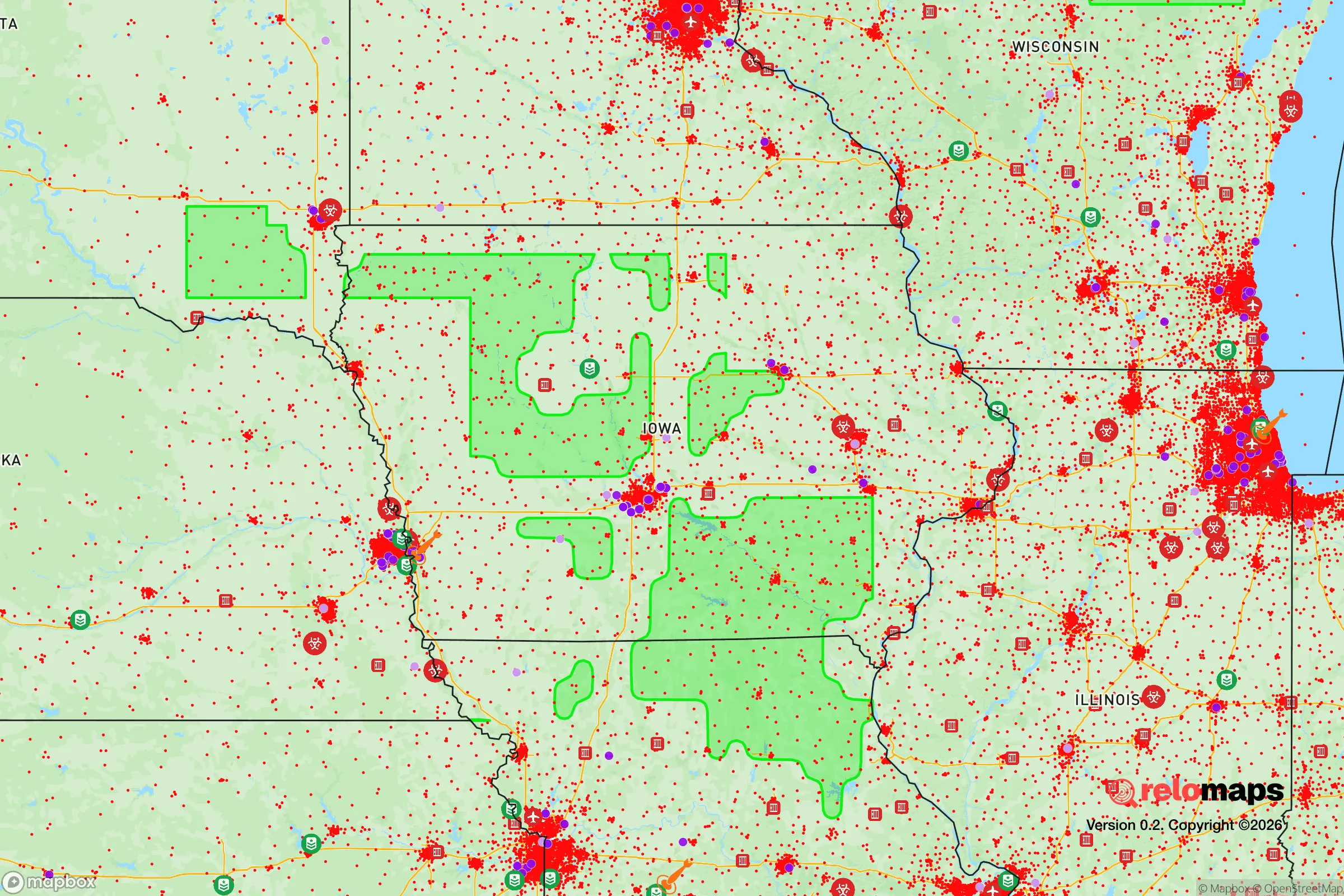
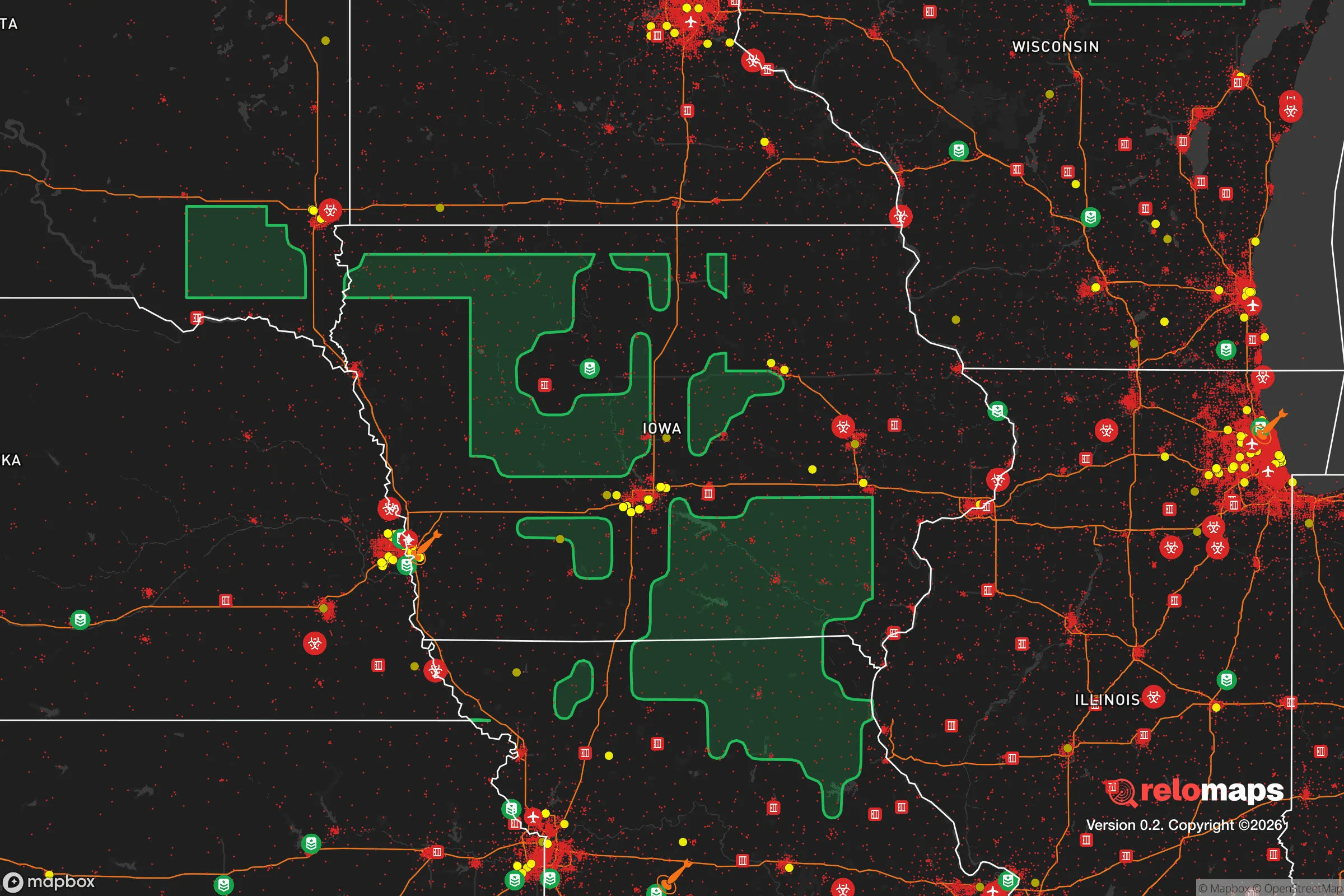


Important Note: For informational purposes only. This does not mean nothing bad ever happens in the green zones. Please use common sense. This is based on public data and modeled with AI. We tried to take a conservative approach but mistakes happen. We update this regularly as new information becomes available.
Solar Generator Recommendations
Backup power matters more here than in safer locations. We've picked three solar generators across budgets and capacity tiers — start with the budget unit if you only need a few essentials, or step up if you want to run a fridge and HVAC for days at a time.

Jackery Portable Power Station Explorer 300
Budget OptionPower on the Go: Weighing only 11 lbs, it's convenient to set up and store with book-sized foldable solar panels

BLUETTI Portable Power Station AC180
Designed for both indoor and outdoor scenarios, AC180 is highly capable as it has a robost capacity and continuous output power.

EF ECOFLOW DELTA Pro Ultra Power Station
Upgraded PickEcoFlow DELTA Pro Ultra is a whole-home energy system designed to grow with your family. Integrated with the Smart Home Panel 2, it scales to meet your evolving energy needs — keeping your home powered, intelligent, and secure through every stage of life.
We earn a commission, at no additional cost to you.
Strategic Assessment Analysis
North Liberty, Iowa, presents a mixed strategic picture for the conservative prepper or survivalist. Its rapid growth and proximity to Iowa City offer economic opportunity, but that same proximity introduces significant vulnerabilities in a collapse or unrest scenario. The town’s resilience is tied directly to its ability to function as a semi-independent node rather than a bedroom suburb, and its location on the I-380 corridor is both a lifeline and a liability. For a single individual or family looking to balance modern convenience with long-term preparedness, North Liberty requires a clear-eyed assessment of its geographic trade-offs.
Geographic position and natural advantages for long-term survival
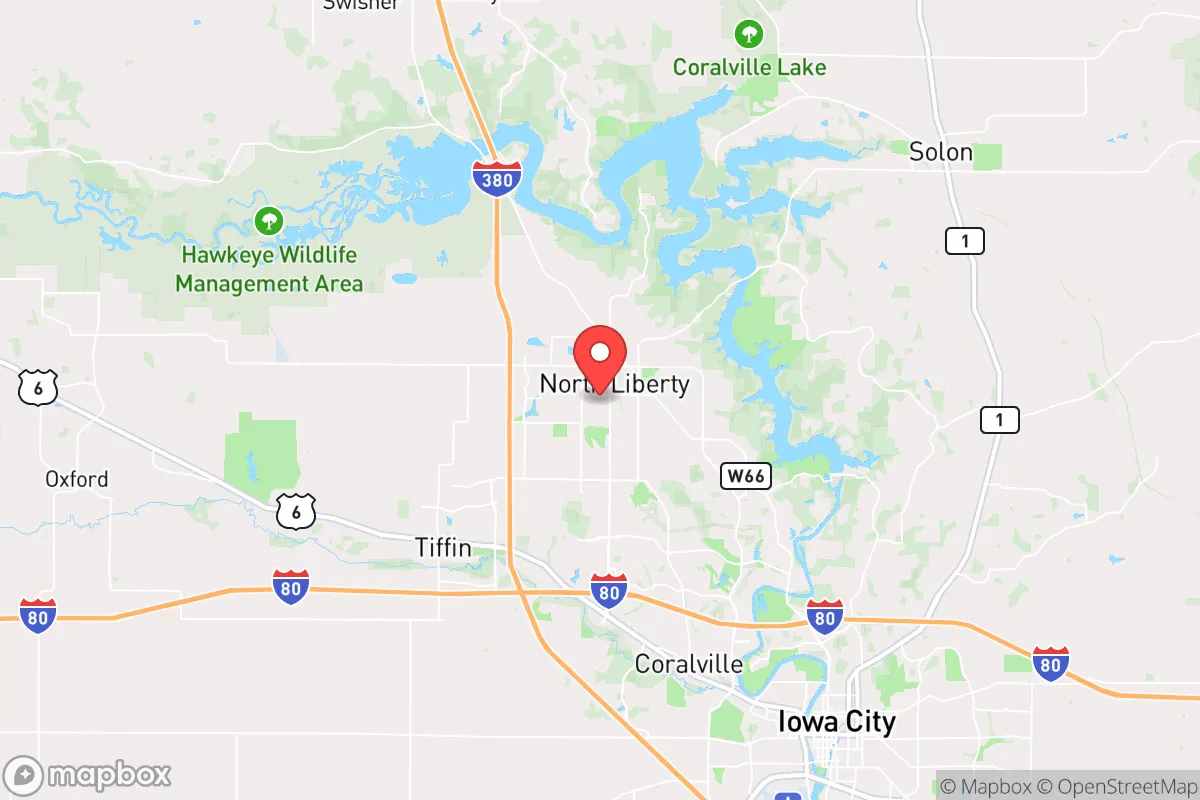
North Liberty sits in Johnson County, roughly 10 miles north of Iowa City and 25 miles south of Cedar Rapids. This places it in the heart of eastern Iowa’s agricultural belt, which is a genuine asset for food security. The surrounding land is flat, fertile, and dominated by row crops—corn and soybeans—which means that in a prolonged disruption, local food production is theoretically possible, provided you have the means to grow, process, and store it. The area is not prone to earthquakes, hurricanes, or wildfires. The biggest natural threat is severe weather: tornadoes are a real risk, and the region experiences harsh winters with heavy snow and ice storms that can knock out power for days. The Iowa River runs through the county, but North Liberty itself is not directly on a major waterway, which reduces flood risk but also means you’ll need a reliable well or a plan for water storage. The terrain offers little in the way of natural defensibility—no hills, forests, or chokepoints to speak of. This is open country, which is good for visibility but bad for concealment or standoff defense.
Risks, exposures, and proximity to fallout-relevant landmarks
The single biggest strategic weakness of North Liberty is its location on the I-380 corridor, a major north-south highway connecting Cedar Rapids and Iowa City. In a mass evacuation or civil unrest scenario, this road becomes a funnel for desperate people moving between urban centers. North Liberty is essentially a speed bump on that route. The town itself has grown from a few thousand in the 1990s to over 20,000 today, and it’s still building. That growth is almost entirely residential subdivisions and strip malls, meaning the population density is increasing without a corresponding increase in local heavy industry or self-sufficiency. Iowa City, with its university, hospital complex, and 75,000 residents, is a major population center that would become a focal point for chaos in a national emergency. The University of Iowa Hospitals and Clinics is a Level 1 trauma center—valuable in a medical crisis, but also a target for looters, rioters, or those seeking scarce medical supplies. Cedar Rapids, with its industrial base and 130,000 people, is another potential flashpoint. North Liberty is sandwiched between these two cities, and in a breakdown, you are within walking distance of both. There are no significant military bases or nuclear facilities nearby, but the Duane Arnold Energy Center (a decommissioned nuclear plant) is about 20 miles northwest near Palo. While it’s no longer operational, the spent fuel storage there remains a potential target for sabotage or a secondary hazard in a wider disaster. The area’s political climate is also a factor: Johnson County is one of the most liberal in Iowa, which could create friction for conservative-minded residents during periods of social unrest. You are not in friendly territory, culturally speaking.
Practical resilience for a relocator: food, water, energy, and defensibility
For a relocator serious about self-sufficiency, North Liberty offers a mixed bag. Food: The agricultural surroundings are a plus, but you’ll need land to garden or raise animals. Most new subdivisions have small lots with HOAs that restrict livestock and large gardens. Look for older homes on acreage north or west of town, where zoning is looser. Local farmers’ markets and CSAs exist, but they depend on a functioning supply chain. In a collapse, those sources dry up fast. Water: The city water comes from the Iowa River via the Iowa City water system. That’s a single point of failure. A prolonged power outage or contamination event would cut your supply. A well is your best bet, but many newer homes are on municipal water. If you buy here, prioritize a property with a private well and a backup hand pump. Rainwater collection is legal but limited by Iowa’s water rights laws. Energy: The grid is reliable day-to-day, but ice storms in winter can take it down for a week or more. Solar is viable, but the region’s cloudy winters mean you’ll need battery storage and a backup generator (propane or diesel). Natural gas is available in town, but that pipeline is vulnerable to disruption. Wood heat is a solid option if you have a fireplace or stove and a source of firewood—there are woodlots within 20 miles, but they’re not abundant. Defensibility: As noted, the terrain offers little. Your best bet is a rural property with a long driveway, good sightlines, and neighbors you can trust. In-town living means you are surrounded by strangers, many of whom are not prepared. A suburban subdivision is a trap in a grid-down scenario—too many people, too few exits. If you must live in North Liberty, choose a home on the edge of town, near farmland, with a clear route out to the north or west, away from the I-380 corridor.
The overall strategic picture for North Liberty is one of calculated risk. It is not a survivalist’s paradise, but it is not a death trap either. The area’s agricultural base and low natural disaster risk are genuine advantages. However, the rapid suburbanization, cultural hostility to conservative values, and dangerous proximity to two major urban centers on a major highway are serious liabilities. For a single individual or family willing to invest in off-grid infrastructure—well, solar, wood heat, food storage—and who can secure a defensible property on the rural fringe, North Liberty can work as a base of operations. But it requires constant vigilance and a plan to bug out if the I-380 corridor becomes a river of refugees. If you want a low-profile, high-resilience location with minimal exposure to urban chaos, look further west or north, away from the university towns and the interstate. North Liberty is a compromise—and in a true collapse, compromises can get you killed.

* Values derived from national, state, county, city and local statistics and may differ in a specific area. Last updated: 2026-04-29T22:36:34.000Z
Narrative content on this page is AI-generated and may contain mistakes. Verify any details that matter before acting on them.
ReloMaps may earn a commission from affiliate links at no extra cost to you.

