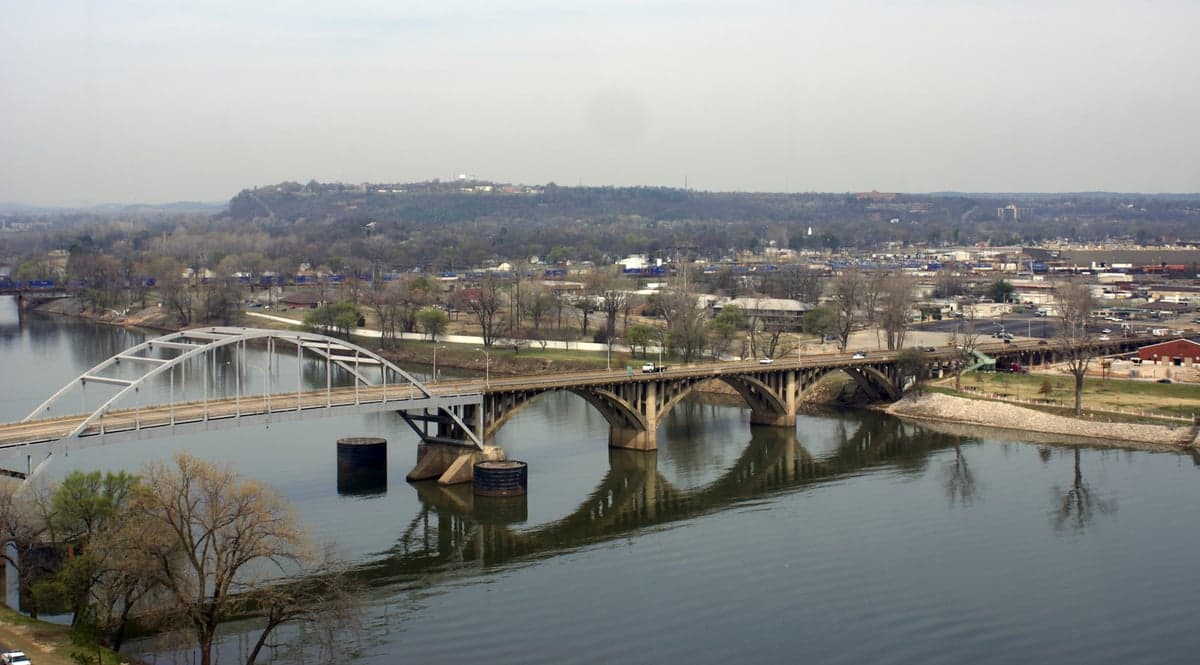
Photo: Wikipedia
Strategic Assessment of North Little Rock, AR
Meaningful friction. Expect exposure to either population pressure, blast zones, or natural disaster risk. Consider buying a retreat property.
What does the Strategic Assessment tell us?
Our Strategic Assessment grades tactical survivability of an area. Major population centers, military targets, fallout zones, natural disasters, and border exposure all drive risk — lower exposure means a more defensible position in a crisis.
This is heavily inspired by Joel Skousen's Strategic Relocation book. Highly recommended you checkout the book ($)What does this tell us?
Our Strategic Assessment grades tactical survivability of an area. Major population centers, military targets, fallout zones, natural disasters, and border exposure all drive risk — lower exposure means a more defensible position in a crisis.
This is heavily inspired by Joel Skousen's Strategic Relocation book. Highly recommended you checkout the book ($)Strategic Pillars

Key Distances
Regional Safe Places
Below is our recommended "safe zones" in Arkansas and the surrounding area based on our strategic heuristics. For most people, it's unrealistic to live in a “safe zone” full-time due to work, family or other personal reasons. They tend to be more rural. However, many of these areas are perfect for second homes and retreat properties that double as a vacation home or even a short-term rental.
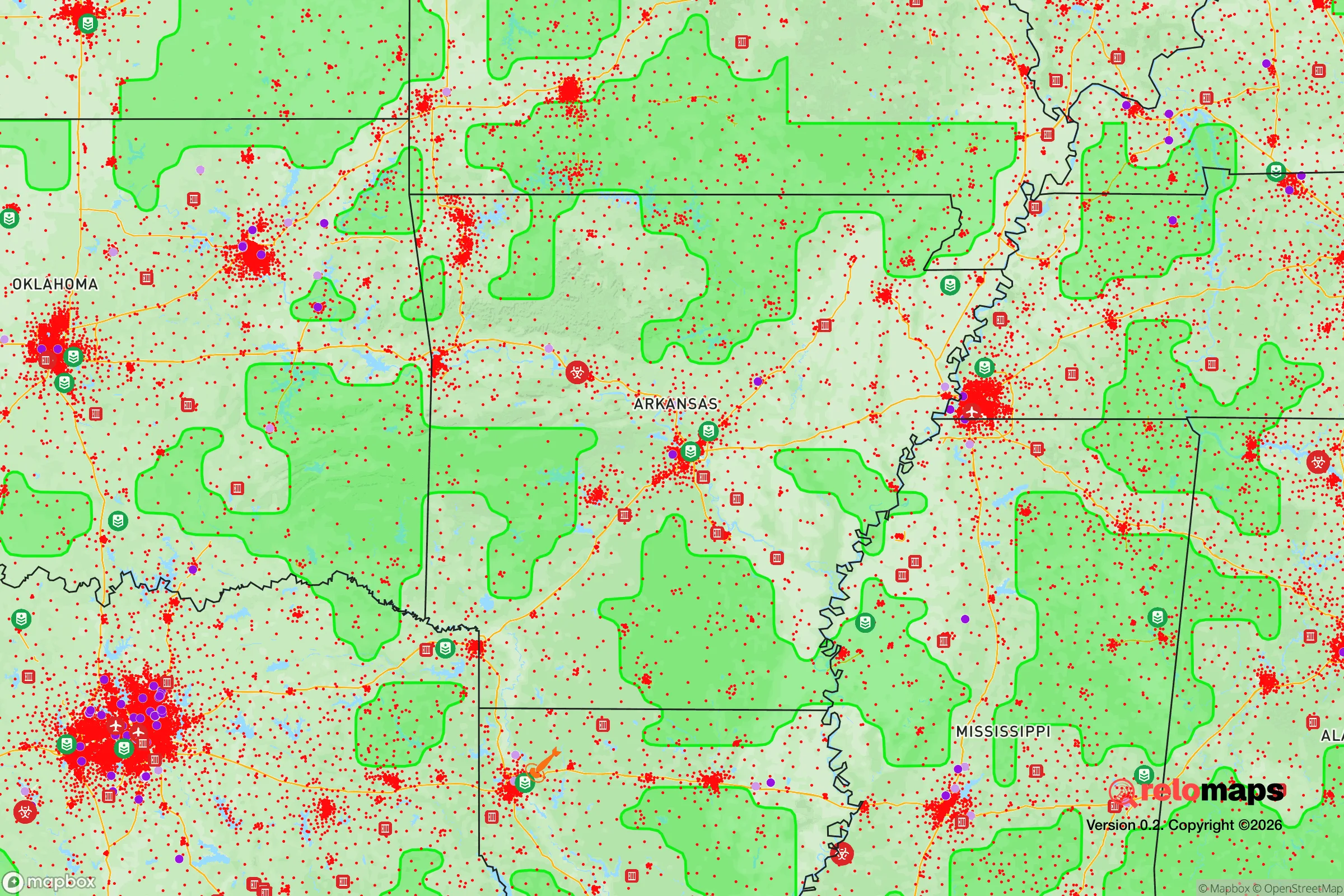
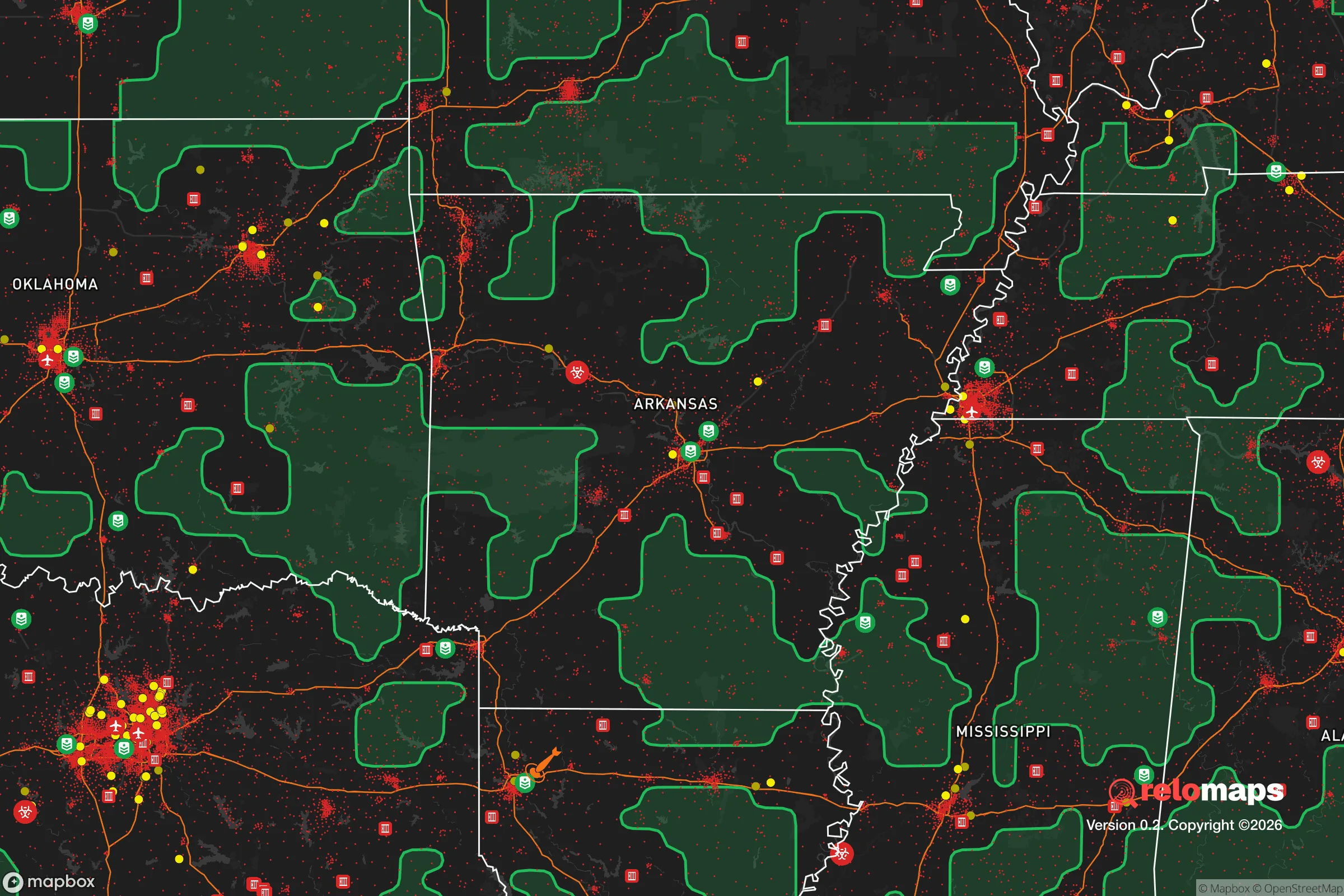


Important Note: For informational purposes only. This does not mean nothing bad ever happens in the green zones. Please use common sense. This is based on public data and modeled with AI. We tried to take a conservative approach but mistakes happen. We update this regularly as new information becomes available.
Solar Generator Recommendations
Backup power matters more here than in safer locations. We've picked three solar generators across budgets and capacity tiers — start with the budget unit if you only need a few essentials, or step up if you want to run a fridge and HVAC for days at a time.

Jackery Portable Power Station Explorer 300
Budget OptionPower on the Go: Weighing only 11 lbs, it's convenient to set up and store with book-sized foldable solar panels

BLUETTI Portable Power Station AC180
Designed for both indoor and outdoor scenarios, AC180 is highly capable as it has a robost capacity and continuous output power.

EF ECOFLOW DELTA Pro Ultra Power Station
Upgraded PickEcoFlow DELTA Pro Ultra is a whole-home energy system designed to grow with your family. Integrated with the Smart Home Panel 2, it scales to meet your evolving energy needs — keeping your home powered, intelligent, and secure through every stage of life.
We earn a commission, at no additional cost to you.
Strategic Assessment Analysis
North Little Rock, Arkansas, presents a mixed strategic picture for the conservative prepper or survivalist. Its primary advantage is a resilient geographic position within the Arkansas River Valley, offering access to fresh water and defensible terrain, while its major drawback is its proximity to a state capital and potential target for civil unrest. For the relocator prioritizing long-term stability over immediate convenience, this area demands a clear-eyed assessment of trade-offs between natural resources and man-made risks.
Geographic position and natural advantages for long-term survival
North Little Rock sits on the north bank of the Arkansas River, directly across from the state capital. This river is a reliable, year-round water source—critical for any grid-down scenario. The surrounding terrain transitions from the flat Delta region to the east into the Ouachita Mountains to the west, providing a mix of agricultural land and forested hills. The area's elevation averages around 250 feet, with higher ground to the north and west offering natural defensibility and reduced flood risk compared to the river's immediate floodplain. The climate is humid subtropical, with hot summers and mild winters, supporting a growing season of roughly 200 days—enough for serious gardening or small-scale farming. The Arkansas River Valley also provides a natural corridor for wildlife, making hunting and trapping viable for supplementing food stores. For the prepper, the key takeaway is that the land itself can sustain life if infrastructure fails, provided you secure a property with well water and a septic system away from the river's flood zone.
Risks, exposures, and proximity to fallout-relevant landmarks
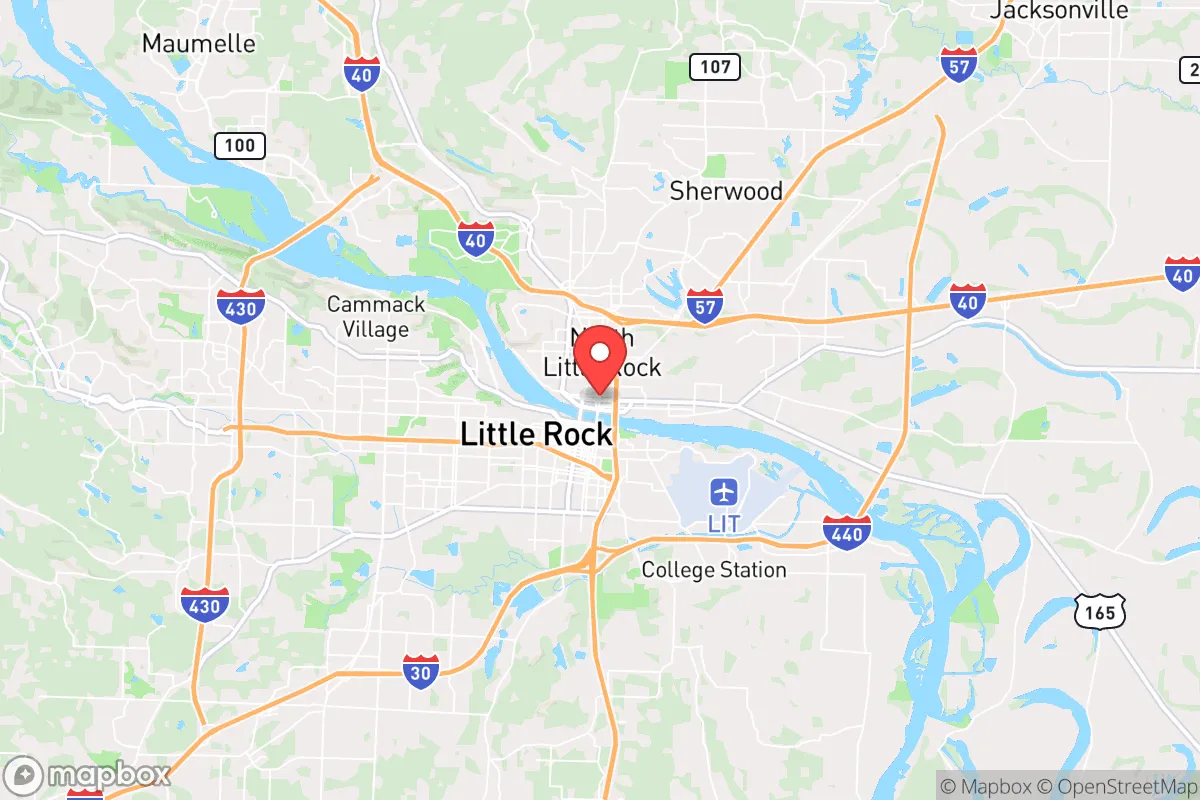
The most significant vulnerability is North Little Rock's location adjacent to Little Rock, a city of roughly 200,000 people and the seat of state government. In a scenario of civil unrest or mass casualty events, this proximity means you are within the blast radius of any political or social disruption. The city hosts the Clinton Presidential Center, the Arkansas State Capitol, and the Little Rock Air Force Base (Jacksonville, just north), which could become targets or staging areas during a national crisis. Interstate 40 and Interstate 30 converge here, making it a chokepoint for refugee movement during a disaster. The Arkansas River itself, while a resource, is also a vector for contamination—upstream industrial sites in Fort Smith and Tulsa could release toxins into the water supply during a collapse. Natural disaster risks include tornadoes (the area is in Dixie Alley) and occasional ice storms that can knock out power for days. For the survivalist, the calculus is clear: you are trading the convenience of city access for a higher risk of being caught in a secondary fallout zone during a major event.
Practical resilience for a relocator: food, water, energy, and defensibility
For the individual or family looking to establish a resilient homestead, North Little Rock offers a workable but not ideal baseline. Water is the strongest asset—the Arkansas River is a massive surface supply, but you must treat it heavily due to agricultural runoff and industrial pollution. A deep well (200-400 feet) is the better bet, with the Ozark aquifer providing reliable groundwater in the western parts of the county. Food production is feasible: the soil in the river valley is rich silt loam, but you'll need to amend it for heavy clay in the hills. Local farmers' markets and co-ops exist, but for serious self-sufficiency, plan on raised beds and a greenhouse to extend the season. Energy resilience is moderate—the area has decent solar insolation (about 4.5 peak sun hours per day), and off-grid solar is practical if you have battery storage. Natural gas is available in town, but rural properties rely on propane or wood. Defensibility is the weak point. The terrain is not mountainous; it's rolling hills with plenty of cover but also plenty of approach routes. A property with a long driveway, a creek or pond as a natural barrier, and a clear line of sight to the road is essential. The local gun culture is strong, and Arkansas is a constitutional carry state, so you won't face legal hurdles for self-defense. However, the proximity to Little Rock means you are within a day's walk of a population that could become desperate during a collapse. For the prepper, the practical advice is to buy at least 15-20 miles north or west of the city limits, ideally in Pulaski County's more rural northern sections or across the line into Faulkner County.
The overall strategic picture for North Little Rock is one of cautious viability for the survivalist who values water access and a moderate climate but is willing to accept elevated risk from urban proximity. It is not a bug-out destination for a total collapse scenario—you would be better served by deeper rural Arkansas counties like Stone or Searcy. However, for the relocator who needs to maintain a job in the Little Rock metro while building a resilient property, it offers a realistic compromise. The key is to treat the city as a liability, not an asset, and to position yourself on the northern or western fringe where you can leverage the river's resources while maintaining distance from its population centers. If you can secure a property with a well, solar panels, and a defensible perimeter, North Little Rock can work as a long-term base—but only if you are prepared to go fully independent when the grid goes down and the city becomes a danger zone.

* Values derived from national, state, county, city and local statistics and may differ in a specific area. Last updated: 2026-04-19T11:28:08.000Z
Narrative content on this page is AI-generated and may contain mistakes. Verify any details that matter before acting on them.
ReloMaps may earn a commission from affiliate links at no extra cost to you.

