Photo: Wikipedia
Political ClimatePolitical Climate in North Little Rock, AR
District shown is the primary district for this city’s centroid. Cities may span multiple districts.
Local Political AnalysisPolitical Analysis of North Little Rock, AR
North Little Rock has long been a solidly conservative community, and that hasn't changed much despite the broader shifts you see in Pulaski County as a whole. The Cook PVI sits at R+8, which tells you the lay of the land pretty clearly — this is a place where folks tend to vote their values, and those values lean traditional. But if you’ve lived here as long as I have, you’ve noticed the political winds shifting in the city proper, especially as the Little Rock metro area gets more attention from national players. The trajectory is still conservative, but there’s a growing tension between the old-school, leave-us-alone crowd and the newer, more progressive voices trying to make inroads.
How it compares
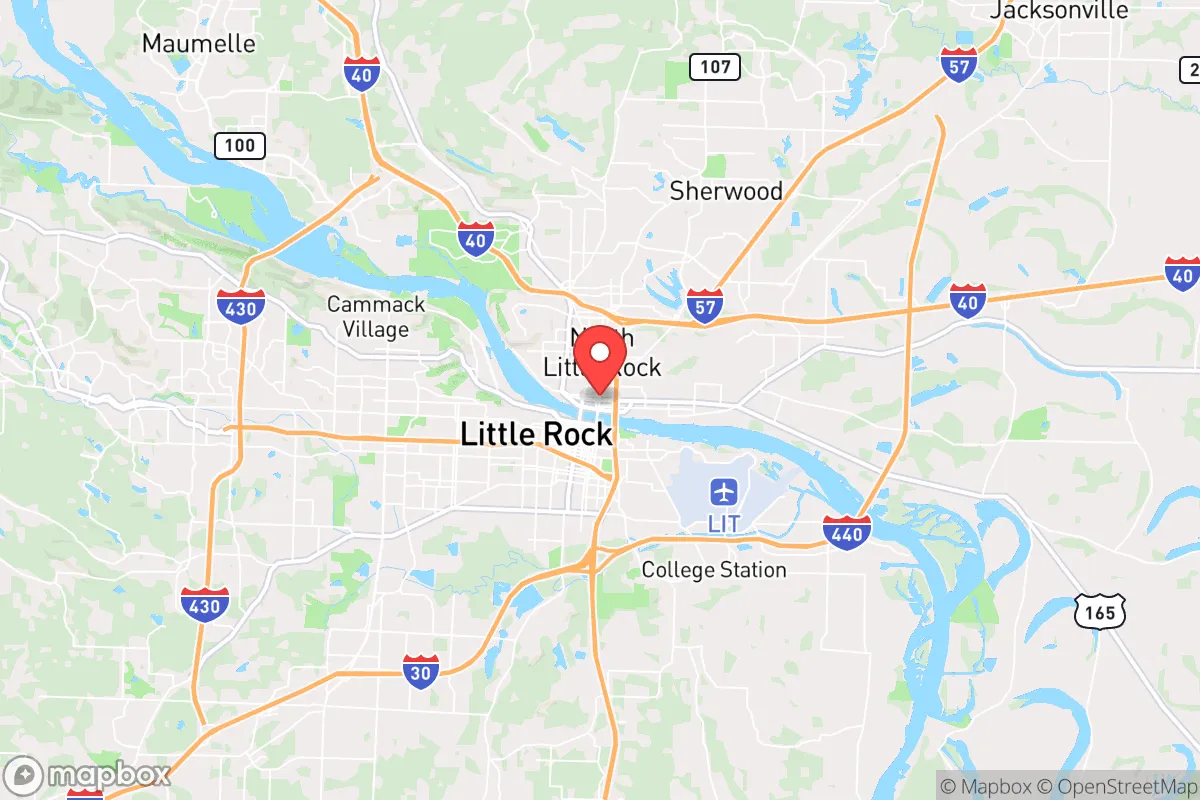
To really get the picture, you have to look at the contrast with Little Rock itself, just across the Arkansas River. Little Rock is a deep blue island in a red state, with a Cook PVI of D+12 or so, and it’s where you see the bulk of the progressive activism, the big government programs, and the kind of top-down social engineering that rubs a lot of us the wrong way. North Little Rock, on the other hand, feels more like the surrounding towns — Sherwood, Jacksonville, Maumelle — where the politics are more about personal responsibility and less about government solutions. Drive ten minutes north to Sherwood and you’re in a place that votes even more conservative, with a PVI closer to R+12. The contrast is stark: you cross the river and the vibe changes from “we mind our own business” to “we’ll tell you how to live.” That’s the real dividing line in central Arkansas.
What this means for residents
For the average person living here, the R+8 lean means you’re not dealing with the kind of government overreach you see in more progressive cities. Property taxes stay reasonable, zoning laws are less restrictive, and there’s a general sense that the city council isn’t trying to micromanage your life. That said, there have been some concerning shifts in the last few years — talk of expanding city ordinances on things like short-term rentals, noise complaints, and even some half-baked diversity initiatives that feel more like box-checking than real community building. The local school board has seen a few progressive candidates slip in, pushing for curriculum changes that would have been unthinkable a decade ago. It’s not a crisis yet, but it’s a warning sign. If you value your Second Amendment rights, your ability to run a small business without a dozen permits, and your kids not being taught that America is the bad guy, North Little Rock is still a good bet — but you have to stay engaged.
One thing that sets North Little Rock apart culturally is its working-class backbone. This isn’t a city of coastal transplants or tech bros; it’s a place where people work in manufacturing, logistics, and healthcare, and they don’t have much patience for ideological experiments. The city has a strong sense of local identity — the Arkansas Travelers baseball team, the riverfront parks, the old-school diners — and that identity is rooted in a kind of quiet, practical conservatism. You won’t see a lot of political yard signs or activist groups here, but you will see people who show up to vote and expect their representatives to keep government out of their lives. The long-term outlook depends on whether that culture holds. If the metro area keeps growing and attracting folks from bluer states, the political balance could tip. But for now, North Little Rock remains a place where common sense still has a fighting chance.

State Political ClimatePolitical Climate in Arkansas
State Political AnalysisPolitical Environment in the State
Arkansas has been a reliably red state for decades, with a Republican lean that has only deepened since the early 2000s. The state voted for Donald Trump by a 27-point margin in 2024, a shift from the 2016 and 2020 cycles where it went +27 and +28 respectively. This isn’t a fluke—Arkansas’s political DNA is rooted in a strong conservative coalition of rural voters, evangelical Christians, and a growing number of transplants from blue states seeking lower taxes and fewer regulations. The Democratic Party, once dominant in the post-Civil War era, has been reduced to a rump in most counties, with its last statewide win being Mike Beebe’s 2010 gubernatorial re-election. The trajectory over the past 20 years is clear: Arkansas has moved from a purple-ish state to a solid red one, driven by a cultural and economic shift that prioritizes individual liberty over government expansion.
Urban vs. rural divide
The political map of Arkansas is a textbook example of the urban-rural split. The two major metros—Little Rock and Fayetteville-Springdale-Rogers (Northwest Arkansas)—are the only real blue dots in a sea of red. Pulaski County (Little Rock) voted for Joe Biden in 2020 by a 10-point margin, but that’s an outlier driven by the state capital’s government workforce, university presence, and a growing Black middle class. Washington County (Fayetteville) is a toss-up, leaning slightly blue due to the University of Arkansas and a younger, more educated population, but it’s surrounded by deep-red Benton and Madison counties. Outside these pockets, the rest of the state is overwhelmingly conservative. Counties like Baxter (Mountain Home), Pope (Russellville), and Faulkner (Conway) are reliably red, with margins often exceeding 30 points. The rural Delta region—places like Crittenden County (West Memphis) and Jefferson County (Pine Bluff)—still vote Democratic, but these are shrinking populations with high poverty rates, not growth engines. The real story is Northwest Arkansas: Benton County (Bentonville) has become a conservative stronghold, driven by Walmart’s corporate culture and a flood of out-of-state families seeking lower taxes and better schools. This area is where the state’s political future is being forged—more red, more affluent, and more aligned with national conservative trends.
Policy environment
Arkansas’s policy environment is a dream for limited-government advocates. The state has a flat income tax of 4.9% (down from 7% a decade ago), no estate tax, and a sales tax cap of 6.5% at the state level. Property taxes are among the lowest in the nation, with a median effective rate of 0.62%. The regulatory climate is business-friendly, with right-to-work laws and no state-level minimum wage above the federal $7.25 (though a 2024 ballot initiative raised it to $11, a rare progressive win). Education policy is a mixed bag: school choice exists through charter schools and a limited voucher program (the Arkansas LEARNS Act of 2023), but the state still ranks near the bottom in national test scores. Healthcare is a flashpoint—Arkansas expanded Medicaid under the private option in 2013, but the state has resisted further Obamacare expansion and has some of the strictest abortion laws in the country (a near-total ban with no exceptions for rape or incest, passed in 2023). Election laws are conservative: voter ID is required, early voting is limited to 15 days, and absentee ballots require an excuse. The state also passed a 2021 law restricting ballot drop boxes and mail-in voting, which critics call voter suppression but supporters say ensures integrity. Overall, the policy environment leans heavily toward personal responsibility and limited government, with a few exceptions like the Medicaid expansion that rankle fiscal conservatives.
Trajectory & freedom
Arkansas is becoming more free in several key areas, but there are warning signs. On the positive side, the state has expanded gun rights significantly: permitless carry (constitutional carry) was signed into law in 2021, and the 2023 "Second Amendment Sanctuary State" act prohibits state enforcement of federal gun laws that violate the Second Amendment. Parental rights were strengthened with the 2023 LEARNS Act, which includes a provision allowing parents to opt their kids out of any curriculum they find objectionable—a direct response to CRT and LGBTQ+ content fears. Medical freedom took a hit during COVID, with Governor Asa Hutchinson imposing mask mandates and business closures in 2020, but the backlash led to a 2021 law banning vaccine passports and a 2023 law prohibiting mask mandates in schools. Property rights are strong, with no statewide zoning laws and low property taxes. However, there are concerning trends: the state’s reliance on federal funding (about 35% of the budget) creates a vulnerability to Washington’s strings, and the 2023 LEARNS Act’s expansion of state control over local school boards (through the creation of a new state-run "School Choice Office") has some conservatives worried about centralization. The biggest freedom concern is the state’s growing prison population and mandatory minimum sentencing laws, which have led to overcrowding and a 2023 lawsuit over conditions. Still, compared to blue states, Arkansas is a bastion of personal liberty—just keep an eye on the feds.
Civil unrest & political movements
Arkansas has been relatively calm compared to national hotspots, but there have been flashpoints. The 2020 George Floyd protests in Little Rock turned violent, with looting and fires in the downtown area, leading to a heavy police response and a subsequent push for police reform that fizzled. The state has seen a rise in organized conservative activism, particularly around school boards and library boards. In 2022, a group called "Parents Against Indoctrination" successfully pushed for the removal of several books from school libraries in Bentonville and Fayetteville, citing explicit content. Immigration politics are muted—Arkansas has a small immigrant population (about 5%), but the 2023 "Sanctuary City Ban" law prohibits any local government from adopting sanctuary policies, with penalties for noncompliance. Election integrity remains a hot topic: the 2020 election saw no major fraud cases, but the 2021 voting law was passed in response to national concerns, and there’s ongoing debate about the security of electronic voting machines. Nullification rhetoric is rare, but the 2023 gun sanctuary law is a form of it. The most visible political movement is the rise of the "Arkansas Freedom Caucus" in the state legislature, a group of hardline conservatives who have pushed for further tax cuts, school choice, and anti-abortion measures. A new resident would notice the strong presence of church-based political activism—evangelical churches in places like Springdale and Conway are deeply involved in local politics, from school board races to city council elections.
Projection
Over the next 5-10 years, Arkansas will likely become even more conservative, driven by in-migration from blue states. Northwest Arkansas is the key: Benton and Washington counties are projected to grow by 15-20% by 2030, bringing in families from California, Illinois, and New York who are fleeing high taxes and crime. These newcomers tend to be fiscally conservative but socially moderate, which could create tension with the state’s more socially conservative base. The rural areas will continue to shrink and redden, while Little Rock may become more blue as it attracts younger, more diverse residents. The biggest wildcard is the state’s education system—if the LEARNS Act fails to improve outcomes, there could be a push for more state control or even a voucher system that drains rural schools. On the freedom front, expect more preemption laws (state overrides of local ordinances) on issues like housing, zoning, and environmental regulations, which will please property rights advocates but anger local control purists. The state’s fiscal health is strong, with a $1.6 billion surplus in 2024, so more tax cuts are likely. The biggest risk is federal overreach—if a future Democratic administration cracks down on red states, Arkansas could face legal battles over its abortion ban, gun laws, and voting restrictions. But for now, the trajectory is clear: Arkansas is doubling down on conservative governance, and anyone moving here in the next decade will find a state that values individual freedom, low taxes, and traditional values.
For a new resident, the bottom line is this: Arkansas offers a high degree of personal liberty, low taxes, and a community-oriented culture that rewards self-reliance. You’ll find a state that respects your right to live as you see fit, as long as you don’t expect the government to solve your problems. The political climate is stable and predictable—conservative, with a focus on economic growth and family values. Just be prepared for the heat of summer, the humidity, and the occasional culture clash if you’re moving from a blue state. But if you’re looking for a place where your voice matters and your freedoms are protected, Arkansas is a solid bet.
* Values derived from national, state, county, city and local statistics and may differ in a specific area. Last updated: 2026-04-19T11:28:08.000Z
Narrative content on this page is AI-generated and may contain mistakes. Verify any details that matter before acting on them.
ReloMaps may earn a commission from affiliate links at no extra cost to you.

