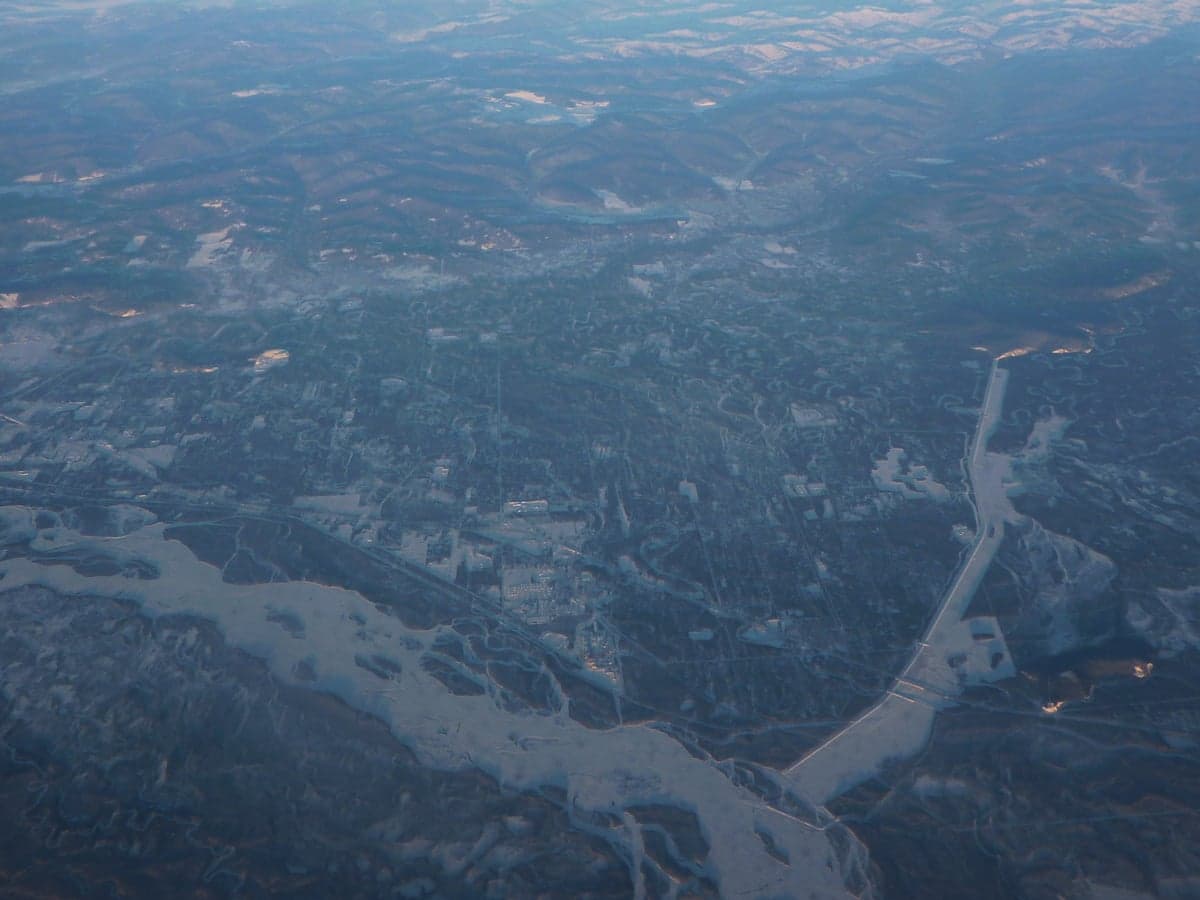
Photo: Wikipedia
Personal Sovereignty in North Pole, AK
Viable for self-reliance. Generally workable, though some barriers may limit total independence.
What does Personal Sovereignty tell us?
Personal Sovereignty measures your capacity for self-reliance and independence with minimal government friction. Higher scores mean fewer barriers between you and the way you want to live... but it assumes you have the space you need and good neighbors.
What does this tell us?
Personal Sovereignty measures your capacity for self-reliance and independence with minimal government friction. Higher scores mean fewer barriers between you and the way you want to live... but it assumes you have the space you need and good neighbors.
State Policy
Energy independence: Net exporter (350% of energy produced in-state)
Personal Liberty
Homesteading

Personal Liberty Analysis
North Pole, Alaska, offers a level of personal sovereignty that is increasingly rare in the Lower 48, largely due to the state’s constitutional protections and its physical and cultural distance from federal overreach. While you’re still subject to the IRS and federal land-use restrictions, the day-to-day reality here is one of minimal government intrusion into your home, your property, and your decisions. For a survivalist or prepper looking to breathe, this is one of the few places in the United States where the state government actively respects your right to be left alone—provided you can handle the cold and the logistics of living in a remote subarctic environment.
Tax burden and regulatory posture: how Alaska compares to the Lower 48
Alaska is the only state in the union with no state income tax and no state sales tax, and North Pole residents benefit directly from this. The city itself does not levy a sales tax, though the Fairbanks North Star Borough (which North Pole is part of) imposes a modest 2% sales tax on most goods. Property taxes in the borough are also relatively low, with a mill rate of roughly 10.5 mills on assessed value—far below what you’d see in blue states like California or New York. There is no state-level property tax, and the state actually pays residents an annual Permanent Fund Dividend (roughly $1,000–$1,600 per person) just for living here. For a prepper, this means less of your income is confiscated to fund programs you may disagree with, and more stays in your pocket for supplies, land, and infrastructure. The regulatory posture is similarly light: Alaska has no building codes in unincorporated areas, and even within North Pole city limits, permitting is minimal compared to most of the country. You won’t need a dozen inspections to put up a shed or a greenhouse. The state’s attitude is essentially: you own your land, you manage your risks.
Self-defense and gun law specifics: what you can own and where you can carry
Alaska is one of the most gun-friendly states in the nation, and North Pole is no exception. The state has constitutional carry—no permit required to carry a concealed firearm for anyone 21 or older who can legally possess a gun. Open carry is also fully legal without a permit. There is no state-level waiting period, no magazine capacity limit, and no assault weapon ban. You can own suppressors, short-barreled rifles, and machine guns (with federal NFA paperwork) without state interference. Stand-your-ground laws are in effect: you have no duty to retreat before using deadly force in any place you are lawfully present. Castle doctrine protections apply to your home, vehicle, and workplace. For a prepper, this means your defensive capabilities are limited only by federal law and your own budget. The local sheriff’s office and Alaska State Troopers are generally supportive of gun rights, and you won’t find the kind of anti-gun sentiment that dominates many urban areas. Bear defense is a practical concern here, and carrying a large-caliber handgun or a rifle is not just a right but a common-sense precaution when you’re outside the city limits.
Self-reliance and homesteading viability: lot sizes, zoning, and off-grid feasibility
North Pole’s zoning and lot sizes make genuine self-reliance achievable. Within the city, residential lots are typically one to five acres, and many properties are larger. Outside city limits in the Fairbanks North Star Borough, you can find parcels of 10, 20, or even 40 acres at prices that would be laughable in the Lower 48—often under $5,000 per acre. There are no restrictive HOA covenants in most areas, and the borough’s zoning code is permissive: you can keep livestock (chickens, goats, even reindeer), grow food, and store equipment without bureaucratic hassle. Off-grid living is not only legal but common. Many residents use solar panels (with battery banks for the dark winter months), wood stoves, and generators. There is no state or local requirement to connect to municipal water or sewer; wells and septic systems are standard. The biggest challenge is the climate—winter temperatures can drop to -40°F for weeks at a time—but that’s a logistical problem, not a legal one. For a prepper, the ability to build a self-sufficient homestead without fighting zoning boards or environmental reviews is a major advantage. The state even offers tax exemptions for land used for agricultural purposes, further reducing the cost of self-reliance.
Personal liberties: parental rights, medical autonomy, speech, and property
Alaska’s constitution includes a strong privacy clause (Article I, Section 22) that the state courts have interpreted broadly to protect individual autonomy. This has real implications for medical freedom: there is no state mandate for vaccines (for adults or children), and during the COVID-19 era, Alaska was one of the few states that never imposed a statewide mask mandate or lockdown. Parental rights are robust—you have the legal authority to make educational and medical decisions for your children without state interference. Homeschooling is popular and lightly regulated; you simply file an intent to homeschool and are not required to follow a state curriculum or submit to testing. Speech protections are as strong as anywhere in the country, and there is no state-level hate speech law that could be used to chill political expression. Property rights are also well-protected: eminent domain is rarely abused, and there is no state-level rent control or land-use planning that would restrict what you can do with your own land. The borough does have some zoning in the more populated areas, but it’s far less intrusive than what you’d find in Oregon, Washington, or Colorado. For a conservative concerned about government overreach, North Pole offers a legal environment where you are presumed free unless a specific law says otherwise—the opposite of the regulatory presumption of guilt found in many states.
Overall, North Pole ranks among the top locations in the United States for personal sovereignty, especially when you factor in the low tax burden, strong gun rights, and permissive land-use laws. The trade-offs are real: extreme cold, limited access to medical specialists, and a long supply chain for goods. But if your priority is maximizing your freedom to live as you see fit—without the state dictating your healthcare choices, your self-defense options, or how you use your property—this small city in interior Alaska is hard to beat. It’s not a libertarian utopia (you still pay federal taxes and deal with federal land agencies), but it’s as close as most Americans will ever get without leaving the country.

* Values derived from national, state, county, city and local statistics and may differ in a specific area. Last updated: 2026-04-19T19:33:38.000Z
Narrative content on this page is AI-generated and may contain mistakes. Verify any details that matter before acting on them.
ReloMaps may earn a commission from affiliate links at no extra cost to you.

