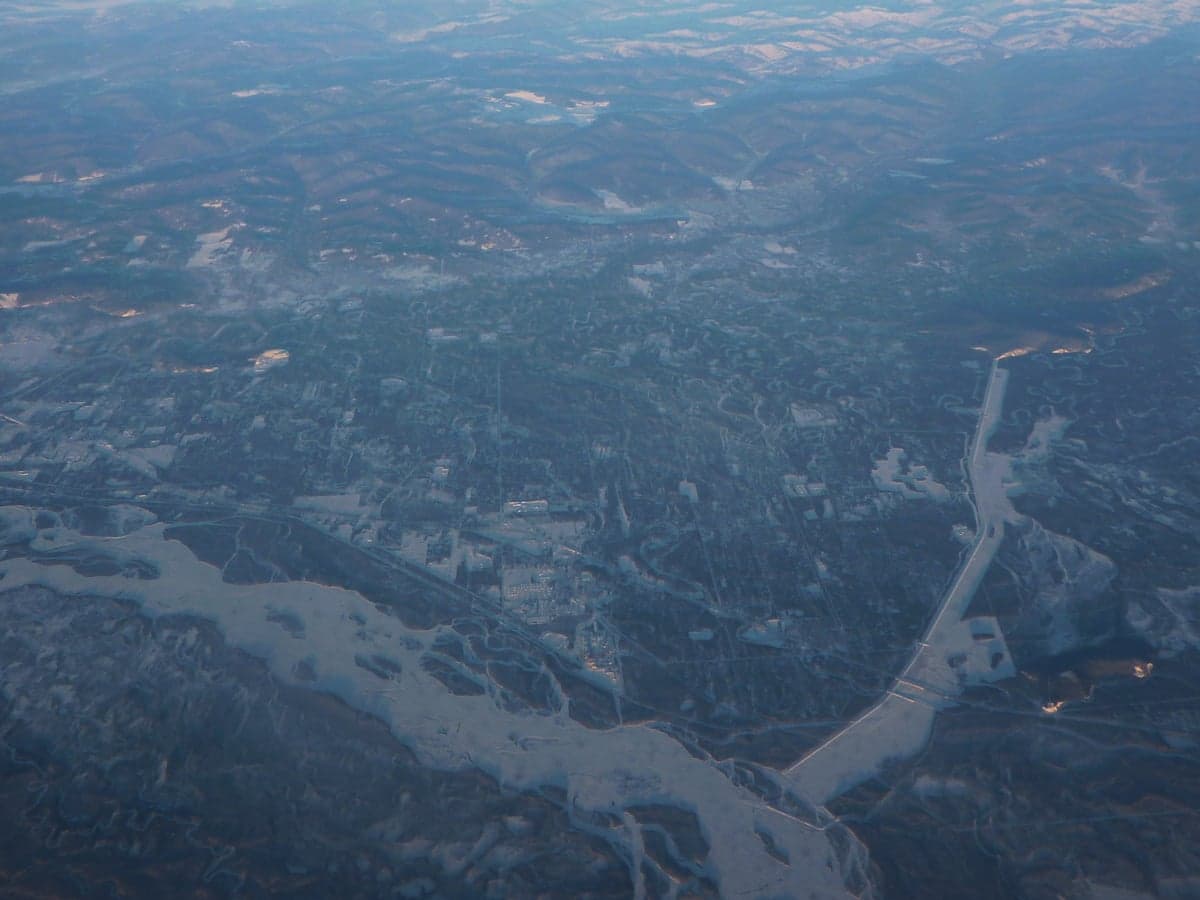
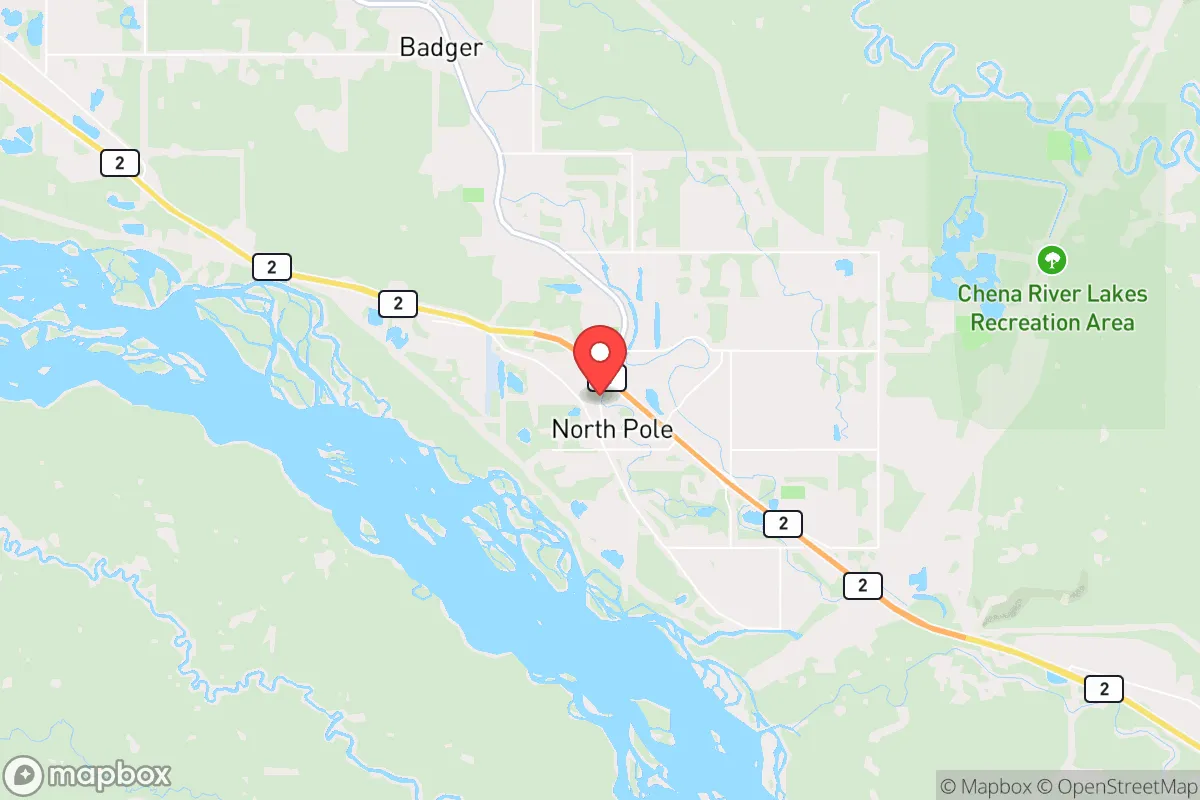
Photo: Wikipedia
Strategic Assessment of North Pole, AK
Workable tactical position. Some exposure to population density or targets, but generally defensible in a crisis.
What does the Strategic Assessment tell us?
Our Strategic Assessment grades tactical survivability of an area. Major population centers, military targets, fallout zones, natural disasters, and border exposure all drive risk — lower exposure means a more defensible position in a crisis.
This is heavily inspired by Joel Skousen's Strategic Relocation book. Highly recommended you checkout the book ($)What does this tell us?
Our Strategic Assessment grades tactical survivability of an area. Major population centers, military targets, fallout zones, natural disasters, and border exposure all drive risk — lower exposure means a more defensible position in a crisis.
This is heavily inspired by Joel Skousen's Strategic Relocation book. Highly recommended you checkout the book ($)Strategic Pillars

Key Distances
Regional Safe Places
Below is our recommended "safe zones" in Alaska and the surrounding area based on our strategic heuristics. For most people, it's unrealistic to live in a “safe zone” full-time due to work, family or other personal reasons. They tend to be more rural. However, many of these areas are perfect for second homes and retreat properties that double as a vacation home or even a short-term rental.
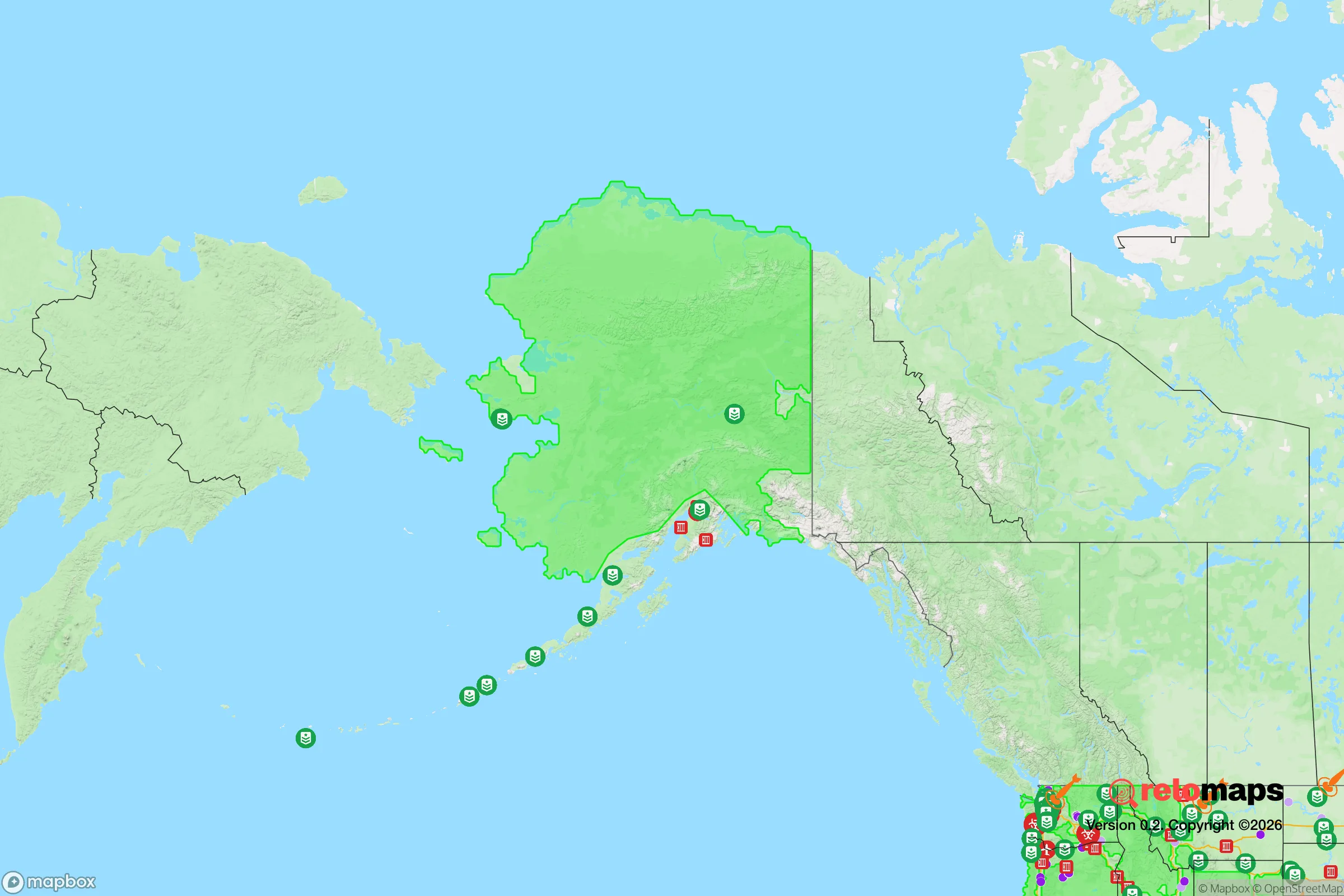
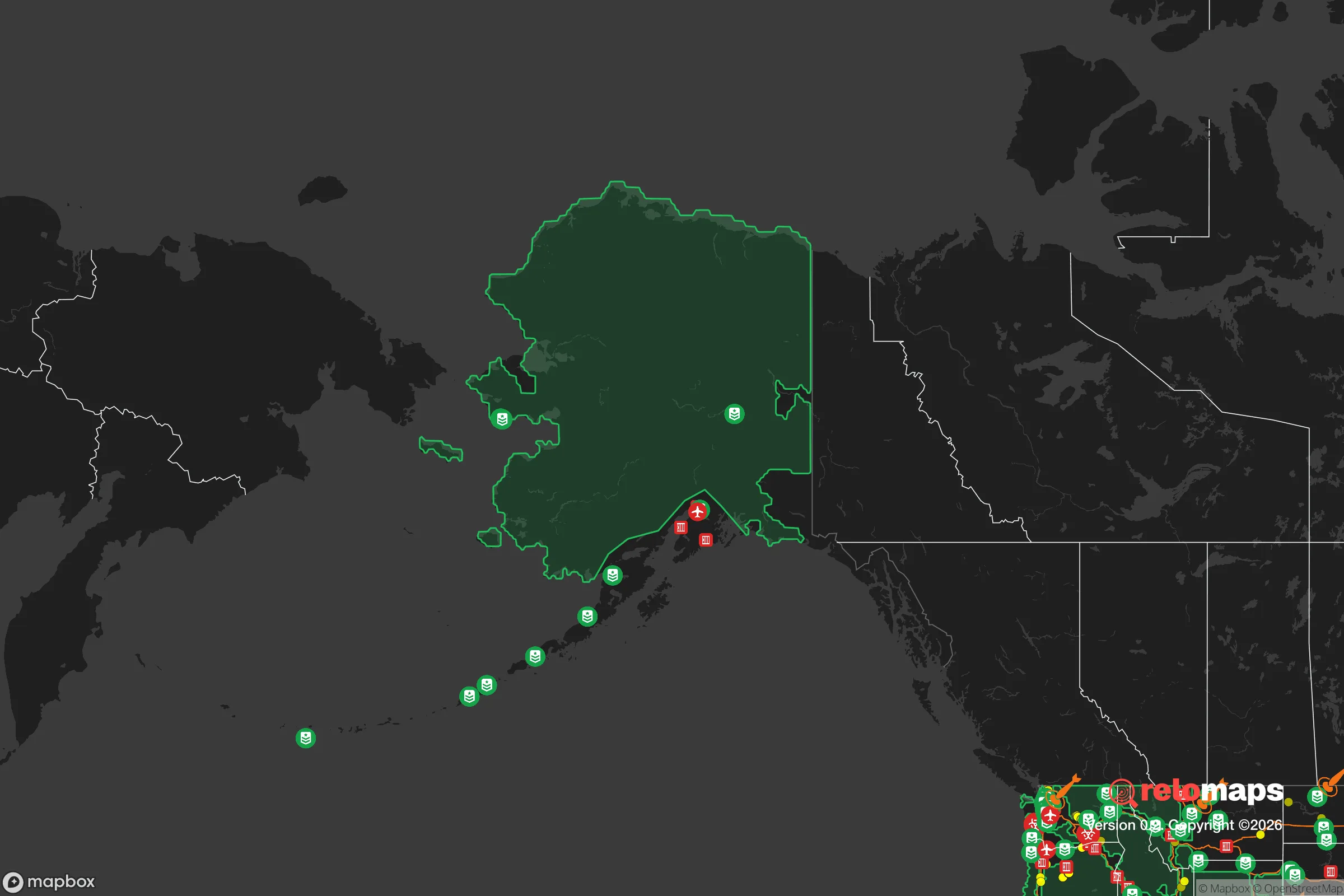


Important Note: For informational purposes only. This does not mean nothing bad ever happens in the green zones. Please use common sense. This is based on public data and modeled with AI. We tried to take a conservative approach but mistakes happen. We update this regularly as new information becomes available.
Solar Generator Recommendations
Backup power matters more here than in safer locations. We've picked three solar generators across budgets and capacity tiers — start with the budget unit if you only need a few essentials, or step up if you want to run a fridge and HVAC for days at a time.

Jackery Portable Power Station Explorer 300
Budget OptionPower on the Go: Weighing only 11 lbs, it's convenient to set up and store with book-sized foldable solar panels

BLUETTI Portable Power Station AC180
Designed for both indoor and outdoor scenarios, AC180 is highly capable as it has a robost capacity and continuous output power.

EF ECOFLOW DELTA Pro Ultra Power Station
Upgraded PickEcoFlow DELTA Pro Ultra is a whole-home energy system designed to grow with your family. Integrated with the Smart Home Panel 2, it scales to meet your evolving energy needs — keeping your home powered, intelligent, and secure through every stage of life.
We earn a commission, at no additional cost to you.
Strategic Assessment Analysis
North Pole, Alaska, offers a unique strategic position for those prioritizing resilience and long-term preparedness, combining extreme geographic isolation with the practical infrastructure of a small town. Located about 20 miles southeast of Fairbanks, this community of roughly 2,200 people sits in the Tanana Valley, far from the coastal vulnerabilities and population-dense corridors of the Lower 48. For a relocator with a survivalist mindset, the key trade-off is clear: you gain a buffer from societal collapse and mass casualty events that would cripple urban centers, but you must accept a harsh climate and logistical challenges that demand serious self-reliance. The area’s low population density, cold weather that naturally limits human activity, and distance from major fallout targets make it a compelling, if demanding, option for those seeking a retreat from national instability.
Geographic isolation and natural defensive advantages
North Pole’s primary strategic asset is its location. It sits roughly 350 miles south of the Arctic Circle, but the real advantage is the buffer from the Lower 48’s interconnected grid and population centers. The nearest major city, Anchorage, is 360 miles away by road—a drive that takes over six hours on the Parks Highway. Fairbanks, the regional hub, is close enough for supplies (20 miles) but far enough that its potential problems—civil unrest, infrastructure failure, or disease outbreaks—won’t immediately spill over. The surrounding terrain is a mix of boreal forest, permafrost, and rivers, which creates natural chokepoints. The only road access is via the Richardson Highway and the Alaska Railroad, both of which can be easily monitored or blocked if needed. For a prepper, this means you have time to react. The area’s extreme cold—average winter lows of -20°F to -40°F—acts as a population filter; only those willing to endure it will stay, reducing the risk of mass migration during a crisis. The Chena River and nearby lakes provide water sources, but the real defensive advantage is the lack of strategic value to adversaries. North Pole is not a target for nuclear strikes, EMP attacks, or conventional warfare. It’s a backwater, and that’s exactly what you want.
Risks, exposures, and proximity to fallout-relevant landmarks
No location is without risk, and North Pole has specific exposures that a strategic relocator must weigh. The most obvious is the cold itself. A prolonged power outage in winter—whether from grid failure, cyberattack, or natural disaster—would be lethal within hours without proper preparation. The area is also prone to earthquakes, though less so than coastal Alaska; the 2018 Anchorage quake (magnitude 7.1) was felt here but caused minimal damage. Wildfires are a growing concern, with the 2022 Clear Fire burning over 100,000 acres in the region, threatening air quality and access routes. On the fallout front, North Pole’s proximity to Fairbanks is a double-edged sword. Fairbanks is home to Fort Wainwright (a major Army post) and Eielson Air Force Base (home to F-35s and refueling wings). These are potential targets in a conflict with a peer adversary like Russia or China. A strike on Eielson, just 25 miles southeast, could produce fallout depending on wind patterns. However, the prevailing winds in interior Alaska blow from the west and north, meaning fallout from a strike on Fairbanks or Eielson would likely move east or southeast, away from North Pole. The real danger is the secondary effects: a military base under attack would draw refugees, military traffic, and potential supply chain disruptions. The Trans-Alaska Pipeline, which runs about 50 miles west, is a critical infrastructure target; a rupture would cut off fuel supplies to the entire region. For a prepper, the mitigation is simple: stockpile fuel, food, and medical supplies for at least six months, and have a plan to go fully off-grid if the military presence becomes a liability.
Practical resilience for a relocator: food, water, energy, and defensibility
Self-sufficiency in North Pole is not optional—it’s a survival requirement. The growing season is short (about 90 days) and limited by permafrost, but raised beds and greenhouses can produce hardy crops like potatoes, carrots, and kale. The real food security comes from hunting and fishing. Moose, caribou, and small game are abundant in the surrounding forests, and the Chena and Tanana Rivers offer salmon and grayling. You’ll need a freezer and a generator to store meat through the winter. Water is accessible via wells, but permafrost can complicate drilling; many homes rely on hauled water or rainwater collection. Filtration and boiling are mandatory due to natural contaminants like giardia. Energy is the biggest challenge. The grid is powered by a mix of natural gas, coal, and diesel, all subject to supply chain disruptions. Solar panels work in summer (20+ hours of daylight) but are nearly useless in winter (4 hours of weak sun). A wood stove is essential for heat, and a backup generator with at least 200 gallons of stored fuel is non-negotiable. Defensibility is high due to the low population density and the fact that most homes are on large lots (1-5 acres) with clear sightlines. The community is tight-knit and self-reliant; neighbors know each other and share resources. There’s no police force in North Pole itself—the Alaska State Troopers cover the area from Fairbanks—so you are responsible for your own security. Firearms ownership is common, and the culture is pro-Second Amendment. For a relocator, this means you can build a defensible property without drawing attention, but you must also be prepared to handle medical emergencies, as the nearest hospital is 20 miles away in Fairbanks.
The overall strategic picture for North Pole is one of calculated trade-offs. It offers genuine isolation from the chaos of the Lower 48—no riots, no mass casualty events from urban density, no reliance on fragile interstate supply chains. The cold is a brutal but effective barrier, and the area’s low strategic value means it’s unlikely to be a target in a major conflict. However, the risks are real: dependence on a single road for resupply, proximity to military bases that could become liabilities, and a climate that punishes mistakes. For a conservative-minded relocator who values self-reliance and is willing to invest in serious infrastructure—wood heat, fuel storage, water systems, and food production—North Pole is a viable long-term retreat. It’s not for the faint of heart or the unprepared, but for those who can handle the cold and the isolation, it’s one of the most defensible and resilient locations in the United States. The key is to treat it as a permanent base, not a vacation spot, and to build your systems before you need them. If you do that, you’ll be as prepared as anyone can be for whatever comes.

* Values derived from national, state, county, city and local statistics and may differ in a specific area. Last updated: 2026-04-19T19:33:38.000Z
Narrative content on this page is AI-generated and may contain mistakes. Verify any details that matter before acting on them.
ReloMaps may earn a commission from affiliate links at no extra cost to you.

