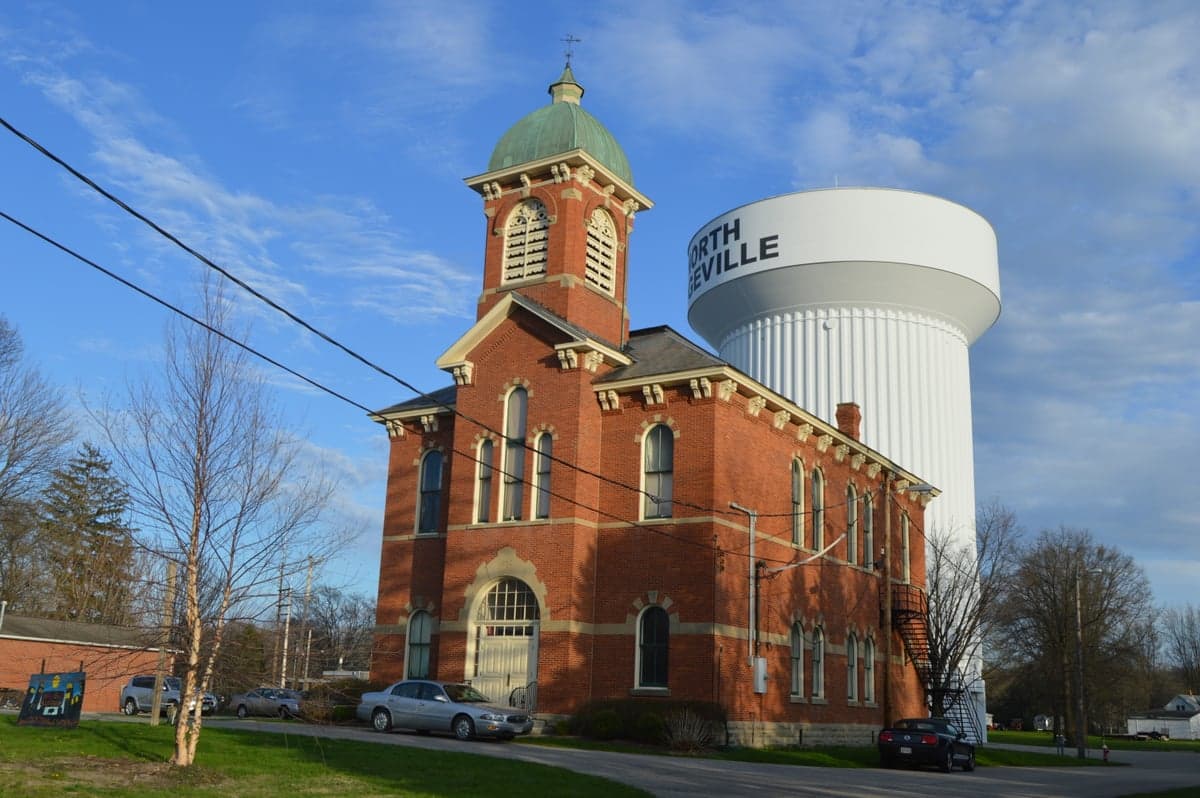
Photo: Wikipedia
Demographics of North Ridgeville, OH
Affluence Level in North Ridgeville, OH
An upper-middle-class area. Household wealth, education levels, and homeownership run ahead of national benchmarks.
People of North Ridgeville, OH
North Ridgeville, Ohio, is a predominantly white, middle-class suburb of 36,043 residents that has evolved from a rural farming hamlet into a bedroom community for Cleveland and Lorain. The city’s population is notably less diverse than the national average, with 87.3% identifying as white, a foreign-born population of just 1.4%, and a college attainment rate of 34.9%. Its character remains rooted in its agricultural past and a strong sense of local identity, distinct from the more urbanized and diverse communities to its north and east.
How the city was settled and grew
North Ridgeville was originally part of the Connecticut Western Reserve, and its first settlers were primarily of English and German stock who arrived in the early 19th century, drawn by the promise of fertile farmland. The town’s name derives from the "Ridge," a prominent geological feature, and its early economy was built on agriculture, particularly dairy farming and apple orchards. The original settlement clustered around the intersection of what is now Center Ridge Road and State Route 83, an area still referred to as Uptown North Ridgeville, where the first churches, general stores, and the town hall were established. A second wave of German and Irish immigrants arrived in the late 19th century, many working on the railroad or as farm laborers, and they settled along the Ridgeville corridor, particularly in the Bassett Road and Stoney Ridge areas, where small family farms dotted the landscape. The city remained a sparsely populated agricultural community well into the mid-20th century, with its population barely exceeding 3,000 by 1950.
Modern era (post-1965)
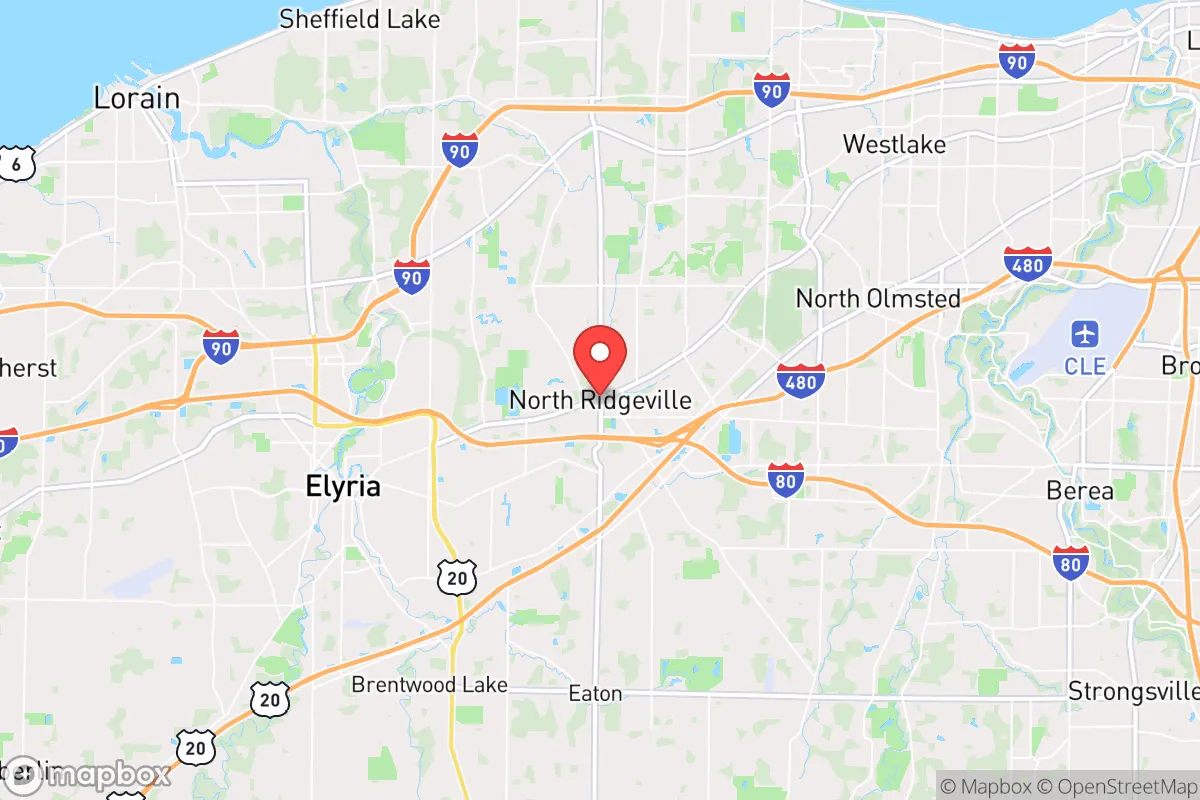
The post-1965 era brought dramatic suburbanization, as the construction of Interstate 480 and the expansion of the Ohio Turnpike made North Ridgeville a commuter-friendly alternative to Cleveland and Lorain. The city’s population exploded from roughly 6,000 in 1970 to over 30,000 by 2010, driven overwhelmingly by white, middle-class families seeking affordable single-family homes and good schools. The Pheasant Run subdivision, developed in the 1970s and 1980s, became a primary landing spot for these domestic migrants, offering large lots and a semi-rural feel. Later, the Waterbury and Abbey Pointe neighborhoods, built in the 1990s and 2000s, attracted a second wave of families from within Lorain and Cuyahoga counties. Unlike many older suburbs, North Ridgeville saw very little immigration from the Hart-Cellar Act’s changes. The city’s Hispanic population (6.8%) is the largest minority group, with many families of Puerto Rican and Mexican descent settling in the Bassett Road corridor and the newer apartments near State Route 83. The Black population (2.3%) and East/Southeast Asian population (0.6%) are small and dispersed, with no single ethnic enclave forming. The Indian-subcontinent population (0.5%) is similarly tiny and scattered.
The future
Demographic projections suggest North Ridgeville will continue to homogenize rather than diversify. The city’s low foreign-born rate (1.4%) and its location in a region with slow overall population growth mean that the Hispanic share may rise modestly through natural increase, but the white share is likely to remain above 80% for the foreseeable future. The city is not tribalizing into distinct ethnic enclaves; instead, it is experiencing a gradual aging of its existing white population, with younger families often being priced out by rising home values. The Village of North Ridgeville and Pheasant Run areas are seeing some turnover as older residents downsize, but new construction in the South Central district is attracting the same demographic profile—white, married couples with children. The next 10-20 years will likely see a plateau in population growth, with the city remaining a stable, predominantly white, and culturally conservative suburb.
For a conservative-leaning individual or family moving in now, North Ridgeville offers a predictable, low-crime environment with a strong sense of community and a population that is largely homogeneous. The city is not becoming a melting pot or a hub of new immigration; it is a place where the demographic trends point toward continuity, not change. This stability is a key selling point for those seeking a traditional suburban lifestyle with minimal cultural or demographic disruption.

* Values derived from national, state, county, city and local statistics and may differ in a specific area. Last updated: 2026-04-19T07:09:36.000Z
Narrative content on this page is AI-generated and may contain mistakes. Verify any details that matter before acting on them.
ReloMaps may earn a commission from affiliate links at no extra cost to you.

