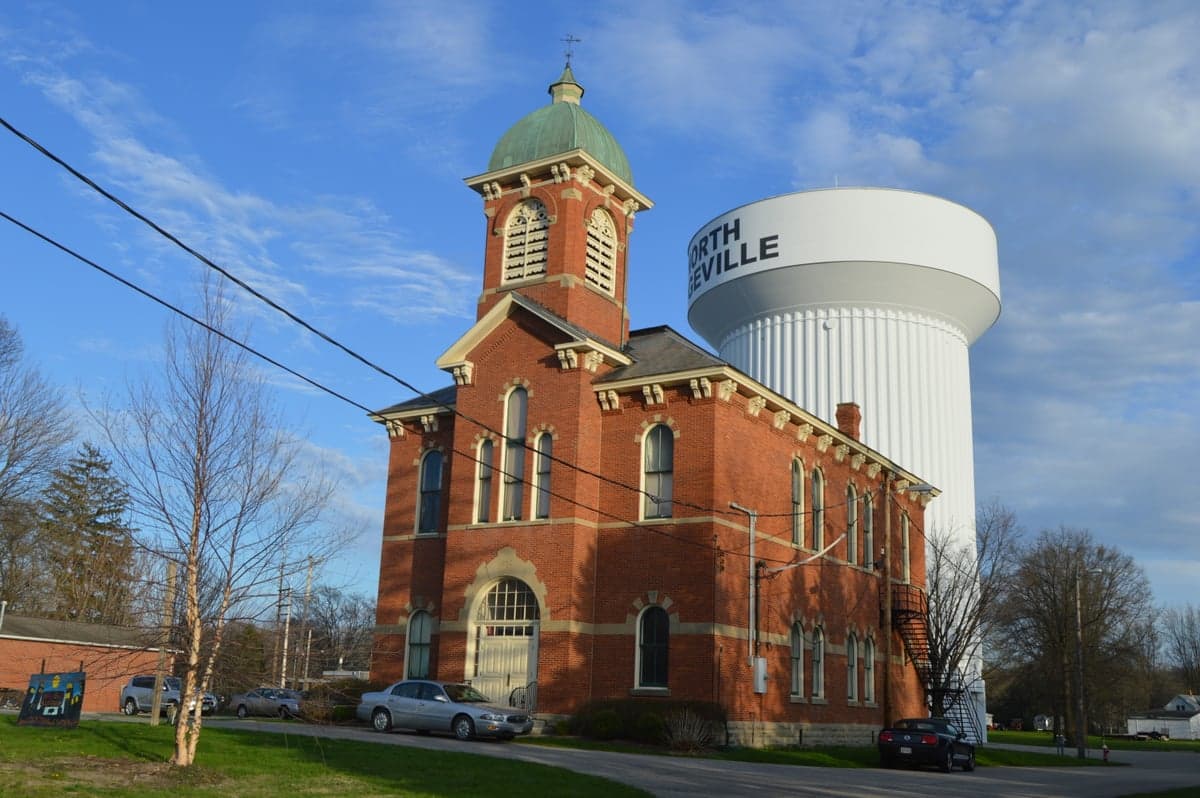
Photo: Wikipedia
Strategic Assessment of North Ridgeville, OH
Meaningful friction. Expect exposure to either population pressure, blast zones, or natural disaster risk. Consider buying a retreat property.
What does the Strategic Assessment tell us?
Our Strategic Assessment grades tactical survivability of an area. Major population centers, military targets, fallout zones, natural disasters, and border exposure all drive risk — lower exposure means a more defensible position in a crisis.
This is heavily inspired by Joel Skousen's Strategic Relocation book. Highly recommended you checkout the book ($)What does this tell us?
Our Strategic Assessment grades tactical survivability of an area. Major population centers, military targets, fallout zones, natural disasters, and border exposure all drive risk — lower exposure means a more defensible position in a crisis.
This is heavily inspired by Joel Skousen's Strategic Relocation book. Highly recommended you checkout the book ($)Strategic Pillars

Key Distances
Regional Safe Places
Below is our recommended "safe zones" in Ohio and the surrounding area based on our strategic heuristics. For most people, it's unrealistic to live in a “safe zone” full-time due to work, family or other personal reasons. They tend to be more rural. However, many of these areas are perfect for second homes and retreat properties that double as a vacation home or even a short-term rental.

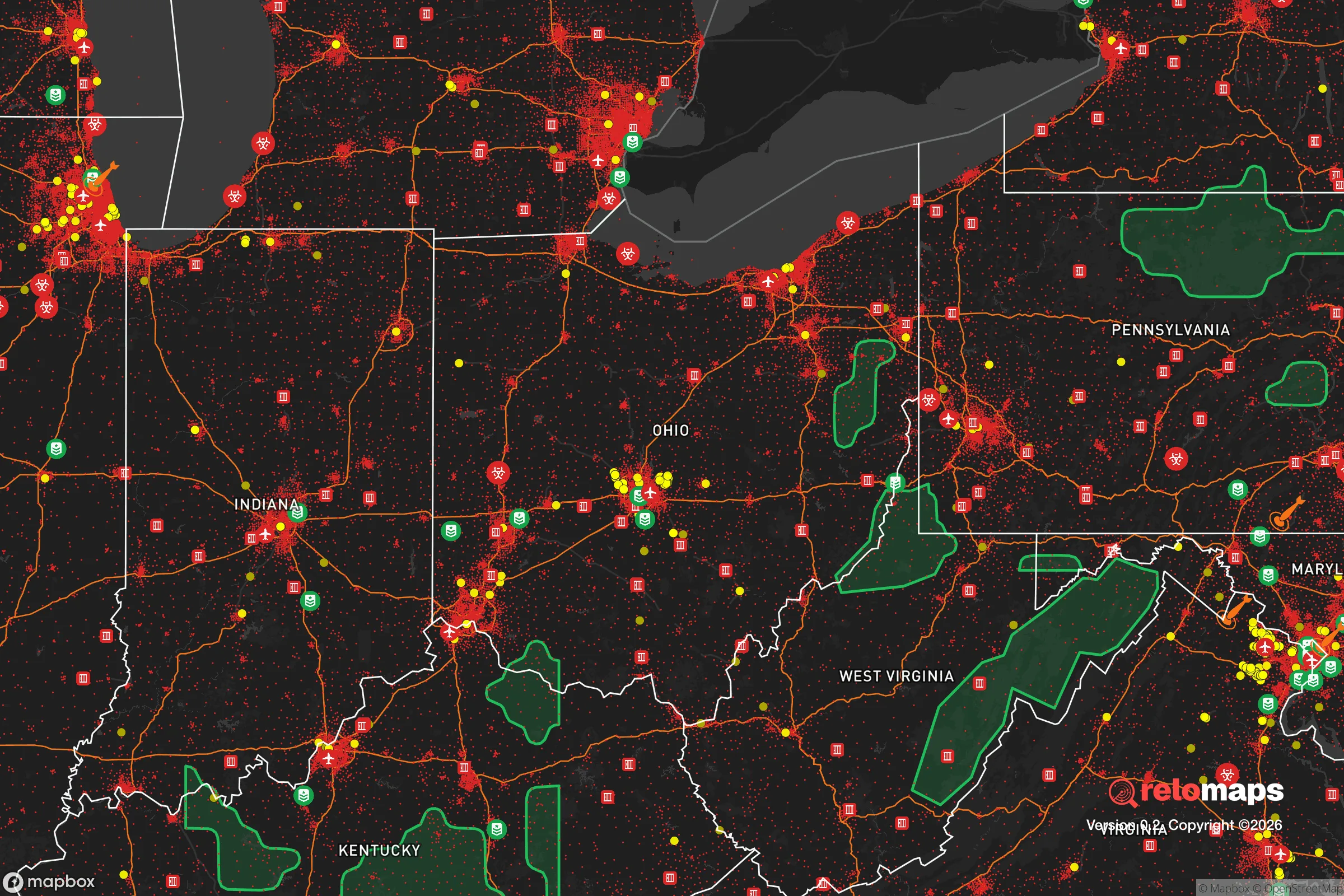


Important Note: For informational purposes only. This does not mean nothing bad ever happens in the green zones. Please use common sense. This is based on public data and modeled with AI. We tried to take a conservative approach but mistakes happen. We update this regularly as new information becomes available.
Solar Generator Recommendations
Backup power matters more here than in safer locations. We've picked three solar generators across budgets and capacity tiers — start with the budget unit if you only need a few essentials, or step up if you want to run a fridge and HVAC for days at a time.

Jackery Portable Power Station Explorer 300
Budget OptionPower on the Go: Weighing only 11 lbs, it's convenient to set up and store with book-sized foldable solar panels

BLUETTI Portable Power Station AC180
Designed for both indoor and outdoor scenarios, AC180 is highly capable as it has a robost capacity and continuous output power.

EF ECOFLOW DELTA Pro Ultra Power Station
Upgraded PickEcoFlow DELTA Pro Ultra is a whole-home energy system designed to grow with your family. Integrated with the Smart Home Panel 2, it scales to meet your evolving energy needs — keeping your home powered, intelligent, and secure through every stage of life.
We earn a commission, at no additional cost to you.
Strategic Assessment Analysis
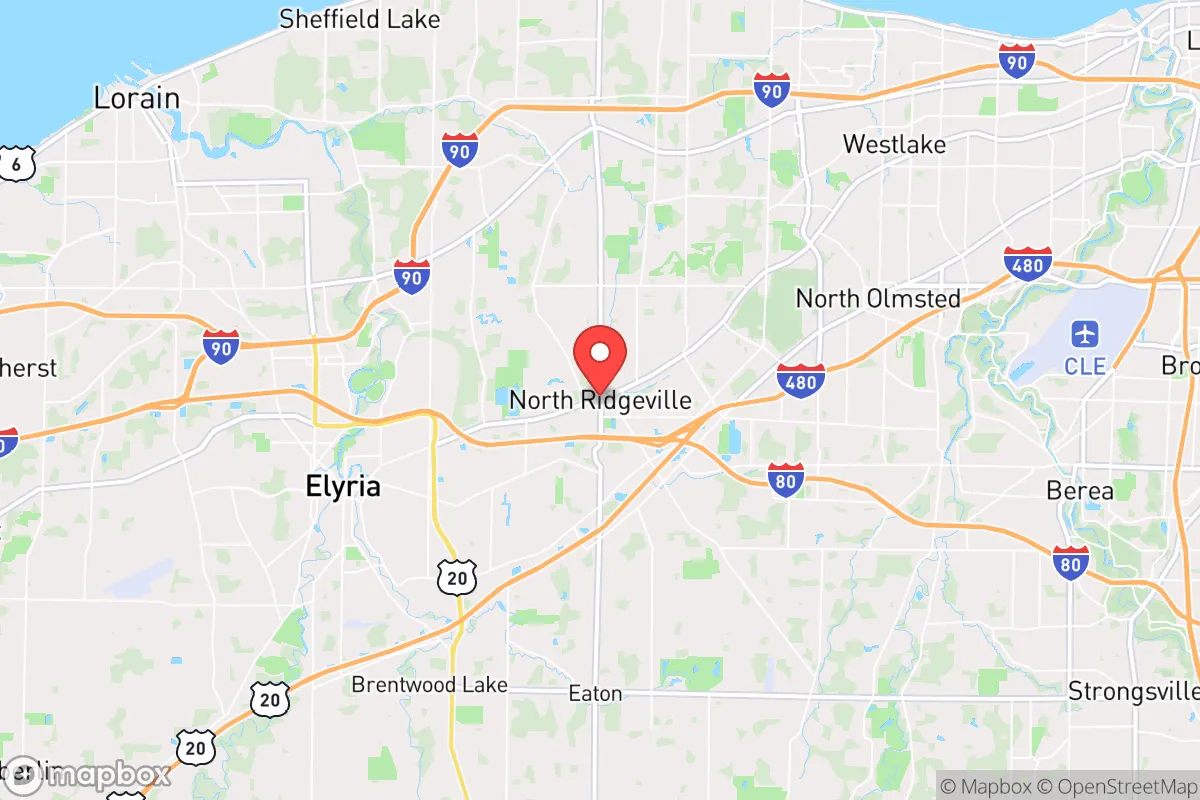
North Ridgeville, Ohio, sits in a precarious but potentially advantageous position for those serious about strategic relocation. Its location in Lorain County, roughly 20 miles southwest of Cleveland, places it within the suburban sprawl of a major Great Lakes metro area, but its specific geography offers a blend of proximity to resources and a degree of separation from the most acute risks of a major urban collapse. For a relocator with a survivalist mindset, the key question isn't whether North Ridgeville is a bunker—it isn't—but whether it provides a defensible, resource-accessible base from which to weather the storms of civic unrest, supply chain disruptions, or a mass casualty event. The answer is a cautious yes, provided you understand the trade-offs and plan accordingly.
Geographic position and natural advantages for long-term survival
North Ridgeville's primary strategic asset is its position on the edge of the Lake Erie plains, offering flat to gently rolling terrain that is highly productive for agriculture. The area sits atop the Berea Sandstone aquifer, which provides reliable groundwater—a critical factor if municipal water systems fail. The city itself is bisected by the Black River and its tributaries, offering surface water sources, though these require treatment. The proximity to Lake Erie (about 10 miles north) is a double-edged sword: it provides a massive freshwater reservoir and a potential fishing resource, but it also concentrates population and infrastructure along the lakeshore, making it a likely target in a crisis. The surrounding Lorain County is a mix of suburban development and active farmland, with corn, soybeans, and dairy operations within a 15-minute drive. This agricultural buffer means that, in a prolonged disruption, local food production is not a fantasy—it's a present reality. The region's USDA Hardiness Zone 6a allows for a long growing season (April to October), enabling serious gardening and small-scale farming. The lack of major mountain ranges or dense forests means travel and logistics are relatively easy, but it also means limited natural cover for concealment or retreat. For a prepper, the flat terrain is a liability for defense but an asset for mobility and resource transport.
Risks, exposures, and proximity to fallout-relevant landmarks
The most significant strategic drawback of North Ridgeville is its proximity to high-value, high-risk targets. Cleveland Hopkins International Airport (CLE) is 12 miles east, and the Port of Cleveland is 20 miles northeast—both are likely nodes for disease spread, refugee movement, or military activity during a national emergency. The city is also within the 50-mile fallout zone of the Davis-Besse Nuclear Power Station (30 miles east), a plant with a history of safety incidents. A catastrophic failure there would render large portions of Lorain County uninhabitable for months. Additionally, the Norfolk Southern rail line running through the city carries hazardous materials—a derailment like East Palestine is a real, if localized, risk. The I-80/Ohio Turnpike corridor, which passes just south of North Ridgeville, is a major east-west artery that would become a chokepoint for evacuation or supply movement during a crisis. For a conservative-leaning relocator concerned about civil unrest, the city's population density of ~1,200 people per square mile is moderate but still high enough that a breakdown in order could lead to resource competition. The Lorain County Jail and the North Ridgeville Police Department are local assets, but in a mass casualty event, law enforcement would be overwhelmed. The city's evacuation routes are limited to State Routes 10, 83, and 113—all two-lane roads that would gridlock quickly. The closest major medical center is University Hospitals Elyria Medical Center (8 miles west), but in a crisis, its capacity would be exhausted within hours.
Practical resilience for a relocator: food, water, energy, and defensibility
For a single individual or family serious about self-sufficiency, North Ridgeville offers a mixed bag. Water is the strongest suit: the aquifer is accessible via a private well (typical depth 60-120 feet), and rainwater collection is legal in Ohio. The city's municipal water comes from Lake Erie, but a grid-down scenario would cut that supply. A well with a hand pump or solar-powered pump is a non-negotiable investment. Food is viable: the Lorain County Farmers Market and local CSAs provide immediate access to fresh produce, and the soil is fertile enough for a substantial garden. However, suburban zoning laws restrict livestock—chickens are allowed in some areas, but pigs or cattle are not. For long-term protein, you'd need to look at rural properties in southern Lorain County or neighboring Medina County. Energy is a challenge: the grid is reliable in normal times, but the region is prone to lake-effect snowstorms that can knock out power for days. Solar panels are viable (average 4.5 peak sun hours per day), but battery storage is essential. Natural gas is widely available for heating, but a propane backup generator is a better bet for resilience. Defensibility is the weakest point: North Ridgeville is a typical suburban grid of cul-de-sacs and strip malls. There are no natural chokepoints, and the flat terrain means a determined group could approach from any direction. A rural property with a long driveway and tree line would be far more defensible, but that's not what you're getting here. The best strategy is to fortify a single-family home on a corner lot with clear sightlines, reinforced doors, and a safe room. The North Ridgeville Community Center and South Central Park could serve as rally points, but in a breakdown, you'd want to avoid any public gathering space. The Lorain County Emergency Management Agency runs a decent alert system, but don't rely on it—invest in a ham radio setup and know the local repeater frequencies.
Overall, North Ridgeville is a tier-2 strategic location for a prepper: it's not a remote retreat, but it's not a death trap either. Its strengths are water availability, agricultural access, and a moderate population that isn't dense enough to trigger immediate resource wars. Its weaknesses are proximity to Cleveland, nuclear risk, and poor defensibility. For a conservative relocator who wants to stay within striking distance of Great Lakes resources while avoiding the worst of urban collapse, North Ridgeville works as a base camp—but only if you're willing to invest in well water, solar power, and a serious security plan. The smartest play is to use it as a staging area while scouting a more remote property in southern Lorain or Ashland County for a true bug-out location. The area's real estate prices (median home ~$280,000) are reasonable for the region, and the property tax rate (~2.3%) is manageable. If you're looking for a place to hunker down and ride out the next decade of instability, North Ridgeville won't save you on its own—but it gives you a fighting chance, provided you treat it as a starting point, not a final destination.

* Values derived from national, state, county, city and local statistics and may differ in a specific area. Last updated: 2026-04-19T07:09:36.000Z
Narrative content on this page is AI-generated and may contain mistakes. Verify any details that matter before acting on them.
ReloMaps may earn a commission from affiliate links at no extra cost to you.

