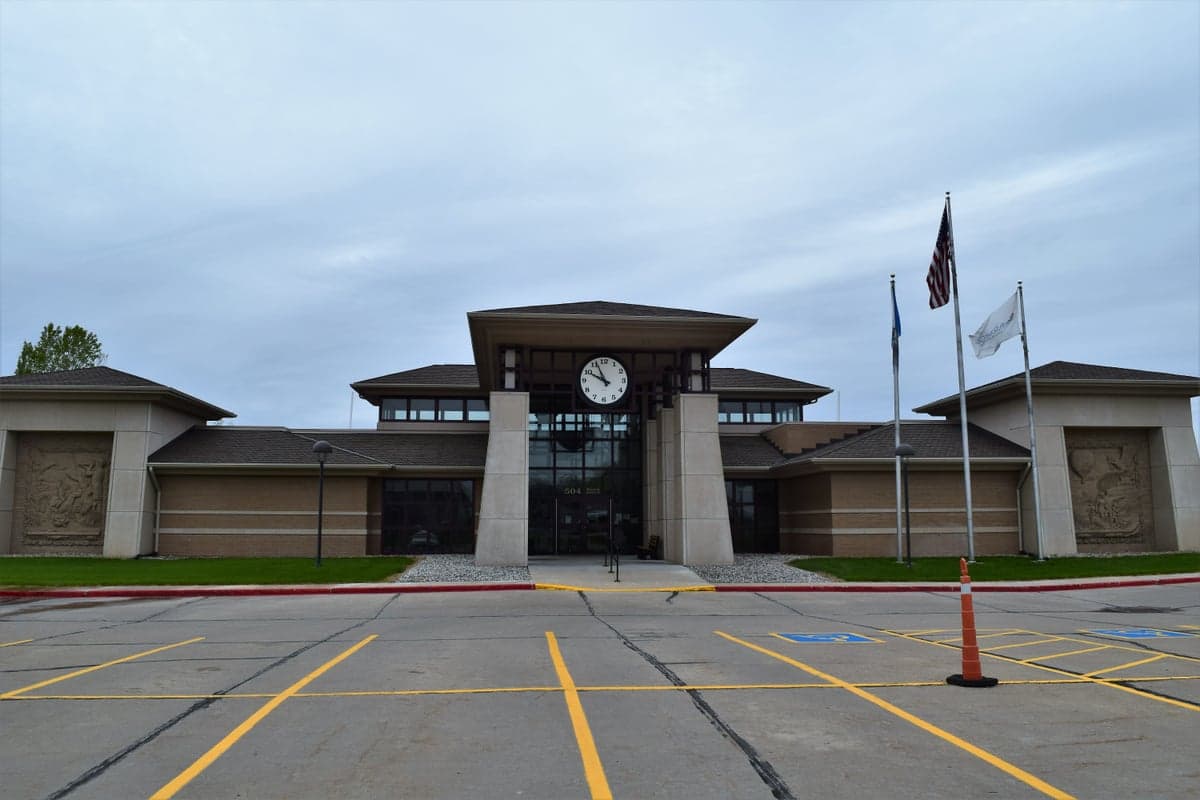
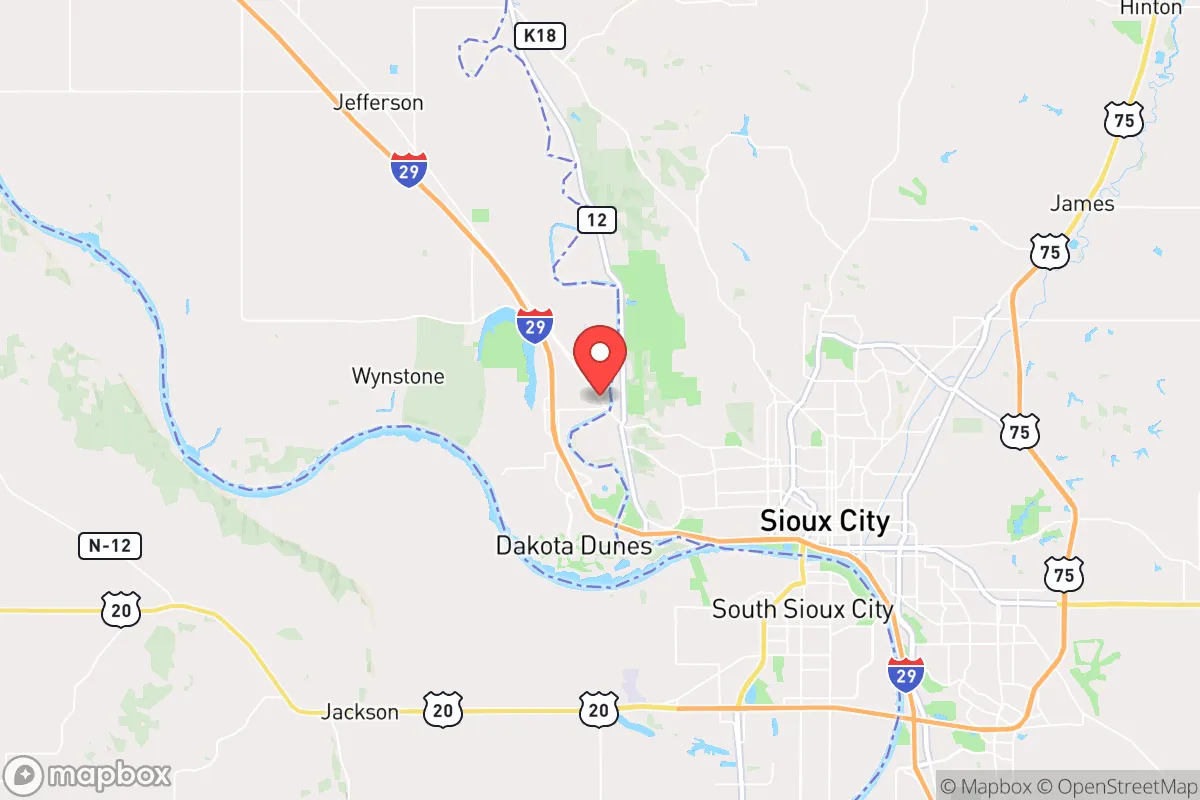
Photo: Wikipedia
Strategic Assessment of North Sioux City, SD
Strong survivability profile. Good buffer from population centers, with manageable environmental and tactical risks.
What does the Strategic Assessment tell us?
Our Strategic Assessment grades tactical survivability of an area. Major population centers, military targets, fallout zones, natural disasters, and border exposure all drive risk — lower exposure means a more defensible position in a crisis.
This is heavily inspired by Joel Skousen's Strategic Relocation book. Highly recommended you checkout the book ($)What does this tell us?
Our Strategic Assessment grades tactical survivability of an area. Major population centers, military targets, fallout zones, natural disasters, and border exposure all drive risk — lower exposure means a more defensible position in a crisis.
This is heavily inspired by Joel Skousen's Strategic Relocation book. Highly recommended you checkout the book ($)Strategic Pillars

Key Distances
Regional Safe Places
Below is our recommended "safe zones" in South Dakota and the surrounding area based on our strategic heuristics. For most people, it's unrealistic to live in a “safe zone” full-time due to work, family or other personal reasons. They tend to be more rural. However, many of these areas are perfect for second homes and retreat properties that double as a vacation home or even a short-term rental.
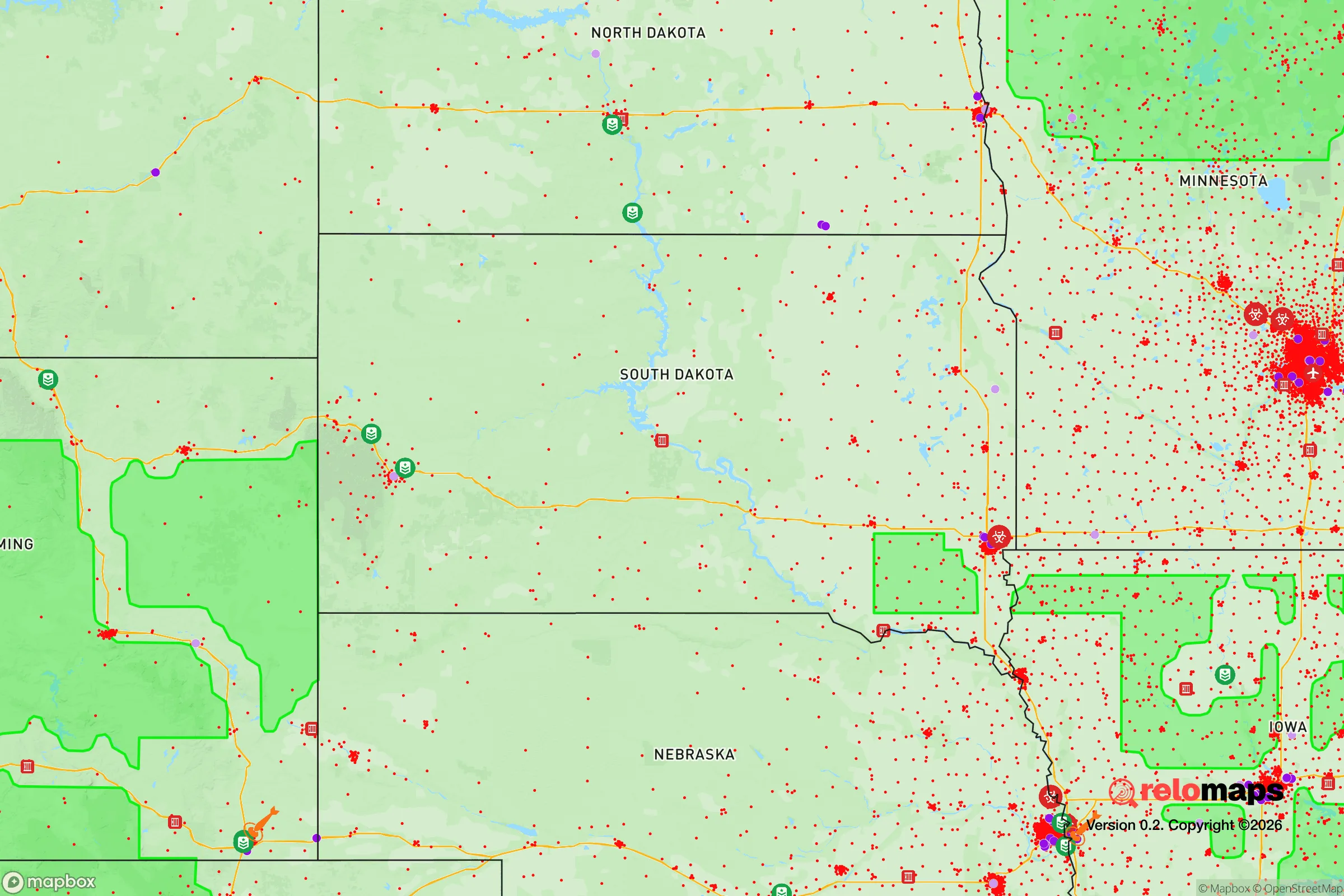


Important Note: For informational purposes only. This does not mean nothing bad ever happens in the green zones. Please use common sense. This is based on public data and modeled with AI. We tried to take a conservative approach but mistakes happen. We update this regularly as new information becomes available.
Solar Generator Recommendations
Backup power matters more here than in safer locations. We've picked three solar generators across budgets and capacity tiers — start with the budget unit if you only need a few essentials, or step up if you want to run a fridge and HVAC for days at a time.

Jackery Portable Power Station Explorer 300
Budget OptionPower on the Go: Weighing only 11 lbs, it's convenient to set up and store with book-sized foldable solar panels

BLUETTI Portable Power Station AC180
Designed for both indoor and outdoor scenarios, AC180 is highly capable as it has a robost capacity and continuous output power.

EF ECOFLOW DELTA Pro Ultra Power Station
Upgraded PickEcoFlow DELTA Pro Ultra is a whole-home energy system designed to grow with your family. Integrated with the Smart Home Panel 2, it scales to meet your evolving energy needs — keeping your home powered, intelligent, and secure through every stage of life.
We earn a commission, at no additional cost to you.
Strategic Assessment Analysis
North Sioux City, South Dakota, sits in a unique strategic pocket that offers genuine resilience advantages for those thinking seriously about long-term preparedness. Its position along the Missouri River, combined with South Dakota’s low population density and favorable regulatory environment, makes it a location worth examining for anyone prioritizing self-sufficiency and distance from major metropolitan chaos. The area’s primary strength is its ability to function as a quiet staging ground—close enough to access resources from Sioux City, Iowa, and Nebraska, but far enough to avoid the immediate fallout of a major urban collapse.
Geographic position and natural advantages for long-term stability
North Sioux City’s location at the confluence of the Missouri and Big Sioux Rivers provides a reliable water source, which is the single most critical resource in any extended disruption scenario. The surrounding terrain is primarily rolling plains and agricultural land, offering good visibility and limited natural choke points that could be exploited by hostile actors. The area sits in the Missouri River Valley, which provides some natural windbreaks and moderates temperature extremes compared to the open plains further west. For a relocator, this means year-round access to surface water and the ability to cultivate food without relying on complex irrigation systems. The region’s agricultural base is a major plus—Union County, where North Sioux City is located, has some of the most productive farmland in the state, and local farmers markets and co-ops are well-established. This isn’t a remote mountain redoubt, but it’s a place where you can realistically establish a semi-self-sufficient homestead within a short drive of a small city’s amenities.
Risks, exposures, and proximity to fallout-relevant landmarks
The most significant risk here is proximity to Sioux City, Iowa, which sits just across the Missouri River and has a population of roughly 85,000. In a mass casualty event or civil unrest scenario, that population could become a liability—people fleeing the city would likely cross the bridges into North Sioux City, creating a bottleneck and potential security issue. The Sioux Gateway Airport and the rail lines running through the area are also potential targets for disruption, whether from domestic unrest or foreign sabotage. Additionally, the Missouri River itself is a double-edged sword: while it provides water, it also creates flood risk, and the area has experienced significant flooding events in recent years. The Union County Emergency Management office is active, but local infrastructure for large-scale evacuation is limited. For the prepper mindset, the key takeaway is that North Sioux City is not a bug-out location—it’s a place to hunker down and ride out a storm, provided you have a plan for securing your perimeter and filtering water.
Practical resilience for a relocator: food, water, energy, and defensibility
For someone serious about preparedness, North Sioux City offers a workable foundation. Water is the strongest asset—the Missouri River is a massive, reliable source, but you’ll need a good filtration system (think Berkey or a sand filter) because agricultural runoff and upstream industrial activity are real concerns. The local water table is high, so shallow wells are feasible in many areas, and rainwater collection is straightforward given the region’s average 30 inches of annual precipitation. Food security is solid: the surrounding farmland produces corn, soybeans, and livestock, and there are multiple local processors and butchers within a 20-mile radius. For energy, South Dakota has some of the most permissive solar and wind regulations in the country, and net metering is available through the local utility, MidAmerican Energy. A small solar array with battery backup can easily cover a household’s basic needs, and wood-burning stoves are common for winter heating. Defensibility is moderate—the terrain is open, so you’ll need to think about perimeter security and line-of-sight issues. A rural property with a good well, a garden, and a clear view of approach roads is ideal. The local law enforcement presence is minimal but responsive; Union County has a sheriff’s office with about a dozen deputies, so you’re largely on your own for immediate security.
Overall, North Sioux City presents a balanced strategic picture for the conservative-minded relocator. It’s not a fortress, but it’s a place where you can build a resilient lifestyle without the extreme isolation of the mountain West or the regulatory headaches of the coasts. The proximity to Sioux City is a real vulnerability, but it’s also a source of supplies, medical care, and community if things stay stable. For someone looking to position themselves for a range of scenarios—from economic disruption to natural disasters to civil unrest—this area offers a solid middle ground. The key is to arrive with a plan, secure your water and energy sources early, and build relationships with the local farming community. In a world where the margins are getting thinner, North Sioux City gives you a fighting chance to stay ahead of the curve.

* Values derived from national, state, county, city and local statistics and may differ in a specific area. Last updated: 2026-04-19T08:18:14.000Z
Narrative content on this page is AI-generated and may contain mistakes. Verify any details that matter before acting on them.
ReloMaps may earn a commission from affiliate links at no extra cost to you.

