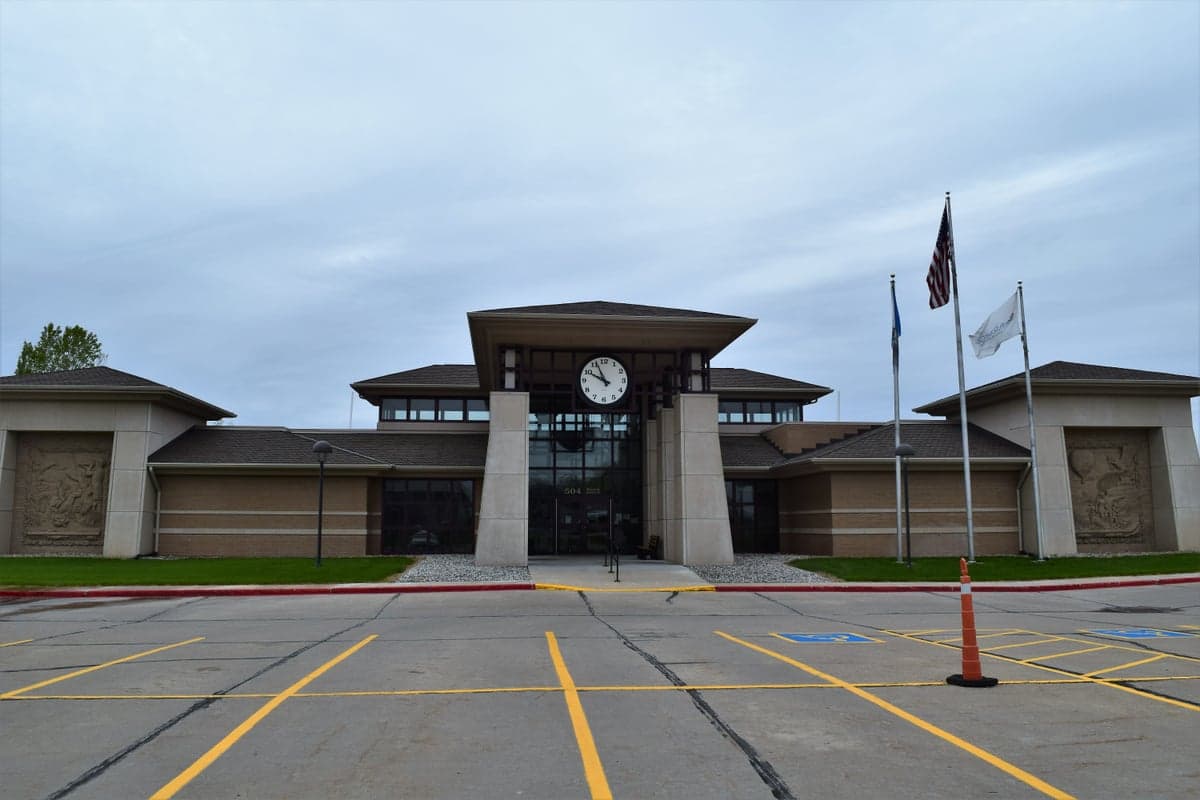
Photo: Wikipedia
Political ClimatePolitical Climate in North Sioux City, SD
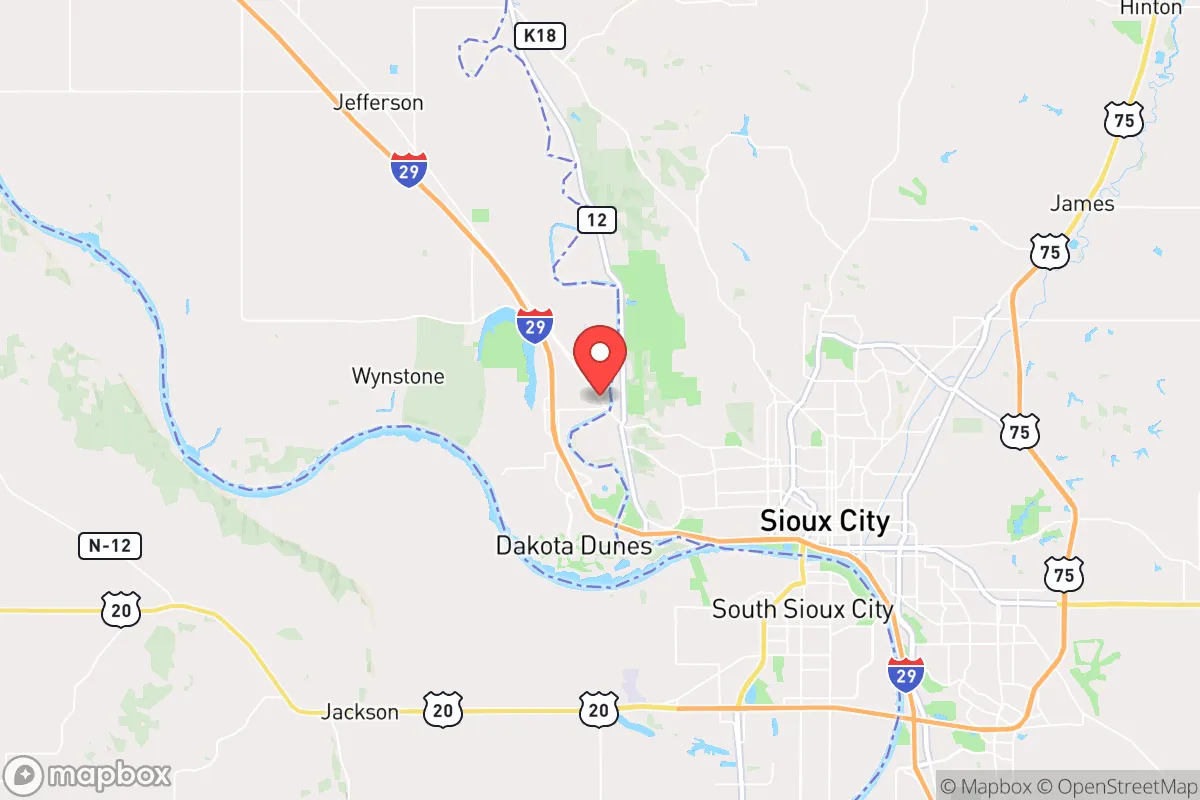
District shown is the primary district for this city’s centroid. Cities may span multiple districts.
Inherited from parent state — no local data available.
Local Political AnalysisPolitical Analysis of North Sioux City, SD
North Sioux City, South Dakota, is about as reliably conservative as it gets, with a Cook PVI of R+15 that tells you everything you need to know about the local voting patterns. This isn't a purple area that flips back and forth; it's a place where Republican candidates routinely win by double digits, and the political culture reflects a deep-seated belief in limited government, personal responsibility, and the Second Amendment. The trajectory here has been steady red for decades, though like much of the country, you can feel a subtle tension as outside influences from nearby Sioux City, Iowa, and the broader progressive drift in some parts of the region start to creep in around the edges.
How it compares
Drive ten minutes south into Sioux City, Iowa, and you'll hit a starkly different political reality. Woodbury County, Iowa, has been trending purple-to-blue in recent cycles, with a more mixed electorate that includes a stronger union presence and a growing Hispanic population that leans left. North Sioux City, by contrast, sits in Union County, South Dakota, which is deeply red and proud of it. The contrast is immediate: cross the Missouri River and you go from a place where "defund the police" is a non-starter to a city council that's had its own progressive flare-ups. Even within South Dakota, towns like Vermillion (home to the University of South Dakota) and Brookings are noticeably more liberal, while North Sioux City remains a bastion of traditional values. The local school board and city council elections here rarely see contested races from the left, and when they do, the results are lopsided.
What this means for residents
For folks who value their freedoms, living in North Sioux City means you're largely left alone. There's no city-wide mask mandate drama, no heavy-handed business closures, and the local government generally takes a hands-off approach to your personal life. Property taxes are low, there's no state income tax, and the gun laws are among the most permissive in the nation. That said, you can't be complacent. The progressive push from the larger Sioux City metro area—especially on issues like zoning, environmental regulations, and school curriculum—has a way of bleeding across state lines. A few years back, there was a real push to bring "equity" training into the local schools, and it took a vocal group of parents to shut it down. The concern is that as the area grows and attracts new residents from blue states, the political culture could shift if people aren't paying attention.
Culturally, North Sioux City is still a place where neighbors know each other, the Fourth of July parade is a big deal, and the local churches are community anchors. There's a strong libertarian streak here—people don't like being told what to do, whether it's by the state or the feds. The biggest policy distinction from the rest of South Dakota is probably the close economic and social ties to Iowa, which means you get a bit more exposure to Midwest pragmatism, but the political heart remains solidly conservative. If you're looking for a place where you can raise a family without the government breathing down your neck, this is still one of the best spots in the region. Just keep an eye on the ballot box and show up to those school board meetings, because the fight to keep it that way never really ends.

State Political ClimatePolitical Climate in South Dakota
State Political AnalysisPolitical Environment in the State
South Dakota is a deeply conservative state, with a Republican lean that has only solidified over the past two decades. The state hasn't voted for a Democratic presidential candidate since 1964, and in 2024, Donald Trump carried it by over 30 points. The dominant coalition is a mix of rural traditionalists, libertarian-leaning ranchers, and a growing number of conservative transplants fleeing blue states. Over the last 10-20 years, the state has shifted further right, driven by an influx of freedom-minded newcomers and a native population that resists progressive trends. The political culture here is less about partisan bickering and more about a shared skepticism of federal overreach, though recent battles over education and property rights have sharpened the lines.
Urban vs. rural divide
The political map is straightforward: the eastern corridor, anchored by Sioux Falls and Brookings, is the most moderate and populous region. Sioux Falls, home to about 200,000 people, leans Republican but has a noticeable libertarian streak—it's a business hub where fiscal conservatism trumps social issues. Brookings, home to South Dakota State University, is the bluest pocket in the state, with a younger, more educated electorate that occasionally votes Democratic in local races. The rest of the state is overwhelmingly red. Rapid City and the Black Hills region are reliably conservative, driven by military retirees and tourism workers. The rural counties—like Harding, Perkins, and Jones—routinely vote 85%+ Republican. The divide isn't hostile; it's more a matter of density. In Sioux Falls, you'll find a few progressive coffee shops and a Pride parade; in Sturgis, you'll find bikers and Second Amendment rallies. The state's small towns, like Deadwood and Vermillion, are culturally conservative but pragmatic—they care about local schools and roads more than national culture wars.
Policy environment
South Dakota's policy environment is a conservative dream, with a few libertarian quirks. There is no state income tax, and the sales tax is 4.5%, though local add-ons can push it to 6.5%. Property taxes are moderate, averaging about 1.2% of assessed value, but recent reappraisals have sparked complaints. The regulatory posture is light: no occupational licensing for many trades, no state-level rent control, and a right-to-work law. Education policy is a flashpoint. Governor Kristi Noem signed a 2021 law banning critical race theory in K-12 schools, and in 2023, the state passed a "Parents' Bill of Rights" (HB 1080) that requires schools to notify parents of any curriculum changes and allows them to opt their kids out of objectionable material. Healthcare is mixed: the state expanded Medicaid in 2023 via a ballot initiative, which conservatives opposed, but it also protects medical conscience rights for providers. Election laws are tight—voter ID is required, no-excuse absentee voting was ended in 2021, and the state has a clean voter roll system. The legislature is solidly Republican, with a supermajority in both chambers, so progressive bills rarely get a hearing.
Trajectory & freedom
South Dakota is becoming more free in several key areas, but there are warning signs. On gun rights, the state is a fortress: constitutional carry passed in 2019, and in 2023, the legislature passed a "Second Amendment Preservation Act" (HB 1193) that prohibits state enforcement of any future federal gun bans. On parental rights, the 2023 Parents' Bill of Rights is a strong shield against school overreach. On medical autonomy, the state banned gender-affirming care for minors in 2023 (HB 1080), and it protects doctors who refuse to perform abortions or transgender procedures. However, there are encroachments. The state's COVID-19 response was heavy-handed—Noem resisted lockdowns but did issue a state of emergency that gave her broad powers, which some conservatives saw as overreach. Property rights are under pressure: the state's use of eminent domain for the proposed carbon pipeline (Summit Carbon Solutions) has sparked fierce backlash from landowners, with many feeling the state is siding with corporate interests over individual rights. The 2024 legislative session saw a bill to limit local zoning authority, which passed, but it's a reminder that "freedom" here is often defined by who's in power.
Civil unrest & political movements
Civil unrest is minimal, but there are organized movements worth noting. The Noem administration has been a lightning rod: her 2020 decision to send the state's National Guard to the Texas border was popular, but her 2023 feud with the Oglala Sioux Tribe over a border checkpoint on the Pine Ridge Reservation stirred tensions. The tribe, which is sovereign, set up a checkpoint to enforce COVID-19 protocols, and Noem threatened legal action—a flashpoint that highlighted the state's uneasy relationship with tribal nations. On the right, the South Dakota Freedom Caucus has grown more assertive, pushing for school choice vouchers and a repeal of the state's sales tax on groceries (which failed in 2024). On the left, the South Dakota Democratic Party is nearly extinct, but activist groups like South Dakota Voices for Peace and Rural Organizing Project are trying to build a base in Sioux Falls and on the reservations. Immigration politics are quiet—the state has a small immigrant population, mostly in meatpacking towns like Sioux Falls and Huron, and there's no sanctuary policy. Election integrity is a settled issue: the 2020 and 2022 elections were clean, and the state's voter ID law is widely accepted. A new resident would notice a general lack of street-level activism—people here are more likely to settle disputes at the county commission meeting than in the streets.
Projection
Over the next 5-10 years, South Dakota will likely become more conservative, but with internal fractures. The in-migration from blue states—especially California, Colorado, and Minnesota—is accelerating, and these newcomers tend to be fiscally conservative but socially moderate. They're moving to Sioux Falls and Rapid City for jobs and lower taxes, and they're starting to push for more amenities, like bike lanes and craft breweries, which can clash with the rural traditionalist base. The state's population is growing at about 1% annually, and the eastern corridor is becoming more diverse. This could lead to a split between the "libertarian growth" faction and the "cultural conservative" faction, especially on issues like school choice and land use. The carbon pipeline fight is a preview: it's pitting property rights against economic development, and the outcome will define the state's trajectory. If the pipeline goes through, it could embolden corporate-friendly policies; if it's blocked, it'll signal that individual rights still trump big business. The state's political future is stable, but the tension between freedom and order will be the defining battle.
For a new resident, the bottom line is this: South Dakota offers a high degree of personal freedom—low taxes, strong gun rights, and a government that mostly stays out of your life. But it's not a libertarian paradise. The state is still run by a Republican establishment that can be cozy with corporate interests, and the growing population in the eastern cities is slowly shifting the culture. If you're moving here for freedom, you'll find it, but you'll also need to engage locally to keep it that way. The state's politics are a reflection of its people: independent, skeptical of authority, and fiercely protective of their way of life. Just don't expect it to stay exactly the same—nothing does.
* Values derived from national, state, county, city and local statistics and may differ in a specific area. Last updated: 2026-04-19T08:18:14.000Z
Narrative content on this page is AI-generated and may contain mistakes. Verify any details that matter before acting on them.
ReloMaps may earn a commission from affiliate links at no extra cost to you.

