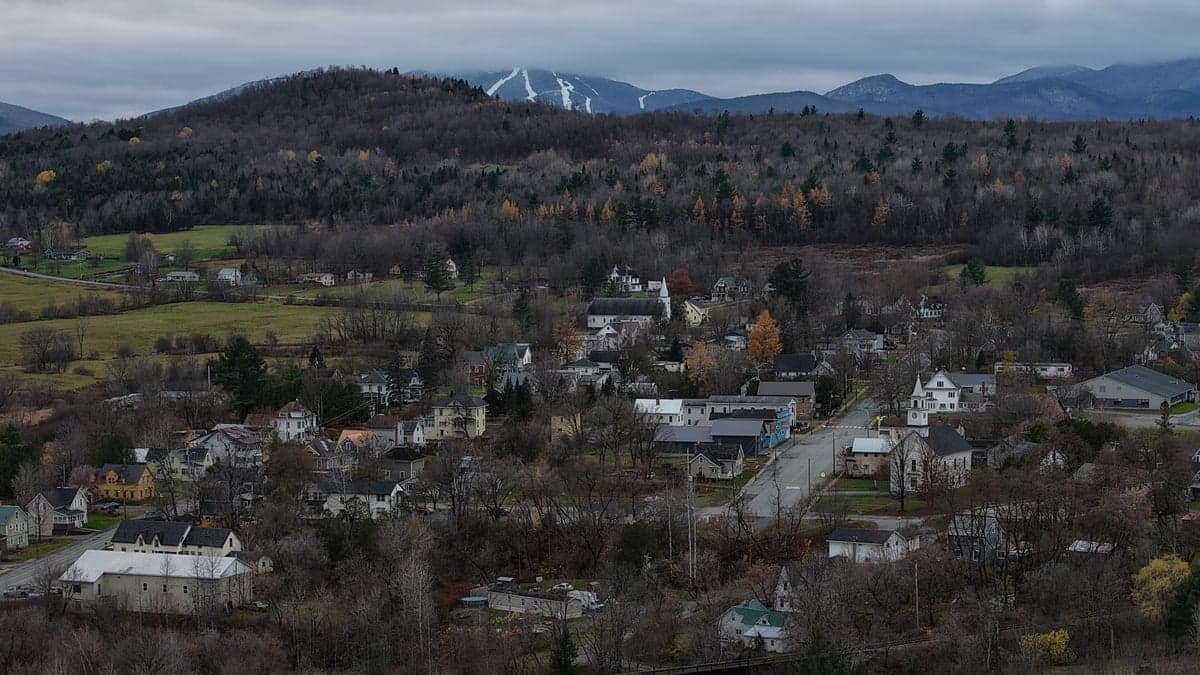
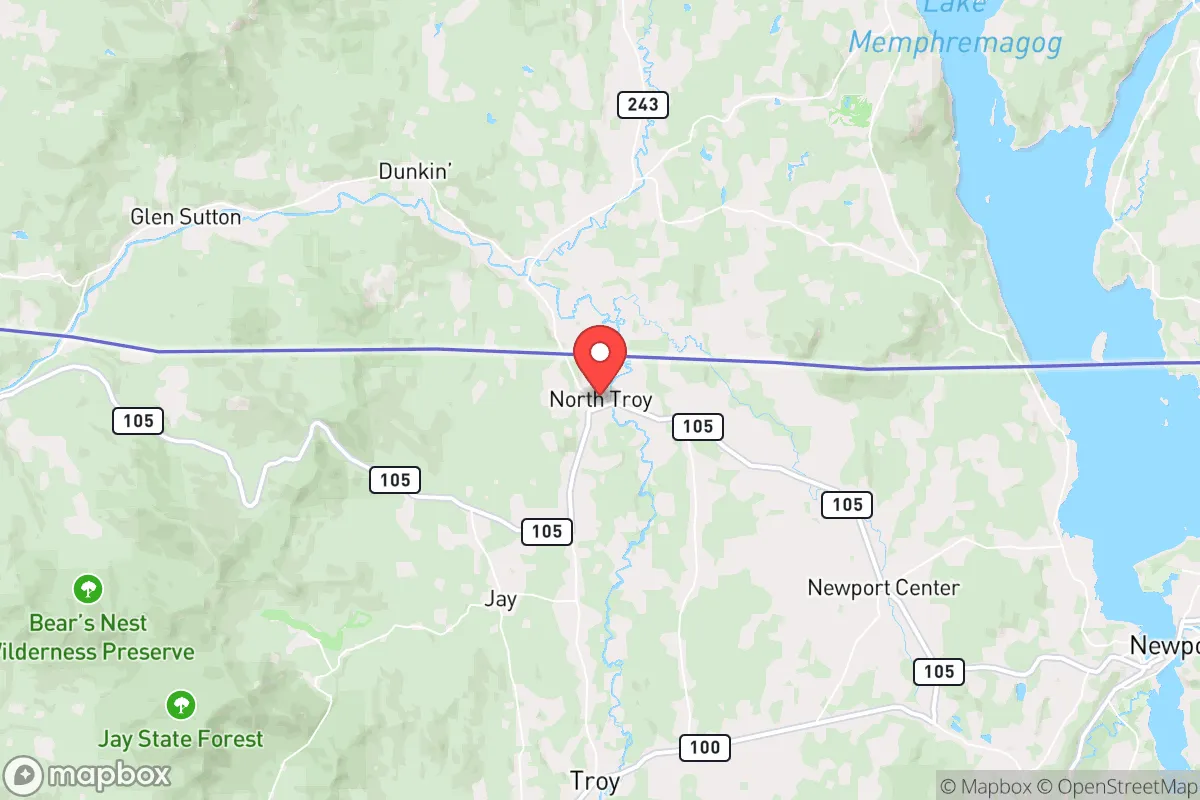
Photo: Wikipedia
Demographics of North Troy, VT
Affluence Level in North Troy, VT
A low-income area with significant economic hardship. Household wealth and educational attainment are well below national averages.
People of North Troy, VT
North Troy, Vermont, is a small, tight-knit village of roughly 550 residents where the population is overwhelmingly white (88.5%) and native-born, with a foreign-born share of just 0.5%. The village retains a working-class, rural character shaped by its border location and industrial past, and its residents are notably less college-educated than state averages, with only 21.5% holding a bachelor's degree or higher. This is a place where family roots run deep, and the population is both aging and slowly shrinking, reflecting broader trends in Vermont's Northeast Kingdom.
How the city was settled and grew
North Troy's human history begins with the Abenaki people, who used the Missisquoi River valley for seasonal fishing and travel long before European arrival. Permanent white settlement began in the early 1800s, driven by land grants issued after the Revolutionary War. The village's growth exploded with the arrival of the railroad in the 1850s, which connected local lumber and granite quarries to markets in Montreal and Boston. The Railroad District, clustered around the depot and the Canadian border crossing, became the heart of a bustling commercial and industrial zone, drawing Irish and French-Canadian laborers who built the rail lines and worked the sawmills. By the 1880s, French-Canadian families dominated the Lower Village area along the river, establishing St. Vincent de Paul Catholic Church as their cultural anchor. A smaller wave of English and Scottish immigrants settled on the hillier Upper Village streets, where they ran the granite sheds and general stores. The population peaked around 1,200 in the early 1900s, sustained by the granite industry and cross-border trade.
Modern era (post-1965)
The post-1965 period brought no significant immigration to North Troy. The village's foreign-born population today is negligible at 0.5%, and the Hispanic (2.7%) and Black (1.3%) shares remain tiny, reflecting the area's limited economic draw and geographic isolation. Instead, the major demographic shift was domestic out-migration. The decline of the granite and railroad industries after the 1960s triggered a steady population loss, with many young adults leaving for Burlington or out of state. The Pleasant Valley neighborhood, once home to millworker families, saw many homes converted to seasonal or second properties. The Border Road area, near the Canadian line, absorbed a small influx of retirees and remote workers seeking cheaper land, but this was not enough to offset the overall decline. The village's racial composition remained static: the white share actually increased slightly from historical levels as non-white populations never established a foothold. The college-educated share (21.5%) is well below Vermont's state average of roughly 40%, reflecting the area's blue-collar legacy and limited white-collar job base.
The future
North Troy's population is heading toward further contraction and homogenization. The village's median age is rising, and the school-age population has declined, leading to consolidation pressures on the local elementary school. The small Hispanic and Black populations are not growing; they appear to be transient, likely tied to seasonal agricultural or service work. No immigrant enclave is forming in any neighborhood. The East Hill area, with its older farmhouses, is seeing gradual conversion to vacation homes for out-of-state buyers, which is pushing property values up but not adding permanent residents. The Depot Street corridor, once the commercial spine, now has several empty storefronts. Over the next 10-20 years, the village will likely continue to lose population, becoming an even older, whiter, and more economically homogenous community, unless a major employer or housing development reverses the trend.
For someone moving in now, North Troy offers a quiet, safe, and affordable rural setting with strong community ties, but it is a place in demographic decline. The population is stable in its homogeneity, not diversifying, and the economic opportunities are limited. New residents should expect a close-knit, traditional environment where most families have been here for generations, and where the biggest change is the slow turnover of homes to out-of-state owners.

* Values derived from national, state, county, city and local statistics and may differ in a specific area. Last updated: 2026-04-29T19:47:41.000Z
Narrative content on this page is AI-generated and may contain mistakes. Verify any details that matter before acting on them.
ReloMaps may earn a commission from affiliate links at no extra cost to you.

