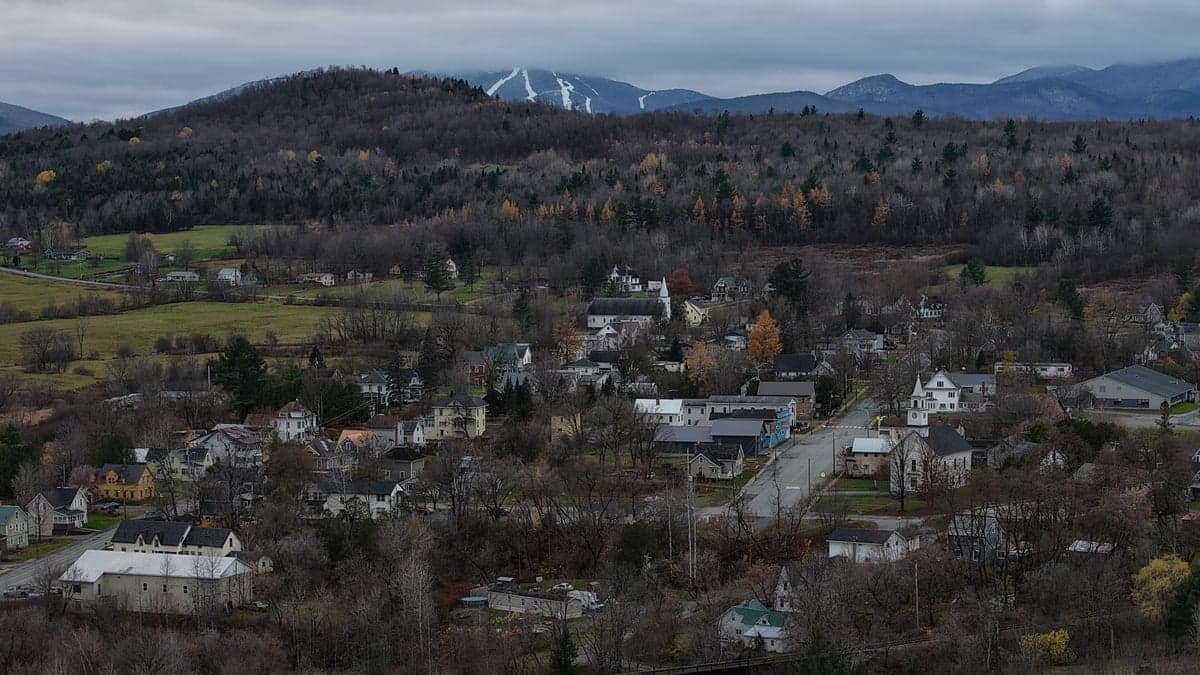
Photo: Wikipedia
Personal Sovereignty in North Troy, VT
Moderate friction. Expect trade-offs in some aspect of personal liberty and independence.
What does Personal Sovereignty tell us?
Personal Sovereignty measures your capacity for self-reliance and independence with minimal government friction. Higher scores mean fewer barriers between you and the way you want to live... but it assumes you have the space you need and good neighbors.
What does this tell us?
Personal Sovereignty measures your capacity for self-reliance and independence with minimal government friction. Higher scores mean fewer barriers between you and the way you want to live... but it assumes you have the space you need and good neighbors.
State Policy
Energy independence: Importer (15% of energy produced in-state)
Personal Liberty
Homesteading

Personal Liberty Analysis
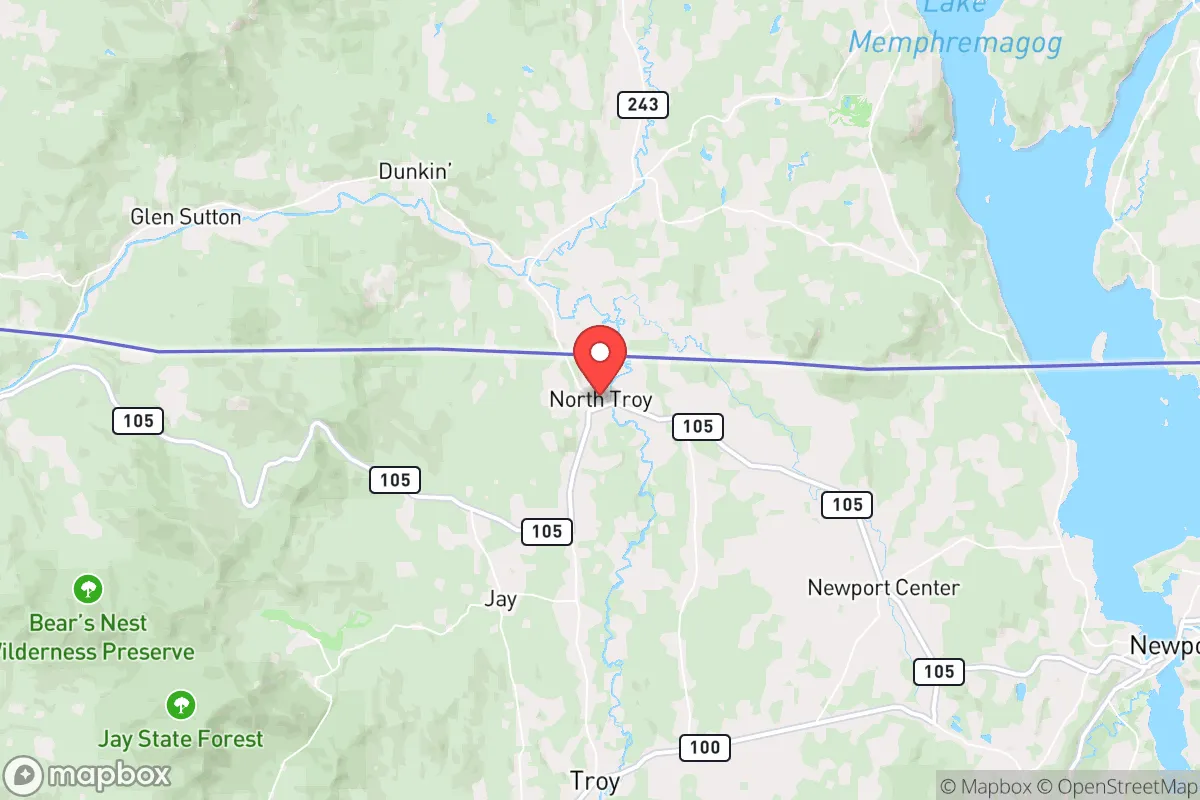
North Troy, Vermont, offers a unique autonomy environment that sits at a sharp intersection of deep rural seclusion and a state government whose policy trajectory often runs counter to the principles of personal sovereignty. For the survivalist or prepper seeking a low-grid, high-self-reliance lifestyle, the town’s physical remoteness—tucked against the Canadian border in Orleans County—provides a genuine buffer from population density and the chaos of urban centers. However, this natural advantage is constantly weighed against Vermont’s aggressive regulatory climate, which can feel like a direct challenge to the very independence you’re trying to secure. The net assessment here is a trade-off: you get some of the most affordable, secluded land in the Northeast, but you must navigate a state apparatus that is increasingly skeptical of the kind of unfettered personal liberty that defines the prepper mindset.
Tax burden and regulatory posture: the cost of seclusion
Vermont’s tax burden is among the highest in the nation, and North Troy residents feel that pressure directly. The state levies a progressive income tax that tops out at 8.75% on income over $213,150 (2025 rates), and property taxes are notoriously steep, averaging around 1.8% of assessed home value—a figure that can eat into any homesteading budget. For a prepper, this isn’t just a financial annoyance; it’s a form of government overreach that funds programs and policies you may fundamentally disagree with. The regulatory posture in Vermont is equally heavy-handed. The state’s Act 250 land-use law gives bureaucrats broad authority over development, meaning even simple projects like building a shed, installing a septic system, or clearing land for a garden can trigger costly permitting delays. In North Troy, the local enforcement is less aggressive than in Chittenden County, but the state’s long arm still reaches into your backyard. The upside is that land prices in this corner of the state remain relatively low—you can still find raw parcels under $5,000 per acre—but the ongoing tax and regulatory drag is a permanent cost of doing business as a sovereign individual here.
Self-defense and gun law specifics: navigating a blue state’s restrictions
Vermont has a complicated relationship with firearms. On one hand, it’s a constitutional carry state—no permit is required to carry a concealed or open firearm, and the state does not maintain a registry of gun owners. This is a significant plus for the prepper who values the right to self-defense without government permission slips. On the other hand, the state has enacted several restrictions that erode that freedom. In 2023, Vermont passed a ban on "large-capacity" magazines (over 10 rounds for rifles, 15 for handguns) and raised the purchase age for all firearms to 21. The state also has a "red flag" law (Extreme Risk Protection Order) that allows authorities to seize firearms based on a civil complaint, without a criminal conviction. For the survivalist, this is a direct threat: a disgruntled neighbor or a misunderstanding with local law enforcement could result in your guns being confiscated. North Troy’s rural nature means enforcement is less frequent than in Burlington, but the law is on the books and can be weaponized. Ammunition sales are also subject to background checks, and there is no preemption for local ordinances, meaning towns could theoretically add their own restrictions. The bottom line: you can own and carry firearms here, but the state is actively narrowing the window of what’s permissible, and the legal landscape is trending in the wrong direction for those who view self-defense as a non-negotiable right.
Self-reliance and homesteading viability: lot sizes, zoning, and off-grid feasibility
This is where North Troy shines for the prepper. The town is zoned primarily for agricultural and rural residential use, with minimum lot sizes typically around 2 to 5 acres in the more developed areas, and larger parcels available in the unincorporated backcountry. Zoning is minimal—there’s no county-level planning commission breathing down your neck—and the local board is generally hands-off as long as you’re not building a commercial operation. Off-grid living is legally feasible, but with caveats. Vermont law requires that any dwelling have a "potable water supply and a wastewater disposal system" that meets state standards, which usually means a drilled well and a septic system. Solar panels, rainwater collection, and composting toilets are all allowed, but you must get permits for the well and septic, which can cost $10,000–$20,000 combined. The state’s building code applies to new construction, but enforcement in North Troy is lax—many long-time residents live in cabins without formal inspections. For the serious homesteader, the land itself is a major asset: the soil in the Missisquoi River valley is fertile, the growing season is short (about 120 days) but workable, and the surrounding forests offer firewood, game, and timber. The biggest challenge is the winter—six months of snow and cold mean you need a robust heating system, a reliable vehicle, and a serious food storage plan. Off-grid feasibility is high, but it requires capital and grit.
Personal liberties: parental rights, medical autonomy, speech, and property
Vermont’s record on parental rights is mixed. The state has a strong tradition of local control in education, but the legislature has pushed for statewide mandates on curriculum and health education that some parents view as overreach. In 2024, the state passed a law requiring all public schools to provide "medically accurate" sex education, which includes LGBTQ+ content, and parents do not have a blanket opt-out—only a limited one. For the conservative parent, this is a red flag. Homeschooling is legal and relatively unregulated—you must submit an annual enrollment notice and provide a "narrative" of your curriculum, but there are no standardized tests or home visits. Medical autonomy is a mixed bag. Vermont has a universal healthcare system (Green Mountain Care) that mandates coverage, and the state has strict vaccine requirements for school attendance, with only medical exemptions allowed. This means if you refuse vaccines for philosophical or religious reasons, you’ll be forced to homeschool or face legal pressure. The state also has a "death with dignity" law and legalized recreational marijuana, which may or may not align with your values. Free speech is protected under the First Amendment, but Vermont has a "bias-motivated crime" law that can enhance penalties for speech deemed hateful, which some see as a chilling effect. Property rights are relatively strong—eminent domain is rarely used for private development—but the state’s environmental regulations (like Act 250) can limit what you do with your land. Overall, personal liberties in North Troy are a patchwork: you have significant freedom in your private life, but the state is willing to intervene in family and medical decisions in ways that a sovereignty-minded individual will find intrusive.
Compared to other areas in the Northeast, North Troy offers a higher degree of personal sovereignty than most of Massachusetts, New York, or New Jersey, where taxes are higher and gun laws are stricter. It falls short of the freedom found in New Hampshire or much of the rural Midwest, where property taxes are lower, homeschooling is unregulated, and there is no income tax. For the prepper or survivalist, North Troy is a compromise: you get the land, the seclusion, and the low population density that make self-reliance possible, but you must constantly fight against a state government that views your independence with suspicion. If you can afford the tax burden and navigate the regulatory maze, the town itself will leave you alone. The question is whether that trade-off is acceptable for your long-term strategy. For those willing to dig in and build a life on the edge of the grid, North Troy is a viable option—but it is not a sanctuary from government overreach. It is a place where you must be vigilant, organized, and prepared to defend your freedoms at the ballot box and in the courtroom, not just in your bunker.

* Values derived from national, state, county, city and local statistics and may differ in a specific area. Last updated: 2026-04-29T19:47:41.000Z
Narrative content on this page is AI-generated and may contain mistakes. Verify any details that matter before acting on them.
ReloMaps may earn a commission from affiliate links at no extra cost to you.

