
Photo: Wikipedia
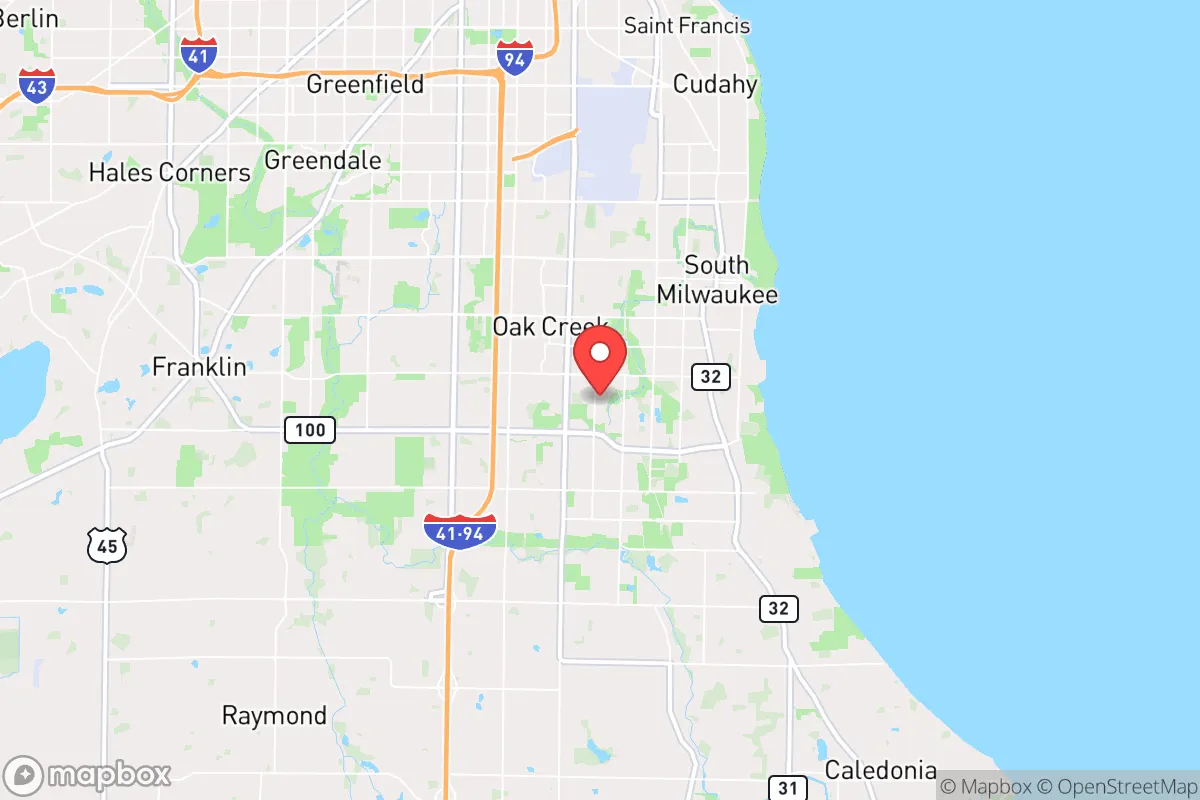
Strategic Assessment of Oak Creek, WI
Multiple tactical vulnerabilities. Population density, target proximity, or disaster risk are likely compounding. A retreat property and exit planning is required.
What does the Strategic Assessment tell us?
Our Strategic Assessment grades tactical survivability of an area. Major population centers, military targets, fallout zones, natural disasters, and border exposure all drive risk — lower exposure means a more defensible position in a crisis.
This is heavily inspired by Joel Skousen's Strategic Relocation book. Highly recommended you checkout the book ($)What does this tell us?
Our Strategic Assessment grades tactical survivability of an area. Major population centers, military targets, fallout zones, natural disasters, and border exposure all drive risk — lower exposure means a more defensible position in a crisis.
This is heavily inspired by Joel Skousen's Strategic Relocation book. Highly recommended you checkout the book ($)Strategic Pillars

Key Distances
Regional Safe Places
Below is our recommended "safe zones" in Wisconsin and the surrounding area based on our strategic heuristics. For most people, it's unrealistic to live in a “safe zone” full-time due to work, family or other personal reasons. They tend to be more rural. However, many of these areas are perfect for second homes and retreat properties that double as a vacation home or even a short-term rental.
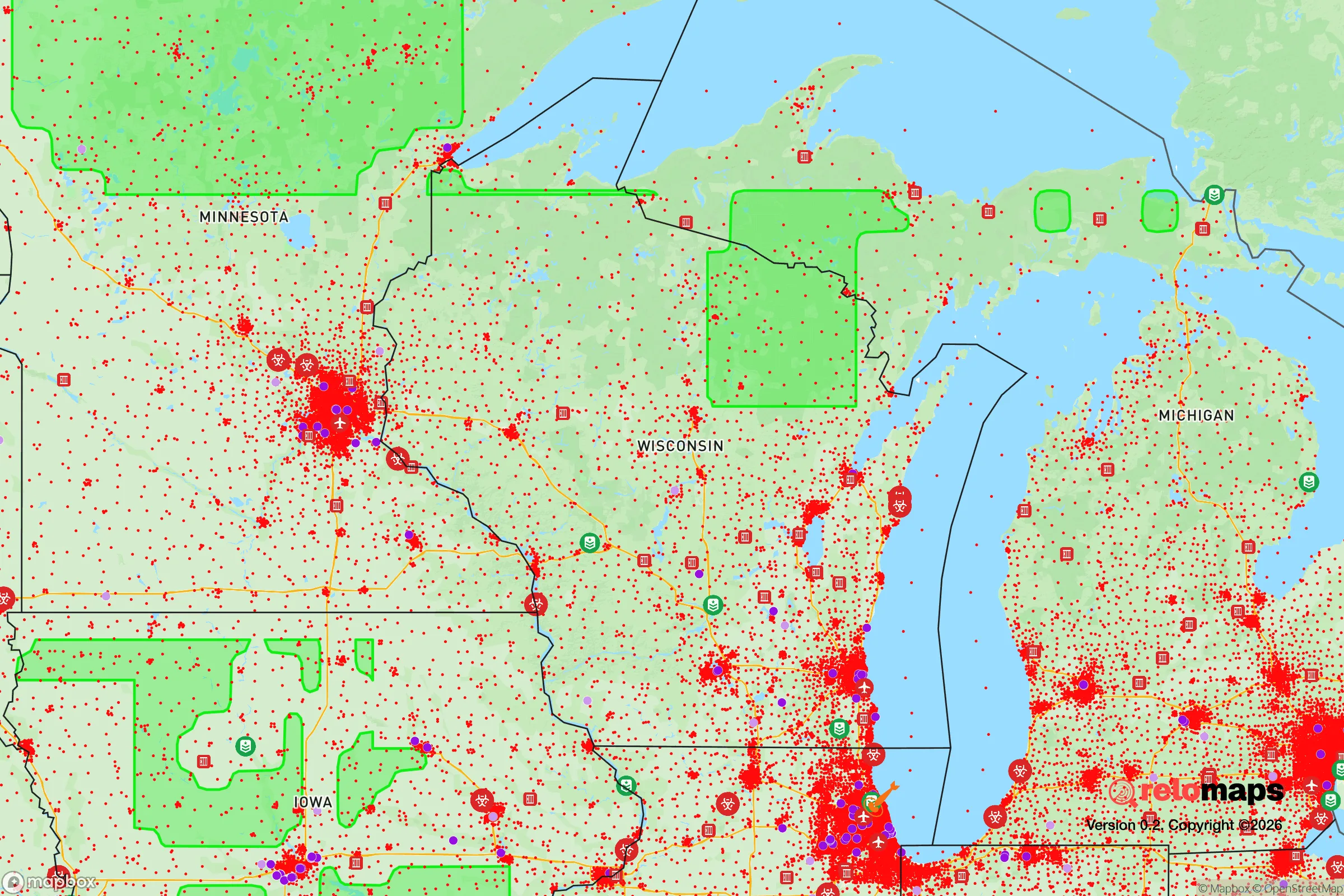
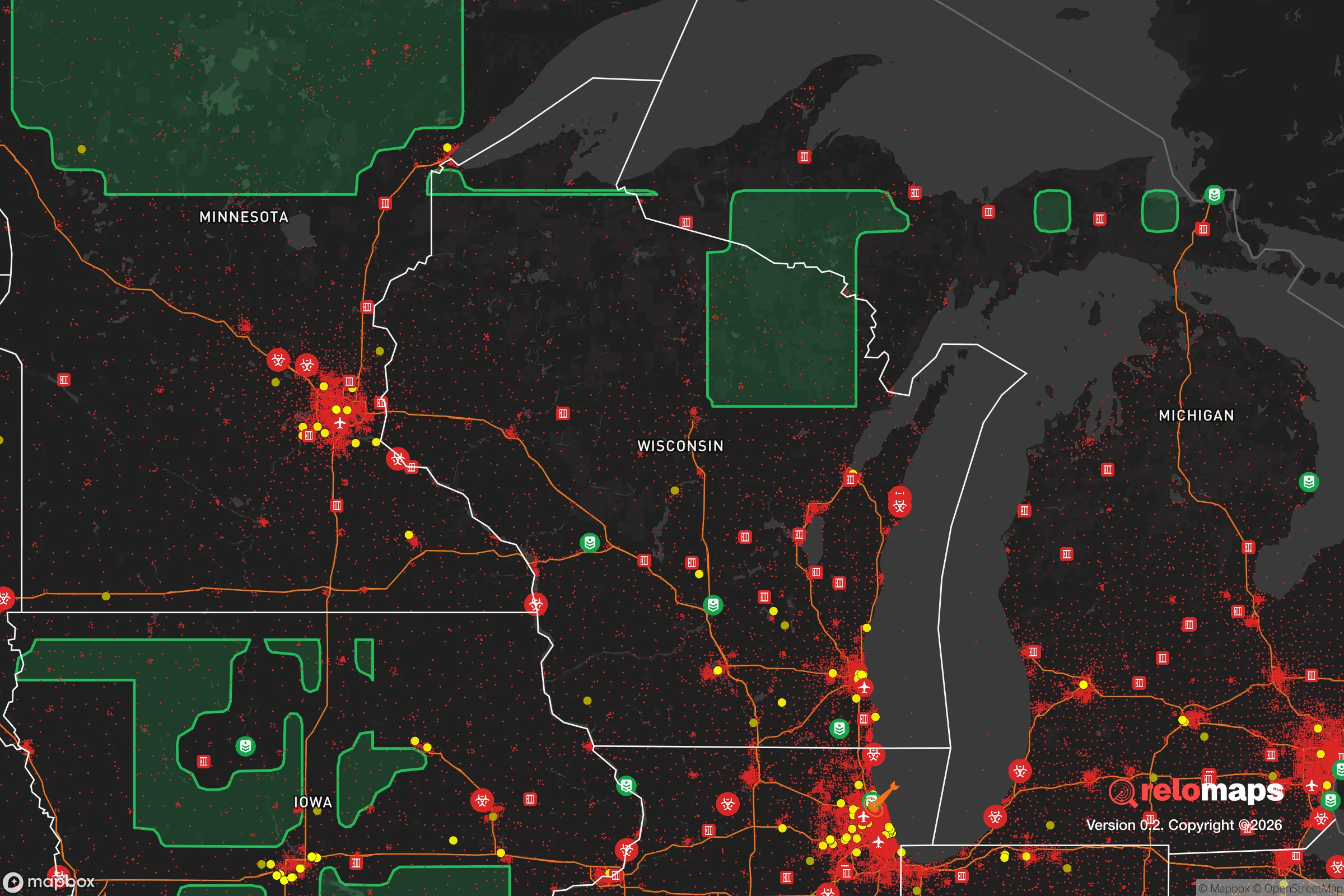


Important Note: For informational purposes only. This does not mean nothing bad ever happens in the green zones. Please use common sense. This is based on public data and modeled with AI. We tried to take a conservative approach but mistakes happen. We update this regularly as new information becomes available.
Solar Generator Recommendations
Backup power matters more here than in safer locations. We've picked three solar generators across budgets and capacity tiers — start with the budget unit if you only need a few essentials, or step up if you want to run a fridge and HVAC for days at a time.

Jackery Portable Power Station Explorer 300
Budget OptionPower on the Go: Weighing only 11 lbs, it's convenient to set up and store with book-sized foldable solar panels

BLUETTI Portable Power Station AC180
Designed for both indoor and outdoor scenarios, AC180 is highly capable as it has a robost capacity and continuous output power.

EF ECOFLOW DELTA Pro Ultra Power Station
Upgraded PickEcoFlow DELTA Pro Ultra is a whole-home energy system designed to grow with your family. Integrated with the Smart Home Panel 2, it scales to meet your evolving energy needs — keeping your home powered, intelligent, and secure through every stage of life.
We earn a commission, at no additional cost to you.
Strategic Assessment Analysis
Oak Creek, Wisconsin, presents a mixed strategic picture for the conservative prepper or survivalist. Its location on the southwestern shore of Lake Michigan offers a significant water and climate advantage, but its proximity to the Milwaukee metropolitan area and critical national infrastructure introduces serious vulnerabilities. For a relocator prioritizing resilience over convenience, Oak Creek is a location that demands careful trade-offs: it provides a solid natural buffer and a strong local economy, but it sits within the blast radius of a major population center and a key energy hub. The area’s long-term viability depends on how well you can mitigate the risks of being near a city that is both a target and a source of potential unrest.
Geographic position and natural advantages for long-term survival
Oak Creek’s primary strategic asset is its position on Lake Michigan, the sixth-largest freshwater lake in the world. This provides an essentially inexhaustible supply of fresh water, a critical resource that most inland locations cannot match. The lake also moderates the local climate, reducing the severity of both summer heat and winter cold compared to areas further inland, which can extend growing seasons and reduce heating costs. The city sits on relatively flat, well-drained land, which is less prone to flooding than riverine areas, though the lake itself can produce dangerous storm surges during strong northeasterly winds. The surrounding terrain is a mix of suburban development and agricultural land, with pockets of forest and wetlands that offer some cover and foraging potential. The area’s position roughly 15 miles south of downtown Milwaukee and 90 miles north of Chicago places it in a corridor that is both economically active and strategically vulnerable. For a relocator, the lake is the single most important feature—it is a reliable water source, a potential food source (fishing), and a natural barrier to approach from the east. However, the flat terrain offers little natural defensibility against ground-based threats from the west or south.
Risks, exposures, and proximity to fallout-relevant landmarks
The most significant risk for Oak Creek is its proximity to Milwaukee, a city of roughly 570,000 people that is a major regional economic and transportation hub. In a scenario of civil unrest, mass casualty events, or a breakdown of social order, Milwaukee would likely become a source of refugees, looters, and organized criminal activity. Oak Creek is directly connected to Milwaukee via I-94 and several major surface roads, making it a natural corridor for movement. The city itself is not a primary target for a nuclear strike, but it lies within the fallout zone of potential targets. The most concerning nearby landmark is the Point Beach Nuclear Plant, located about 30 miles north in Two Rivers, Wisconsin. A catastrophic failure or attack on that facility could render large portions of southeastern Wisconsin uninhabitable for decades. Additionally, the Milwaukee Metropolitan Sewerage District and the Jones Island Water Reclamation Facility are critical infrastructure points that, if compromised, could contaminate the lake and groundwater. The city also hosts the Oak Creek Power Plant, a coal-fired facility that, while not a nuclear target, is a potential source of hazardous material release. The presence of Mitchell International Airport (just north of Oak Creek) and the General Mitchell Air National Guard Base makes the area a likely staging ground for military and emergency response, which could attract secondary attacks or become a focal point for chaos. For a survivalist, the key takeaway is that Oak Creek is not a remote redoubt; it is a suburban buffer zone that will be heavily impacted by events in Milwaukee and by any disruption to the region’s energy and transportation infrastructure.
Practical resilience for a relocator: food, water, energy, and defensibility
For a relocator focused on practical resilience, Oak Creek offers a mixed bag. Water is the strongest asset: Lake Michigan provides a virtually unlimited supply, but you will need a reliable means of extraction and purification. A hand pump, a solar-powered pump, or a gravity-fed filtration system are essential. The city’s municipal water supply is treated and reliable in normal times, but it is vulnerable to contamination and disruption. Food production is feasible but limited. The area has a growing season of roughly 150 days, suitable for cold-hardy crops like potatoes, carrots, and leafy greens. The soil is generally fertile, but suburban lot sizes (typically 0.25 to 0.5 acres) restrict large-scale gardening. Community gardens and local farms exist, but you cannot rely on them in a crisis. Energy is a vulnerability. The grid is tied to the regional system, which includes the aging Oak Creek Power Plant and connections to the larger Midwest grid. Solar potential is moderate—Wisconsin averages about 180 sunny days per year, less than the Southwest but enough for a well-designed off-grid system. Natural gas is widely available, but a disruption would leave you without heat or cooking fuel. Defensibility is poor. The terrain is flat, the neighborhoods are open, and the roads are straight and predictable. A single-family home on a standard lot offers limited concealment and is easily approached from multiple directions. The best defensive strategy is to form a neighborhood watch or mutual assistance group with like-minded neighbors. The city’s police force is professional and well-funded, but in a widespread collapse, they will be overwhelmed. Medical access is good in normal times, with Ascension Wisconsin Hospital in Franklin and Froedtert Hospital in Milwaukee within 20 minutes. In a crisis, these facilities will be overwhelmed and likely targeted. Stockpiling antibiotics, trauma supplies, and basic surgical tools is non-negotiable.
The overall strategic picture for Oak Creek is one of calculated risk. It is not a survivalist paradise, but it is not a death trap either. The lake provides a resource that most inland locations lack, and the local economy is strong enough to support a prepper lifestyle without drawing unwanted attention. The proximity to Milwaukee and critical infrastructure is a serious liability, but it is a liability that can be managed with good situational awareness, a well-stocked retreat, and a plan for rapid evacuation if necessary. For a conservative relocator who values community, access to fresh water, and a relatively stable local government, Oak Creek is a viable option—provided you accept that you are living in the shadow of a major city and that your long-term survival depends on your ability to be self-sufficient when the system fails. If you are looking for a remote, defensible homestead, look further north or west. If you want a suburban base with a solid natural advantage and a realistic plan for dealing with urban fallout, Oak Creek deserves a place on your short list.

* Values derived from national, state, county, city and local statistics and may differ in a specific area. Last updated: 2026-04-21T10:41:52.000Z
Narrative content on this page is AI-generated and may contain mistakes. Verify any details that matter before acting on them.
ReloMaps may earn a commission from affiliate links at no extra cost to you.

