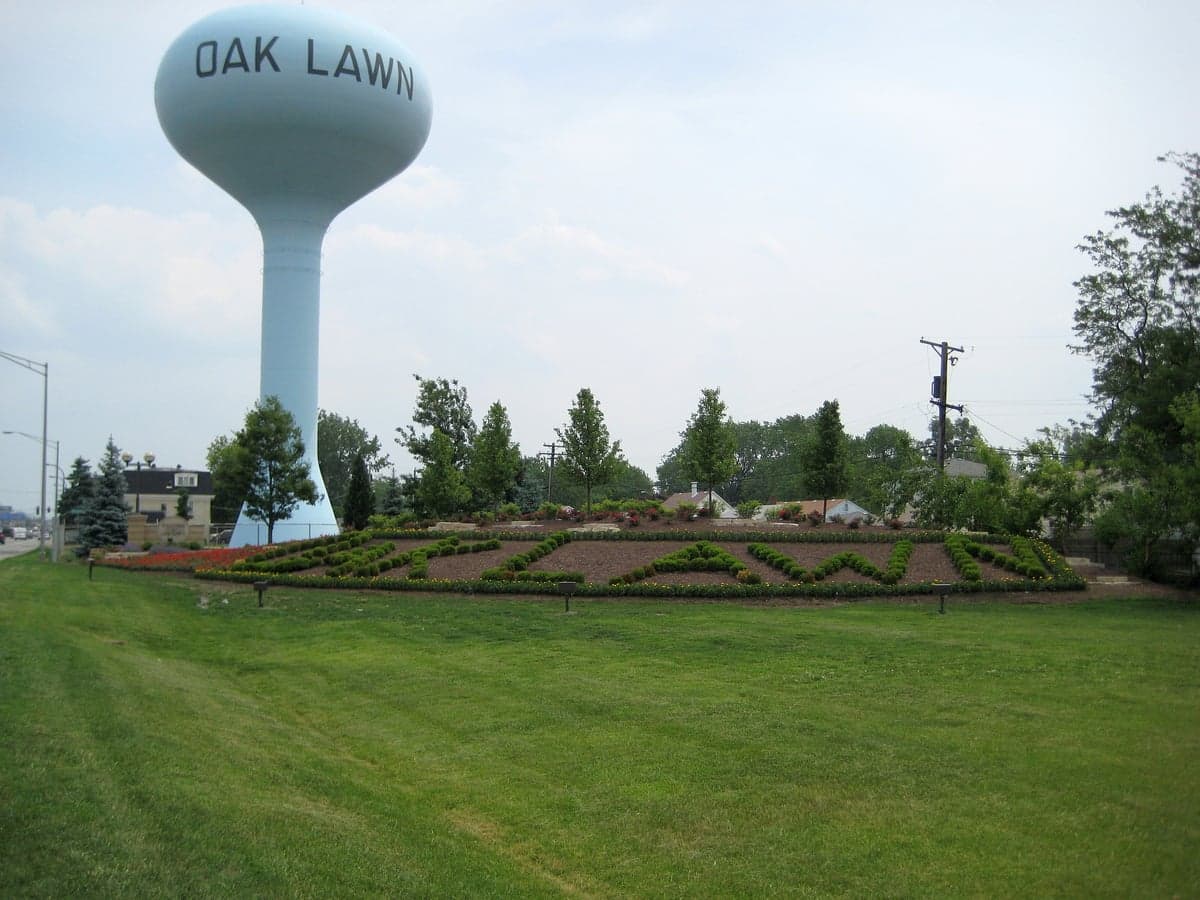
Photo: Wikipedia
Personal Sovereignty in Oak Lawn, IL
Viable for self-reliance. Generally workable, though some barriers may limit total independence.
What does Personal Sovereignty tell us?
Personal Sovereignty measures your capacity for self-reliance and independence with minimal government friction. Higher scores mean fewer barriers between you and the way you want to live... but it assumes you have the space you need and good neighbors.
What does this tell us?
Personal Sovereignty measures your capacity for self-reliance and independence with minimal government friction. Higher scores mean fewer barriers between you and the way you want to live... but it assumes you have the space you need and good neighbors.
State Policy
Energy independence: Importer (45% of energy produced in-state)
Personal Liberty
Homesteading

Personal Liberty Analysis
Oak Lawn, Illinois, presents a mixed picture for those prioritizing personal sovereignty, where the promise of suburban self-reliance is constantly weighed against the heavy hand of state-level mandates. As a southwest Chicago suburb, Oak Lawn offers a degree of local control and community autonomy that is absent in the city proper, but residents must navigate one of the most restrictive state governments in the Midwest. For the survivalist or prepper, the key question is whether the town's practical advantages—like decent lot sizes and a strong sense of community—can offset the burdens imposed by Springfield's regulatory and fiscal overreach.
Tax burden and regulatory posture: How much of your income and property stays yours
The financial sovereignty of Oak Lawn residents is significantly compromised by Illinois's notoriously high tax burden. Property taxes in Cook County are among the highest in the nation, with Oak Lawn's effective rate often exceeding 2.5% of a home's assessed value. For a $250,000 home, that means annual payments of $6,000 or more, a substantial drain on any prepper's budget for land, supplies, or alternative energy. The state income tax, currently a flat 4.95%, adds another layer, and unlike some states, Illinois taxes retirement income, including 401(k) and IRA distributions. This fiscal posture means that a larger portion of your earnings is forcibly redirected to government programs, reducing your capacity for self-directed savings and investments. The regulatory environment is equally burdensome: Illinois mandates strict building codes, environmental regulations, and licensing requirements that can complicate even minor home improvements or the construction of outbuildings. For the self-reliant individual, every permit and inspection represents a potential point of state intrusion into your private property decisions.
Self-defense and gun law specifics: Navigating Illinois's restrictive firearms environment
This is the most critical area of concern for the sovereignty-minded resident. Illinois is not a gun-friendly state, and Oak Lawn residents must comply with some of the strictest firearms laws in the country. The state requires a Firearm Owner's Identification (FOID) card for possession of any firearm or ammunition, a process that involves fingerprinting, a background check, and a waiting period that can stretch for months. Concealed carry is legal only with a state-issued license (CCL), which requires 16 hours of training and a separate application. Illinois is a "may-issue" state in practice, meaning local law enforcement has discretion in granting licenses, though Oak Lawn itself is generally more accommodating than Chicago. However, the state's ban on "assault weapons" and high-capacity magazines, passed in 2023, directly impacts the prepper's ability to own standard defensive rifles like the AR-15. Magazine capacity is limited to 10 rounds for long guns and 15 for handguns. Magazine capacity is limited to 10 rounds for long guns and 15 for handguns. The state also has no "Stand Your Ground" law; instead, a "duty to retreat" is required before using deadly force outside the home, unless you are in your dwelling or vehicle. For the survivalist, this means your legal ability to defend your property or person in public is severely constrained, and any defensive use of a firearm will be subject to intense legal scrutiny.
Self-reliance and homesteading viability: Lot sizes, zoning, and off-grid feasibility
Oak Lawn offers a mixed bag for the homesteader. The typical lot size in the village is around 50 to 60 feet wide by 120 to 150 feet deep, providing roughly a quarter-acre of land. This is enough for a substantial vegetable garden, a small chicken coop (check local ordinances—many suburbs allow hens but not roosters), and a modest workshop or shed. However, zoning regulations are strict: raising livestock beyond a few chickens is generally prohibited, and any outbuilding over a certain size requires a permit and must meet setback requirements. Off-grid feasibility is extremely low. The village is fully connected to municipal water, sewer, and the ComEd electrical grid. Installing solar panels is allowed but requires permits and interconnection agreements, and battery storage systems are subject to fire codes. Rainwater collection for potable use is heavily regulated by the state. For the serious prepper seeking true self-sufficiency—well water, septic, wood heat, and large-scale food production—Oak Lawn is not viable. The lot sizes are too small, the zoning too restrictive, and the proximity to neighbors too close. This is a location for suburban resilience, not rural independence.
Personal liberties: Parental rights, medical autonomy, speech, and property
On the spectrum of personal liberties, Oak Lawn reflects the broader Illinois trend of state preemption over local control. Parental rights are a flashpoint: Illinois law mandates that schools cannot notify parents if a child requests a name or pronoun change without the child's consent, a direct challenge to parental authority. The state also requires comprehensive sex education in public schools, which some parents find objectionable. Medical autonomy is similarly constrained. Illinois has some of the most permissive vaccine mandates in the country, and during the COVID-19 pandemic, the state imposed broad mask and vaccine requirements that were enforced locally. For the medical freedom advocate, Illinois's public health powers are expansive and have been used aggressively. Free speech is constitutionally protected, but local ordinances on noise, signage, and public assembly can be used to limit expression. Property rights are the most secure of these liberties, but they are still subject to eminent domain and the state's powerful home-rule authority, which allows municipalities to regulate land use extensively. The overall message is clear: your rights as a parent, patient, and property owner are subordinate to state and local government authority.
In the final analysis, Oak Lawn offers a limited form of personal sovereignty that is best suited for those who value community stability and suburban amenities over radical independence. The high tax burden, restrictive gun laws, and state-level mandates on education and health care create a significant drag on individual autonomy. For the survivalist or prepper, this is not a location for bugging out or building a self-sufficient compound. Compared to rural areas in Indiana, Kentucky, or even downstate Illinois, Oak Lawn represents a heavily regulated environment where personal sovereignty is constantly negotiated with the state. It can work as a base for those who are politically engaged and willing to fight for their rights at the local level, but for those seeking maximum freedom from government overreach, the suburbs of Chicago are a compromise, not a sanctuary.

* Values derived from national, state, county, city and local statistics and may differ in a specific area. Last updated: 2026-04-30T05:50:42.000Z
Narrative content on this page is AI-generated and may contain mistakes. Verify any details that matter before acting on them.
ReloMaps may earn a commission from affiliate links at no extra cost to you.

