Demographics of Ocean Ridge, FL
Affluence Level in Ocean Ridge, FL
A wealthy area with high-earning, well-educated households. Incomes, home values, and educational attainment meaningfully outpace national averages.
People of Ocean Ridge, FL
Ocean Ridge, Florida, is a small, exclusive coastal town of 1,461 residents that is overwhelmingly white (87.3%) and highly educated (77.1% college graduates), with a foreign-born population of just 2.1%. The city’s character is defined by its quiet, low-density beachside living, with no Black or Asian residents and a modest 6.0% Hispanic share. This is a place of established, affluent households—many of them retirees or second-home owners—rather than a diverse or growing community. The population is stable, aging, and shows little demographic churn, making it one of Palm Beach County’s most homogeneous enclaves.
How the city was settled and grew
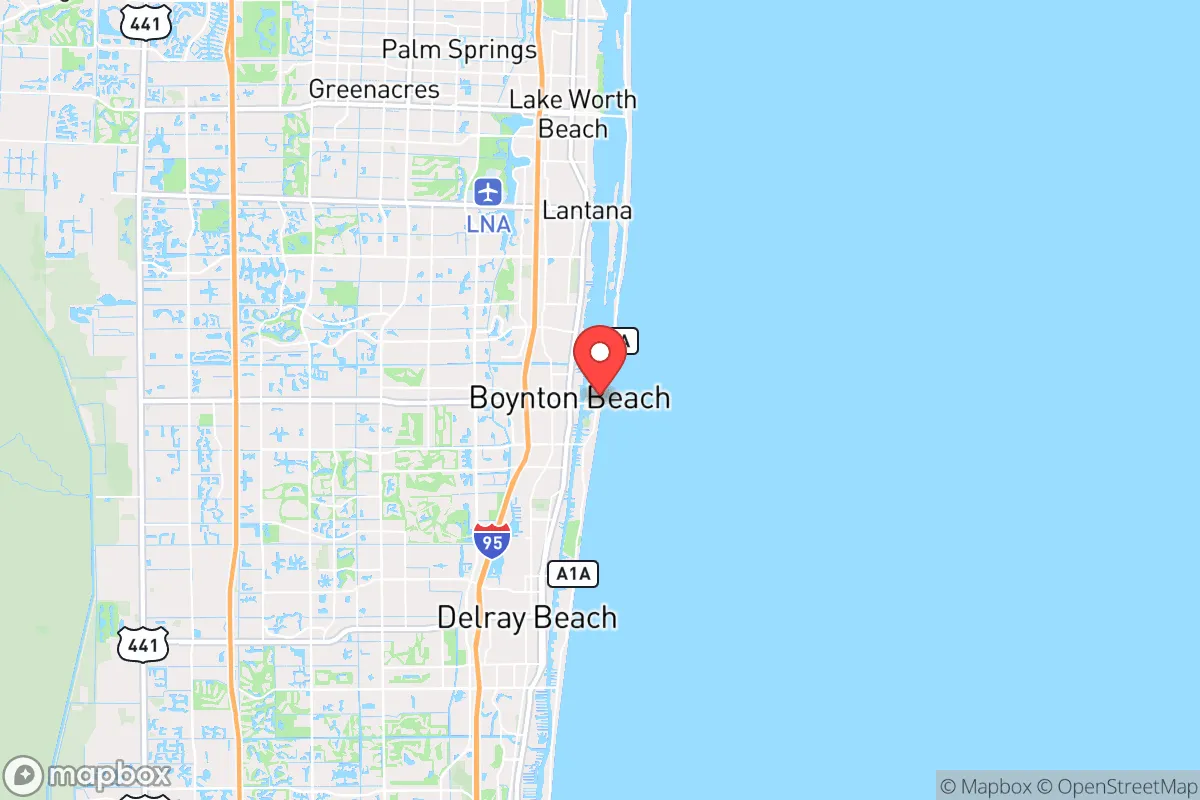
Ocean Ridge was not a product of early Florida settlement; it was platted and developed in the mid-20th century as a planned beach community. The area was originally part of the Town of Briny Breezes before incorporating separately in 1931 as the Town of Ocean Ridge. The earliest residents were wealthy winter visitors from the Northeast—primarily white, Protestant, and English-speaking—who built seasonal homes along the barrier island. The Ocean Ridge Hammock neighborhood, with its winding streets and oceanfront lots, was the first to be developed in the 1940s and 1950s, attracting families from New York and Pennsylvania seeking a quiet Atlantic retreat. The Gulf Stream area, now a separate town, was part of the same early wave, with large estates set back from the beach. No agricultural or industrial workforce ever settled here; the city was built as a resort and residential destination from the start. The North Ocean Ridge section, closer to Boynton Beach Inlet, saw infill development in the 1960s, with smaller homes and condominiums that attracted a slightly broader middle-class white population, though still overwhelmingly non-Hispanic.
Modern era (post-1965)
After the 1965 Hart-Cellar Act reshaped U.S. immigration, Ocean Ridge saw virtually no impact. The city’s zoning and high property values—median home prices consistently above $1 million—created a natural barrier to the demographic shifts that transformed nearby cities like Boynton Beach and Delray Beach. The Ocean Ridge Shores neighborhood, developed in the 1970s, added a handful of townhomes and villas, but the buyer pool remained almost entirely white and domestic. Hispanic residents, now 6.0% of the population, are concentrated in the South Ocean Ridge area near the Briny Breezes border, often in service-industry roles or as caretakers for seasonal properties. The city’s Black population has been zero for decades, and East/Southeast Asian and Indian-subcontinent residents are also absent from the census data. The Ocean Ridge Estates section, with its larger lots and private beach access, continues to attract wealthy retirees from the Northeast and Midwest, reinforcing the city’s demographic stability. No significant immigrant or minority enclave has formed, and the city’s character remains that of an insulated, affluent white community.
The future
Ocean Ridge’s population is projected to remain flat or decline slightly, as the city is built out with no room for new subdivisions. The median age is high—likely in the late 50s or early 60s—and younger families are rare due to the cost of entry. The Hispanic share may grow modestly as service workers from nearby Boynton Beach seek rental units, but zoning restrictions and high prices will keep that growth slow. The city is not homogenizing further (it is already at its demographic ceiling) nor tribalizing into distinct enclaves; it is simply aging in place. The Ocean Ridge Village condominium complex, built in the 1980s, may see a gradual turnover to younger white professionals from the Northeast, but the overall racial and ethnic composition will remain nearly unchanged. For a conservative-leaning mover, Ocean Ridge offers a predictable, low-crime, and demographically stable environment—but one with little diversity, limited school-age population, and a housing market that effectively filters for wealth.
Ocean Ridge is becoming an increasingly exclusive, older, and whiter community, with no signs of significant demographic change on the horizon. For someone moving in now, the city offers a quiet, secure beachside lifestyle among like-minded, affluent neighbors—but it is not a place of growth, diversity, or family-oriented activity. It is a finished product, not a community in transition.

* Values derived from national, state, county, city and local statistics and may differ in a specific area. Last updated: 2026-05-14T02:26:29.000Z
Narrative content on this page is AI-generated and may contain mistakes. Verify any details that matter before acting on them.
ReloMaps may earn a commission from affiliate links at no extra cost to you.

