Photo: Made with AI
Find The Best Places To Live
in Palm Beach
PRO TIP! You can paste a Zillow or Redfin link to get info on that property.
What It's Like Living in Palm Beach, FL
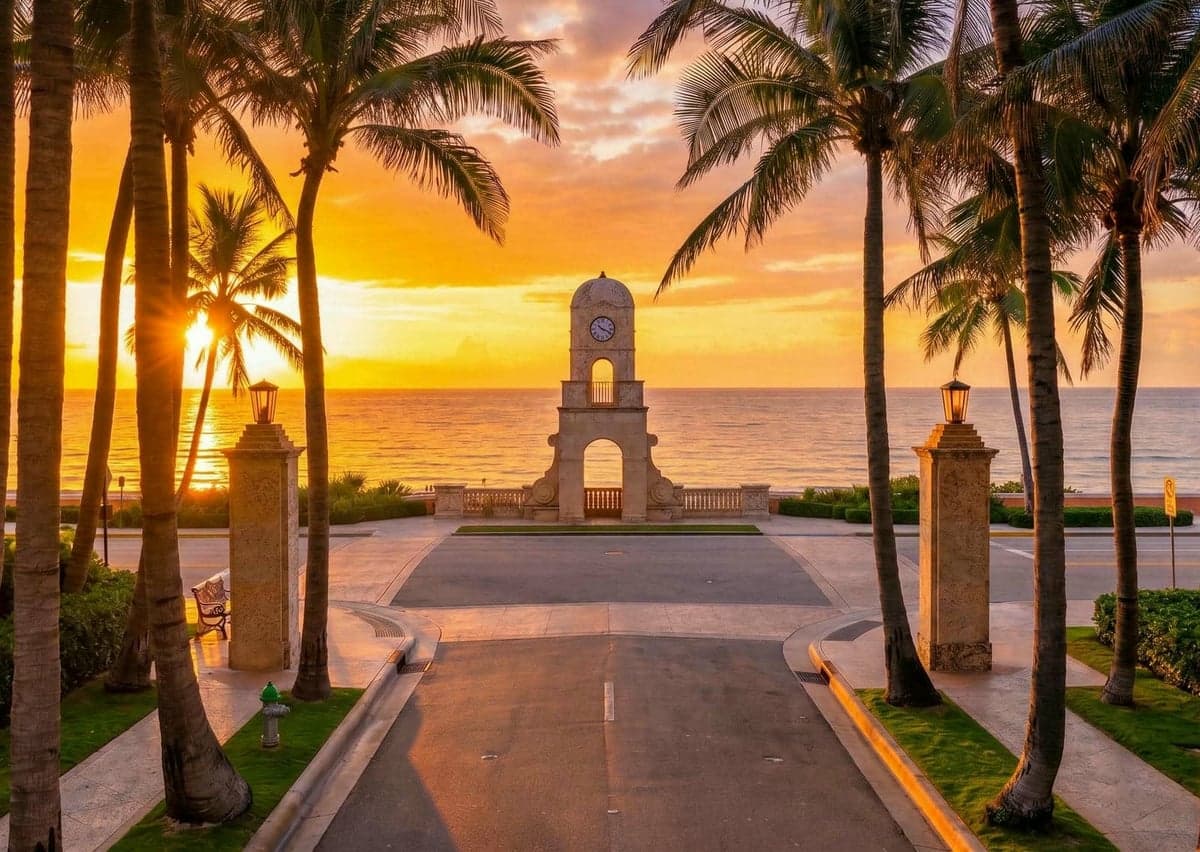
Living in Palm Beach feels less like a typical town and more like a curated resort that happens to have year-round residents. With a population hovering around 9,200 and a median age of nearly 70, this is a place where the rhythm is set by seasonal snowbirds, quiet mornings on the ocean, and a social calendar that revolves around charity galas and golf. It’s not a place for everyone—but for those who fit its particular mold, it’s hard to imagine being anywhere else.
Daily Rhythm and the Kind of Person Who Thrives Here
Daily life in Palm Beach is unhurried but structured. Mornings often start with a walk or bike ride along the Lake Trail, a shaded path that hugs the Intracoastal Waterway, before a coffee stop at Sant Ambroeus on Worth Avenue. By late morning, the tennis courts at the Palm Beach Country Club or the Seaview Park pickleball courts fill up. Lunch might be a casual salad at Green’s Pharmacy, a local institution that’s been serving the island since 1938, or a more polished affair at Café L’Europe. The afternoons are for the beach—Midtown Beach or the quieter stretch near Phipps Ocean Park—or for shopping along Worth Avenue, where the storefronts are a mix of Hermès, Tiffany, and independent art galleries.
The kind of person who fits in here is typically retired or semi-retired, financially comfortable, and values privacy and polish. The median household income is $175,078, and the median home value sits at $1,996,700, which effectively filters the community. Over two-thirds of residents hold a college degree. You’ll find few young families; the public schools are excellent (Palm Beach Public Elementary and Palm Beach Lakes High are well-regarded), but the island’s social fabric is woven by empty nesters and seasonal residents who own second homes. The cost of living index is 379—nearly four times the national average—so even a modest lifestyle here requires significant resources.
Sports, Festivals, and Where People Actually Go
Sports culture here is less about rooting for a local pro team and more about participation. The Palm Beach Par 3 Golf Course is a beloved 18-hole course that runs along the ocean, and it’s common to see foursomes of retirees playing at sunrise. Tennis is a serious pursuit at the Palm Beach Country Club, and the annual Palm Beach International Boat Show in late March draws crowds that spill over from the island into West Palm Beach. For spectators, the Palm Beach Polo Club in nearby Wellington hosts high-goal polo matches from January through April, a distinctly local tradition that feels more like a social event than a sport.
Festivals are elegant rather than rowdy. The Palm Beach Food & Wine Festival in December brings in celebrity chefs for tastings and dinners at private homes and clubs. The Palm Beach Opera holds performances at the Kravis Center, and the Society of the Four Arts offers lectures, concerts, and a botanical garden that’s a quiet escape from the beach crowds. For live music, locals head to The Breakers for cabaret-style shows or to Respectable Street in nearby West Palm for a younger, louder scene—but that’s a 10-minute drive and a different world.
Pros and Cons of Living on the Island
Longtime residents love the safety and serenity. The violent crime rate is 166.8 per 100,000, which is below the national average, and the town feels insulated from the chaos of mainland Florida. The beaches are pristine, the landscaping is immaculate, and the town’s strict zoning laws keep commercial development tasteful. The average commute is about 27 minutes, which for many means a short drive over the Royal Park Bridge to jobs in West Palm Beach or a walk to a home office overlooking the water.
What frustrates people? Seasonal congestion is the top complaint. From January through April, Worth Avenue and South Ocean Boulevard become gridlocked with rental cars and delivery trucks. Restaurants require reservations weeks in advance, and the quiet winter calm gives way to a frantic energy. The weather is another trade-off: from May through October, the humidity is oppressive, and hurricane season brings genuine anxiety. Many residents leave for the summer, which can make the island feel like a ghost town. And while the schools are strong, the social scene for children and teenagers is limited—most extracurriculars and friendships require driving to West Palm Beach or Boca Raton.
There’s also a cultural quirk: Palm Beach is deeply traditional. The town has a dress code in certain public spaces (no swimsuits on Worth Avenue), and the social hierarchy is real. Newcomers who don’t join a club or volunteer for a charity board can find it hard to break into the inner circle. It’s a place where who you know matters as much as what you have, and that can feel stifling for people used to more casual communities.

Similar small towns to Palm Beach
* Values derived from national, state, county, city and local statistics and may differ in a specific area. Last updated: 2026-05-14T02:25:10.000Z
Narrative content on this page is AI-generated and may contain mistakes. Verify any details that matter before acting on them.
ReloMaps may earn a commission from affiliate links at no extra cost to you.

