Photo: Wikipedia
Demographics of Odessa, FL
Affluence Level in Odessa, FL
An upper-middle-class area. Household wealth, education levels, and homeownership run ahead of national benchmarks.
People of Odessa, FL
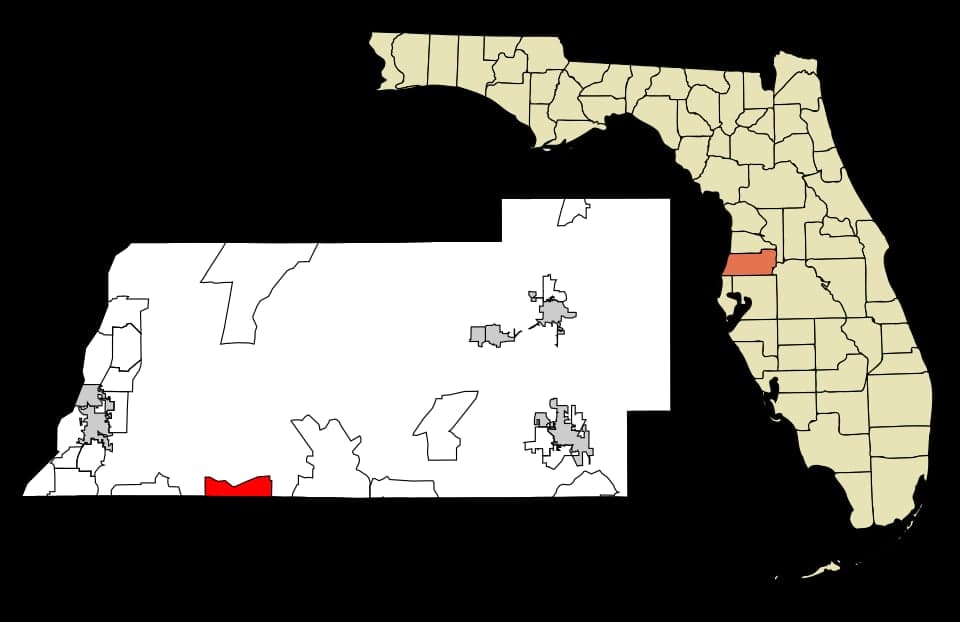
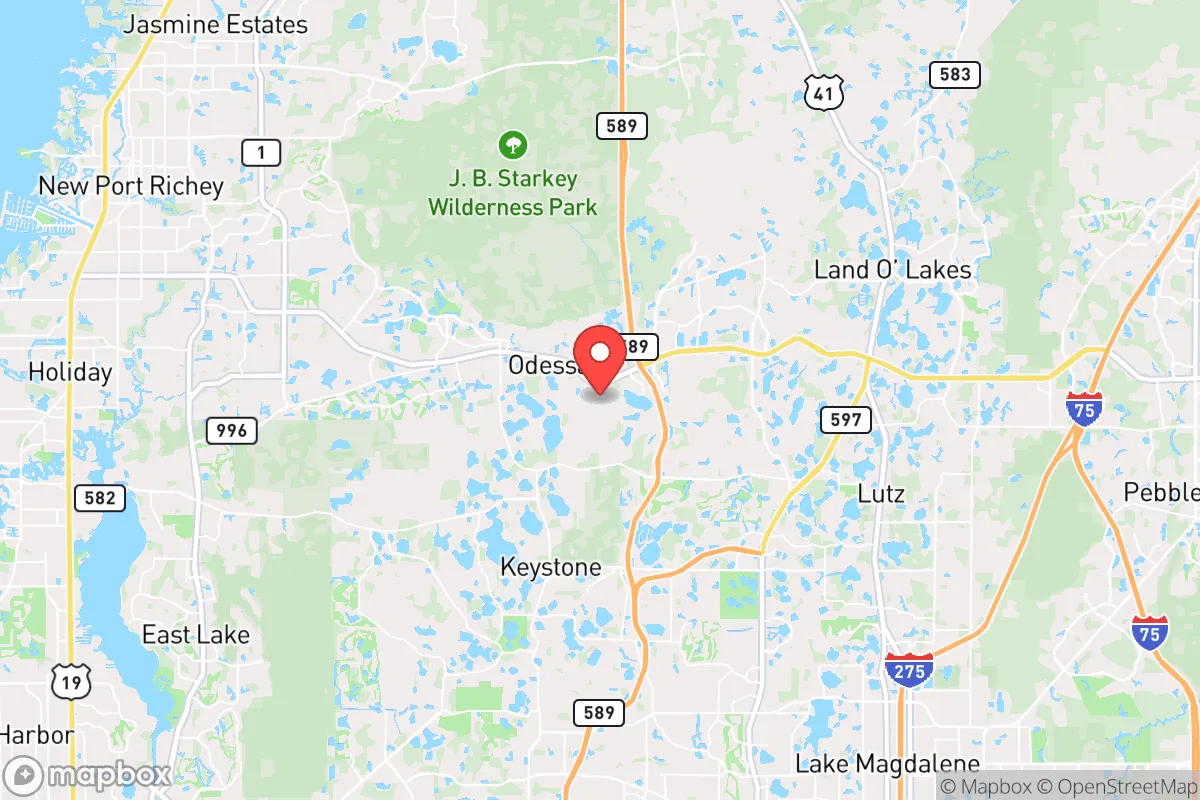
Odessa, Florida, is a small, affluent unincorporated community in northern Hillsborough County with a population of roughly 8,170. Its residents are predominantly white (61.1%) with a significant and growing Hispanic minority (24.3%), alongside smaller but notable communities of Indian-subcontinent (4.1%) and East/Southeast Asian (2.4%) heritage. The area is characterized by large-lot homes, equestrian properties, and a strong sense of rural privacy, attracting families and professionals seeking space and lower density than nearby Tampa. Over half of adults (50.4%) hold a college degree, reflecting a population that is highly educated and economically stable.
How the city was settled and grew
Odessa’s human history begins not with a town founding but with the extension of the railroad. The area was originally part of the vast wilderness of northern Hillsborough County, sparsely populated by cattle ranchers and citrus growers in the late 19th and early 20th centuries. The Seaboard Air Line Railroad laid tracks through the region in the 1910s, and a small depot was established at what is now the intersection of State Road 54 and Gunn Highway. The community was named Odessa by a railroad official, reportedly after the Ukrainian port city, though no significant Eastern European settlement followed. For decades, Odessa remained a tiny crossroads hamlet serving the surrounding agricultural operations. The original families were largely white, native-born farmers and ranchers, with a few seasonal migrant laborers of Mexican descent working the citrus groves. The historic core, now known as Old Odessa around the railroad crossing, retains a handful of early 20th-century structures and a quiet, rural character that contrasts sharply with the suburban development to the south.
Modern era (post-1965)
The modern transformation of Odessa began in earnest after the 1965 Immigration and Nationality Act and accelerated with the completion of the Veterans Expressway (SR 589) in the 1990s. The expressway opened northern Hillsborough County to commuters working in Tampa and the growing Westshore business district. This triggered a wave of domestic in-migration, primarily white professionals and families from other parts of Florida and the Northeast, who were drawn to the promise of large lots, good schools, and a semi-rural lifestyle. The Lake Keystone area, centered on the large lake of the same name, became a magnet for upper-middle-class families building custom homes on acreage. Simultaneously, the Hispanic population began to grow, driven by both domestic migration from other Florida cities and immigration from Cuba, Puerto Rico, and Central America. These families often settled in the more modest subdivisions along Gunn Highway and State Road 54, such as Oak Creek and Heritage Harbor, which offered newer, more affordable homes. The Indian-subcontinent community, a more recent arrival, has concentrated in the Westchase area (technically a separate census-designated place but closely tied to Odessa’s housing market) and the newer developments near the intersection of SR 54 and the Suncoast Parkway, drawn by the area’s reputation for excellent schools and safe neighborhoods. The East/Southeast Asian population, though smaller, is similarly dispersed in these newer subdivisions, with no single ethnic enclave forming.
The future
Odessa’s population is becoming more diverse, but the pace of change is moderate. The white share (61.1%) is declining slowly as the Hispanic and Indian-subcontinent shares grow. The Hispanic population, now nearly a quarter of residents, is projected to increase further, driven by both natural increase and continued in-migration from across Florida and Latin America. The Indian-subcontinent community, while still small in absolute numbers (4.1%), is growing rapidly as professionals in tech, finance, and healthcare seek the area’s combination of space and proximity to Tampa’s job centers. New residential developments are concentrated along the Suncoast Parkway corridor, particularly in the Bexley Ranch master-planned community and the expanding Connerton area, which are absorbing most of the new arrivals. These communities are more diverse than the older, established neighborhoods like Lake Keystone, and they are fostering a more suburban, less rural identity. Over the next 10-20 years, Odessa will likely become denser and more diverse, with the Hispanic share potentially approaching 30% and the Indian-subcontinent share rising to 6-7%. The cultural identity is shifting from a white, agricultural enclave to a multi-ethnic, commuter-oriented suburb, though the large-lot zoning in older areas will preserve pockets of the traditional character.
For someone moving in now, Odessa offers a stable, family-oriented environment with strong schools and a growing diversity that is still gradual enough to avoid cultural friction. It is becoming a more cosmopolitan version of its former self, but the core appeal—space, safety, and a connection to the natural landscape—remains intact. The population is heading toward a future that is more suburban and more diverse, but at a pace that allows for a smooth transition.

* Values derived from national, state, county, city and local statistics and may differ in a specific area. Last updated: 2026-10-18T23:59:33.000Z
Narrative content on this page is AI-generated and may contain mistakes. Verify any details that matter before acting on them.
ReloMaps may earn a commission from affiliate links at no extra cost to you.

