
Photo: Wikipedia
Demographics of Lake County
Affluence Level in Lake County
A middle-class area roughly in line with national averages across income, home values, education, and employment.
People of Lake County
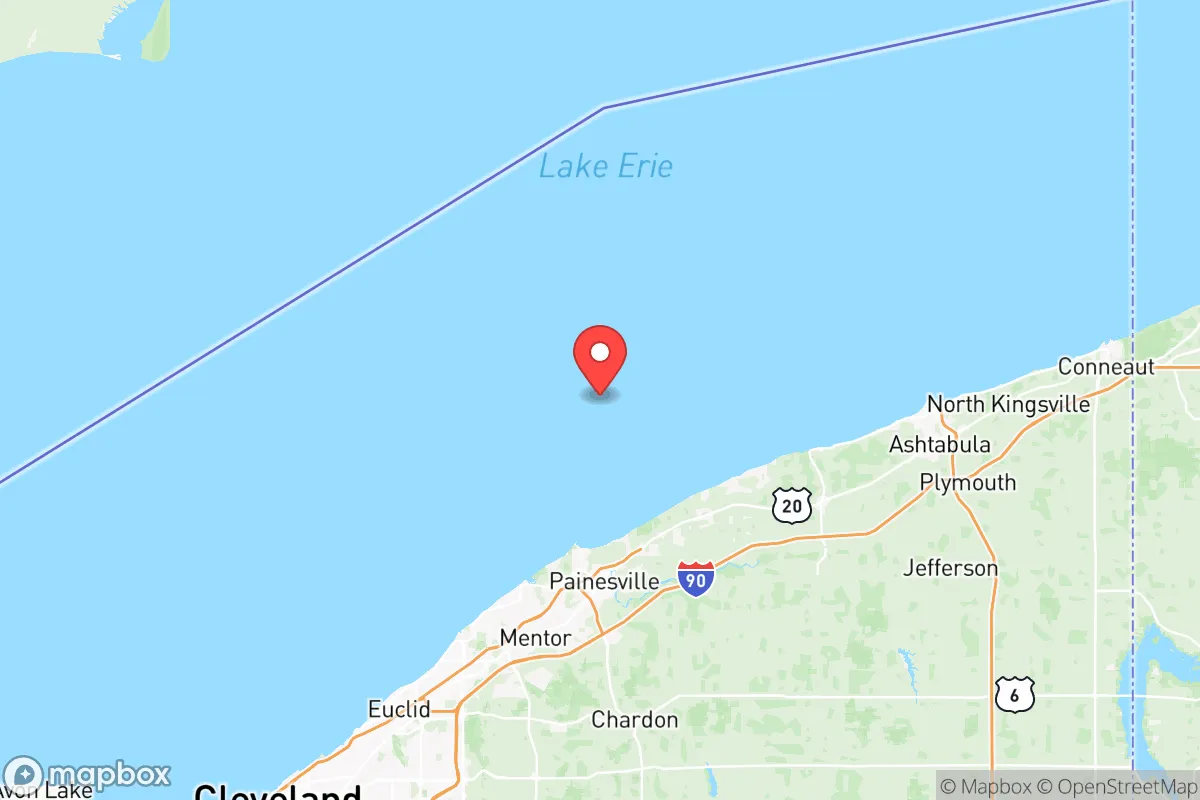
Lake County, Ohio, is a predominantly white, middle-to-upper-middle-class suburban county of 232,101 residents, characterized by a strong sense of local identity rooted in its Lake Erie shoreline, historic industrial towns, and post-war suburban expansion. With a foreign-born population of just 1.9% and a population that is 85.0% white, the county is notably less diverse than the national average, reflecting its history as a destination for European immigrants and domestic migrants from the broader Midwest. The county’s distinctive identity is a blend of its historic manufacturing base, its role as a commuter suburb for Cleveland, and a growing conservative-leaning political orientation, particularly in its eastern and rural townships.
Settlement & growth (pre-1960)
Before American settlement, the area now known as Lake County was part of the Western Reserve, a region claimed by Connecticut and inhabited primarily by the Erie people, who were largely displaced by the Iroquois Confederacy in the 17th century. The first permanent American settlers arrived in the late 1790s and early 1800s, primarily from New England, drawn by the promise of land grants in the Connecticut Western Reserve. These Yankee settlers established the county’s earliest towns, including Painesville (the county seat, founded 1800) and Willoughby (founded 1798), bringing with them a tradition of town-meeting governance, Congregationalist churches, and a focus on education and commerce.
The next major wave of settlement came in the mid-to-late 19th century, driven by industrialization and the expansion of the railroad. The discovery of high-quality sandstone in the region led to a quarrying boom, particularly in the towns of Kirtland and Perry, attracting skilled stonecutters from England, Ireland, and Germany. Simultaneously, the growth of manufacturing in Painesville and Willoughby—including iron foundries, carriage works, and later, automotive parts plants—pulled in a wave of Eastern and Southern European immigrants. By the 1880s and 1890s, significant communities of Slovak, Polish, and Italian immigrants had settled in the industrial neighborhoods of Painesville and the lakefront village of Fairport Harbor, where they worked in the docks, railroads, and factories. These groups established distinct ethnic parishes and social clubs, many of which remain active today.
The early 20th century saw continued growth from domestic migration, as workers from rural Ohio and Appalachia moved to Lake County for jobs in the booming automotive and chemical industries. The post-World War II era, from 1945 to 1960, marked a period of explosive suburbanization. The construction of Interstate 90 and the expansion of Cleveland’s suburbs pushed development eastward, transforming farmland and small villages into bedroom communities. Mentor, which had been a quiet farming town, exploded in population, growing from roughly 8,000 residents in 1950 to over 36,000 by 1970, as white, middle-class families from Cleveland and its inner-ring suburbs sought larger homes and newer schools. This wave was overwhelmingly white and native-born, solidifying the county’s demographic character for decades to come.
Modern era (post-1965)
The 1965 Hart-Cellar Act, which dramatically reshaped U.S. immigration, had a relatively muted impact on Lake County compared to major urban centers or coastal regions. The county’s foreign-born population remains low at 1.9%, and the immigrant communities that have formed are small and dispersed. The most notable post-1965 immigrant group is the Hispanic population, now at 5.1% of the county. This community is concentrated primarily in Painesville and Fairport Harbor, where a mix of Mexican, Puerto Rican, and Central American families have settled, drawn by jobs in manufacturing, agriculture (particularly nurseries and greenhouses), and the service industry. A smaller but visible East/Southeast Asian community (0.8%) and an Indian subcontinent community (0.6%) have also formed, largely clustered in the more affluent suburbs of Concord Township and Willoughby Hills, where many work in the healthcare, engineering, and information technology sectors.
The most significant demographic shift in the modern era has been domestic, not international. Since the 1970s, Lake County has experienced a steady outflow of younger adults and families to the Sun Belt, particularly to states like Florida, Texas, and the Carolinas, a trend that accelerated after the 2008 recession. This out-migration has been partially offset by in-migration from Cuyahoga County (Cleveland) and other parts of Northeast Ohio, as residents seek lower property taxes, better school districts, and a more conservative political environment. The county’s Black population, at 4.6%, has grown modestly since 2000, with new residents moving primarily to Mentor and Willoughby, drawn by the same suburban amenities that attracted earlier white migrants. Suburbanization has continued, with the eastern townships of Madison and Perry seeing new housing developments that cater to families and retirees seeking a semi-rural lifestyle.
The future
Lake County’s population is projected to remain relatively stable or experience slight decline over the next 10-20 years, mirroring broader trends in Northeast Ohio. The county is not homogenizing into a single cultural bloc, but rather tribalizing into distinct enclaves based on income, lifestyle, and political affiliation. The lakefront communities—Mentor-on-the-Lake, Fairport Harbor, and Grand River—are becoming more working-class and diverse, with growing Hispanic and Black populations, while the inland townships and villages—Kirtland Hills, Waite Hill, and Concord Township—remain overwhelmingly white and affluent. The immigrant communities, while small, are likely to grow slowly, particularly the Hispanic population in Painesville, which may approach 10-12% of the city’s population by 2040. In-migration from Cuyahoga County will continue, but it will be increasingly selective, with families choosing Lake County for its school districts and perceived safety, while younger, single adults and empty-nesters may be drawn to the revitalizing downtowns of Willoughby and Painesville. The county’s cultural identity is likely to remain predominantly white and Midwestern, but with a growing conservative tilt in its eastern and rural areas, and a more moderate, slightly more diverse character in its western suburbs and lakefront towns.
For someone moving in now, Lake County offers a stable, family-oriented environment with strong schools, low crime, and a relatively low cost of living compared to the national average. The trade-off is a lack of racial and ethnic diversity, a limited nightlife and cultural scene, and a demographic trajectory that points toward slow decline or stagnation. It is a place that rewards those who value predictability, community, and proximity to Lake Erie, but may feel insular to those accustomed to more dynamic, diverse urban environments.

* Values derived from national, state, county, city and local statistics and may differ in a specific area. Last updated: 2026-05-10T12:55:26.000Z
Narrative content on this page is AI-generated and may contain mistakes. Verify any details that matter before acting on them.
ReloMaps may earn a commission from affiliate links at no extra cost to you.

