
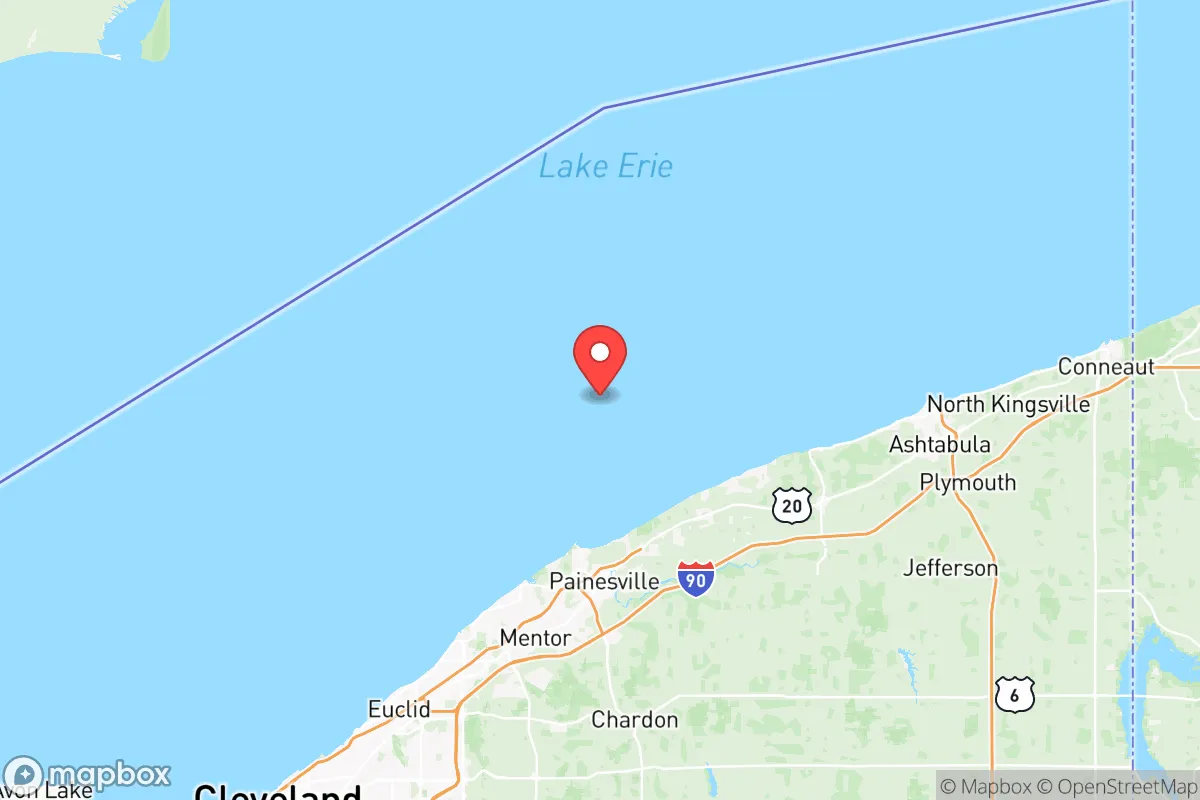
Photo: Wikipedia
Political ClimatePolitical Climate in Lake County
Showing state-level results — no local-only data available.
Local Political AnalysisPolitical Analysis of Lake County
Lake County, Ohio, has long been a bellwether in state politics, but its recent trajectory is a cautionary tale for conservatives. Once a reliably Republican stronghold, the county has shifted noticeably leftward in presidential elections, voting for Joe Biden by a 2-point margin in 2020 after supporting Donald Trump by 4 points in 2016. This swing is stark when you consider that the surrounding state of Ohio now carries a Cook PVI of R+5, meaning Lake County is trending bluer than the state as a whole. The shift is driven largely by the suburbanization of the county’s eastern half and an influx of voters from Cuyahoga County, bringing more progressive attitudes with them.
How it compares
Compared to Ohio’s R+5 lean, Lake County is a political battleground where the old conservative base is being eroded. The variation across the county’s towns tells the story. Mentor and Painesville Township remain reliably red, with Trump winning Mentor by double digits in 2020. But Willoughby and Eastlake have become swing precincts, often tipping the county’s overall result. The real concern is in Concord Township and Kirtland, where once-solid Republican margins have shrunk to single digits. Meanwhile, Mentor-on-the-Lake and Grand River have flipped blue entirely, driven by younger renters and commuters. The county’s overall PVI is now roughly D+1, a far cry from the R+5 of the state, showing that Lake County is an outlier—and not in a good way for those who value limited government.
What this means for residents
For a conservative living here, the practical effect is a slow creep of government overreach into daily life. The county commissioners, now split 2-1 Republican, have held the line on tax increases, but the school boards in Willoughby-Eastlake and Mentor have adopted progressive curriculum policies that many parents find intrusive. The push for “equity” initiatives in local libraries and parks has raised eyebrows, with some residents feeling their tax dollars are funding social engineering rather than core services. On the bright side, the county’s sheriff remains a staunch Second Amendment supporter, and concealed carry permits are still issued without the bureaucratic hurdles seen in Cuyahoga County. But the trend is clear: if the county continues its leftward drift, expect more zoning restrictions, higher property taxes, and a growing disconnect between local government and the values of longtime residents.
Culturally, Lake County still feels like a place where neighbors know each other, but the political divide is widening. The annual Lake County Fair in Painesville remains a bastion of traditional values, while the Mentor arts district has become a hub for progressive activism. The biggest policy distinction is in housing: the county’s push for “inclusionary zoning” in Willowick and Wickliffe has been met with fierce opposition from residents who see it as a backdoor to higher density and reduced property rights. If you’re considering a move here, know that the western townships still offer a conservative haven, but the eastern suburbs are increasingly resembling the very policies that drove many out of Cleveland. Keep an eye on the 2026 county commissioner races—they’ll be the real test of whether Lake County can hold the line or continues its slide into progressive governance.

State Political ClimatePolitical Climate in Ohio
State Political AnalysisPolitical Environment in the State
Ohio is a classic swing state that has shifted decisively rightward over the past two decades, now carrying a Cook PVI of R+5. The state’s political center of gravity has moved from the industrial, union-heavy battleground of the 1990s to a reliably Republican-leaning state where the GOP holds supermajorities in both legislative chambers and controls every statewide office. This transformation has been driven by a steady exodus of Democratic-leaning voters from the old manufacturing belt and a surge of conservative-leaning migration into the exurbs and smaller cities, particularly in the western and southern parts of the state. For a conservative relocating here, the bottom line is that Ohio is now a solidly red state where Republican policies on taxes, guns, and education are the norm, but the urban strongholds of Columbus, Cleveland, and Cincinnati still provide a persistent blue undercurrent that keeps the state from becoming a deep-red lock.
Urban vs. rural divide
The political map of Ohio is a textbook study in the urban-rural split. The three major metros—Cleveland (Cuyahoga County), Columbus (Franklin County), and Cincinnati (Hamilton County)—are Democratic strongholds that together account for roughly 40% of the state’s vote. Cuyahoga County alone delivered 66% for Joe Biden in 2020, while Franklin County hit 62%. But the rest of the state is overwhelmingly red. The rural counties of the Appalachian southeast, the farmlands of the northwest, and the exurban counties surrounding the metros have all trended sharply right. The most dramatic flip has been in the Mahoning Valley around Youngstown, which was a Democratic bastion for generations but voted for Trump by 12 points in 2020. Similarly, the old steel towns of Steubenville and Canton have moved from blue to red. The suburbs of Columbus—Delaware County, Union County—are now among the most Republican in the nation, with Delaware County voting 58% for Trump. The I-71 corridor between Columbus and Cincinnati is a solid red wall, while the Lake Erie shoreline from Toledo to Cleveland remains a patchwork of blue and purple. For a conservative, the safest bets are the exurbs of Columbus (Delaware, Powell), the Cincinnati suburbs (West Chester, Mason), and the smaller cities like Findlay, Lima, and Zanesville, where the political culture is deeply conservative and the local governments reflect that.
Policy environment
Ohio’s policy environment is broadly conservative, with a few notable exceptions that should give a freedom-minded person pause. The state has a flat income tax of 3.5% (down from 4.99% in 2021), and the GOP legislature has been steadily cutting rates with a goal of elimination. Property taxes are moderate, averaging about 1.5% of home value, but recent reappraisals in fast-growing areas like Delaware County have caused sticker shock. Sales tax is 5.75% statewide, with local add-ons pushing it to 7-8% in most cities. On education, Ohio has a robust school choice program—the EdChoice scholarship—that allows students in underperforming public schools to attend private or religious schools with state funding. This has been a major win for parental rights. However, the state also has a controversial “science of reading” mandate that requires schools to use specific curricula, which some conservatives see as overreach. Healthcare policy is mixed: Ohio expanded Medicaid under Obamacare, which remains a sore point for many, but the state also has some of the strongest pro-life laws in the Midwest, including a ban on abortion after six weeks (currently blocked by court order). Election laws are solid: voter ID is required, early voting is available, and the state purges inactive voters regularly. There is no universal mail-in voting, which conservatives generally see as a safeguard against fraud. The overall regulatory posture is business-friendly, with right-to-work laws (though not a full right-to-work state) and minimal zoning restrictions in rural areas.
Trajectory & freedom
Ohio’s trajectory on personal freedom is a mixed bag, but the trend is generally positive for conservatives. The biggest win in recent years was the passage of constitutional carry (permitless carry of a concealed handgun) in 2022, which made Ohio a true Second Amendment sanctuary. The state also passed a “stand your ground” law in 2019, eliminating the duty to retreat. On parental rights, Ohio enacted a Parents’ Bill of Rights in 2023 that requires schools to notify parents of any changes to a child’s health or well-being, including gender identity issues. This was a direct response to progressive school board policies in places like Columbus and Shaker Heights. However, there are concerning signs. In 2023, voters approved Issue 1, which enshrined a right to abortion in the state constitution—a major loss for pro-life advocates. The same election saw the legalization of recreational marijuana, which passed with 57% support. These ballot initiatives show that while the legislature is conservative, the electorate is more libertarian on social issues. On property rights, Ohio has been aggressive in using eminent domain for economic development, particularly in the “Intel corridor” around Columbus, where the state seized farmland for a massive semiconductor plant. This has angered many rural landowners. The state also has a controversial “public nuisance” law that has been used to target gun dealers and oil companies, though it’s rarely enforced. Overall, Ohio is becoming freer on guns and parental rights, but less so on life issues and property rights.
Civil unrest & political movements
Ohio has seen its share of political flashpoints. The 2020 George Floyd protests in Columbus and Cincinnati were large but largely peaceful, though there were instances of looting in the Short North district of Columbus. The state was a national epicenter of the election integrity debate in 2020, with Trump’s campaign focusing on Cuyahoga County and the city of Columbus for alleged irregularities. No major fraud was proven, but the controversy energized conservative activists. The “Ohio Patriot” movement is strong in rural counties, with regular rallies at the statehouse and in places like Marietta and Chillicothe. Immigration politics are relatively quiet, as Ohio has a small immigrant population, but there have been flashpoints over the resettlement of refugees in Columbus and Cleveland. The state has no sanctuary cities, and the legislature has passed laws requiring local law enforcement to cooperate with ICE. The most visible political movement in recent years has been the school board wars, particularly in suburban districts like Olentangy (Delaware County) and Mason (Warren County), where conservative parents have organized to push back against critical race theory and LGBTQ curriculum. These battles have been intense but have largely been won by conservatives, with many progressive board members voted out. There is no serious secession or nullification movement in Ohio, though some rural counties have floated the idea of joining West Virginia or Indiana.
Projection
Over the next 5-10 years, Ohio is likely to become more Republican, but not as fast as some hope. The demographic trends are favorable: the state is losing population in the blue-leaning cities of Cleveland and Youngstown, while gaining in the red exurbs of Columbus and Cincinnati. The in-migration from blue states like California and New York is small but growing, and these newcomers tend to be conservative-leaning, drawn by lower taxes and housing costs. However, the ballot initiative trend is a wild card—if voters continue to pass progressive measures on abortion and marijuana, the legislature may face pressure to moderate. The biggest risk for conservatives is the continued growth of Columbus, which is becoming a blue island in a red sea. If Franklin County’s population share continues to rise, it could eventually flip the state back to purple. But for now, the trajectory is clear: Ohio is a solidly red state that is likely to stay that way for at least the next decade, with the caveat that the urban centers will remain stubbornly blue. A new resident moving to the exurbs or smaller cities can expect a stable, conservative political environment with low taxes, strong gun rights, and a culture that values family and faith.
For a conservative relocating to Ohio, the practical takeaway is that you are moving to a state where your values are the default, not the exception. The legislature is reliably pro-life, pro-gun, and pro-school choice. The tax burden is low and falling. The election laws are secure. But you need to choose your location carefully—stick to the exurbs and smaller cities, avoid the urban cores, and be aware that the ballot box can sometimes override the legislature on social issues. Ohio is a good place to raise a family, start a business, and live free, but it’s not a perfect red utopia. It’s a real state with real political fights, and if you’re willing to engage, you’ll find plenty of allies. If you’re looking for a place where the government mostly leaves you alone and the culture is conservative, Ohio is a solid bet.
* Values derived from national, state, county, city and local statistics and may differ in a specific area. Last updated: 2026-05-10T12:55:26.000Z
Narrative content on this page is AI-generated and may contain mistakes. Verify any details that matter before acting on them.
ReloMaps may earn a commission from affiliate links at no extra cost to you.

