
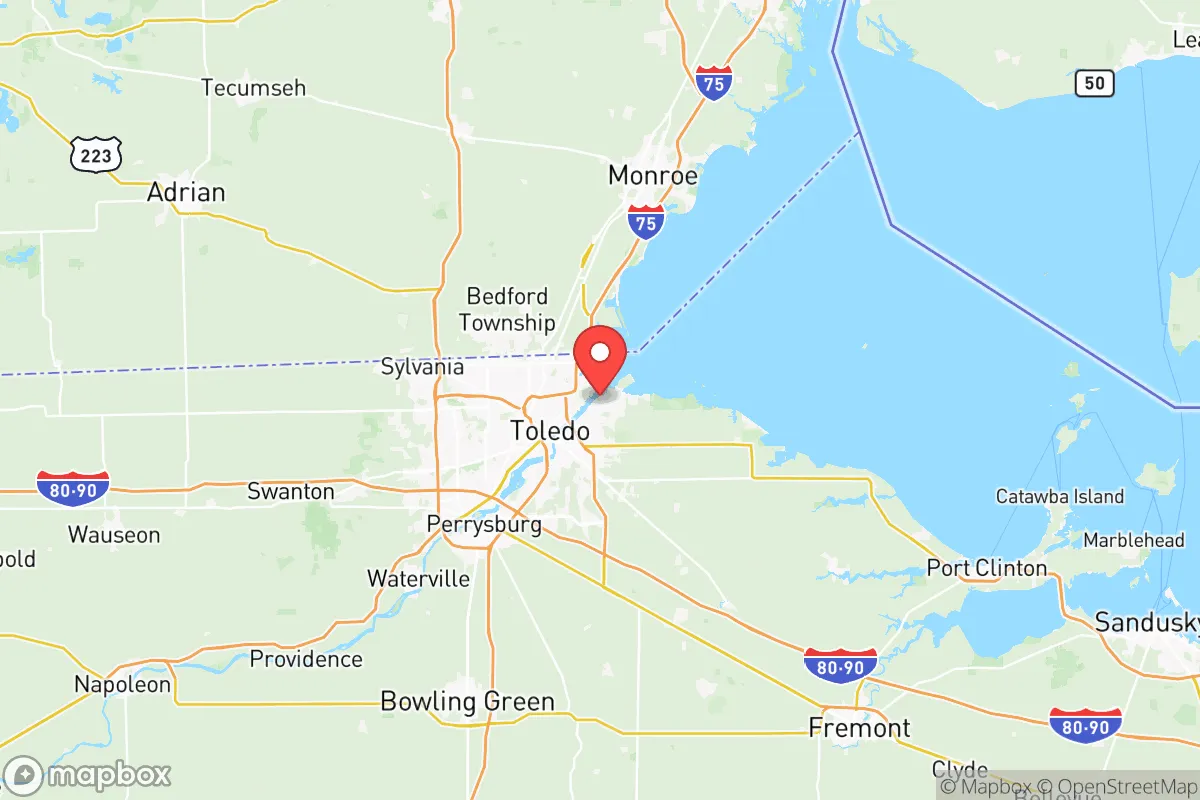
Photo: Wikipedia
Quality of Life in Lucas County
A livable area that tracks near national norms for affordability, walkability, and neighborhood health.
What does Quality of Life tell us?
Quality of Life measures an area by evaluating factors like cost of living, nearby amenities, country club access, airport proximity, socioeconomic signals and neighborhood character. For large states, this is a general average — quality of life can vary dramatically between metro areas, suburbs, and rural communities within the same state.
What does this tell us?
Quality of Life measures an area by evaluating factors like cost of living, nearby amenities, country club access, airport proximity, socioeconomic signals and neighborhood character. For large states, this is a general average — quality of life can vary dramatically between metro areas, suburbs, and rural communities within the same state.
Cost of Living
31% below national average
136%
The Real Cost of Living in Lucas County for 2026
| Tier | Individual | Family (4) |
|---|---|---|
| Survival | $15k | $27k |
| Comfortable | $30k | $44k |
| Luxury | $109k+ | $168k+ |
| Elite (Top 5%) | $141k+ | $219k+ |
Quality-of-Life Analysis
Lucas County, Ohio, offers a broad quality-of-life spectrum that ranges from the dense, urban energy of Toledo to the quiet, agricultural landscapes of its western and southern townships. The county’s overall cost of living index sits at a remarkably low 69 (100 = U.S. average), with a median home value of $155,200 and median rent of $911, making it one of the most affordable metro areas in the Great Lakes region. This affordability draws a diverse mix of residents: young professionals and students gravitate to Toledo’s walkable neighborhoods and cultural institutions, while families and retirees seek out the slower pace and lower taxes of communities like Sylvania, Maumee, and rural Springfield Township. The average commute of just under 21 minutes means that even those living in the far reaches of the county can reach downtown Toledo in under half an hour, a convenience that blurs the line between urban and rural living.
Largest town(s) & population centers
Toledo is the county’s anchor and only major city, home to roughly 270,000 residents. Daily life here is defined by a mix of historic neighborhoods—like the Old West End with its Victorian mansions—and revitalizing downtown districts, including the Warehouse District and the area around the Huntington Center arena. The city offers robust amenities: the Toledo Museum of Art, the Toledo Zoo, and the Mud Hens baseball stadium are major draws. Employment is concentrated in healthcare (ProMedica, Mercy Health), manufacturing (Jeep assembly plant in nearby Maumee), and education (University of Toledo). Maumee (pop. ~14,000) and Sylvania (pop. ~19,000) function as the county’s primary suburban population centers. Maumee offers a historic riverfront downtown with independent shops and restaurants, while Sylvania is known for its highly rated public schools and tree-lined residential streets. Both provide a more suburban feel than Toledo, with lower crime rates and larger lot sizes, yet remain within a 10- to 15-minute drive of downtown Toledo.
Smaller towns & rural pockets
Beyond the suburbs, Lucas County contains several distinct smaller communities. Waterville (pop. ~5,500) sits along the Maumee River and is known for its historic district, the annual Waterville Riverfest, and access to the Wabash Cannonball Trail. Whitehouse (pop. ~4,500) is a growing village with a strong sense of community, centered on its village park and local schools. Holland (pop. ~1,800) and Ottawa Hills (pop. ~4,500) are smaller enclaves; Ottawa Hills is particularly notable for its wealthy, estate-like properties and its own independent school district. The county’s rural pockets are concentrated in Springfield Township (the western portion, outside the city of Holland) and Monclova Township, where working farms, horse properties, and large-lot subdivisions dominate the landscape. These areas offer true country living—cornfields, quiet two-lane roads, and minimal traffic—yet residents are never more than 20 minutes from a major grocery store or hospital.
Cost & lifestyle range
The cost-of-life spread across Lucas County is dramatic. At the low end, central Toledo neighborhoods like the Old South End or Junction offer median home values well below the county average—often under $80,000—and rents as low as $600–$700 for a one-bedroom apartment. These areas are affordable but come with higher crime rates and fewer retail amenities. At the high end, Ottawa Hills and the Ottawa River corridor in Toledo’s Point Place feature median home values above $300,000, with some riverfront properties exceeding $500,000. Sylvania’s newer subdivisions and Maumee’s historic district also command premiums, with homes typically ranging from $250,000 to $400,000. Lifestyle varies accordingly: residents in the urban core walk to bars, museums, and public transit, while those in the outer townships rely on cars for everything but enjoy larger yards, lower property taxes (especially in townships without a city income tax), and access to Metroparks like the Oak Openings Preserve. The county’s average commute of 20.6 minutes means that even the most rural resident can reach Toledo’s job centers in under 30 minutes, a rare balance for a county of this size.
Lucas County is best suited for people who want a low cost of living without sacrificing access to big-city amenities. Young professionals and students thrive in Toledo’s urban core, where rent is cheap and culture is abundant. Families and retirees find their niche in the suburbs and rural townships, where schools are strong, crime is low, and a 20-minute commute keeps them connected to the region’s employment base. The county’s diversity of housing stock—from $60,000 fixer-uppers to $400,000 riverfront estates—means that nearly any budget can find a place to call home, provided the buyer is willing to navigate the trade-offs between urban energy and suburban peace.

Crime in Lucas County
Crime rates similar to the national median for U.S. locations.
Violent CrimeViolent Crime Analysis
Property CrimeProperty Crime Analysis
Crime Analysis
Lucas County, Ohio, which encompasses Toledo and its surrounding suburbs, reports a violent crime rate of 268 incidents per 100,000 residents and a property crime rate of 1,369.9 per 100,000. These figures place the county in a challenging position relative to national averages, with violent crime roughly 25% below the U.S. rate but property crime slightly above it. The county's safety picture is heavily shaped by the contrast between Toledo's urban core and its more suburban communities, where crime rates diverge significantly.
Crime in context
Lucas County's violent crime rate of 268 per 100,000 is notably lower than Ohio's statewide average of approximately 300 per 100,000 and well below the national rate of 380 per 100,000. However, property crime at 1,369.9 per 100,000 exceeds both the Ohio average (around 1,200) and the national figure (1,954). The disparity is driven largely by Toledo, which accounts for the majority of the county's population and crime volume. Suburban communities like Sylvania, Maumee, and Perrysburg (the latter technically in Wood County but adjacent) consistently report lower crime rates, often 50-70% below Toledo's figures. For example, Sylvania Township's violent crime rate hovers near 100 per 100,000, while Toledo's exceeds 400 per 100,000. The county's overall numbers mask this internal divide, making it essential to evaluate specific jurisdictions rather than relying on the county-wide average.
What residents experience
Residents' daily safety experience varies dramatically by location. In Toledo, property crimes like vehicle theft and burglary are common concerns, particularly in neighborhoods near the central business district and along major corridors like Dorr Street and Monroe Street. The city's police department has struggled with staffing shortages, leading to slower response times in some areas. In contrast, Oregon and Waterville report property crime rates below 800 per 100,000, with residents citing well-lit streets and active neighborhood watch programs as deterrents. Violent crime in Lucas County is concentrated in Toledo's zip codes 43604, 43608, and 43609, where gang-related activity and drug offenses drive incidents. Suburban residents in Whitehouse and Holland rarely encounter violent crime, though they remain vulnerable to package thefts and occasional break-ins. The county's judicial system, overseen by the Lucas County Prosecutor's Office and judges in the Lucas County Common Pleas Court, has faced criticism for progressive sentencing policies in Toledo that some argue prioritize rehabilitation over incarceration, potentially contributing to recidivism. This approach, while aimed at reducing overcrowding, has led to concerns about repeat offenders returning to neighborhoods quickly, particularly in property crime cases.
Neighborhood-level variation
Neighborhood-level data reveals stark contrasts. Toledo's Old West End and Ottawa Hills (an enclave within the city) report violent crime rates below 150 per 100,000, comparable to the safest suburbs. Meanwhile, the Junction and North Toledo neighborhoods see rates exceeding 600 per 100,000. Property crime follows a similar pattern: the East Side and South Side experience rates above 2,000 per 100,000, while Sylvania Township and Monclova Township stay under 900. The Lucas County Sheriff's Office provides additional patrols in unincorporated areas, but residents in high-crime zones often rely on private security measures. For those considering relocation, focusing on specific neighborhoods within Toledo—such as the historic Old West End or the suburban communities of Maumee and Perrysburg—offers a clearer picture of actual safety than the county-wide statistics suggest.
* Values derived from national, state, county, city and local statistics and may differ in a specific area. Last updated: 2026-08-25T00:22:55.000Z
Narrative content on this page is AI-generated and may contain mistakes. Verify any details that matter before acting on them.
ReloMaps may earn a commission from affiliate links at no extra cost to you.

