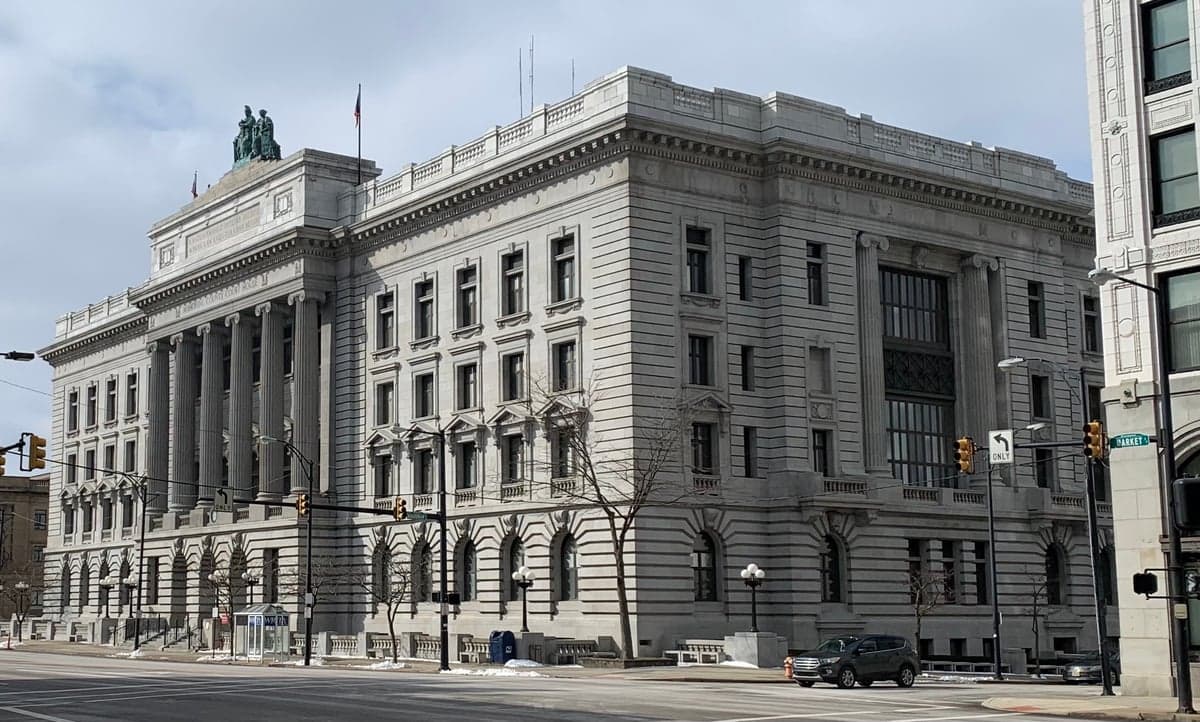
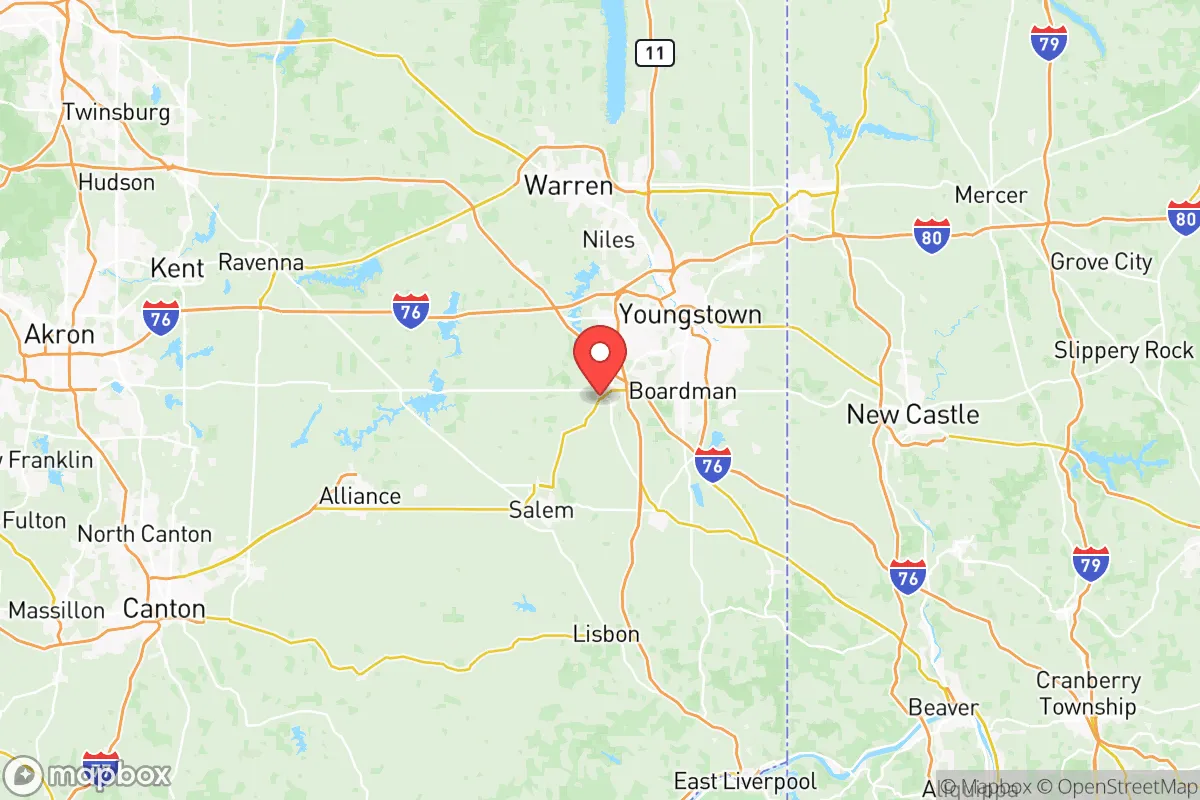
Photo: Wikipedia
Quality of Life in Mahoning County
A livable area that tracks near national norms for affordability, walkability, and neighborhood health.
What does Quality of Life tell us?
Quality of Life measures an area by evaluating factors like cost of living, nearby amenities, country club access, airport proximity, socioeconomic signals and neighborhood character. For large states, this is a general average — quality of life can vary dramatically between metro areas, suburbs, and rural communities within the same state.
What does this tell us?
Quality of Life measures an area by evaluating factors like cost of living, nearby amenities, country club access, airport proximity, socioeconomic signals and neighborhood character. For large states, this is a general average — quality of life can vary dramatically between metro areas, suburbs, and rural communities within the same state.
Cost of Living
40% below national average
138%
The Real Cost of Living in Mahoning County for 2026
| Tier | Individual | Family (4) |
|---|---|---|
| Survival | $12k | $23k |
| Comfortable | $27k | $40k |
| Luxury | $100k+ | $156k+ |
| Elite (Top 5%) | $125k+ | $193k+ |
Quality-of-Life Analysis
Mahoning County, Ohio, offers a broad quality-of-life spectrum that ranges from the urban energy of Youngstown to the quiet farmland of towns like Greenford and North Lima, drawing everyone from young professionals and college students to retirees and rural homesteaders. With a cost of living index of 60—well below the national average of 100—the county provides significant financial breathing room, though the experience of daily life shifts dramatically depending on whether you choose a dense city neighborhood, a historic small town, or a secluded rural pocket. The median home value sits at $141,100 and median rent at $775, making homeownership attainable across most of the county, while the average commute of just under 23 minutes keeps travel times manageable even for those living in outlying areas.
Largest town(s) & population centers
Youngstown is the county's largest city and primary urban center, home to roughly 60,000 residents and the anchor of the region. Daily life here centers on a revitalizing downtown with venues like the Covelli Centre, Youngstown State University (enrolling over 11,000 students), and a growing arts scene along West Federal Street. Neighborhoods range from the historic, tree-lined streets of the North Side to more affordable, working-class areas on the South Side. Boardman, a census-designated place just south of Youngstown, functions as a major commercial and retail hub, with the Southern Park Mall and a dense concentration of big-box stores and chain restaurants. Boardman's suburban feel—with newer subdivisions and good schools—attracts families and commuters who work in Youngstown or commute to nearby Warren or Pittsburgh (about 65 miles east). Canfield, a smaller city of about 7,500, offers a more upscale, small-town atmosphere with a historic village green, highly rated Canfield Local Schools, and a quieter pace, appealing to professionals and empty-nesters seeking a premium suburban lifestyle within the county.
Smaller towns & rural pockets
Beyond the main population centers, Mahoning County contains a patchwork of smaller communities and genuinely rural areas. Poland, a village of roughly 2,500, is known for its well-regarded Poland Seminary High School and a charming downtown with independent shops and restaurants, offering a tight-knit community feel. New Middletown and Springfield Township provide a more rural-suburban mix, with larger lots, farmland, and a slower pace while still being within 20 minutes of Youngstown's amenities. Greenford and North Lima are unincorporated communities that exemplify the county's agricultural side, where residents live on acreage, raise livestock, or work in nearby manufacturing and logistics. Sebring, in the far southwest corner, is a small village of about 4,200 with a strong blue-collar identity and a historic downtown, though it faces economic challenges similar to many small Rust Belt towns. These areas offer lower housing costs than the county average—often under $100,000 for a fixer-upper—and a lifestyle defined by space, privacy, and proximity to outdoor recreation at places like Mill Creek Park or the Berlin Lake area.
Cost & lifestyle range
The cost of living and available amenities vary widely across Mahoning County. At the higher end, Canfield and parts of Poland and Boardman command median home values above $200,000, with newer construction and larger homes, while still remaining affordable by national standards. These areas offer the best schools, most retail options, and lowest crime rates. At the lower end, Youngstown's urban core and older neighborhoods like Brier Hill or Cornersburg have median home values below $80,000 and rents under $600, attracting first-time buyers, investors, and those seeking maximum affordability. Rural towns like Greenford and North Lima sit in the middle, with home values around $120,000–$150,000 and lower property taxes than in the suburbs. The trade-off is clear: urban and suburban areas offer walkability, entertainment, and jobs, while rural pockets provide land, quiet, and lower costs but require a car for every errand. The county's overall COL index of 60 means even the priciest neighborhoods cost roughly 40% less than the average U.S. metro area.
Mahoning County best suits those who value affordability and variety over prestige or high-end amenities. Young professionals and students thrive in Youngstown's urban core, families gravitate to Boardman and Canfield for schools and safety, and rural homesteaders or commuters find value in Greenford and North Lima. Retirees on fixed incomes can stretch savings further here than in most of Ohio, while investors and first-time buyers find entry-level prices that are nearly impossible to match in larger metros. The county's mix of urban, suburban, and rural options—all within a 30-minute drive—makes it a practical choice for anyone who wants financial breathing room without sacrificing access to basic services and community.

Crime in Mahoning County
Crime rates similar to the national median for U.S. locations.
Violent CrimeViolent Crime Analysis
Property CrimeProperty Crime Analysis
Crime Analysis
Mahoning County, Ohio, reports a violent crime rate of 265 incidents per 100,000 residents and a property crime rate of 1,357.8 per 100,000, placing it in a middle tier for safety within the state. The county’s overall safety picture is heavily shaped by the contrast between its urban core, Youngstown, and its more suburban and rural townships. While the county is not among Ohio’s most dangerous, residents in certain areas face elevated risks, particularly from property crime, and the local criminal justice system’s approach has become a point of concern for public safety advocates.
Crime in context
Mahoning County’s violent crime rate of 265 per 100,000 is roughly 25% below the national average of 380 per 100,000 but sits slightly above the Ohio state average of 250 per 100,000. Property crime, at 1,357.8 per 100,000, is about 10% higher than the national average of 1,232 per 100,000 and significantly above Ohio’s state average of 1,150 per 100,000. The county’s property crime rate is driven largely by theft and burglary, with Youngstown and Boardman reporting the highest concentrations. By comparison, neighboring Trumbull County has a similar violent crime rate (270 per 100,000) but a lower property crime rate (1,200 per 100,000), while Columbiana County is notably safer across both categories, with violent crime at 180 per 100,000 and property crime at 950 per 100,000.
What residents experience
Residents in Mahoning County report that property crime—especially vehicle break-ins, package theft, and residential burglary—is the most common safety concern in daily life. In Youngstown, the county’s largest city, violent crime is concentrated in specific neighborhoods such as the South Side and the area around the downtown corridor, where drug-related offenses and aggravated assaults are more frequent. Suburban communities like Canfield and Poland Township consistently report violent crime rates below 100 per 100,000, making them among the safest areas in the county. Boardman, a densely populated unincorporated area, sees moderate property crime but relatively low violent crime, though its commercial corridors attract theft and shoplifting. The county’s judicial landscape has drawn scrutiny: the Mahoning County Prosecutor’s Office and local judges in Youngstown have been criticized for progressive policies, including diversion programs and reduced sentencing for repeat property offenders. Critics argue that these approaches, while intended to reduce incarceration, have led to higher recidivism rates and a perception that property crime carries few consequences, particularly in the Youngstown Municipal Court district. This has created a two-tier experience: residents in conservative-leaning townships like Austintown and Beaver Township report feeling safer and seeing faster police response, while those in Youngstown and Boardman express frustration with what they describe as a revolving-door justice system.
Neighborhood-level variation
Safety in Mahoning County varies dramatically by location. The safest areas are the eastern and southern townships: Poland Township, Canfield, and Berlin Center all report violent crime rates under 80 per 100,000, with property crime also well below county averages. These communities benefit from their own police departments and a more conservative judicial approach in the Canfield Municipal Court district. In contrast, Youngstown’s central and south-side neighborhoods see violent crime rates exceeding 500 per 100,000, and the city’s reliance on the progressive-leaning Youngstown Municipal Court has been linked to lighter sentences for gun and drug offenses. Boardman, while not as dangerous as Youngstown, has a property crime rate near 1,800 per 100,000, driven by its dense retail environment. For those considering relocation, the safest bets are the townships and villages outside Youngstown’s city limits, where local governance and policing are more aligned with traditional public safety priorities.
* Values derived from national, state, county, city and local statistics and may differ in a specific area. Last updated: 2026-06-01T17:00:41.000Z
Narrative content on this page is AI-generated and may contain mistakes. Verify any details that matter before acting on them.
ReloMaps may earn a commission from affiliate links at no extra cost to you.

