
Photo: Wikipedia
Political ClimatePolitical Climate in Mahoning County
Showing district-level results — no local-only data available.
Local Political AnalysisPolitical Analysis of Mahoning County
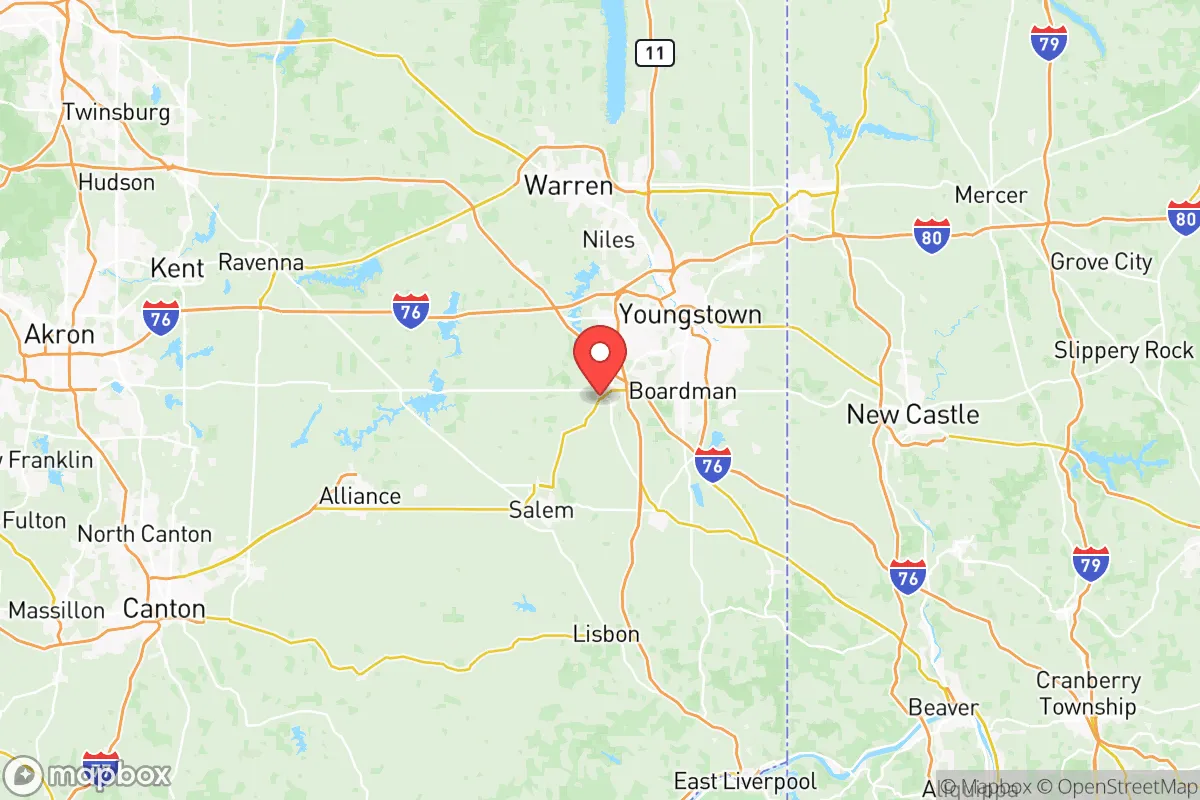
Mahoning County, Ohio, has been a political battleground that’s shifted hard to the right in recent years, now carrying a Cook PVI of R+16—a stark contrast to Ohio’s overall R+5 rating. This isn’t your granddad’s union stronghold anymore; the old Democratic machine that ran Youngstown, Boardman, and Struthers for decades has been crumbling, replaced by a wave of conservative energy that’s been building since the 2016 election. If you’re looking at the numbers, Mahoning County voted for Trump by double digits in 2020 and 2024, and that trend shows no signs of slowing down as more folks here feel the squeeze from federal overreach and cultural shifts they didn’t ask for.
How it compares
Compared to Ohio as a whole, Mahoning County is a political outlier that’s become more conservative than the state average. While Ohio leans R+5, Mahoning’s R+16 puts it in the same league as deep-red rural counties, but with a twist: it’s still got blue pockets that make the local dynamics interesting. For instance, Youngstown’s downtown and South Side still vote reliably Democratic, thanks to older union households and a shrinking but vocal progressive base. But drive 15 minutes west to Canfield or Poland, and you’ll find precincts that vote 70% Republican, fueled by suburban families fed up with rising crime and school board politics. The real swing areas are in Boardman and Austintown, where independent voters have flipped from blue to red over the past two cycles—these are the precincts that decide countywide races now. Statewide, Ohio’s suburban shift has been more gradual, but Mahoning’s working-class roots make its rightward turn feel more like a rebellion than a realignment.
What this means for residents
For residents, this political climate means local government is increasingly skeptical of state and federal mandates, especially on issues like gun rights, school curriculum, and property taxes. The county commission, now majority Republican, has pushed back against Columbus on things like vaccine mandates and zoning overrides, which resonates with folks who feel the state capital doesn’t understand their way of life. Property taxes are a hot-button issue—Mahoning’s rates are among the highest in Ohio, and the conservative majority has been fighting to cap assessments, arguing that government shouldn’t price people out of their homes. On the flip side, if you’re worried about progressive overreach in schools, you’ll find comfort in districts like Canfield Local Schools and Poland Seminary, where school boards have resisted critical race theory and gender ideology curricula, keeping the focus on basics. But it’s not all smooth sailing; the county’s aging infrastructure and population decline mean that even conservative leaders have to balance fiscal restraint with the need for basic services, which can lead to some tense budget meetings.
Culturally, Mahoning County feels like a throwback to a time when neighbors looked out for each other without government interference. You’ll still see “Trump 2024” signs on lawns in Struthers and Campbell right next to American flags, and the local diners in Sebring and Beloit are where folks hash out politics over coffee. The big policy distinction from Ohio’s more liberal cities like Columbus or Cleveland is that Mahoning’s leaders prioritize Second Amendment rights and local control over everything else—there’s a deep distrust of any one-size-fits-all solution coming from the statehouse. If you’re moving here, expect a community that values personal freedom and isn’t shy about telling politicians to stay out of their business. The trajectory is clear: Mahoning County is doubling down on conservative values, and anyone hoping for a return to its blue-collar Democratic past is going to be disappointed. It’s a place where the old ways are fading, but the new ones feel a lot more like common sense to the folks who live here.

State Political ClimatePolitical Climate in Ohio
State Political AnalysisPolitical Environment in the State
Ohio has shifted from a classic purple battleground to a solidly Republican-leaning state, carrying a Cook PVI of R+5 and voting for Donald Trump by 8 points in both 2020 and 2024. The state’s political transformation over the past 15 years has been dramatic—Barack Obama won Ohio twice, but since 2016, the GOP has tightened its grip on nearly every level of government, from the statehouse to the Supreme Court. This isn’t a fluke; it’s the result of working-class voters in the Rust Belt abandoning the Democratic Party over trade, energy, and cultural issues, while the rural and exurban base has become more reliably conservative.
Urban vs. rural divide
The political map of Ohio is a tale of three regions. The urban cores—Cleveland, Columbus, and Cincinnati—vote overwhelmingly Democratic, with Cuyahoga County (Cleveland) delivering a 66% vote share for Joe Biden in 2020. But these cities are shrinking or stagnant in population, while the suburbs and exurbs are growing and trending red. Delaware County, just north of Columbus, flipped from purple to deep red in the 2010s and now votes +20 Republican. The real muscle of the GOP comes from the rural and small-town counties that blanket the state: Mercer County in the west voted 80% for Trump, and Ashland County in north-central Ohio hit 75%. The southeastern Appalachian counties, once Democratic strongholds like Belmont County, have swung hard to the right as the party’s national brand shifted away from coal and manufacturing. The only metro area that bucks the trend is Dayton, which remains a true swing area—Montgomery County went for Trump by just 1 point in 2024, reflecting its mix of Wright-Patterson Air Force Base workers and union households.
Policy environment
Ohio’s policy landscape is broadly conservative, with a few notable exceptions. The state has a flat income tax of 3.5% (down from 4.8% in 2020), and the GOP-controlled legislature has passed multiple rounds of tax cuts, including eliminating the income tax for small businesses. Property taxes are relatively low, averaging 1.4% of home value, but local levies for schools can push that higher. The regulatory posture is business-friendly—Ohio is a right-to-work state in practice, though not by law, and has no state-level minimum wage above the federal $7.25. On education, the state has a robust school choice program: the EdChoice voucher system allows students in underperforming districts to attend private schools with state funding, and over 50,000 students use it. Higher education is a mixed bag—Ohio State University in Columbus leans left, but the state has banned DEI offices and critical race theory mandates in public universities. Healthcare is a flashpoint: Ohio expanded Medicaid under Obamacare in 2014, but the legislature has passed laws restricting abortion to six weeks (the “Heartbeat Bill”) and requiring parental consent for minors. Election laws have tightened—voter ID is now required, drop boxes are limited to one per county, and early voting windows have been reduced. The state also passed a constitutional amendment in 2023 enshrining abortion rights, which the GOP legislature is trying to undermine with a new law requiring a 24-hour waiting period and mandatory ultrasounds.
Trajectory & freedom
Ohio is becoming more free in several key areas, but the trend is uneven. On gun rights, the state passed constitutional carry in 2022, allowing any adult to carry a concealed firearm without a permit—a major win for Second Amendment advocates. The “Stand Your Ground” law was also strengthened in 2021. On parental rights, Ohio enacted a “Parents’ Bill of Rights” in 2023, requiring schools to notify parents of any curriculum involving sexuality or gender identity and to obtain consent before counseling students on such matters. The state also banned transgender surgeries for minors in 2024, overriding a veto from Governor Mike DeWine. However, freedom has contracted in other areas. The state’s COVID-era emergency powers were used to shut down businesses and churches for months, and while the legislature later curbed the governor’s authority, the memory lingers. Property rights took a hit with the 2023 passage of a law allowing wind and solar projects to be forced onto private land through eminent domain, though it was later softened. Medical autonomy is a mixed bag—the abortion amendment passed, but the legislature is actively working to restrict access through clinic regulations and waiting periods. The overall trajectory is toward more personal liberty on guns and family issues, but with a creeping regulatory state on energy and healthcare.
Civil unrest & political movements
Ohio has seen its share of political flashpoints. The 2020 protests in Columbus and Cincinnati over George Floyd’s death turned violent, with looting and arson in the Short North and downtown areas. The state’s response was aggressive—the Ohio National Guard was deployed, and curfews were enforced. Since then, the left has organized around abortion rights, successfully passing the 2023 amendment, while the right has mobilized around election integrity and school board battles. The “Ohio Election Integrity Network” has been active, pushing for audits and challenging voter rolls, though no major fraud has been found. Immigration politics are relatively quiet—Ohio has no sanctuary cities, and the state passed a law in 2024 requiring local law enforcement to cooperate with ICE. The most visible flashpoint for a new resident would be the school board wars: districts in Mason and Hudson have seen heated meetings over critical race theory and LGBTQ curriculum, with parents on both sides turning out in force. There’s no serious secession or nullification movement, but the “Ohio Freedom Alliance” has pushed for a state constitutional convention to limit federal overreach.
Projection
Over the next 5-10 years, Ohio will likely become more Republican at the state level, but the margin may narrow as in-migration from blue states accelerates. The Columbus suburbs—Dublin, Westerville, New Albany—are growing fast with tech and finance workers from California and New York, and these newcomers tend to be moderate or left-leaning on social issues. However, the rural and exurban counties are growing even faster, and the GOP’s base is more motivated. The state’s demographic future is older and whiter than the national average, which favors Republicans. The biggest wildcard is the state’s economy: if the CHIPS Act and EV battery plants in Lordstown and Newark bring in younger, more diverse workers, the political calculus could shift. But for now, expect the legislature to continue cutting taxes, expanding school choice, and tightening abortion restrictions. A new resident moving in now should expect a state that is broadly conservative but with pockets of blue in the cities, and a political culture that is increasingly polarized but still civil compared to the coasts.
Bottom line for a new resident: Ohio offers a solidly conservative policy environment with low taxes, strong gun rights, and parental control over education. The urban areas are liberal, but you can easily avoid them by choosing a suburb or small town. The state is trending in the right direction on most freedom issues, but keep an eye on the legislature’s tendency to overreach on energy and healthcare. If you’re looking for a place where your values are reflected in state law and your vote actually counts, Ohio is a safe bet—just be ready for the occasional political fight at the school board meeting.
* Values derived from national, state, county, city and local statistics and may differ in a specific area. Last updated: 2026-06-01T17:00:41.000Z
Narrative content on this page is AI-generated and may contain mistakes. Verify any details that matter before acting on them.
ReloMaps may earn a commission from affiliate links at no extra cost to you.

